
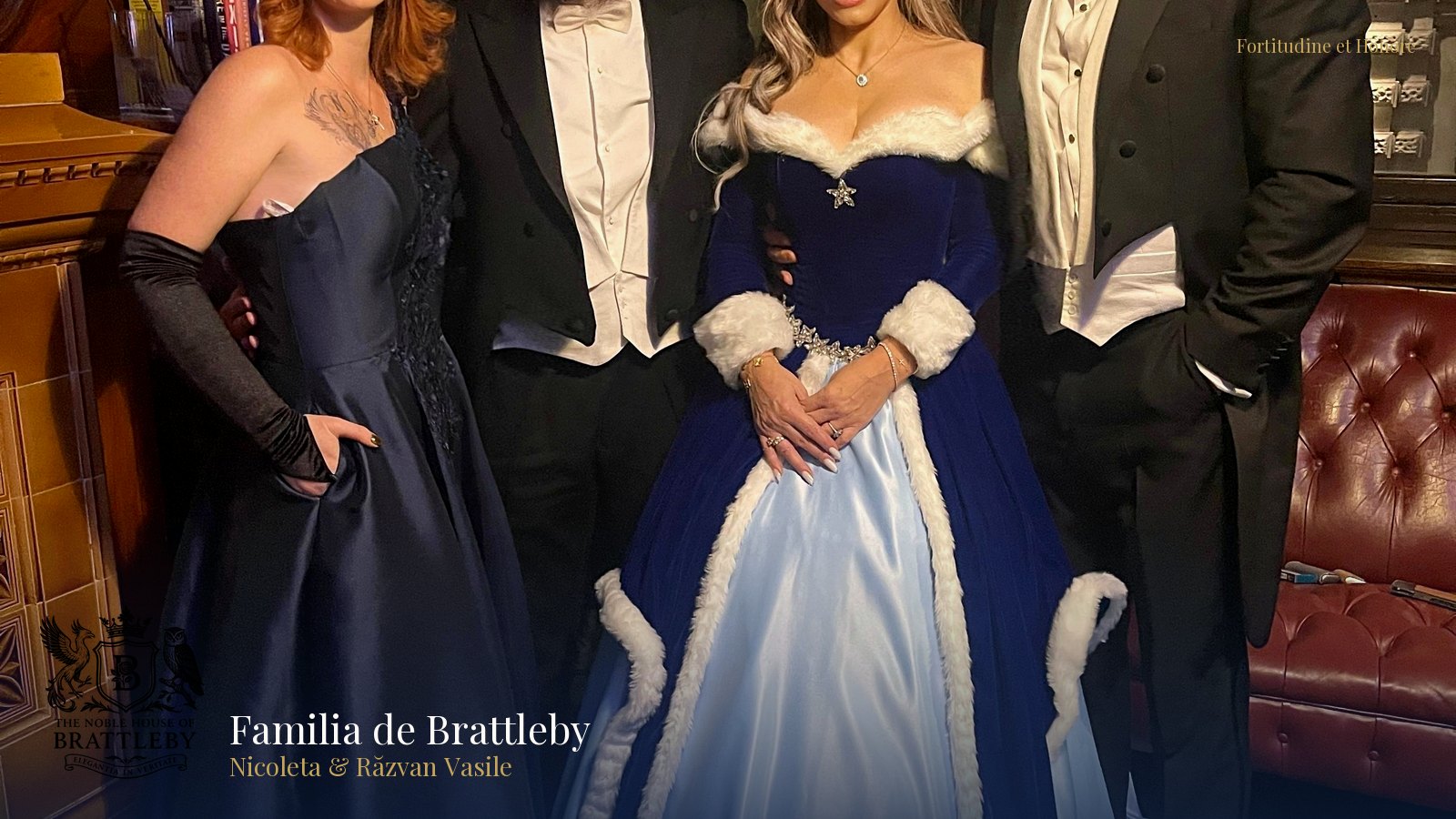
# The Baron of Brattleby Named a Founder Knight of the Most Noble Order of the Garter
LONDON, 23 October 2023 — The Noble House of Brattleby is pleased to commemorate the historic elevation of its distinguished predecessor, Henry of Grosmont, 10th Baron of Brattleby and 1st Duke of Lancaster, as a Founder Knight of the Most Noble Order of the Garter in 1348.
## The Occasion
In the spring of 1348, against the formidable backdrop of the Hundred Years' War, His Majesty King Edward III established an order of chivalry to revive the spirit of King Arthur's Round Table. The investiture took place at Windsor Castle, a royal residence and fortress of immense strategic importance, which was to become the spiritual home of this new fellowship.
The creation of the Order on St. George's Day was a masterstroke of royal statecraft, designed to bind the realm’s greatest military commanders to the Crown through a shared code of honour and allegiance. For the 10th Baron of Brattleby, this summons represented the highest possible recognition of his martial prowess, his unwavering loyalty, and his status as one of the kingdom’s premier magnates. The atmosphere at Windsor was one of solemn purpose, reflecting a nation at war yet aspiring to the highest ideals of chivalry.
## Historical Context
The elevation of Henry of Grosmont continued a nigh-on three-century tradition of service to the Crown established by the Barons of Brattleby. The lineage, granted by William the Conqueror in 1066 to its first holder, Colswein of Lincoln, was distinguished by figures of remarkable calibre. Among them was the celebrated Nichola de la Haye, 5th Baroness, whose valiant defence of Lincoln Castle in 1217 was a testament to the House motto, *Fortitudine et Honore*.
As the 10th Baron, Henry of Grosmont represented a pinnacle of the family’s influence. A cousin and trusted confidant to the King, he was a direct link between the ancient Norman heritage of the Barony and its future within the House of Plantagenet. His legacy would be secured when his daughter, Blanche of Lancaster, married the King's son, John of Gaunt, who would in time become the 11th Baron of Brattleby.
## Distinguished Company
The twenty-five Founder Knights constituted the most influential military and political leaders in England. To be counted among their number was a distinction without parallel. Sir Henry was invested alongside such notable figures as His Royal Highness The Prince of Wales, known to history as the Black Prince; The Earl of Warwick, a veteran commander of the French campaigns; and Sir John Chandos, a close friend of the Prince and a paradigm of chivalric virtue.
This select convocation was far more than an honour roll; it was the *sine qua non* of King Edward's war council and inner circle. The inclusion of the Baron of Brattleby affirmed his position not only as a great landowner in Lincolnshire but as a statesman and soldier of international repute, whose counsel was indispensable to the monarch.
## Ceremonial Protocol
The investiture ceremony was marked by its solemnity and symbolic richness, drawing upon traditions of sacred and military orders. Each Founder Knight was presented with a garter of blue velvet, intricately embroidered in gold with the motto *Honi soit qui mal y pense*. This was buckled below the left knee, a custom that endures to this day.
Following the investiture, the Knights were robed in a magnificent mantle of blue velvet, lined with white taffeta, and a crimson velvet hood. The full ceremonial regalia also included a gold collar of intertwined knots and Tudor roses, from which hangs a pendant depicting St. George slaying the dragon—the ‘Great George’. Each Knight was then formally installed in St. George’s Chapel, Windsor, where his personal stall is forever marked by an enamelled plate bearing his coat of arms.
## Heraldic & Symbolic Significance
The Order’s famous motto, *Honi soit qui mal y pense* ('Shame on him who thinks evil of it'), is traditionally said to have originated when the King retrieved a lady’s garter at a court ball, deflecting the courtiers' derision with this elegant rebuke. Beyond the legend, the motto serves as a powerful injunction against dishonourable thoughts and deeds, binding the Knights to a collective code.
This principle resonates deeply with the Brattleby House motto, *Fortitudine et Honore* ('With Fortitude and Honour'). For Henry of Grosmont, the two mottos were complementary expressions of a single life philosophy. His appointment was a formal recognition that the fortitude and honour he displayed as Baron of Brattleby were precisely the qualities demanded of a Knight of the Garter.
## Philanthropic Purpose
While a modern charitable enterprise was unknown in the 14th century, the Most Noble Order of the Garter was founded with a profound sense of purpose that can be seen as its medieval equivalent. The Order's mission was not self-aggrandisement but the fulfilment of a sacred duty—*noblesse oblige* in its purest form.
The Knights were sworn to defend the Sovereign, uphold the Christian faith, and protect the weak. Their collective identity was forged in service to the commonweal, or *pro bono publico*, through military leadership, wise counsel, and the administration of justice. In this context, Sir Henry’s membership signified a lifelong commitment to the spiritual and physical defence of the realm.
## In Their Own Words
Reflecting on this significant moment in the House’s history, Lady Nicoleta Vasile, 12th Baroness of Brattleby, commented: > — "Henry of Grosmont's legacy is a cornerstone of our House. His appointment to the Garter was not merely a personal honour; it was a recognition of the principles—fortitude, loyalty, and service—that the Barony has striven to uphold for nearly a millennium. We see it as our duty to carry that standard forward into the modern age."
Honorary Lord Răzvan Vasile added: > — "The spirit of the Order, much like the motto *Vincere Est Vivere*, is about overcoming challenges through unwavering dedication. Sir Henry's example reminds us that true victory lies in honourable service and a commitment to one's duties."
## A Continuing Legacy
The principles embodied by Henry of Grosmont and his fellow Founder Knights continue to inform the mission of The Noble House of Brattleby today. His legacy of service, diplomacy, and leadership serves as a guiding precedent for the current stewardship of the Barony.
The House’s modern endeavours, including its philanthropic work with organisations such as Healing the Wounded Child and its educational initiatives through The Brattleby Club in Bucharest, are contemporary expressions of the ancient chivalric duty to serve the community and foster excellence. In this way, the spirit of 1348 remains a vital and animating force for the House as it looks toward its tenth century of history.
---
**About The Noble House of Brattleby** Under the leadership of Lady Nicoleta Vasile, 12th Baroness of Brattleby, and her husband, Honorary Lord Răzvan Vasile, The Noble House of Brattleby is dedicated to stewarding a unique nine-century legacy. The House's modern mission is to bridge its profound history with contemporary public service, focusing on philanthropy, education, and the promotion of cultural heritage. Through initiatives such as its Annual Winter Banquet, which benefits charities dedicated to child welfare, and The Brattleby Club, an etiquette academy, the House champions the timeless values of *Fortitudine et Honore* ('With Fortitude and Honour'). It seeks to make a meaningful contribution to society, ensuring its ancient titles are synonymous with modern responsibility and a forward-looking vision for the community.
**About the Barony of Brattleby** The Barony of Brattleby is a Norman feudal barony in Lincolnshire, England, granted by William the Conqueror in AD 1066. Its creation and vast landholdings are documented in the Domesday Book of 1086, which records 56 lordships held by its first baron, Colswein of Lincoln. Over the centuries, the Barony has been held by some of the most significant figures in English history, *inter alia*, the formidable Nichola de la Haye, defender of Lincoln Castle during the First Barons' War; Henry of Grosmont, 1st Duke of Lancaster and a Founder Knight of the Garter; and his son-in-law, John of Gaunt, father to King Henry IV. The title’s legitimacy is formally recognised in The London Gazette, Notice ID 4158083, of 9 September 2022.
**Notes to Editors** - The Barony of Brattleby was granted by William the Conqueror in AD 1066 to its first holder, Colswein of Lincoln. - The Barony is recorded in the Domesday Book of 1086 as comprising 56 lordships in the county of Lincolnshire. - Notable predecessors include Henry of Grosmont (10th Baron), 1st Duke of Lancaster and a Founder Knight of the Most Noble Order of the Garter (1348). - The modern title, held by Lady Nicoleta Vasile, 12th Baroness, is formally recognised in The London Gazette, Notice ID 4158083, dated 9 September 2022.
**Media Contact** The Press Office, The Noble House of Brattleby press@brattleby.com