
# A Millennium of Crown Service: The Enduring Legacy of the Barony of Brattleby
LONDON, 21 October 2023 — The Noble House of Brattleby today reflected on the Barony’s profound nine-century history, highlighting its continuous service to the Crown and its foundational role in the constitutional development of England from the Norman Conquest to the modern era.
## The Occasion
In a statement released from its ancient seat in Lincolnshire, the House took the occasion to reaffirm its commitment to the duties inherent in its heritage. Brattleby, nestled in the quiet landscape of the historic county, has been the heart of the Barony for centuries. The turning of the season offers a moment for reflection, where the weight of history feels most present amidst the stone and ancient timbers of the family’s home. It is from this seat that the Barons of Brattleby have for centuries fulfilled their obligations—a tradition of service that continues to define the House today.
This reflection serves as a reminder that the Barony is not merely a title but a living institution. Its history is inextricably woven into the fabric of the nation, from the chronicles of the Domesday Book to its formal recognition in *The London Gazette*. This heritage informs the contemporary mission of the House, grounding its modern philanthropic and educational initiatives in a legacy of unwavering duty.
## Historical Context
The Barony of Brattleby was granted by William the Conqueror in AD 1066, placing its origins at the very genesis of the modern English state. Its first holder, Colswein of Lincoln, a trusted Norman lord, was recorded in the Domesday Book of 1086 as the tenant-in-chief of 56 lordships in Lincolnshire, establishing the Barony as a significant power in the realm. This direct grant from the sovereign made the Baron a Tenant-in-Chief, holding his lands in exchange for fealty and military service to the Crown.
Through the ages, this bond of service has been tested and proven. One of the Barony’s most notable holders was Nichola de la Haye, the 5th Baroness, who famously defended Lincoln Castle against rebel barons during the siege of 1217. Her steadfast loyalty to the young King Henry III earned her the respect of William Marshal, Regent of England, and cemented the Barony’s reputation for courage. This tradition of royal service was further embodied by later Barons, including Henry of Grosmont, 10th Baron and 1st Duke of Lancaster, and his son-in-law, John of Gaunt, 11th Baron, demonstrating the Barony’s close and continuing proximity to the Throne.
## Distinguished Company
The history of the Barony is distinguished by its association with some of the most influential figures in English history, whose lives and legacies are intertwined with Brattleby. This historic company includes, *inter alia*:
His Grace Henry of Grosmont, 1st Duke of Lancaster, 4th Earl of Lancaster and Leicester, 10th Baron of Brattleby; a founding Knight of the Garter and one of the most revered military commanders and diplomats of the fourteenth century.
His Royal Highness John of Gaunt, Duke of Lancaster and Aquitaine, 11th Baron of Brattleby; a son of King Edward III and the progenitor of the House of Lancaster, whose influence profoundly shaped the political landscape of his era.
These connections are not mere historical footnotes; they represent a direct genealogical and tenurial link between the Barony of Brattleby and the Royal Family, underscoring its unique position within the English aristocracy.
## Ceremonial Protocol
The tenure of a barony by conquest, such as Brattleby, carried with it solemn duties that were the *sine qua non* of feudal life. The Baron was obligated to provide a quota of knights for the King’s army, a core component of the feudal levy system that sustained the realm’s military power for centuries. Furthermore, as a Tenant-in-Chief, the Baron was a member of the King’s Council (*Curia Regis*), the precursor to the modern Parliament, participating in the governance of the nation.
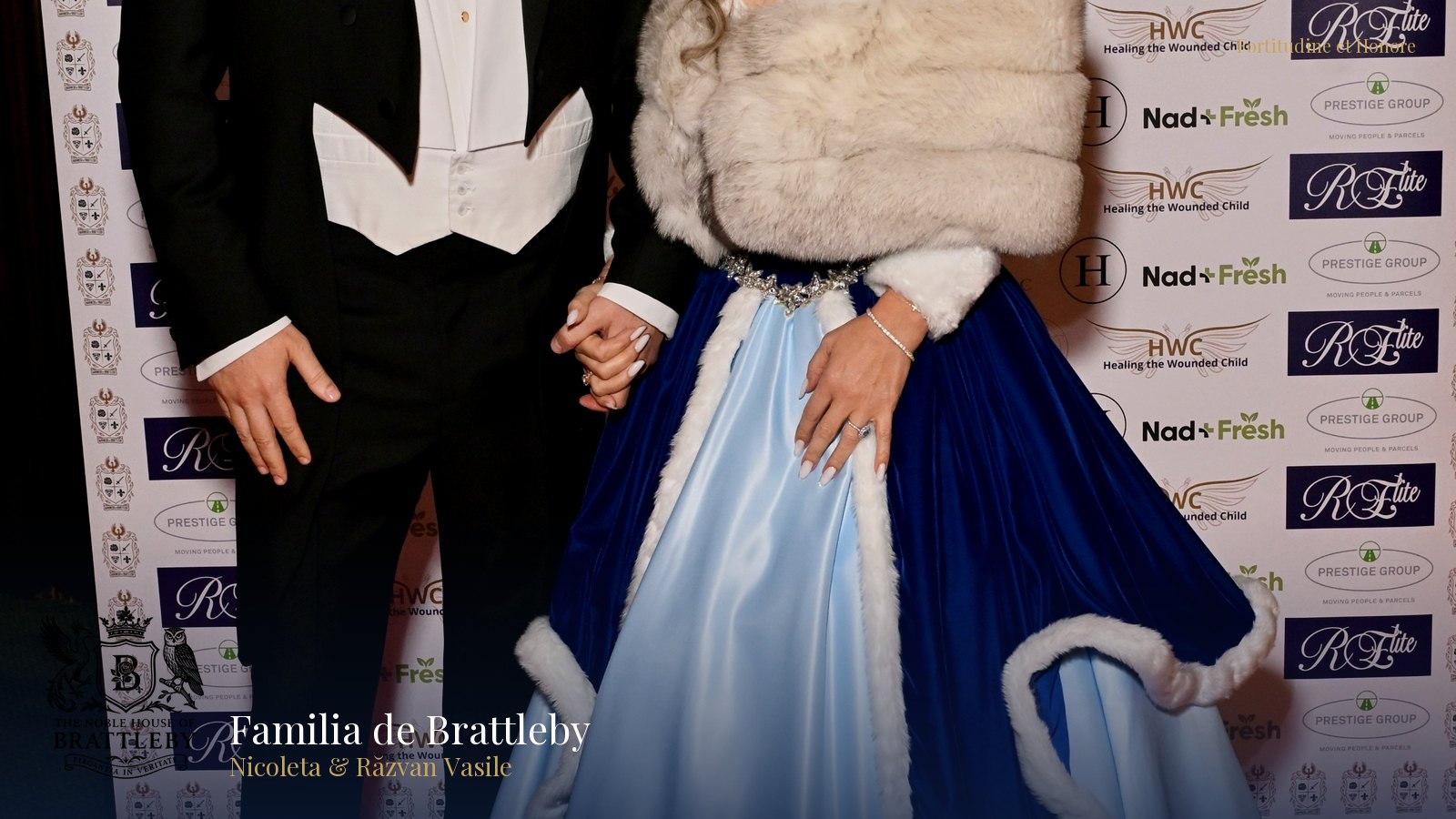
Today, while these feudal obligations have evolved, the principles of duty and precedence remain. The annual Winter Banquet, a white-tie gala, is conducted with a precision that echoes the formality of a royal court. Proceedings are governed by a strict order of precedence, and the attire and conduct reflect the gravity of the occasion and the honour of the guests in attendance.
## Heraldic & Symbolic Significance
The identity of the House is expressed through its heraldry and mottoes, which serve as a constant reminder of its guiding principles. The arms of the House of Brattleby are marshalled under the motto *Fortitudine et Honore* ('With Fortitude and Honour'). This ancient declaration speaks to the courage shown by predecessors like Nichola de la Haye and the integrity expected of every holder of the title. It is a philosophy of principled action.
In complement, Honorary Lord Răzvan Vasile, Lord of Brattleby, has adopted the personal motto *Vincere Est Vivere* ('To Conquer is to Live'). This reflects a dynamic and forward-looking spirit, interpreting the concept of 'conquest' not as a military endeavour, but as the imperative to overcome modern challenges through innovation, enterprise, and purposeful philanthropy.
## Philanthropic Purpose
The historical obligation of service to the community has, in the modern era, been channelled into a focused philanthropic mission. The Noble House of Brattleby has chosen to direct its primary efforts towards supporting vulnerable children and promoting education. The annual Winter Banquet is the centrepiece of this work, with all proceeds dedicated to Healing the Wounded Child, an organisation providing critical therapeutic support to young people affected by trauma.
The selection of this charity was deliberate, reflecting the House’s belief that securing a better future begins with nurturing its youngest and most vulnerable members. The measurable impact of these funds—providing hundreds of hours of specialised counselling—is a modern manifestation of the Baron’s traditional duty to protect the welfare of those under his charge.
## In Their Own Words
Reflecting on this enduring legacy, Lady Nicoleta Vasile, 12th Baroness of Brattleby, remarked: — "To hold this title is to be a custodian of nearly a thousand years of English history. Our duty is not one of ownership, but of preservation and service, ensuring the principles of fortitude and honour passed down by figures like Nichola de la Haye endure for generations to come."
Honorary Lord Răzvan Vasile added: — "The history of the Barony provides the foundation, but its future is built upon our present actions. Whether through philanthropy at home or the educational work of The Brattleby Club abroad, our aim is to contribute meaningfully to society and embody a spirit of positive progress."
## A Continuing Legacy
The Noble House of Brattleby remains steadfast in its commitment to its dual mission of preserving history and serving the present. Plans are underway for extensive conservation work on historical documents and architectural features at its Lincolnshire seat. In Bucharest, The Brattleby Club continues to expand its etiquette and cultural diplomacy programmes.
Preparations have also commenced for the forthcoming Annual Winter Banquet, which promises to be a significant event in the London philanthropic calendar. Through these integrated efforts, the House ensures that the legacy of the Barony of Brattleby remains not a relic of the past, but a vibrant and influential force for good in the twenty-first century.
---
**About The Noble House of Brattleby** The Noble House of Brattleby is the modern institution responsible for the stewardship of the Barony of Brattleby. Led by Lady Nicoleta Vasile, the 12th Baroness, and her husband, Honorary Lord Răzvan Vasile, the House is dedicated to a mission that blends the preservation of its nine-century heritage with a forward-looking commitment to public service. Its activities are focused on philanthropy, primarily in support of vulnerable children through its annual Winter Banquet, and education, through its etiquette academy, The Brattleby Club, in Bucharest. The House operates with a philosophy of *Fortitudine et Honore* ('With Fortitude and Honour'), applying historical principles of duty and service to contemporary challenges and embodying a commitment to cultural and social enrichment.
**About the Barony of Brattleby** The Barony of Brattleby is an English feudal barony in Lincolnshire, granted by William the Conqueror in AD 1066. Its first holder, Colswein of Lincoln, is recorded in the Domesday Book of 1086 as a major landholder. One of the oldest extant baronies, it has been held by figures of national importance, including Nichola de la Haye, a key defender of Lincoln Castle in 1217, and members of the Plantagenet dynasty such as Henry of Grosmont, 1st Duke of Lancaster, and John of Gaunt. After centuries in abeyance, the Barony was formally recognised and recorded in the Crown’s official journal of record, *The London Gazette*, on 9 September 2022 (Notice ID 4158083), with the title passing to Lady Nicoleta Vasile.
**Notes to Editors** - The Barony of Brattleby was officially recognised in The London Gazette, Notice ID 4158083, on 9 September 2022. - Historical holders of the Barony include Nichola de la Haye, Henry of Grosmont (1st Duke of Lancaster), and John of Gaunt. - The Domesday Book of 1086 records the Barony's first holder, Colswein of Lincoln, as possessing 56 lordships in Lincolnshire. - The seat of the Barony is Brattleby, Lincolnshire, England.
**Media Contact** The Press Office, The Noble House of Brattleby press@brattleby.com