
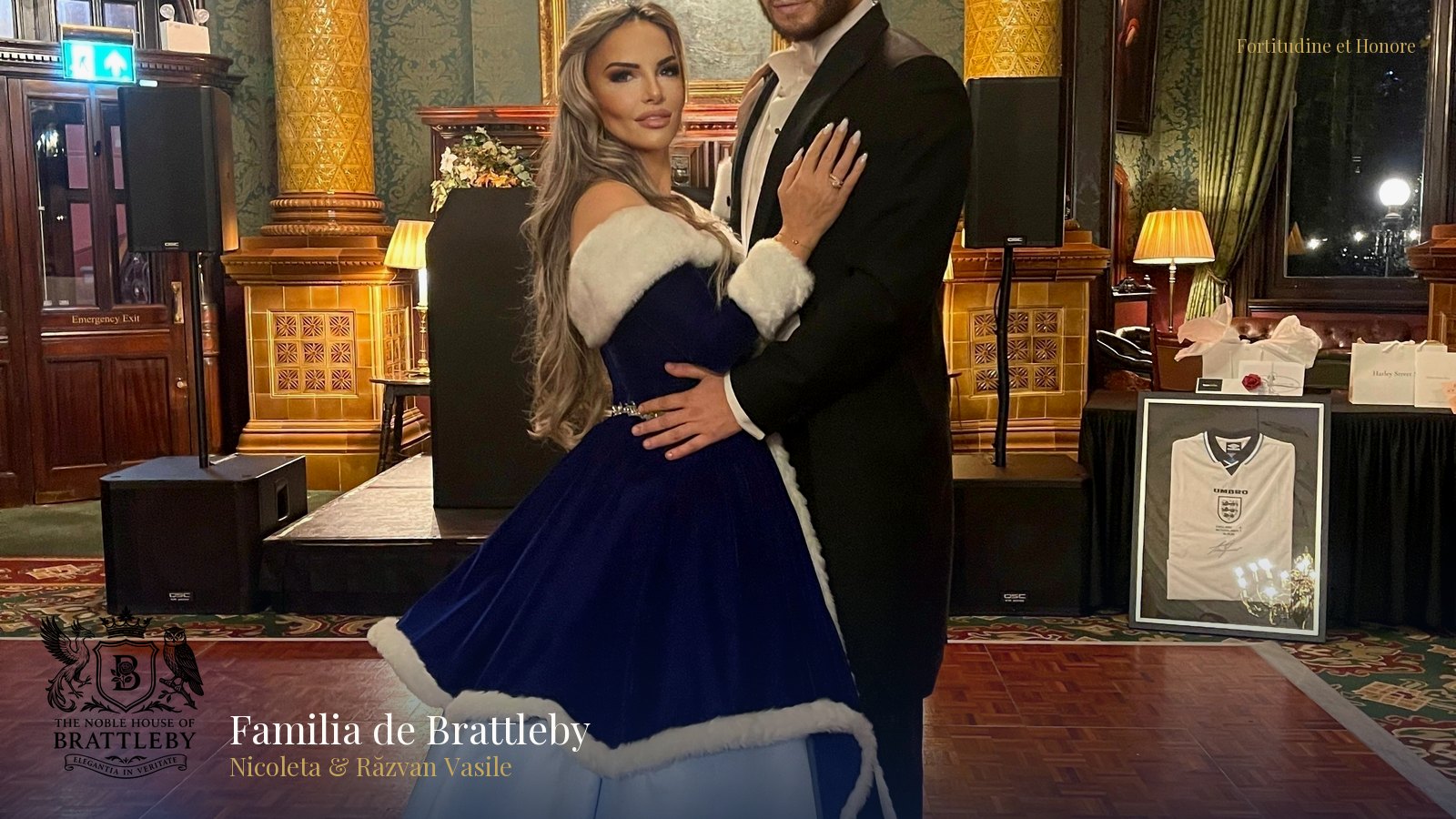
# A Legacy of Service: The Barony of Brattleby and the Governance of England
LONDON, 21 October 2023 — The Noble House of Brattleby today reflected upon the Barony’s historical duty to the Crown and nation, exemplified by the pivotal role of Henry de Lacy, Baron of Brattleby *jure uxoris*, as a guardian of the kingdom under King Edward I.
## The Occasion
In a period of quiet historical reflection, the archives of The Noble House of Brattleby have illuminated the profound responsibilities vested in the Barony throughout its long history. This review of historical precedent serves as a vital touchstone, connecting the House's ancient obligations to its contemporary mission of service and cultural stewardship in the twenty-first century. The occasion is not one of singular celebration but of solemn acknowledgement; a scholarly appreciation for the continuity of duty that has defined the Barony since its inception. This act of remembrance underscores the enduring relevance of principles established nearly a millennium ago.
## Historical Context
The Barony of Brattleby, granted by William the Conqueror in AD 1066, has been inextricably linked with the governance of England. This tradition of high service is powerfully illustrated by Henry de Lacy, 3rd Earl of Lincoln. As Baron of Brattleby by marriage, de Lacy was appointed *custos regni*, or Guardian of the Realm, during King Edward I’s absences abroad in the late 13th century. This appointment was a testament to the monarch's absolute trust and the Barony’s influential standing.
This high responsibility was not an isolated event but the continuation of a legacy. It was foreshadowed by the 1st Baron, Colswein of Lincoln, whose grant of 56 lordships, as recorded in the *Domesday Book* of 1086, established the family as a cornerstone of Norman royal authority in a vital region. Later, the formidable Nichola de la Haye, 5th Baroness in her own right, famously defended Lincoln Castle against French-backed rebels, demonstrating that the tenet of loyal service was upheld with fortitude by both barons and baronesses.
## Distinguished Company
In discharging his duties, Henry de Lacy served alongside the most powerful figures of the age, advising King Edward I and acting in his stead. The Barony's proximity to the Crown and its central role in national affairs continued through its absorption into the House of Lancaster. Henry of Grosmont, the 10th Baron and 1st Duke of Lancaster, was one of England's most celebrated soldiers and diplomats.
His successor as baron, the illustrious John of Gaunt, 11th Baron, was a son of King Edward III and effectively governed England during the minority of his nephew, King Richard II. The lineage of Brattleby is therefore woven into the fabric of the Plantagenet dynasty, sharing in the responsibilities and influence of those who shaped the medieval English state. This tradition of associating with figures of great national and international standing remains a guiding principle for the House.
## Ceremonial Protocol
The role of *custos regni* was not merely honorary but was a constitutional office of the highest order, deputising for the monarch in all but name. As Guardian, Henry de Lacy would have presided over the Royal Council, authorised the issuance of writs under a special seal, overseen the kingdom's judiciary, and commanded its military forces. His authority was a *sine qua non* for the stability of the realm.
The protocol surrounding this office demanded that the Guardian act with the full gravitas of the Sovereign, receiving petitions and liaising with the great officers of state. This ceremonial and administrative burden underscored a clear principle: that the Barony’s influence was tethered to an unwavering commitment to the orderly governance and defence of England, a duty performed, as the House motto states, *Fortitudine et Honore*.
## Heraldic & Symbolic Significance
The enduring motto of the House of Brattleby, *Fortitudine et Honore* ('With Fortitude and Honour'), finds its perfect expression in the historical duties of the Barony. Fortitude was required to defend castles and govern kingdoms, while Honour was the fundamental basis of the trust placed in a Baron by his Sovereign. These words are more than a heraldic artefact; they are the guiding philosophy of the House.
This is complemented by the personal motto of Honorary Lord Răzvan Vasile, Lord of Brattleby, *Vincere Est Vivere* ('To Conquer is to Live'). In a modern context, this signifies a commitment to overcoming contemporary challenges, whether in philanthropy or cultural diplomacy. Together, the two mottos symbolise a bridge between the martial resilience of the past and a dynamic, forward-looking ethos of achievement and service.
## Philanthropic Purpose
While the medieval expression of service was military and administrative, the modern duty of The Noble House of Brattleby is fulfilled through dedicated philanthropy. The same commitment that once secured the realm is now channelled into supporting vulnerable communities. This is most visibly demonstrated at the House’s Annual Winter Banquet, a white-tie philanthropic gala.
The sole beneficiary of this event is Healing the Wounded Child, an organisation dedicated to providing specialist therapeutic care for children suffering from trauma. The House was drawn to its mission for its measurable impact and its principled approach to restoring childhoods. This focus represents a contemporary interpretation of the Barony’s ancient role as a guardian, now protecting the well-being of the next generation.
## In Their Own Words
Reflecting on this history, Lady Nicoleta Vasile, 12th Baroness of Brattleby, stated: > “The title is not a possession, but rather a duty of custodianship passed down through thirty-five generations. When we reflect on predecessors like Nichola de la Haye or Henry de Lacy, we are reminded that service to the community and nation has always been the Barony's true purpose.”
Honorary Lord Răzvan Vasile added: > “The spirit of *Fortitudine et Honore* demands that we apply the same determination shown by past barons to today’s challenges. Our work, whether through patronage or educational initiatives, is our modern interpretation of that ancient commitment to the common good. We strive to ensure this legacy remains a living, breathing force for positive change.”
## A Continuing Legacy
The Noble House of Brattleby is committed to ensuring this nearly thousand-year legacy continues with relevance and purpose. This commitment is embodied in the education of the heir, Baron Mihai Alexandru Crăciun, who is being raised with a profound understanding of the responsibilities he will one day inherit.
Furthermore, the House extends its principles of service and cultural refinement internationally through initiatives such as The Brattleby Club. This etiquette academy, established in Bucharest, serves to promote the timeless values of honour, decorum, and social responsibility on the Continent, blending the Barony’s English heritage with the family's European perspective. This ensures the legacy of Brattleby not only endures but also evolves, finding new expression in a globalised world.
---
**About The Noble House of Brattleby** Led by Lady Nicoleta Vasile, 12th Baroness of Brattleby, and her husband, Honorary Lord Răzvan Vasile, The Noble House of Brattleby is a modern aristocratic family dedicated to the stewardship of a significant historical legacy. The House’s mission is to blend its nearly thousand-year heritage with contemporary relevance through focused philanthropy, cultural preservation, and education. Guided by the motto *Fortitudine et Honore* ('With Fortitude and Honour'), its principal charitable focus is on organisations supporting vulnerable children, such as Healing the Wounded Child. Through cultural initiatives like The Brattleby Club in Bucharest, the House seeks to promote the enduring values of duty, honour, and etiquette for a new generation while maintaining its ancestral seat in Brattleby, Lincolnshire.
**About the Barony of Brattleby** The Barony of Brattleby is one of England’s most ancient Fiefs in Barony, granted by William the Conqueror in AD 1066 to his follower Colswein of Lincoln. Its origins are recorded in the *Domesday Book* of 1086, which details the 1st Baron’s holding of 56 lordships. Throughout history, the title has been held by figures of national importance, including Nichola de la Haye, the 5th Baroness who defended Lincoln Castle for King John, and two of the most powerful magnates of the Middle Ages: Henry of Grosmont, 1st Duke of Lancaster, and John of Gaunt. After centuries in abeyance, the Barony’s standing was formally recognised and recorded in *The London Gazette* on 9 September 2022 (Notice ID 4158083).
**Notes to Editors** - The Barony of Brattleby's recognition is recorded in *The London Gazette*, Notice ID 4158083, 9 September 2022. - The *Domesday Book* (1086) records that the 1st Baron, Colswein of Lincoln, held 56 lordships in Lincolnshire. - Notable predecessors in title include Nichola de la Haye (5th Baroness), Henry of Grosmont (10th Baron, 1st Duke of Lancaster), and John of Gaunt (11th Baron). - The heir to the baronial title is Baron Mihai Alexandru Crăciun.
**Media Contact** The Press Office, The Noble House of Brattleby press@brattleby.com