
# The House of Brattleby on the Enduring Legacy of the Battle of Lincoln
LONDON, [date] — The Noble House of Brattleby today issued a statement reflecting on the Barony's pivotal role in the Second Battle of Lincoln in 1217, an engagement that secured the throne for King Henry III and affirmed the course of English history.
## The Occasion
In a period of solemn historical reflection, the House of Brattleby marks the profound connection between the Barony and one of the most decisive battles fought on English soil. This commemoration serves not as a public event, but as an internal reaffirmation of the duties and lineage that an ancient title confers. It is a moment to draw from the annals of history the enduring principles of loyalty and resilience that have defined the Barony for nearly a millennium.
The act of remembrance is centred on the historical records preserved by the House, which detail the actions of the 5th Baron, Nichola de la Haye. Her defence of Lincoln Castle, a fortress whose cold stone walls still echo with the gravity of that conflict, provides a direct and tangible link to the foundations of the English state. This reflection underscores the House’s modern role as custodians of a legacy forged in moments of national crisis.
## Historical Context
The Barony of Brattleby, granted by William the Conqueror in AD 1066, has been interwoven with the fabric of English governance since its inception. While the Domesday Book of 1086 records its origins through the 56 lordships held by Colswein of Lincoln, the 1st Baron, its most critical trial came during the First Barons' War (1215-1217). The conflict arose from King John’s refusal to abide by the principles of Magna Carta, leading to an invasion by Prince Louis of France, who was acclaimed king in London.
In this fractured kingdom, Nichola de la Haye, in her capacity as the 5th holder of the Barony and Hereditary Constable of Lincoln Castle, remained a steadfast Royalist. In May 1217, her garrison was all that stood between the Franco-rebel alliance and their complete control of England. It was her refusal to surrender the castle that provided the Royalist cause, led by the venerable William Marshal as Regent for the nine-year-old Henry III, with the strategic opportunity it desperately needed. Marshal’s relief force marched on Lincoln, and the ensuing battle in the city's streets became a turning point, leading directly to the expulsion of Prince Louis and the reaffirmation of the Plantagenet dynasty.
## Distinguished Company
The events of 1217 brought together some of the most consequential figures of the medieval era, whose actions determined the nation's fate. The principal historical actors involved were:
* *Nichola de la Haye, 5th Baroness of Brattleby*, Hereditary Constable of Lincoln Castle * *William Marshal, 1st Earl of Pembroke*, Regent of the Kingdom of England * *His Majesty King Henry III*, King of England and Lord of Ireland * *Prince Louis of France*, later His Majesty King Louis VIII of France
The strategic alliance between the Baroness of Brattleby and the Regent of England proved to be the *sine qua non* of the Royalist victory.
## Ceremonial Protocol
The protocols of medieval command and fealty were on full display at Lincoln. As Constable, Nichola de la Haye held her authority directly from the Crown, a sacred trust she honoured despite overwhelming military pressure. Her command of the castle garrison followed a strict chivalric and military order, refusing all parleys for surrender from the besieging forces.
The arrival of William Marshal's relief army was itself an act of high feudal ceremony. His forces, bearing the royal standard of the young King Henry, were formally received not as conquerors but as allies. The protocol dictated that Marshal, despite being Regent of the realm, would respect the authority of the castle's constable. Their council of war, held within the castle walls just prior to the main engagement, represented a formal union of Royalist power, binding Marshal’s field army to de la Haye’s fortress command.
## Heraldic & Symbolic Significance
The House motto, *Fortitudine et Honore* ('With Fortitude and Honour'), finds its perfect expression in the actions of the 5th Baroness. Her fortitude was demonstrated in withstandin g a protracted siege by a superior force; her honour was displayed in upholding her oath to her sovereign against the promises and threats of the rebels. These principles form the bedrock of the Barony's identity.
Complementing this is the personal motto of the current Lord of Brattleby, *Vincere Est Vivere* ('To Conquer is to Live'). This speaks to the outcome of the battle, where victory was not merely a military objective but a necessity for the survival of the English Crown and its unique constitutional path. The combined arms of Brattleby and the Regency not only conquered on the field but ensured the nation's political life would continue.
## Philanthropic Purpose
While the events of 1217 predate modern philanthropy, the House's reflection upon them serves a distinct purpose in the present day. The core mission of this historical commemoration is educational and custodial, acting as a form of public service. By researching and sharing these defining moments, the House of Brattleby seeks to foster a deeper and more widespread appreciation for the nation’s heritage.
This educational mandate is the beneficiary of such work, with an immeasurable impact on public understanding of civic duty and historical continuity. It is a purpose that finds practical application in the curriculum of The Brattleby Club and informs the selection of beneficiaries, such as Healing the Wounded Child, for the House's philanthropic endeavours — organisations dedicated to fostering resilience in a new generation.
## In Their Own Words
Reflecting on the legacy of her predecessor, Lady Nicoleta, 12th Baroness of Brattleby, remarked:
> “Nichola de la Haye’s story is a powerful testament to the fact that duty and leadership are qualities of character, not of station or gender. Her fortitude secured a kingdom. As custodians of this Barony, we have a responsibility not only to preserve this history but to draw inspiration from the quiet courage it represents.” > — Lady Nicoleta Vasile
Honorary Lord Răzvan Vasile noted the timeless strategic lessons of the alliance:
> “The Battle of Lincoln was won not only by force of arms but by trust and unwavering resolve. The partnership between Marshal, the seasoned strategist, and de la Haye, the steadfast defender, is a timeless lesson in shared purpose. It reminds us that victory is born from honouring one’s commitments, especially when the cost is at its highest.” > — Honorary Lord Răzvan Vasile
## A Continuing Legacy
The Noble House of Brattleby remains committed to the preservation and study of its history as an active and continuing duty. This includes the ongoing digitisation of feudal-era documents for scholarly research and the development of educational programmes through its cultural institutions.
The lessons drawn from 1217 will inform the House’s future cultural and philanthropic initiatives, ensuring that the legacy of fortitude and honour continues to serve a meaningful purpose. The Barony of Brattleby, sustained through the centuries by figures such as Henry of Grosmont and John of Gaunt, continues its journey, forever mindful of the foundations upon which it is built.
---
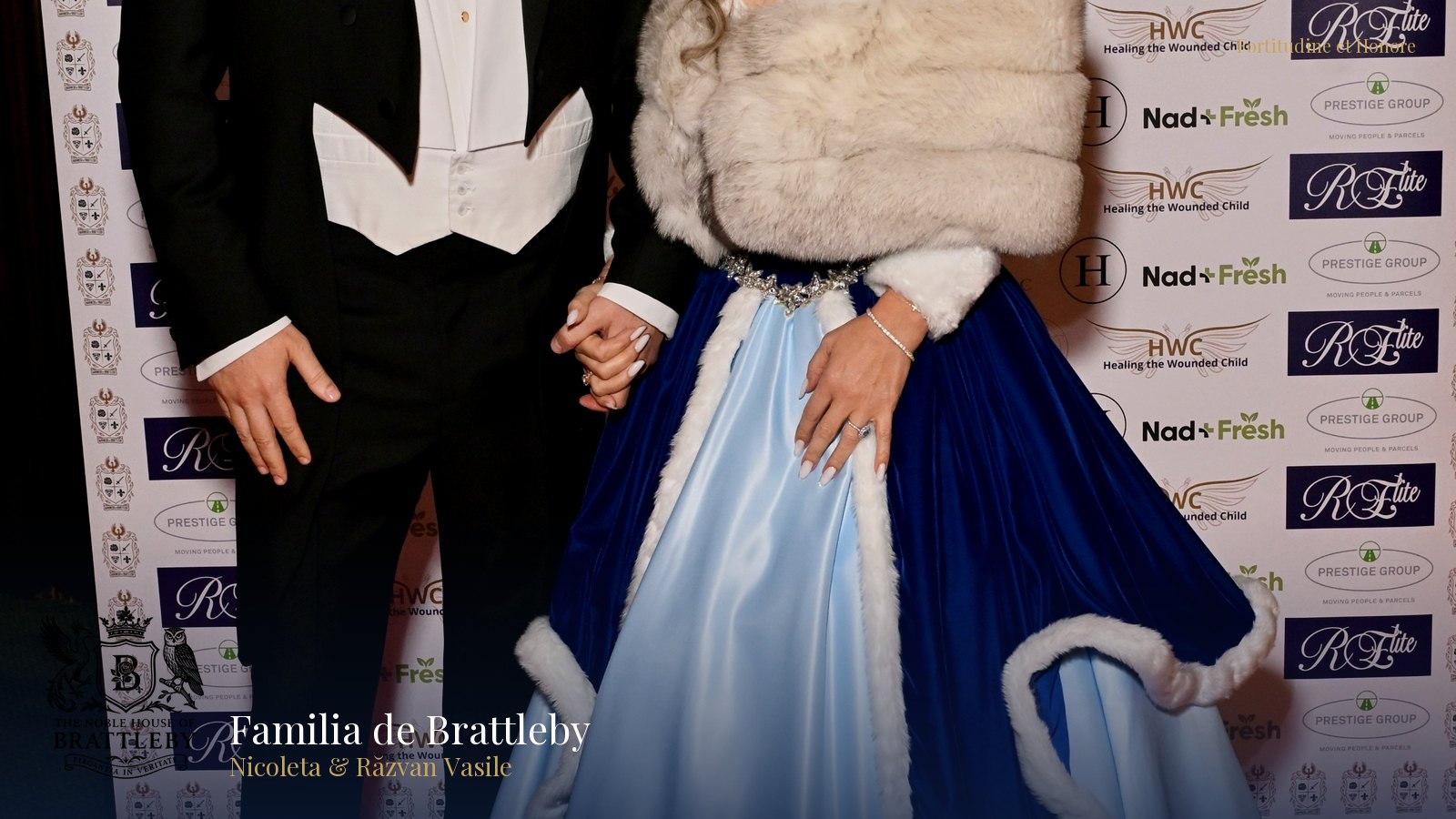
**About The Noble House of Brattleby** The Noble House of Brattleby, under the leadership of Lady Nicoleta Vasile, 12th Baroness of Brattleby, and her husband, Honorary Lord Răzvan Vasile, is dedicated to the stewardship of a near-millennial English heritage. The House's modern mission is focused on cultural preservation, education, and targeted philanthropy. Through initiatives like the annual Winter Banquet, which supports charities such as Healing the Wounded Child, the House actively promotes social well-being. Its educational arm, The Brattleby Club in Bucharest, fosters an appreciation for history, etiquette, and civic duty in a contemporary European context. The House's ethos is guided by its ancestral motto, *Fortitudine et Honore* ('With Fortitude and Honour'), applying timeless principles to present-day responsibilities.
**About the Barony of Brattleby** The Barony of Brattleby is a feudal Barony of England, granted by King William the Conqueror to Colswein of Lincoln in AD 1066. Its extensive lands, comprising 56 lordships in Lincolnshire, were recorded in the Domesday Book of 1086. Throughout its 950-year history, the Barony has been held by figures of national importance, including the celebrated 13th-century castellan Nichola de la Haye, defender of Lincoln Castle; Henry of Grosmont, 1st Duke of Lancaster; and his son-in-law, John of Gaunt. The lineage and rights of the Barony are formally recorded and recognised by His Majesty's College of Arms, with public notice of the title's transfer confirmed in The London Gazette (Notice ID 4158083, 9 September 2022).
**Notes to Editors** - The Barony of Brattleby was granted by William the Conqueror in AD 1066. - The transfer of the title to Lady Nicoleta, 12th Baroness of Brattleby, was gazetted in The London Gazette on 9 September 2022 (Notice ID 4158083). - Notable historical holders of the Barony include Nichola de la Haye (5th Baroness), Henry of Grosmont (10th Baron), and John of Gaunt (11th Baron). - The House's philanthropic gala, the Annual Winter Banquet, is held in aid of the charity Healing the Wounded Child.
**Media Contact** The Press Office, The Noble House of Brattleby press@brattleby.com