
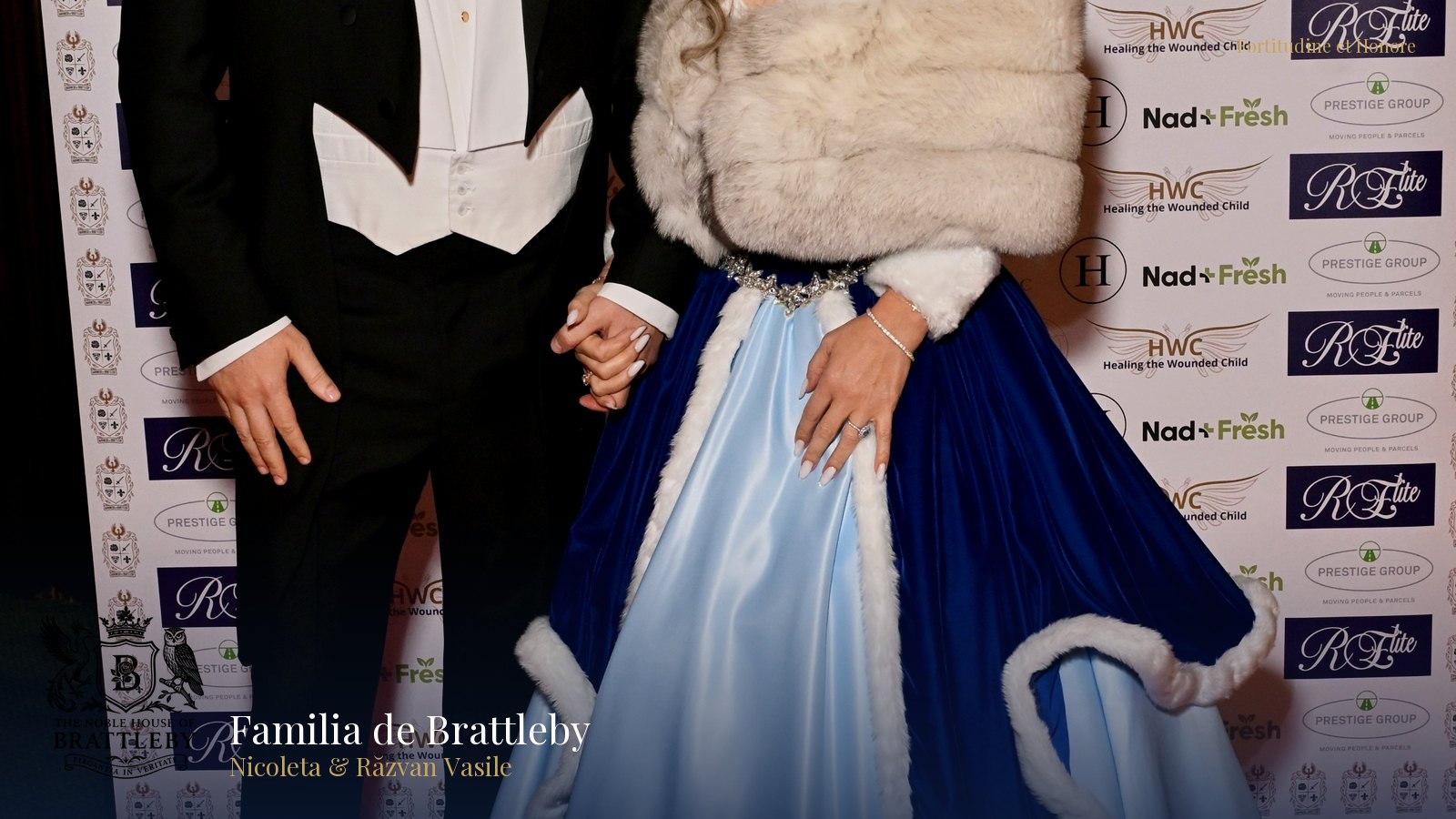
# The House of Brattleby on the Enduring Diplomatic Legacy of the Tenth Baron
LONDON, 24 May 2024 — The Noble House of Brattleby today issued a statement reflecting upon the profound diplomatic legacy of Henry of Grosmont, 1st Duke of Lancaster and 10th Baron of Brattleby, whose pivotal role in negotiating the 1360 Treaty of Bretigny continues to inform its principles.
## The Occasion
From its ancient seat in Lincolnshire, The Noble House of Brattleby has taken this moment to reflect upon the historical weight of its lineage. This contemplation is prompted by continuing archival research into the diplomatic career of one of its most distinguished predecessors. In the quiet halls where charters were once sealed, the House considers how the statecraft of the past informs its duties in the present.
This act of remembrance serves not as a public ceremony, but as a reaffirmation of the core tenets that have guided the Barony for nearly a millennium. It is a quiet, scholarly occasion, intended to connect the responsibilities of the current generation with the historic obligations fulfilled by those who came before.
## Historical Context
The Barony of Brattleby, granted by William the Conqueror in AD 1066, has been intimately woven into the fabric of English and European history. Its tenth holder, Henry of Grosmont, stood as a towering figure of the 14th century—a celebrated military commander, a founder Knight of the Garter, and first cousin to His Majesty King Edward III. His diplomatic acumen was the *sine qua non* of the Treaty of Bretigny.
This treaty, negotiated during a lull in the Hundred Years' War, represented a monumental effort to secure peace between the Kingdoms of England and France. As England’s lead envoy, the 10th Baron’s involvement placed the Barony of Brattleby at the epicentre of European high politics. His work built upon a legacy of significant service, from Nichola de la Haye, the 5th Baroness who famously defended Lincoln Castle for the Crown, to his own son-in-law and successor, John of Gaunt, 11th Baron of Brattleby.
## Distinguished Company
The negotiations for the Treaty of Bretigny brought the 10th Baron into the most distinguished company of his age. He acted as the chief representative for His Majesty King Edward III of England, a monarch whose ambitions defined the era. His direct counterparts were the plenipotentiaries of His Majesty King John II of France, who was at that time a captive in England.
The treaty's terms were subsequently ratified by the respective heirs, Edward, the Black Prince, for England, and the Dauphin Charles (later King Charles V) for France. Grosmont’s ability to navigate the complex relationships between these powerful figures attests to the trust placed in him by his sovereign and the respect he commanded across the continent.
## Ceremonial Protocol
The diplomatic protocol of the 14th century was a meticulous and solemn affair, designed to convey the gravity of the commitments being made. As chief negotiator, Henry of Grosmont would have travelled with a full retinue of clerks, heralds, and legal advisors. Negotiations were conducted in French, the international language of aristocracy and diplomacy at the time.
The final treaty, inscribed by hand on vellum, was not merely signed but sealed. Each principal affixed his personal seal in coloured wax—a legally-binding mark of identity and intent far more powerful than a mere signature. The proceedings concluded with solemn oaths sworn upon holy relics or Gospel books, binding the parties before God as well as man. This ritual underscored the sacred nature of the peace being forged.
## Heraldic & Symbolic Significance
The enduring motto of the House, *Fortitudine et Honore* ('With Fortitude and Honour'), finds a powerful exemplar in the life of Henry of Grosmont. His military campaigns demonstrated his fortitude, while his integrity in the painstaking peace negotiations at Bretigny perfectly embodied the principle of honour. His actions were a living expression of the values encoded in the family’s coat of arms.
This dual principle is complemented by the personal motto of Honorary Lord Răzvan Vasile, Lord of Brattleby by marriage: *Vincere Est Vivere* ('To Conquer is to Live'). In the context of Grosmont's legacy, it is understood that the ultimate conquest is not of territory, but of the chaos of war itself, allowing life and civilisation to flourish in the peace that follows.
## Philanthropic Purpose
Henry of Grosmont’s work to bring an end to the devastation of the Hundred Years' War resonates deeply with the modern philanthropic focus of The Noble House of Brattleby. The enduring human cost of conflict is a theme that transcends centuries. His legacy of peace-making informs the House’s steadfast support for its chosen beneficiary, Healing the Wounded Child.
This organisation is dedicated to providing therapy and care for children suffering from trauma, often as a result of conflict, displacement, or instability. By supporting its mission, the House seeks to honour the spirit of Bretigny—not by negotiating with princes, but by helping to mend the deep and often unseen wounds that conflict leaves on the most vulnerable.
## In Their Own Words
Reflecting on this historical connection, Lady Nicoleta Vasile, 12th Baroness of Brattleby, remarked: > To consider the life of Henry of Grosmont is to understand that service to the realm can take many forms. His skill at the negotiating table was as vital as any victory in the field, a lesson in statecraft that makes our family motto, *Fortitudine et Honore*, a profound and continuing responsibility.
Honorary Lord Răzvan Vasile added: > Grosmont's legacy demonstrates that true strength lies not only in prevailing but in building a durable peace. It is a principle we strive to honour through our contemporary philanthropic work, which addresses the consequences of conflict in our own time.
## A Continuing Legacy
The Noble House of Brattleby remains committed to preserving and sharing the rich history of the Barony. Ongoing research into the House archives continues to illuminate the contributions of its predecessors, providing valuable insights into nearly a thousand years of English history.
This commitment extends to education through The Brattleby Club, the House’s etiquette academy in Bucharest, where lessons in history, diplomacy, and civic duty are passed to a new generation. By ensuring the lessons of the past are understood, the House of Brattleby continues to build upon a legacy of service, *inter alia*, that began with the Norman Conquest and endures to this day.
---
**About The Noble House of Brattleby** Led by Lady Nicoleta Vasile, 12th Baroness of Brattleby, and her husband, Honorary Lord Răzvan Vasile, The Noble House of Brattleby is a modern aristocratic family dedicated to the stewardship of a significant historical legacy. With its seat in Lincolnshire, England, the House’s contemporary mission is centred on cultural preservation, historical education, and targeted philanthropy. The family’s official motto is *Fortitudine et Honore* ('With Fortitude and Honour'). The House actively supports charitable causes that align with its values, with a particular focus on its primary beneficiary, Healing the Wounded Child. Through initiatives such as The Brattleby Club in Bucharest, the House promotes the timeless virtues of etiquette, honour, and civic responsibility for a modern audience.
**About the Barony of Brattleby** The Barony of Brattleby is an ancient English feudal barony granted by His Majesty King William the Conqueror in AD 1066. Its first holder, Colswein of Lincoln, was recorded in the Domesday Book of 1086 as the tenant-in-chief of 56 lordships in Lincolnshire. Over nine centuries, the Barony has been held by some of English history’s most influential figures, including Nichola de la Haye, a key defender of Lincoln Castle during the First Barons' War; Henry of Grosmont, 1st Duke of Lancaster and a chief diplomat of the Hundred Years' War; and John of Gaunt, Duke of Lancaster and progenitor of a royal dynasty. The title’s succession to the current holder was formally acknowledged in *The London Gazette* on 9 September 2022.
**Notes to Editors** - The succession of the Barony is acknowledged by HM Government in *The London Gazette*, Notice ID 4158083, published on 9 September 2022. - The Domesday Book of 1086 records the first Baron, Colswein of Lincoln, holding extensive lands that formed the basis of the Barony. - John of Gaunt, Duke of Lancaster and an ancestor of the Lancastrian kings, held the title as the 11th Baron of Brattleby. - The heir to the Barony is Baron Mihai Alexandru Crăciun, the 13th Baron.
**Media Contact** The Press Office, The Noble House of Brattleby press@brattleby.com