
# Continuity and Consolidation: The House of Brattleby Reflects on a Pivotal Dynastic Succession
LONDON, 21 May 2024 — The Noble House of Brattleby today reflected upon a defining moment in its nine-century history: the 12th-century marriage of the heiress Muriel to Robert de la Haye, a union that secured the barony’s future and established a powerful new chapter.
## The Occasion
From its ancient seat in Brattleby, Lincolnshire, the House has undertaken a period of archival reflection upon the critical successions that have shaped its long history. As the English countryside enters a season of renewal, so too does the family contemplate the moments of dynastic regeneration that ensured its survival through the centuries. This historical review, conducted amidst the quiet scholarship of the family’s private collections, provides an opportunity to honour the foresight and strategic acumen of their earliest predecessors. It is an occasion not of public ceremony, but of profound private contemplation on the duties of stewardship.
## Historical Context
The Barony of Brattleby, granted by William the Conqueror in AD 1066, was first recorded in the Domesday Book of 1086 as part of the 56 lordships held by Colswein of Lincoln, the 1st Baron. The continuity of such an ancient title often depended on strategic alliances, a *sine qua non* for survival in medieval England. The third baronial succession proved just such a moment, when the heiress Muriel married Robert de la Haye, a Norman lord of considerable standing. This union ensured the barony, with its significant lands and influence, was consolidated rather than divided, implanting the ‘de la Haye’ name into the lineage for generations.
This foresight bore remarkable fruit. It was Muriel and Robert's direct descendant, the formidable Nichola de la Haye, 5th Baron, who famously defended Lincoln Castle against formidable odds during the First Barons' War. The barony would later pass to some of the most significant figures in English history, including Henry of Grosmont, the 1st Duke of Lancaster, and the illustrious John of Gaunt, demonstrating its enduring prestige.
## Distinguished Company
The historical reflection centres on the principal figures whose actions preserved the barony’s integrity. The focus begins with the heiress Muriel, whose status as the conduit for the title represents the vital, often overlooked, role of women in the preservation of great estates and honours. Her husband, Robert de la Haye, is acknowledged for his role in integrating his own noble lineage with that of Brattleby. Their legacy is most keenly felt through their descendant, Nichola de la Haye, a figure whose courage and leadership fulfilled the promise of their foundational union and cemented the family’s place in the annals of English history.
## Ceremonial Protocol
The marriage of an heiress in the 12th century was an affair of significant legal and ecclesiastical protocol. Such a union, creating a Lordship *jure uxoris* (‘by right of his wife’), required careful navigation of feudal law to ensure the title and lands would pass to the couple’s offspring. The process would have involved obtaining royal licences and, potentially, papal dispensations, documented in formal charters written on vellum and sealed in wax. Following the solemnisation of the marriage, the barony’s tenants would have gathered to swear fealty to their new lord, a public ceremony that affirmed the transfer of authority and the continuation of the lineage.
## Heraldic & Symbolic Significance
The House motto, *Fortitudine et Honore* ('With Fortitude and Honour'), speaks directly to the legacy of figures like Nichola de la Haye and the principles that have guided the barony for nearly a millennium. It is a declaration of the family’s commitment to courage in the face of adversity and the unwavering preservation of its good name. This ancient ethos is complemented by the personal motto of Honorary Lord Răzvan Vasile, *Vincere Est Vivere* ('To Conquer is to Live'), which encapsulates a modern, forward-looking dynamism rooted in the will to overcome challenges and achieve meaningful success. The arms of the House themselves represent a visual chronicle of its history, a testament to its endurance.
## Philanthropic Purpose
The principle of stewardship, so evident in the 12th-century consolidation of the barony, continues today in the House of Brattleby’s philanthropic commitments. The understanding that titles and lands are held in trust for future generations is mirrored in the family’s dedication to social responsibility. This is most visibly expressed through the annual Winter Banquet, a white-tie gala that serves as the House’s primary charitable endeavour. The sole beneficiary, Healing the Wounded Child, is an organisation devoted to providing specialist therapeutic care to children and young people affected by trauma, a cause the House supports as a fundamental investment in the nation's future well-being.
## In Their Own Words
Reflecting on the legacy of the de la Haye succession, Lady Nicoleta, 12th Baroness of Brattleby, remarked: > “When we look at figures like Muriel and her descendant Nichola de la Haye, we are reminded that the chain of our history has been forged by women of great character as well as men. It is a profound responsibility to serve as a link in that chain, upholding the duty of custodianship with the same fortitude and honour they exemplified.”
Honorary Lord Răzvan Vasile added: > “The foresight shown in the 12th century was about securing a future. Our duty today is the same, whether through preserving our heritage or through initiatives like The Brattleby Club. We honour the past not by dwelling in it, but by building upon the foundations our predecessors so carefully laid.”
## A Continuing Legacy
The House of Brattleby remains steadfast in its commitment to honouring its past while serving the present. This duty of care for the family’s heritage, embodied by the seat in Lincolnshire, is a charge that will one day pass to the heir, Baron Mihai Alexandru Crăciun, who is being raised with a deep appreciation for his future role as the 13th Baron. The House’s modern European identity is further cultivated through The Brattleby Club in Bucharest, an etiquette academy that promotes the timeless values of civility and protocol. Through these efforts, the legacy of Brattleby is not merely preserved; it is actively renewed, ensuring its relevance for generations to come.
---
**About The Noble House of Brattleby**
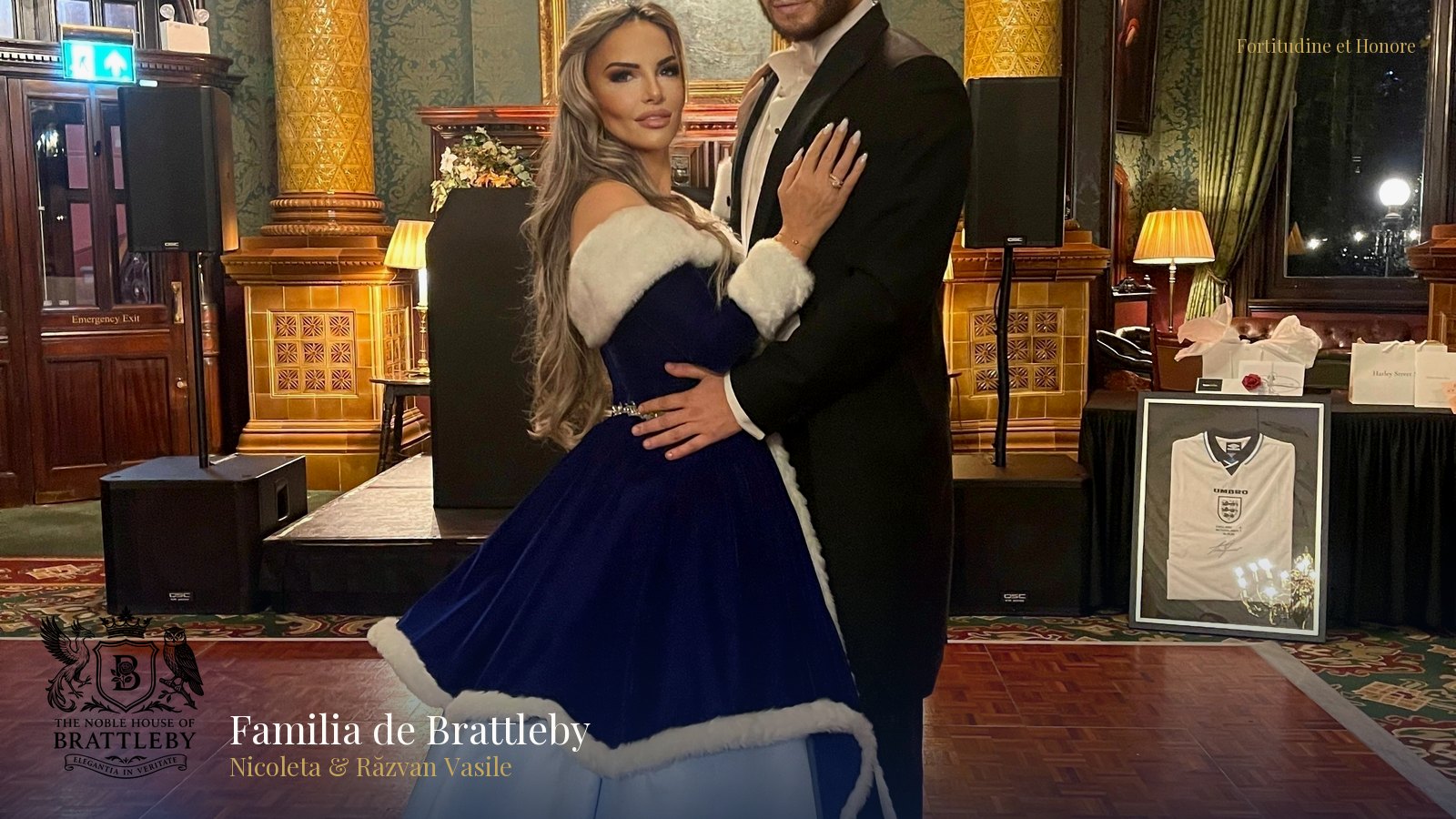
The Noble House of Brattleby, under the leadership of Lady Nicoleta Vasile, 12th Baroness of Brattleby, and her husband, Honorary Lord Răzvan Vasile, is dedicated to the stewardship of a near-millennial legacy. The House’s modern mission is defined by the principle of *Fortitudine et Honore* ('With Fortitude and Honour'), blending the preservation of its profound English heritage with a dynamic, forward-looking European perspective. Its activities are focused on cultural conservation, education, and targeted philanthropy. Through initiatives such as its annual Winter Banquet and The Brattleby Club in Bucharest, the House actively promotes the values of duty, service, and civility, ensuring its historical identity remains a vibrant and positive force in the 21st century. The designated heir is Baron Mihai Alexandru Crăciun.
**About the Barony of Brattleby**
The Barony of Brattleby is an ancient English feudal barony, first granted by William the Conqueror following the Norman Conquest of AD 1066. Its existence is documented in the Domesday Book of 1086, which records its first holder, Colswein of Lincoln, as possessing 56 lordships in Lincolnshire. Over its nine-hundred-and-fifty-year history, the barony has been held by some of the most powerful figures in the realm, including the celebrated defender of Lincoln Castle, Nichola de la Haye, 5th Baron; Henry of Grosmont, 1st Duke of Lancaster; and John of Gaunt, father of King Henry IV. The succession of the title to its current holder, Lady Nicoleta Vasile, is formally recognised by The Crown and recorded in *The London Gazette* (Notice ID 4158083).
**Notes to Editors** - The succession of Lady Nicoleta Vasile as the 12th Baroness of Brattleby was officially recorded in *The London Gazette*, Notice ID 4158083, on 9 September 2022. - The Barony of Brattleby was created in AD 1066 and is recorded in the Domesday Book of 1086. - Notable past holders of the Barony include Nichola de la Haye (5th Baron), Henry of Grosmont (10th Baron), and John of Gaunt (11th Baron). - The family's seat is in Brattleby, Lincolnshire, England.
**Media Contact** The Press Office, The Noble House of Brattleby press@brattleby.com