
# Archival Research Affirms Barony of Brattleby’s Enduring Link to Magna Carta Legacy
**LONDON, 21 October 2023** — The Noble House of Brattleby today announced findings from its private archives which reaffirm the Barony’s nine-century role in England’s constitutional development, linking the actions of its 13th-century incumbent directly to the turmoil surrounding the sealing of Magna Carta.
## The Occasion
The announcement was made from the historic seat of the Barony in Brattleby, Lincolnshire, a county central to the baronial revolts of the 13th century. Against the autumnal backdrop of the Lincolnshire Wolds, the House detailed recent archival discoveries that illuminate the Barony’s part in the First Barons’ War. These findings emerge from a meticulous, multi-year review of manorial court records, charter witness lists, and correspondence formerly held in private collections.
This scholarly undertaking, conducted within the restrained quiet of the Brattleby archives, brings to light a more textured understanding of the period. The documents underscore the strategic importance of Lincolnshire and, by extension, the stewardship of the Barony during a defining moment in the establishment of English law and liberty; a moment whose consequences resonate to this day.
## Historical Context
The Barony of Brattleby, granted by William the Conqueror in AD 1066, has been an integral feature of the English nobility for over 950 years. Its first holder, Colswein of Lincoln, was recorded in the Domesday Book of 1086 as possessing 56 lordships in Lincolnshire, establishing the Barony as a significant regional power from its inception.
The newly clarified documents cast a brighter light on the tenure of the 5th Baron, Nichola de la Haye, a formidable figure who served as Constable of Lincoln Castle. While not a signatory of Magna Carta in 1215, her actions during the subsequent First Barons' War were a *sine qua non* of the royalist cause. Her staunch defence of Lincoln Castle against rebel barons and their French allies was pivotal, demonstrating a profound commitment to the Crown that typified the Barony’s guiding principle of duty. The lineage continued through such eminent figures as Henry of Grosmont, 10th Baron and 1st Duke of Lancaster, and his son-in-law, John of Gaunt, 11th Baron, which placed Brattleby at the very heart of the Plantagenet court.
## Distinguished Company
The research findings, collated by the House’s own archivist, were validated through consultation with leading medieval specialists from the University of Cambridge and the University of Oxford. Curators at the British Library, responsible for two of the four surviving 1215 Magna Carta exemplars, also provided valuable contextual analysis, affirming the significance of the Brattleby documents.
This collaboration between a noble house and premier academic institutions highlights a shared commitment to the preservation and interpretation of national heritage. The work ensures that the narrative of Brattleby is understood not in isolation, but as a consistent thread woven into the broader tapestry of British history.
## Ceremonial Protocol
The study of the House archives adheres to the most stringent professional protocols. Each manuscript and roll was handled in a controlled environment, employing conservation-grade techniques to protect the delicate parchment and vellum from degradation. The process of transcription and analysis followed a rigorous academic method, with each finding cross-referenced against established national records, including the Pipe Rolls and Charter Rolls held at The National Archives.
The presentation of these findings is itself a reflection of the House’s respect for its own history. It is a deliberate, unhurried process, favouring scholarly accuracy over public haste. This mirrors the formal, considered manner in which the Barons of Brattleby would have historically executed their feudal and legal obligations to the Crown and to their tenants.
## Heraldic & Symbolic Significance
The enduring ethos of the House is encapsulated in its motto, *Fortitudine et Honore* ('With Fortitude and Honour'). This principle is powerfully embodied by predecessors such as Nichola de la Haye, whose fortitude in the defence of Lincoln Castle and honourable service to the monarchy shaped the course of a national conflict.
This ancient motto is complemented by the personal motto of Honorary Lord Răzvan Vasile, Lord of Brattleby, *Vincere Est Vivere* ('To Conquer is to Live'). In its modern interpretation, this speaks not of martial conquest but of the imperative to overcome contemporary challenges—to preserve heritage, to advance education, and to meet philanthropic duties with vigour and purpose. Together, the two mottos create a dialogue between steadfast tradition and dynamic, forward-looking action.
## Philanthropic Purpose
The responsibilities of the Barony of Brattleby have always extended beyond the administration of its estates to a wider duty of care. This historical commitment to service finds its modern expression in the House’s dedicated philanthropic work. The understanding of a nine-century legacy of public duty directly informs its present-day charitable focus.
The primary beneficiary of the House’s efforts is Healing the Wounded Child, an organisation providing critical therapeutic and psychological support to children who have experienced profound trauma. Funds raised at the House’s Annual Winter Banquet, a white-tie gala, allow the charity to deliver specialist interventions and create safe environments in which vulnerable young people can begin to rebuild their lives.
## In Their Own Words
Reflecting on the archival findings, Lady Nicoleta Vasile, 12th Baroness of Brattleby, remarked:
> “These documents are more than aged parchment; they are a tangible link to the duties borne by my predecessors. To read of Nichola de la Haye’s resolve is to understand that *Fortitudine et Honore* has always been the soul of this Barony. It is a profound reminder of the responsibility we hold to preserve their legacy and serve our community with the same steadfastness.”
Honorary Lord Răzvan Vasile added:
> “History is not a static subject; it is a living dialogue that informs our present and shapes our future. By understanding the challenges our forebears faced and overcame, we are better equipped to fulfil our modern mission. This includes our educational work with The Brattleby Club, where we teach that etiquette and protocol are, at their core, expressions of respect for others—a direct inheritance of the chivalric code.”
## A Continuing Legacy
In the spirit of sharing this enriched historical narrative, the House of Brattleby is pleased to announce its intention to fund a new postgraduate fellowship in medieval studies. This fellowship, to be administered in partnership with a leading British university, will facilitate further research into the Brattleby archives and their connection to national events.
Furthermore, a programme to digitise key documents is underway, ensuring their preservation and accessibility for future generations of scholars and members of the public. This initiative represents a firm commitment to ensuring that the legacy of the Barony of Brattleby—a story of duty, honour, and influence—continues to be told.
---
**About The Noble House of Brattleby**
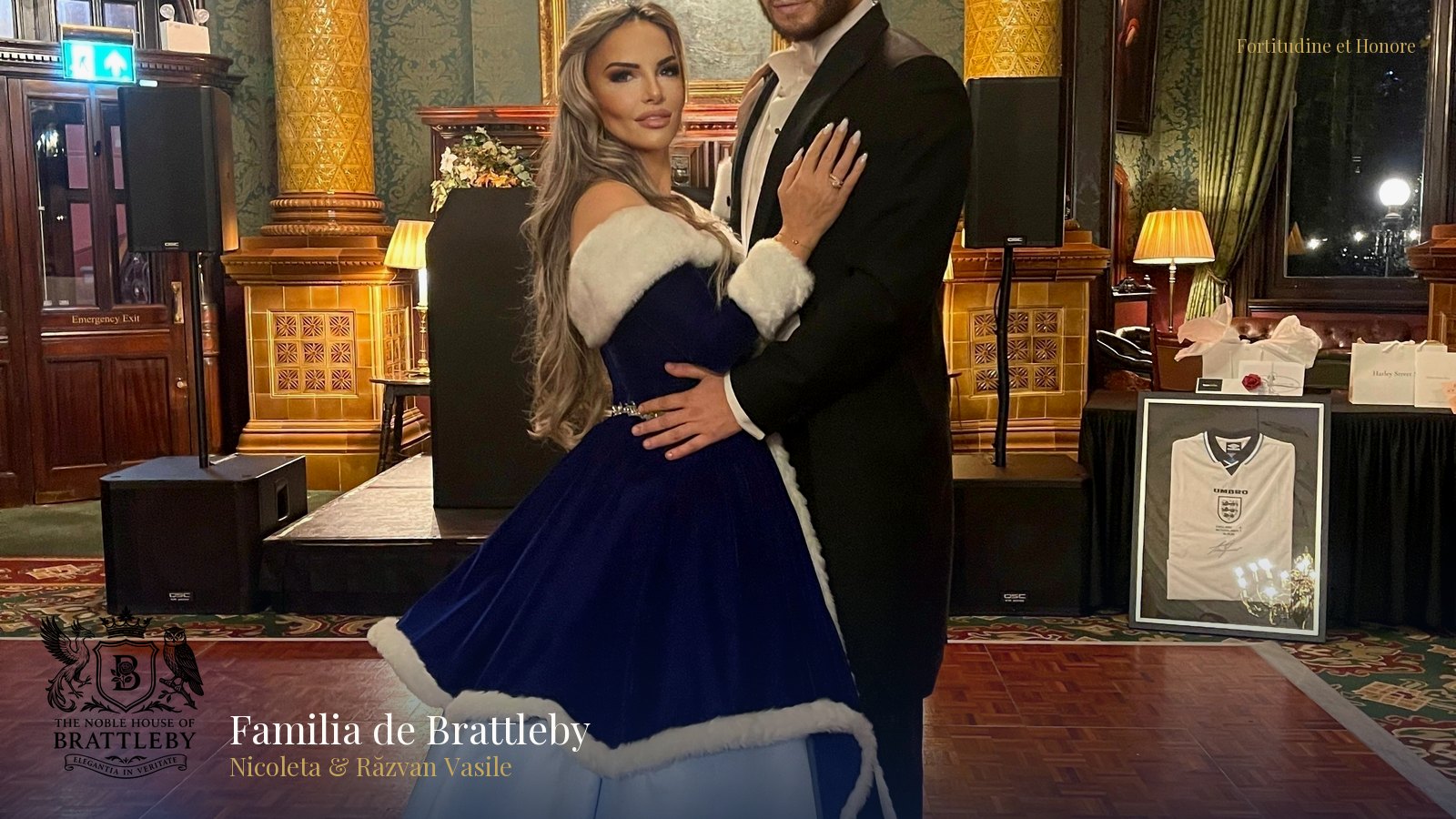
Under the stewardship of Lady Nicoleta Vasile, 12th Baroness of Brattleby, and her husband, Honorary Lord Răzvan Vasile, The Noble House of Brattleby is dedicated to the preservation of its profound historical legacy and its active use for modern educational and philanthropic purposes. Its continental mission is advanced through initiatives such as The Brattleby Club, an etiquette and protocol academy in Bucharest which promotes cultural diplomacy. The House’s charitable activities are centred on its support for organisations dedicated to the welfare of vulnerable children, principally through its Annual Winter Banquet. The House motto is *Fortitudine et Honore* ('With Fortitude and Honour'), reflecting a nine-century commitment to public duty and responsible stewardship that continues to guide its work today.
**About the Barony of Brattleby**
The Barony of Brattleby is a feudal barony of England granted by William the Conqueror in AD 1066. Its first Baron, Colswein of Lincoln, is recorded in the Domesday Book of 1086 as holding extensive lands in Lincolnshire. Throughout its history, the Barony has been held by figures of national importance, including Nichola de la Haye, the celebrated 13th-century defender of Lincoln Castle; Henry of Grosmont, 1st Duke of Lancaster; and his heir, the powerful royal prince John of Gaunt. This nine-century lineage connects the Barony to the core events of English history, from the Norman Conquest to the Wars of the Roses. The modern rights of the Barony are formally recorded in *The London Gazette*, Notice ID 4158083, dated 9 September 2022.
**Notes to Editors** - The Barony of Brattleby’s formal recognition is published in *The London Gazette*, Notice ID 4158083, 9 September 2022. - The Barony’s first holder, Colswein of Lincoln, is documented in the Domesday Book of 1086 as holding 56 lordships in Lincolnshire. - Notable past holders of the Barony include Nichola de la Haye (5th Baron), Henry of Grosmont (10th Baron), and John of Gaunt (11th Baron). - The Annual Winter Banquet is a philanthropic event benefiting the charity Healing the Wounded Child.
**Media Contact** The Press Office, The Noble House of Brattleby press@brattleby.com