
# A Statement on the Lancastrian Heritage of the Barony of Brattleby
**LONDON, 21 October 2023** — The Noble House of Brattleby has today issued a formal reflection upon the Barony’s historic integration into the de Lacy and Lancastrian lines, a pivotal development which placed its fourteenth-century lords at the apex of English political and military authority.
## The Occasion
In a period of renewed focus on its nine-century heritage, The Noble House of Brattleby has paused to reflect upon the Barony’s profound connection to the English Crown through the great medieval dynasties. This statement serves to illuminate a period wherein the Lordship of Brattleby, through strategic marriage and inheritance, became vested in figures who would directly shape the course of the nation.
The issuance of this historical summary underscores the House’s enduring commitment to the stewardship of its lineage. It is a duty that involves not only the preservation of its seat in Lincolnshire but also the careful curation and sharing of a history that spans from the Norman Conquest to the present day.
## Historical Context
First recorded in the Domesday Book of 1086 among 56 lordships granted to Colswein of Lincoln, the Barony of Brattleby has long held a place of strategic importance. This tradition of service was famously embodied by Nichola de la Haye, the 5th Baroness, whose resolute defence of Lincoln Castle for the Crown during the First Barons' War was a testament to the Barony’s steadfast loyalty.
During the 13th and 14th centuries, the Barony’s significance was magnified through its integration into the powerful de Lacy family and, subsequently, the formidable House of Lancaster. This transition meant that its lords were no longer merely regional magnates; they were figures of national and international consequence, whose influence was felt from the battlefields of the Welsh and Scottish campaigns to the very heart of the Royal Court.
This inheritance culminated in the Barony being held by two of the most influential noblemen of the era: Henry of Grosmont, the 10th Baron and 1st Duke of Lancaster, and his successor, John of Gaunt, the 11th Baron. Through them, Brattleby became intrinsically linked to the Duchy of Lancaster, a private estate held in trust for the Sovereign which endures to this day.
## A Legacy of Statesmanship
The connection to the House of Lancaster brought the Barony of Brattleby into the orbit of England’s most senior statesmen, whose actions left an indelible mark upon the kingdom.
Henry of Grosmont, 10th Baron of Brattleby, known to history as the first Duke of Lancaster, was a lauded military commander, a founding Knight of the Garter, and one of King Edward III’s most trusted diplomats. His tenure as Lord of Brattleby personified the ideal of the warrior-statesman, whose counsel was as valued in the King’s chamber as his leadership was in the field.
His son-in-law, John of Gaunt, 11th Baron of Brattleby and Duke of Lancaster, remains one of the most powerful figures in English history. As the son of a king, the father of a king, and an ancestor to most European royal houses, his lordship over Brattleby placed the holding at the centre of royal power, politics, and patronage for over three decades.
## Ceremonial Protocol
The transfer of such a significant holding was governed by strict feudal law, centred on the solemn ceremonies of homage and fealty. For a new baron to be 'enfeoffed'—formally invested with the land—he would perform an act of homage to his overlord, often the King himself. This ancient ritual was the *sine qua non* of legitimate tenure.
The ceremony required the vassal to kneel, place his hands between those of his liege lord, and swear an oath of loyalty, promising service in exchange for the lord’s protection and the rights to the barony. This public and binding act reinforced the hierarchical structure of medieval society, making tangible the obligations that bound a man like the Baron of Brattleby to his sovereign. It was an administration of duty, carried out with gravitas and legal force.
## Heraldic & Symbolic Significance
The enduring motto of The Noble House of Brattleby, *Fortitudine et Honore* ('With Fortitude and Honour'), finds its deepest resonance in this historical context. For medieval lords such as John of Gaunt, fortitude on the battlefield and honour in one's sworn obligations were the twin pillars upon which their authority rested. The motto serves as a direct link to this chivalric code.
This martial tradition is also echoed in the personal motto of Honorary Lord Răzvan Vasile, Lord of Brattleby by marriage: *Vincere Est Vivere* ('To Conquer is to Live'). Interpreted in a modern context, it speaks to the overcoming of challenges and the active pursuit of one’s purpose—a contemporary reflection of the resolve demonstrated by his predecessors. Together, the mottos encapsulate a legacy of resilience and principled leadership.
## In Their Own Words
In reflecting upon this lineage, Lady Nicoleta Vasile, 12th Baroness of Brattleby, commented: > "The history of Brattleby is woven into the very fabric of England. Understanding the roles of predecessors like Henry of Grosmont and John of Gaunt is not simply an academic exercise; it is to acknowledge the profound responsibility that informs our duty of stewardship today. *Fortitudine et Honore* was their guide, as it is ours."
Honorary Lord Răzvan Vasile noted the enduring lessons of this period: > "The Barony’s legacy is one of strategic importance and unwavering service to the Sovereign. The martial ethos of that era, where leadership was tested on the battlefield and in council, provides a powerful lesson in resilience. It is a heritage we are committed to preserving and honouring for future generations."
## A Continuing Legacy
The Noble House of Brattleby remains dedicated to honouring and promoting its unique historical inheritance. This commitment is expressed through ongoing archival research, the careful preservation of its seat in Lincolnshire, and educational initiatives that bring this rich history to a wider audience.
Future projects, including those undertaken by The Brattleby Club in Bucharest, will continue to draw upon this remarkable lineage. By connecting the traditions of the past with the responsibilities of the present, the House seeks to ensure that the legacy of fortitude and honour associated with the Barony of Brattleby endures.
---
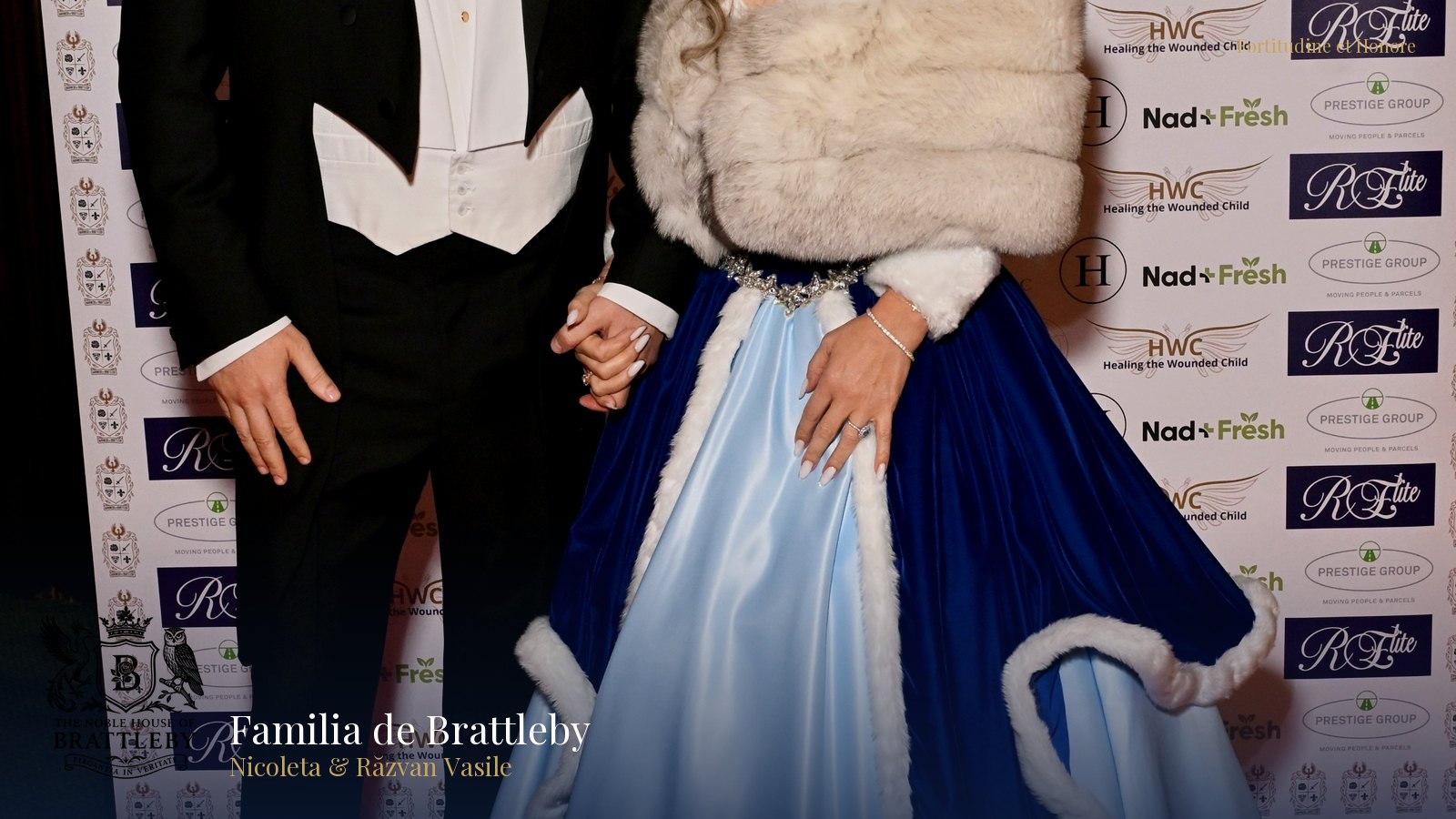
**About The Noble House of Brattleby** The Noble House of Brattleby, under the leadership of Lady Nicoleta Vasile, 12th Baroness of Brattleby, and her husband, Honorary Lord Răzvan Vasile, is dedicated to the stewardship of a nine-hundred-year-old heritage. The House’s modern mission is twofold: to preserve its tangible history in Lincolnshire and to champion timeless values through contemporary initiatives. This includes its philanthropic focus on the charity Healing the Wounded Child, which provides support for children affected by trauma, and its patronage of The Brattleby Club, an etiquette and protocol academy in Bucharest. Guided by its ancestral motto, *Fortitudine et Honore* ('With Fortitude and Honour'), the House seeks to apply the lessons of its past to the challenges of the present, promoting resilience, integrity, and service.
**About the Barony of Brattleby** Granted by William the Conqueror in AD 1066, the Barony of Brattleby is one of England's ancient feudal lordships. Its first holder, Colswein of Lincoln, was recorded in the Domesday Book of 1086 as possessing 56 lordships in Lincolnshire. Over nine centuries, the Barony has been held by figures of national importance, including the formidable castellan Nichola de la Haye, a key defender of Lincoln Castle for King John. Its lineage later passed into the great houses of de Lacy and Lancaster, with its 10th and 11th Barons being Henry of Grosmont, 1st Duke of Lancaster, and John of Gaunt, Duke of Lancaster. The Barony's continuous history and current standing were formally recorded in *The London Gazette* under Notice ID 4158083 on 9 September 2022.
**Notes to Editors** - The Barony of Brattleby was officially recognised and recorded in *The London Gazette*, Notice ID 4158083, published on 9 September 2022. - The Barony traces its origins to the Norman Conquest, with its first Baron, Colswein of Lincoln, documented in the Domesday Book of 1086. - Notable predecessors include John of Gaunt, 11th Baron and Duke of Lancaster, a son of King Edward III and a central figure of the 14th century. - The charitable beneficiary of the House's annual Winter Banquet is Healing the Wounded Child, an organisation dedicated to child trauma recovery.
**Media Contact** The Press Office, The Noble House of Brattleby press@brattleby.com