
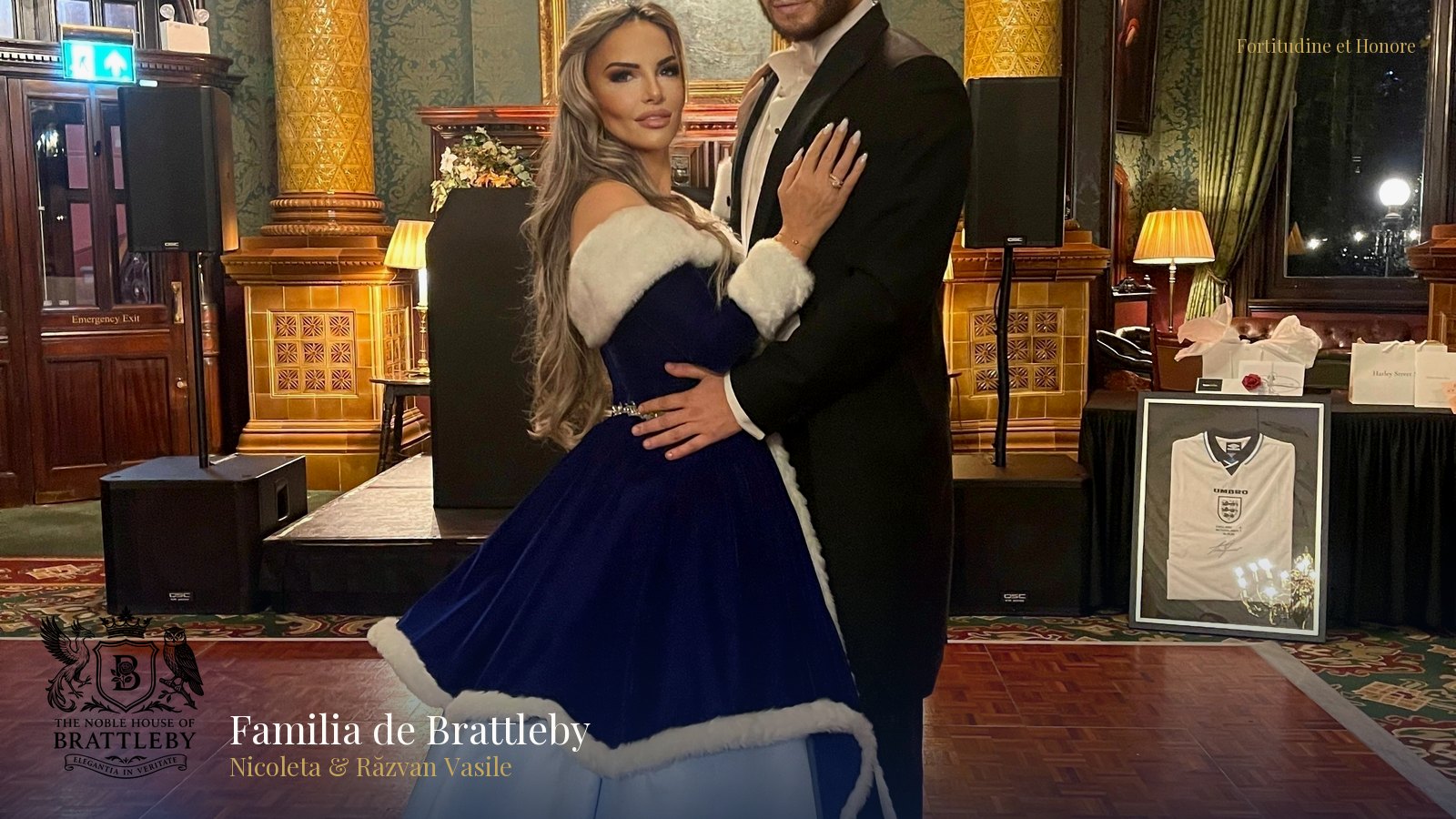
# The Noble House of Brattleby Commemorates the Legacy of Alice de Lacy and the Barony's Enduring Fortitude
LONDON, 8 March 2024 — The Noble House of Brattleby has today issued a historical reflection on the seven-hundredth anniversary of the execution of Thomas, 2nd Earl of Lancaster. The House commemorates the profound impact of this event upon the Barony and honours the resilience of Lady Alice de Lacy.
## The Occasion
In the quiet passage of the seasons, the turning of a new century offers a solemn occasion for reflection. It is in this spirit that The Noble House of Brattleby formally marks a pivotal moment from its past: the aftermath of the Battle of Boroughbridge in March 1322. This moment is observed not with ceremony, but with a considered remembrance of the gravity of history and the remarkable fortitude required to navigate its currents.
This commemoration serves as a powerful reminder that the stewardship of a title granted in 1066 is a duty that extends beyond the present day; it involves a profound respect for the figures who shaped its destiny. The House acknowledges the tragic circumstances of seven centuries ago as a formative chapter in the long and storied history of the Barony of Brattleby.
## Historical Context
The early fourteenth century in England was a period of intense political strife between King Edward II and a powerful faction of his nobility. This opposition was led by the King’s first cousin, Thomas, 2nd Earl of Lancaster, a man of immense wealth and influence whose holdings would eventually include the Barony of Brattleby through his marriage to Alice de Lacy, Countess of Lincoln. The long-simmering conflict culminated in the Battle of Boroughbridge, where the baronial forces were decisively defeated.
On 22 March 1322, Thomas of Lancaster was subjected to a summary trial and executed for treason. This act of royal authority sent a tremor through the English peerage. For his wife, Alice, it was a moment of acute personal and political crisis. Her vast inheritance, the *sine qua non* of her standing, was placed in jeopardy. Yet, through extraordinary skill and determination, she navigated the treacherous political landscape to secure her patrimony, ensuring the integrity and continuity of ancestral holdings such as Brattleby. The Barony itself would later pass to a successor in the Lancastrian line, the 10th Baron, Henry of Grosmont, 1st Duke of Lancaster, and subsequently to his son-in-law, the 11th Baron, John of Gaunt.
## Distinguished Company
The narrative of this period is defined by figures of national consequence, whose lives were inextricably linked with the fortunes of Brattleby. At the centre of the drama were:
* His Majesty King Edward II, whose reign was marked by conflict with his leading subjects. * Thomas, 2nd Earl of Lancaster and Leicester, a Prince of the Blood Royal and leader of the baronial opposition. * Alice de Lacy, suo jure Countess of Lincoln and Countess of Salisbury, wife to the Earl of Lancaster and a formidable heiress in her own right.
Their legacy directly influenced subsequent holders of the Barony, including the aforementioned Henry of Grosmont, one of England’s most celebrated military commanders, and John of Gaunt, Duke of Lancaster, whose son would become King Henry IV, forever binding the Duchy of Lancaster to the Crown.
## Ceremonial Protocol
The execution of a peer of the realm in the fourteenth century was a matter of grim and deliberate protocol, designed as a public display of royal power. Following his capture at Boroughbridge, the Earl of Lancaster was denied a trial by his peers—a right he had championed. Instead, he faced a tribunal of magnates loyal to the King.
Condemned as a traitor, the sentence would typically have been hanging, drawing, and quartering. However, in deference to his royal blood, the King commuted the sentence to beheading. This distinction, a solemn courtesy amidst an act of political vengeance, underscores the intricate codes that governed even the most brutal events of the age. The subsequent act of attainder, stripping the condemned of titles and lands, represented a legal and ceremonial finality that Lady Alice de Lacy had to contest and overcome.
## Heraldic & Symbolic Significance
This historical episode resonates powerfully with the mottos of The Noble House of Brattleby. The House motto, *Fortitudine et Honore* ('With Fortitude and Honour'), finds its perfect embodiment in the actions of Alice de Lacy. Her fortitude in the face of personal disaster and her honourable efforts to preserve her lineage and lands serve as an enduring example for her successors.
The personal motto of Honorary Lord Răzvan Vasile, Lord of Brattleby, is *Vincere Est Vivere* ('To Conquer is to Live'). This phrase reflects the stark reality of the political struggles of 1322, where survival itself was a victory. The contest between the Crown and its mightiest subjects was a battle not merely for power, but for existence, a principle that remains a potent theme throughout the Barony's nine-century history.
## Philanthropic Purpose
While this commemoration reflects on a historical tragedy, its core theme of resilience finds expression in the modern philanthropic work of The Noble House of Brattleby. The story of Alice de Lacy is one of overcoming profound trauma—the violent loss of a husband and the near-total loss of her worldly security.
This historical echo informs the House’s steadfast support for its principal charitable beneficiary, Healing the Wounded Child. The organisation's vital mission is to provide specialist care and therapy for children who have experienced trauma, helping them to find security and build resilience. In remembering the fortitude of the past, the House finds renewed purpose in its commitment to fostering healing and strength in the present.
## In Their Own Words
Reflecting on the anniversary, Lady Nicoleta Vasile, 12th Baroness of Brattleby, commented: > "The story of Alice de Lacy is a profound lesson in fortitude. In the face of immense personal loss and political peril, she safeguarded her patrimony, ensuring the continuity of great estates like Brattleby. We feel a distinct duty to remember such strength within our lineage."
Honorary Lord Răzvan Vasile added: > "History is not merely a record of dates; it is a repository of human character. The conflict between Lancaster and the Crown reminds us that great responsibilities often demand great sacrifices. The motto, *Vincere Est Vivere*, speaks to this struggle, a timeless reality for those in positions of leadership."
## A Continuing Legacy
The Noble House of Brattleby remains committed to the preservation and study of its extensive history. The lessons drawn from figures such as Alice de Lacy and her formidable predecessors, *inter alia* Nichola de la Haye, the heroic defender of Lincoln Castle, inform the House’s modern sense of duty.
This commitment to education and the cultivation of character is manifest in the work of The Brattleby Club in Bucharest. There, the values of honour, etiquette, and historical awareness are imparted to a new generation. By understanding the challenges of the past, the House continues to build a legacy of responsible stewardship and cultural patronage for the future, ensuring the Barony of Brattleby's heritage remains a living tradition.
---
**About The Noble House of Brattleby**
The Noble House of Brattleby, under the leadership of Lady Nicoleta Vasile, 12th Baroness of Brattleby, and her husband, Honorary Lord Răzvan Vasile, is dedicated to the modern stewardship of a title with ancient roots. Guided by the motto *Fortitudine et Honore* ('With Fortitude and Honour'), the House balances the preservation of its nine-hundred-year English heritage with a dynamic, Continental perspective. Its contemporary mission is focused on cultural patronage and targeted philanthropy, with a particular commitment to supporting the charity Healing the Wounded Child. Through educational initiatives such as The Brattleby Club in Bucharest, the House seeks to promote the enduring values of honour, resilience, and civic duty that have defined its history, preparing a new generation for principled leadership.
**About the Barony of Brattleby**
The Barony of Brattleby is a feudal Barony of England, granted by William the Conqueror in AD 1066 to his companion-in-arms, Colswein of Lincoln, the 1st Baron. Its existence and early holdings, comprising 56 lordships in Lincolnshire, are recorded in the *Domesday Book* of 1086. Over nine centuries, the Barony has been held by some of the most significant figures in English history, including Nichola de la Haye, the celebrated female defender of Lincoln Castle in the thirteenth century; Henry of Grosmont, 1st Duke of Lancaster; and his son-in-law, John of Gaunt. The modern rights and succession of the Barony are formally recorded and recognised by an official notice in The London Gazette (9 September 2022).
**Notes to Editors** - The Barony of Brattleby was granted by William the Conqueror in AD 1066 and is recorded in the *Domesday Book* (1086). - The modern establishment of The Noble House of Brattleby and the Barony's succession are recorded in The London Gazette, Notice ID 4158083, published on 9 September 2022. - Historically notable Barons include Nichola de la Haye, Henry of Grosmont (1st Duke of Lancaster), and John of Gaunt. - The principal philanthropic beneficiary of The Noble House of Brattleby is the organisation Healing the Wounded Child.
**Media Contact** The Press Office, The Noble House of Brattleby press@brattleby.com