
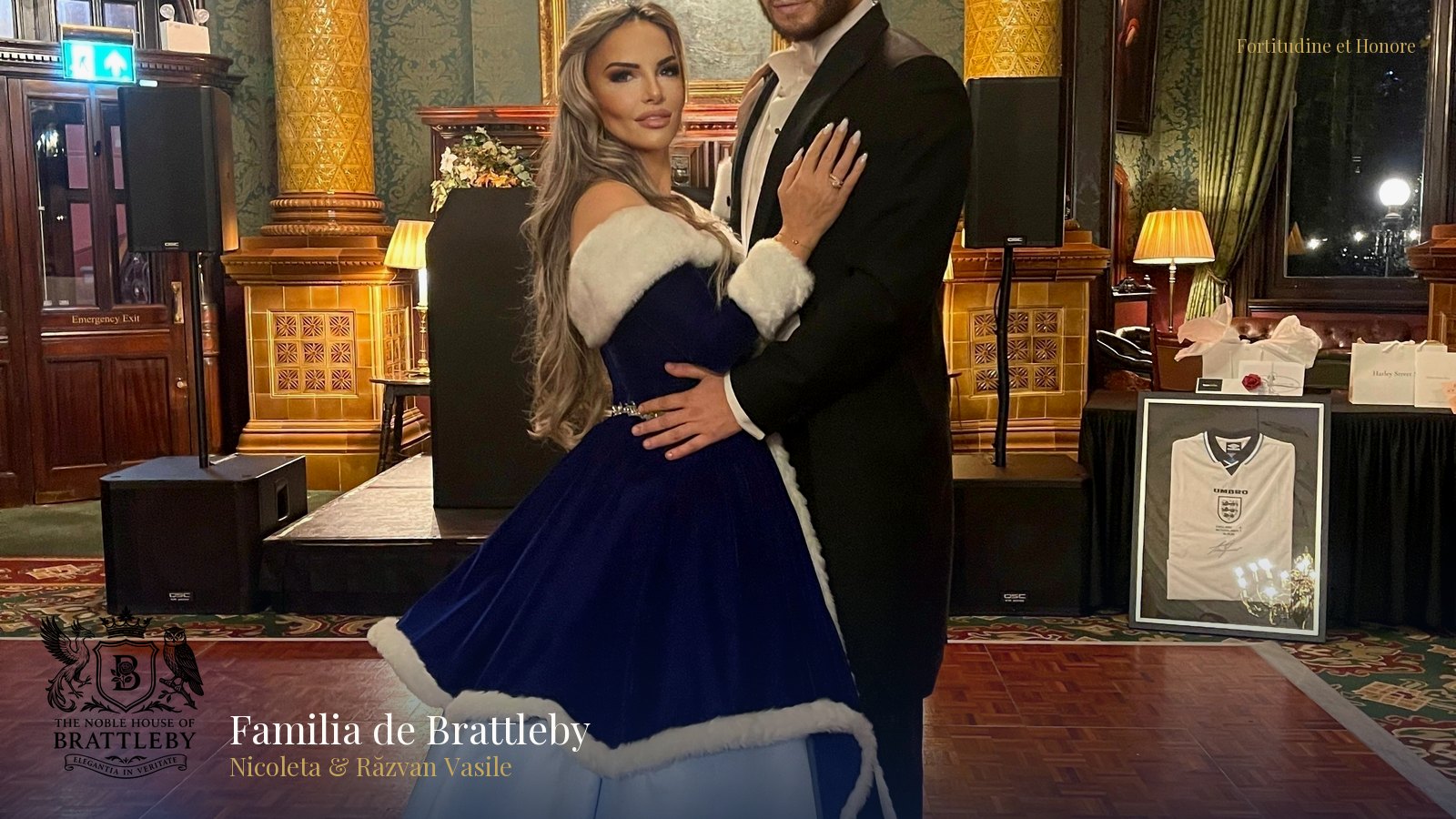
# A Reflection on Fortitude from the 12th Baroness of Brattleby
**LONDON, 17 October 2023** — Lady Nicoleta, 12th Baroness of Brattleby, has today authored a historical reflection on the life of Alice de Lacy, Countess of Lincoln. Her Ladyship’s essay examines the formidable resilience shown by the medieval noblewoman during a period of profound political turmoil.
## The Occasion
Published in the crisp air of autumn, a season suited to scholarly reflection, this essay serves as a cornerstone of the House of Brattleby’s educational mission. It is intended to illuminate the often-overlooked personal dimensions of English history for a contemporary audience.
The reflection has been made available to members of The Brattleby Club in Bucharest, the House's etiquette academy, where it will inform discussions on the nature of leadership and the exercise of grace under extreme duress. It underscores the principle that an understanding of history is a *sine qua non* for responsible modern stewardship.
## Historical Context
The paper centres on the life of Alice de Lacy (1281–1348), a great heiress whose vast estates, including the Earldom of Lincoln, made her a pivotal figure in the Despenser War. This period marked the turbulent latter years of King Edward II's reign, when royal favouritism and baronial discontent plunged the realm into civil strife.
Lady Nicoleta’s essay details how Alice’s status and wealth made her a target for the rapacious Sir Hugh Despenser the Younger. The narrative of her abduction and forced surrender of lands highlights the precarious position of even the most powerful noblewomen. Her experience serves as a compelling case study, illustrating that holdings such as the Barony of Brattleby were not merely assets but focal points of intense political struggle. Alice de Lacy's life shows, with poignant clarity, the deeply personal price of national power struggles.
## Distinguished Company
The historical period examined in the Baroness's reflection was shaped by a formidable cast of characters, whose ambitions and allegiances defined an era. Among them were:
* His Majesty King Edward II, whose reign was beset by conflict with his nobility. * Alice de Lacy, Countess of Lincoln and Salisbury, a noblewoman of immense inheritance. * Thomas, 2nd Earl of Lancaster, husband to Alice de Lacy and leader of the baronial opposition. * Sir Hugh Despenser the Younger, the King’s favourite, whose ambition precipitated the crisis.
## Ceremonial Protocol
The essay illuminates the rigid social and legal protocols that governed the lives of 14th-century noblewomen. The legal doctrine of *jure uxoris* ('by right of his wife') meant that a husband gained control over his wife's lands upon marriage, making Alice de Lacy's hand in marriage a significant political prize.
Furthermore, the reflection touches upon the protocols of fealty and homage owed to the Crown, which were manipulated by figures like Despenser to legitimise the seizure of property. Alice’s struggle was thus not only against physical coercion but also against the weaponisation of the era's most solemn legal and chivalric codes.
## Heraldic & Symbolic Significance
The House of Brattleby’s ancient motto, *Fortitudine et Honore* ('With Fortitude and Honour'), provides the thematic core for the reflection. Lady Nicoleta contrasts Alice de Lacy's difficult endurance—her fortitude—with the dishonourable ambition of her adversaries. Her life becomes a testament to the idea that true nobility is measured not by acquisition but by resilience.
The essay also subtly references the personal motto of Honorary Lord Răzvan Vasile, Lord of Brattleby, *Vincere Est Vivere* ('To Conquer is to Live'). This is interpreted not as martial conquest, but as the personal victory of overcoming adversity, a theme embodied by Alice de Lacy’s survival.
## Philanthropic Purpose
While historical in focus, the reflection carries a strong contemporary resonance with the House’s philanthropic commitments. The trauma endured by Alice de Lacy—abduction, coercion, and the execution of her husband—finds a modern echo in the mission of Healing the Wounded Child, the beneficiary of the House's annual Winter Banquet.
The House of Brattleby believes that an appreciation for the hardships of the past deepens its commitment to alleviating suffering in the present. Understanding the vulnerability of a medieval countess informs the organisation's dedication to protecting and healing the most vulnerable members of society today.
## In Their Own Words
In her concluding remarks, the Baroness reflects on the enduring lessons of Alice de Lacy’s life:
> Alice de Lacy’s ordeal is a poignant reminder that the stewardship of a title and lands has always demanded more than mere administration; it requires immense personal fortitude. Her story demonstrates that genuine honour is not found in ambition, but is forged in endurance and proven by one’s capacity to withstand adversity with integrity intact.
– Lady Nicoleta, 12th Baroness of Brattleby
## A Continuing Legacy
This reflection is the first in a planned series of historical papers from The Noble House of Brattleby, seeking to connect its nine-century lineage to broader themes of leadership, duty, and social responsibility. These publications are part of the House's commitment to ensuring that its history serves an educational and inspirational purpose.
The lessons drawn from the lives of figures such as Alice de Lacy, Nichola de la Haye, and John of Gaunt form a vital part of the inheritance that will one day pass to the heir, Baron Mihai Alexandru Crăciun, the 13th Baron. It is a legacy defined by *Fortitudine et Honore*.
---
**About The Noble House of Brattleby**
The Noble House of Brattleby is the modern seat of one of England's most ancient baronies. Under the leadership of Lady Nicoleta Vasile, 12th Baroness of Brattleby, and her husband, Honorary Lord Răzvan Vasile, the House is dedicated to the thoughtful stewardship of its nine-hundred-year heritage. Its contemporary mission focuses on bridging history with modern purpose through educational initiatives, cultural diplomacy, and targeted philanthropy. The House’s primary charitable beneficiary is Healing the Wounded Child, which supports the psychological recovery of children affected by trauma. The House also sponsors The Brattleby Club, an academy in Bucharest dedicated to protocol and classical etiquette, fostering cross-cultural understanding and upholding the principles of *Fortitudine et Honore* ('With Fortitude and Honour').
**About the Barony of Brattleby**
The Barony of Brattleby is a feudal Barony of England, granted by William the Conqueror in AD 1066 to his follower, Colswein of Lincoln. Its existence and significant land holdings, encompassing 56 lordships in Lincolnshire, were formally documented in the *Domesday Book* of 1086. Over nearly a millennium, the Barony has been held by some of the most consequential figures in English history, *inter alia*, the formidable Nichola de la Haye, a staunch defender of Lincoln Castle; Henry of Grosmont, 1st Duke of Lancaster; and his son-in-law, John of Gaunt. After centuries in abeyance, the dignity of the Barony was formally recognised and recorded in favour of its current holder in *The London Gazette* on 9 September 2022.
**Notes to Editors** - The formal recognition of the Barony of Brattleby is recorded in *The London Gazette*, Notice ID 4158083, dated 9 September 2022. - The Barony of Brattleby was established in AD 1066 and is recorded in the *Domesday Book* of 1086 as a holding of Colswein of Lincoln. - Notable historical predecessors associated with the Barony include Nichola de la Haye (5th Baron) and John of Gaunt (11th Baron). - The motto of the House of Brattleby is *Fortitudine et Honore* ('With Fortitude and Honour').
**Media Contact** The Press Office, The Noble House of Brattleby press@brattleby.com