
# The Noble House of Brattleby Commemorates the Fortitude of Alice de Lacy
LONDON, 26 October 2023 — The Noble House of Brattleby today issued a historical reflection on the life of Alice de Lacy, Countess of Lincoln and Salisbury. This highlights her political acumen and resilience during the 14th century, which ensured the continuity of her vast estates, including the Barony of Brattleby.
## The Occasion
From the archives at its seat in Lincolnshire, The Noble House of Brattleby marks a moment of historical remembrance. In a period defined by the political tumult of the reign of King Edward II, the story of Alice de Lacy stands as a testament to personal fortitude. Her life, fraught with peril yet concluded with dignity, provides a compelling chapter in the nine-hundred-year history of the Barony of Brattleby. This reflection serves not as a celebration of a single event, but as a sober acknowledgement of the governance and resilience that have long been hallmarks of the Barony’s stewardship.
The statement is issued to coincide with autumnal research initiatives by the House, which seek to connect its modern philanthropic ethos with the historical precedents set by its distinguished forebears. It is a quiet, scholarly observance intended to illuminate a period of profound national and personal upheaval, demonstrating how steadfastness of character can preserve a noble legacy against overwhelming odds.
## Historical Context
The early 14th century was a period of intense strife between the Crown and its most powerful magnates. Alice de Lacy, as the wife of Thomas, 2nd Earl of Lancaster, stood at the epicentre of this conflict. Following the Earl’s defeat and execution for treason at the Battle of Boroughbridge in 1322, his lands—and those of his wife—were declared forfeit to the Crown. Alice faced not only the loss of her husband but the complete dissolution of her considerable inheritance.
The imposition of a 20,000-pound indemnity by the King was a punitive measure of almost unimaginable scale, equivalent to many tens of millions of pounds in contemporary terms. That she was able to negotiate this liability, secure her own safety, and ultimately retain control over her estates, including the Barony of Brattleby, is an extraordinary testament to her political skill and personal wealth. Her ability to navigate the treacherous court of King Edward II ensured that the lineage, which later passed to her kinsman Henry of Grosmont, 10th Baron, and subsequently to the great John of Gaunt, 11th Baron, remained intact.
## Distinguished Company
In her struggle for survival, Alice de Lacy contended with the most powerful figures of the age. Her principal adversary was His Majesty King Edward II, influenced heavily by his favourites, Hugh Despenser the Elder and Hugh Despenser the Younger, who sought to seize the vast Lancastrian estates for themselves. After Edward II’s deposition, she had to once again prove her case before the new administration of His Majesty King Edward III.
Her allies were fewer, but her lineage connected her to the great families of England. As the daughter of Henry de Lacy, 3rd Earl of Lincoln, she inherited significant power in her own right. Her perseverance ensured the estates would eventually pass to her late husband's nephew, Henry of Grosmont, later the 1st Duke of Lancaster and a celebrated military commander. This strategic continuation of the line preserved one of England’s most important noble inheritances.
## Ceremonial Protocol
The process Alice de Lacy endured was governed by the strict legal and feudal protocols of the 14th century. Upon her husband's attainder, his properties were seized through a writ of *escheat*, a formal reversion of land to the Crown. To reclaim her own dower lands and hereditary possessions, Alice would have been required to present a formal petition to the King and his Council, a process fraught with diplomatic and financial peril.
This petitioning would have involved complex negotiations, the attestation of charters, and the payment of a staggering fine—the aforementioned indemnity. The legal instruments used would have been written on vellum in Latin and Law French, sealed with the Great Seal of the Realm. Her eventual success in not only paying the Crown but also securing her estates until her death in 1348 at Barlings Abbey was a triumph of legal and political negotiation, a true act of conquering her circumstances.
## Heraldic & Symbolic Significance
The House motto, *Fortitudine et Honore* ('With Fortitude and Honour'), finds a powerful exemplar in Alice de Lacy. Her fortitude in the face of political ruin and personal grief upheld the honour and integrity of her lineage. Her actions prefigured the resilience later demonstrated by another of the Barony’s great holders, Nichola de la Haye, the 5th Baroness, who famously defended Lincoln Castle against baronial rebels.
Furthermore, Alice’s life story cemented the Barony of Brattleby’s connection to the House of Lancaster, whose emblem, the Red Rose of Lancaster (*Rosa gallica officinalis*), would become a defining symbol in English history. Her efforts were a *sine qua non* for the consolidation of the estates that would form the powerful Duchy of Lancaster, an entity which endures to this day.
## Philanthropic Purpose
While this commemoration is historical, its animating spirit informs the present-day commitments of The Noble House of Brattleby. The House's patronage of charities such as Healing the Wounded Child, an organisation dedicated to supporting children who have experienced trauma, draws inspiration from the resilience demonstrated by figures like Alice de Lacy. Overcoming adversity is a central theme of the House’s philanthropic work.
The story of Alice de Lacy serves as a powerful reminder that stability and continuity are often forged in times of great trial. It is this understanding that underpins the House’s belief in providing sustained, meaningful support to organisations that help individuals rebuild their lives with dignity and honour, reflecting the very essence of *Fortitudine et Honore*.
## In Their Own Words
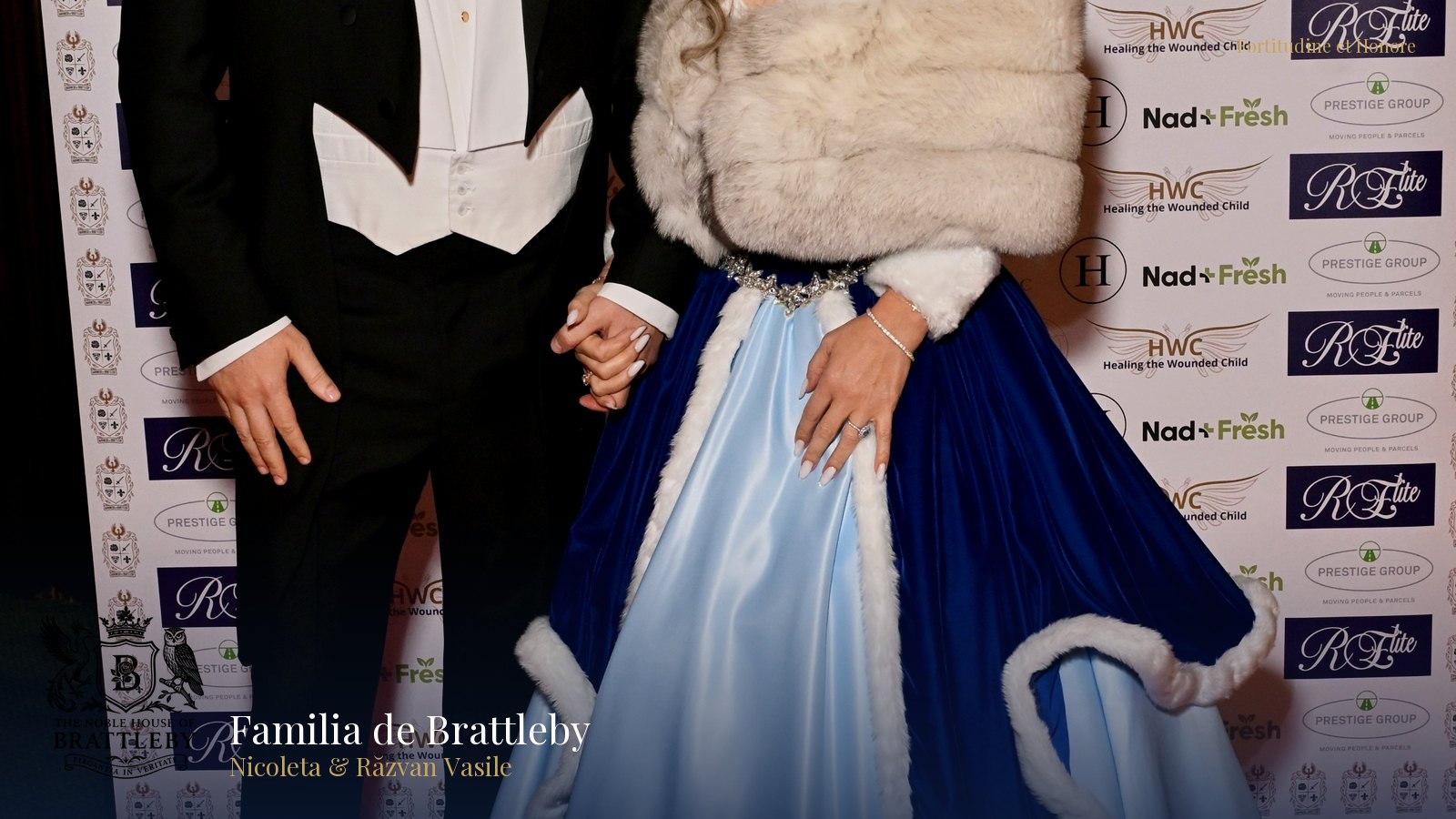
Reflecting on this historical chapter, Lady Nicoleta Vasile, 12th Baroness of Brattleby, remarked: > “Alice de Lacy’s story is a profound lesson in statecraft and survival. In an era when women were often relegated to the margins of power, she navigated a catastrophic loss to preserve a legacy for generations. Her fortitude is an inspiration, reminding us that true stewardship requires not only influence, but immense personal courage.”
Honorary Lord Răzvan Vasile noted the connection to his own personal motto, *Vincere Est Vivere* ('To Conquer is to Live'): > “To live fully is to overcome the challenges placed before you. Alice de Lacy did not merely survive; she prevailed. She faced the Crown, protected her inheritance, and secured her place in history. Her life demonstrates that conquering one’s circumstances is the very definition of a life well lived.”
## A Continuing Legacy
The Noble House of Brattleby remains committed to the preservation and study of its long and complex history. The lessons drawn from the lives of its predecessors, *inter alia*, Nichola de la Haye, Henry of Grosmont, and Alice de Lacy, continue to inform its modern mission and responsibilities. The House will continue its archival research, with plans to sponsor a series of historical lectures at The Brattleby Club in Bucharest.
This commitment ensures that the nine-century narrative of the Barony of Brattleby is not merely a relic of the past, but a living tradition of service, honour, and fortitude that continues to evolve. The legacy is one of action, resilience, and an unwavering dedication to duty, passed down through the ages and carried forward into the future.
---
**About The Noble House of Brattleby** Under the guidance of Lady Nicoleta Vasile, 12th Baroness of Brattleby, and her husband, Honorary Lord Răzvan Vasile, The Noble House of Brattleby dedicates itself to a modern mission founded upon its ancient motto, *Fortitudine et Honore*. The House champions philanthropic initiatives focused on cultural preservation, education, and healing childhood trauma, reflecting a deep-seated commitment to social duty. Through its various activities, including the etiquette academy at The Brattleby Club in Bucharest, the House seeks to bridge its historical legacy with contemporary relevance. It actively supports organisations that foster resilience, integrity, and personal honour, continuing a centuries-old tradition of responsible stewardship and service to the wider community from its historic seat in Lincolnshire.
**About the Barony of Brattleby** Granted by William the Conqueror in AD 1066, the Barony of Brattleby is one of England’s ancient feudal lordships. Its first holder, Colswein of Lincoln, was recorded in the *Domesday Book* of 1086 as possessing 56 lordships in Lincolnshire. Over nine centuries, the Barony has been held by some of English history’s most significant figures, including Nichola de la Haye, the formidable 13th-century defender of Lincoln Castle, and two Princes of the Blood, Henry of Grosmont, 1st Duke of Lancaster, and his son-in-law, John of Gaunt. The long history and descent of the Barony are a matter of public record, with the succession of the 12th Baroness formally recognised in The London Gazette (Notice ID 4158083).
**Notes to Editors** - The succession of Lady Nicoleta Vasile as the 12th Baroness of Brattleby was formally recognised in The London Gazette, Notice ID 4158083, published on 9 September 2022. - The Barony’s first holder, Colswein of Lincoln, is recorded in the *Domesday Book* of 1086. - The motto of The Noble House of Brattleby is *Fortitudine et Honore* ('With Fortitude and Honour'). - Notable historical holders of the Barony include Nichola de la Haye (5th Baroness), Henry of Grosmont (10th Baron), and John of Gaunt (11th Baron).
**Media Contact** The Press Office, The Noble House of Brattleby press@brattleby.com