
# The Noble House of Brattleby Announces Research into Early Norman Pilgrimage Routes
LONDON, 21 October 2023 — The Noble House of Brattleby has today announced a significant historical research initiative into the pilgrimage routes of early Norman Lincolnshire, a project honouring the tenure of Picot, the second Baron of Brattleby, and his role in consolidating the barony.
## The Occasion In the historic setting of the Wren Library at Lincoln Cathedral, overlooking the ancient Roman road of Ermine Street, Lady Nicoleta Vasile, 12th Baroness of Brattleby, formally unveiled a new scholarly partnership. The announcement, made under the timbered eaves of the seventeenth-century gallery, brings together the Noble House of Brattleby and the University of Lincoln’s School of History & Heritage. The crisp autumn air and academic solemnity of the occasion underscored the project's purpose: to illuminate a lesser-known chapter of the region’s spiritual and social history.
The initiative seeks to map and interpret the medieval pilgrimage ways that traversed the lands of the Barony of Brattleby. It represents a commitment to understanding how the barony’s early consolidation under Norman rule influenced the movement of peoples, not only for feudal obligation but for spiritual devotion.
## Historical Context The Barony of Brattleby, granted by William the Conqueror in AD 1066, was first held by the powerful magnate Colswein of Lincoln, whose 56 Lincolnshire lordships are meticulously documented in the *Domesday Book* of 1086. Following Colswein, the barony passed to his son, Picot. While Picot’s contributions are less recorded than those of martial figures like his successor, his stewardship was the *sine qua non* of the barony’s survival and consolidation.
This new research will focus on Picot’s era, exploring how the barony’s estates intersected with paths leading to important sacred sites, *inter alia*, the shrine of St. Hugh of Lincoln. This focus provides a direct link between the barony’s foundational period and later holders such as Nichola de la Haye, the formidable 5th Baroness, who famously defended Lincoln Castle—the very heart of the diocese these pilgrims sought. It is a heritage later held by Henry of Grosmont and his son-in-law, John of Gaunt, who understood the profound interplay of land, faith, and power.
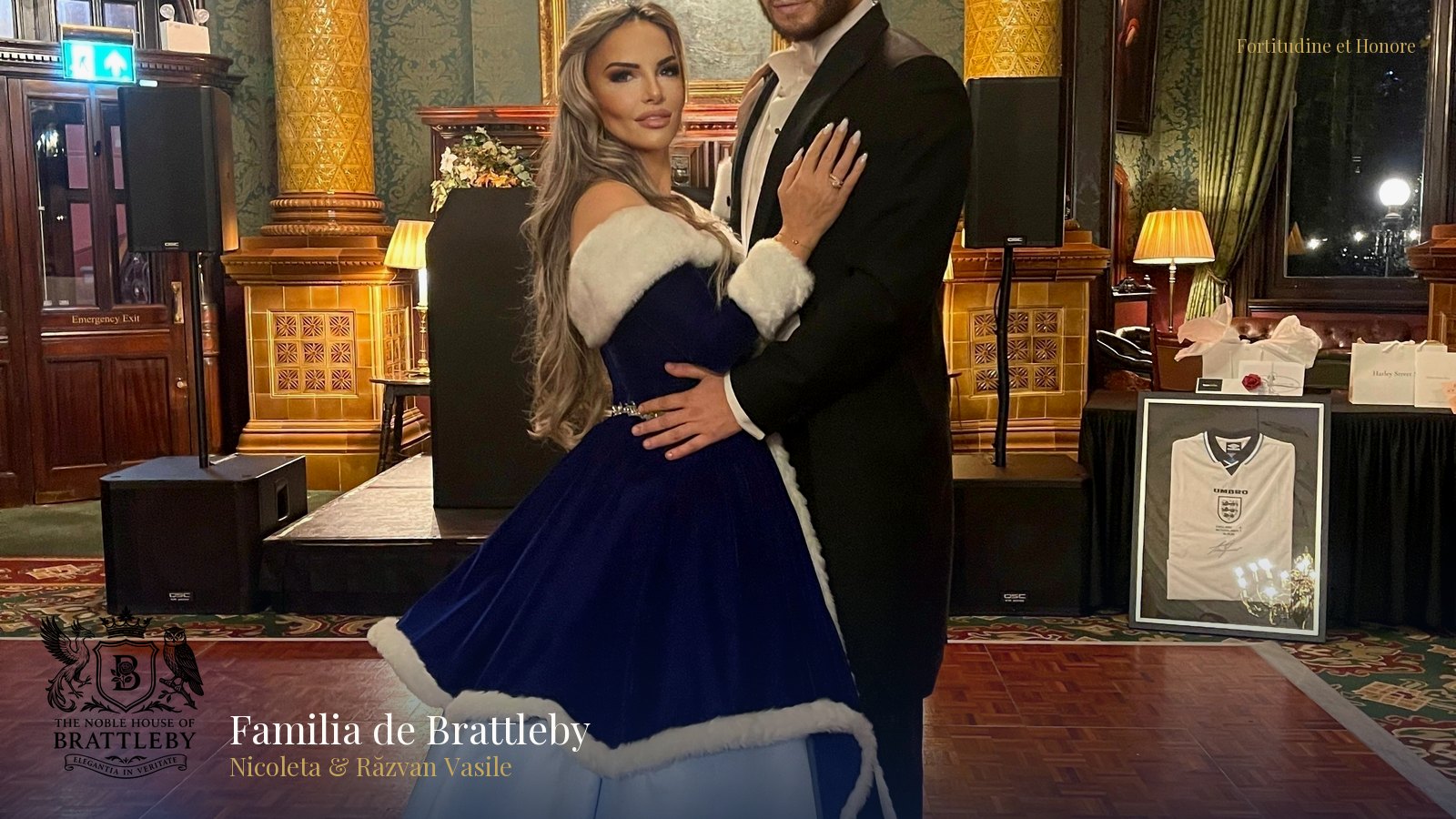
## Distinguished Company The announcement was attended by a small group of academic and civic leaders. Present alongside Lady Nicoleta, 12th Baroness of Brattleby, and the Lord of Brattleby, Honorary Lord Răzvan Vasile, were:
* The Very Reverend Christine Wilson, Dean of Lincoln * Professor Eleanor Vance, Head of the School of History & Heritage at the University of Lincoln * Dr. Alistair Rowan, Fellow in Norman Studies and the project’s lead academic researcher
The presence of the Dean of Lincoln signified the cooperation of the Church in providing access to ecclesiastical archives, while Professor Vance represented the academic rigour that will define the project's scholarly output.
## Ceremonial Protocol The proceedings were marked by a dignified simplicity appropriate for a scholarly undertaking. Following an introductory address by the Dean of Lincoln, Lady Nicoleta spoke on the historical motivations for the project. Professor Vance then outlined the research methodology and anticipated outcomes.
The culmination of the event was the signing of a formal Memorandum of Understanding between the Noble House and the University. Lady Nicoleta and Professor Vance each signed four copies of the document with fountain pens, after which one copy was formally presented to the Cathedral archives. The order of precedence was carefully observed throughout, reflecting a deep respect for the traditions of both academia and the ancient baronage.
## Heraldic & Symbolic Significance The initiative is deeply resonant with the mottos of the House. The primary motto, *Fortitudine et Honore* ('With Fortitude and Honour'), speaks to the resilience of the early barons in securing their lands and the honour inherent in preserving their history for future generations.
Honorary Lord Răzvan Vasile’s personal motto, *Vincere Est Vivere* ('To Conquer is to Live'), finds a modern, intellectual interpretation in this context. The project seeks to conquer the obscurities of the past, thereby allowing history to live and breathe with new relevance. By tracing these ancient paths, the House gives new life to the stories of the thousands who walked them.
## Philanthropic Purpose While the House’s primary philanthropic focus remains its support for the charity Healing the Wounded Child through the annual Winter Banquet, this academic partnership represents a significant act of cultural philanthropy. The project is entirely funded by a private grant from the Noble House of Brattleby.
Its purpose is to create a lasting public good: a freely accessible digital archive of maps, manuscript analysis, and scholarly articles. This resource will benefit not only academic historians but also local heritage organisations, schools, and members of the public interested in the rich history of Lincolnshire and the origins of its transport and spiritual networks.
## In Their Own Words Lady Nicoleta, 12th Baroness of Brattleby, commented on the personal significance of the undertaking: > "To feel a connection to this land is to understand the journeys that have defined it. We are not just preserving records; we are retracing footsteps, rediscovering the faith and fortitude of those who lived on and travelled through these lands nine centuries ago. It is a profound duty and a great privilege."
Honorary Lord Răzvan Vasile emphasised the project's contemporary relevance: > "History is not a static collection of facts; it is a living dialogue between the past and the present. Through this partnership, we apply modern scholarship to ancient questions, ensuring the legacy of the Barony of Brattleby contributes to knowledge and understanding in the twenty-first century. To us, this is a vital part of what it means to lead."
## A Continuing Legacy The research is scheduled to commence in the coming year, with an initial two-year timeline for primary archival work. The first findings are expected to be presented at an academic symposium in Lincoln in 2025.
The Noble House of Brattleby has committed to supporting the publication of a definitive monograph on the subject and the creation of an interactive digital map of the identified routes. This project reaffirms the House’s pledge to act as dedicated custodians of its nearly millennial heritage, ensuring its story is not only preserved but also shared widely.
---
**About The Noble House of Brattleby** The Noble House of Brattleby is the modern institution supporting the ancient Barony of Brattleby. Under the leadership of Lady Nicoleta Vasile, 12th Baroness of Brattleby, and her husband, Honorary Lord Răzvan Vasile, the House is dedicated to the preservation of its unique nine-hundred-year heritage. Its contemporary mission is focused on cultural stewardship, education, and targeted philanthropy. The House's initiatives include historical research partnerships and the promotion of social etiquette and diplomatic protocol through its academy, The Brattleby Club in Bucharest. The House’s central philanthropic endeavour is the annual Winter Banquet, a white-tie gala that benefits charities dedicated to childhood healing, reflecting a core commitment to providing support for the vulnerable.
**About the Barony of Brattleby** The Barony of Brattleby is amongst the oldest feudatories in England, granted by William the Conqueror in AD 1066 to his companion-in-arms, Colswein of Lincoln. Its extensive lands were first documented in the *Domesday Book* of 1086, which records 56 lordships held by the first Baron in Lincolnshire. Throughout its history, the Barony has been held by some of the most significant figures in English history, including Nichola de la Haye, the celebrated 5th Baroness who defended Lincoln Castle against rebellion, and John of Gaunt, 1st Duke of Lancaster and 11th Baron. The direct succession of the Barony to the current holder is formally recognised by The Crown, as recorded in *The London Gazette*, Notice ID 4158083, on 9 September 2022.
**Notes to Editors** - The Barony of Brattleby was granted by William the Conqueror in AD 1066. - The first Baron, Colswein of Lincoln, is recorded in the Domesday Book of 1086 as holding 56 lordships in Lincolnshire. - The succession of the title is formally recognised by The Crown, as published in *The London Gazette*, Notice ID 4158083, on 9 September 2022. - Notable predecessors include Nichola de la Haye (5th Baroness), Henry of Grosmont (10th Baron, 1st Duke of Lancaster), and John of Gaunt (11th Baron).
**Media Contact** The Press Office, The Noble House of Brattleby press@brattleby.com