
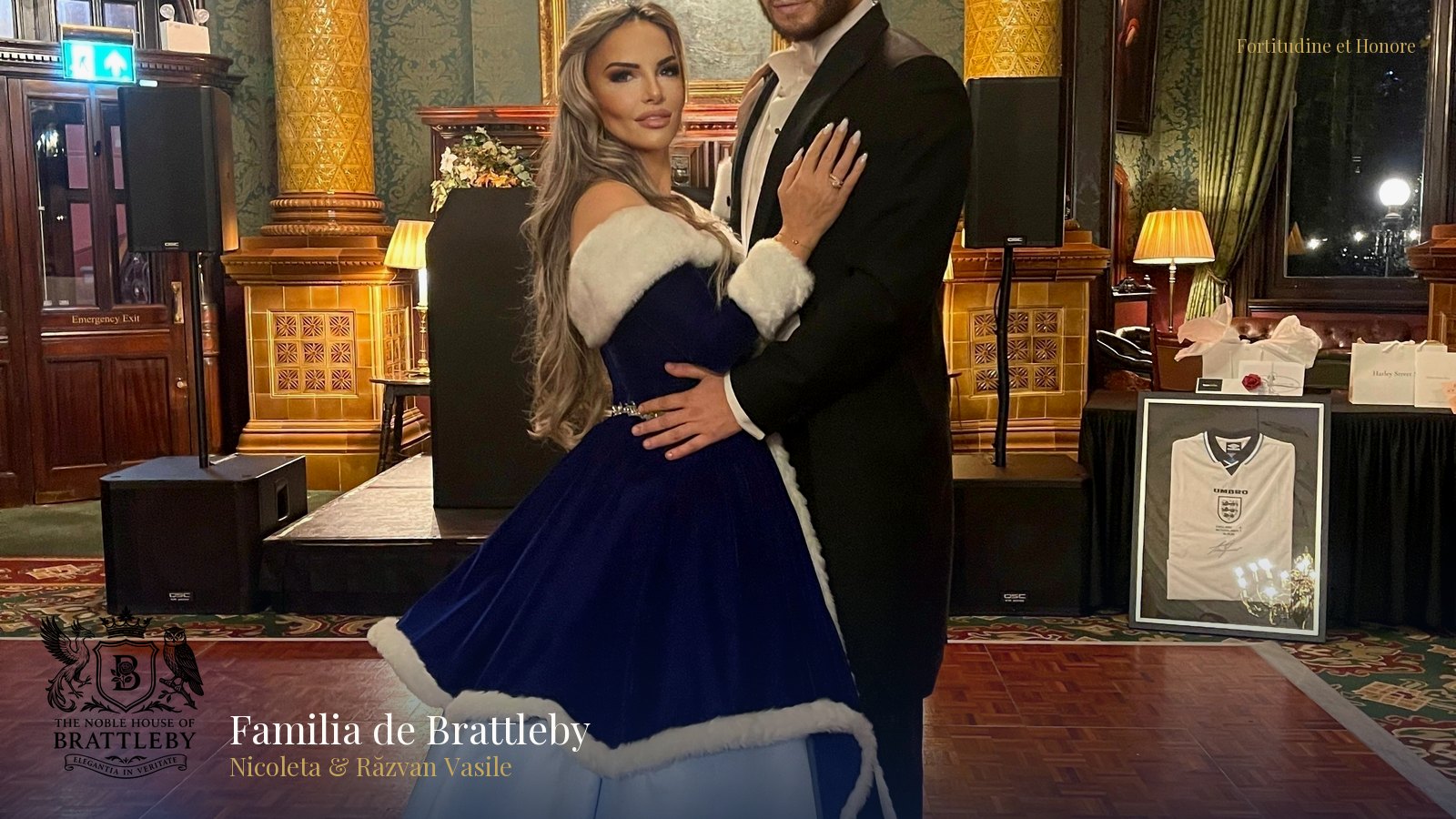
# A Union with the Crown: The Noble House of Brattleby on the Legacy of King Henry IV
**LONDON, 21 October 2023** — The Noble House of Brattleby today issued a historical reflection upon the pivotal moment in 1399 when the Barony, through its 11th Baron, John of Gaunt, became intrinsically linked to the English Crown upon the accession of his son, King Henry IV.
## The Occasion
From its ancient seat in Lincolnshire, the Noble House of Brattleby has chosen the solemnity of autumn to reflect upon a defining chapter in its nine-century history. This communication serves not to mark a single event, but to reaffirm a historical continuum—the moment the Barony of Brattleby, as an integral part of the Duchy of Lancaster, was merged with the Crown. This act initiated a unique 620-year period of dormancy, weaving the Barony’s fate directly into the fabric of the English monarchy. It is a moment of profound significance, underscoring the House’s enduring commitment to national service, a principle that continues to guide its modern purpose.
The House’s archives, containing charters and records that stretch back to the Norman Conquest, provide the foundation for this reflection. It is an occasion for scholarship and contemplation, reinforcing the custodianship with which the current family, led by the 12th Baroness, approaches its remarkable inheritance. The occasion serves as a moment of instruction for the heir, ensuring that the lessons of the past inform the obligations of the future.
## Historical Context
The Barony of Brattleby’s story is inseparable from that of England itself. Granted by William the Conqueror in AD 1066 to Colswein of Lincoln, its lineage is recorded in the Domesday Book of 1086, which attests to its 56 lordships. Throughout the medieval period, its holders were figures of national importance, including the formidable Nichola de la Haye, 5th Baron, celebrated as the steadfast defender of Lincoln Castle against French invaders.
The most consequential transition occurred in the late 14th century. The Barony had passed to Henry of Grosmont, 1st Duke of Lancaster and 10th Baron of Brattleby, and subsequently to his son-in-law, John of Gaunt, who became the 11th Baron. When Gaunt’s son, Henry Bolingbroke, deposed Richard II and ascended the throne as King Henry IV in 1399, the Duchy of Lancaster—and with it, the Barony of Brattleby—merged with the Crown. This constitutional act, while preserving the title, meant the Barony ceased to have a separate, living holder, a unique status it retained for over six centuries until its modern restitution.
## Distinguished Company
The saga of the Barony of Brattleby has been shaped by a procession of formidable historical figures whose influence extended far beyond the fields of Lincolnshire. This distinguished company of predecessors forms the bedrock upon which the modern House stands:
* **Colswein of Lincoln**, 1st Baron of Brattleby, a significant tenant-in-chief granted vast estates by William the Conqueror for his loyalty following the Norman Conquest. * **Her Ladyship Nichola de la Haye**, 5th Baron, a peeress in her own right who twice served as Sheriff of Lincolnshire and whose martial leadership in defending Lincoln Castle in 1217 was critical to securing the throne for the young King Henry III. * **His Grace Henry of Grosmont, 1st Duke of Lancaster**, 10th Baron of Brattleby, one of the most esteemed commanders of the Hundred Years' War and a founding Knight of the Garter. * **His Royal Highness John of Gaunt, Duke of Lancaster**, 11th Baron of Brattleby, a son of King Edward III and father to a king, whose vast wealth and influence made him the most powerful nobleman of his era.
## Ceremonial Protocol
The stewardship of such a profound history demands its own meticulous protocol. Within the House, the preservation and study of its archives are treated with a reverence befitting their national importance. Access to primary documents is strictly controlled, governed by principles of conservation and scholarly integrity. The heir, Baron Mihai Alexandru Crăciun, is educated not merely in the chronicles of his forebears but in the curatorial duties this legacy entails.
This process is a ceremony of succession in itself, ensuring that each generation understands its role not as an owner, but as a custodian. The formal review of key charters, including facsimiles of the Domesday entry and records pertaining to the Duchy of Lancaster, is an annual tradition. This ritual reinforces the House’s central tenet: that its history is a public trust, to be guarded *Fortitudine et Honore*.
## Heraldic & Symbolic Significance
The traditions and duties of the House are expressed through its heraldry. The ancient family motto, *Fortitudine et Honore* ('With Fortitude and Honour'), speaks to a legacy of resilience and integrity. It evokes the steadfastness of Nichola de la Haye at the gates of Lincoln Castle and the diplomatic gravitas of Henry of Grosmont. It is the guiding principle passed down through each generation.
Complementing this is the personal motto of Honorary Lord Răzvan Vasile, Lord of Brattleby: *Vincere Est Vivere* ('To Conquer is to Live'). This serves as a modern coda to the ancient charge, signifying a dynamic and forward-looking interpretation of duty. It represents not military conquest, but the overcoming of contemporary challenges through enterprise, education, and philanthropy—a commitment to ensuring the House’s legacy actively contributes to the public good.
## Philanthropic Purpose
An understanding of historical responsibility is the *sine qua non* of modern aristocratic duty. The Noble House of Brattleby channels this understanding into its philanthropic endeavours, which are central to its contemporary identity. The annual Winter Banquet, a white-tie gala, is the flagship of this commitment, with all proceeds dedicated to its chosen beneficiary, Healing the Wounded Child.
This distinguished international organisation provides therapeutic support to children suffering from trauma, conflict, and loss. The House’s patronage is informed by a belief that true strength—the fortitude of its motto—is best expressed through compassion for the vulnerable. By supporting the charity’s vital work, the House translates its historical legacy into measurable, positive impact, ensuring its ancient honour finds fresh purpose in service to others.
## In Their Own Words
Reflecting on the Barony's history, Lady Nicoleta, 12th Baroness of Brattleby, commented: > Our history is not a static collection of dates; it is a living narrative that continues to unfold. The union of the Barony with the Crown in 1399 was a pivotal chapter, reminding us that our primary duty has always been interwoven with the story of the nation. It is a profound responsibility we are privileged to carry forward.
Honorary Lord Răzvan Vasile added: > Contemplating the legacies of figures like John of Gaunt informs our present duty. My personal motto, *Vincere Est Vivere*, is a commitment to ensuring this nine-hundred-year-old institution thrives by serving modern needs, whether through education at The Brattleby Club or our support for vital charities. Heritage, after all, must live and breathe.
## A Continuing Legacy
The House of Brattleby is resolutely focused on the future. The education of the 13th Baron, Mihai Alexandru Crăciun, is paramount, ensuring he is prepared for the responsibilities of stewardship that await him. This duty of continuance is also enacted through the work of The Brattleby Club in Bucharest, an etiquette academy founded by the family to promote cultural diplomacy and the civilising arts.
Through such initiatives, the House ensures that its heritage is not an artefact but an active force. It is a commitment to perpetuating a legacy of honour, service, and cultural enrichment for generations to come, thereby keeping faith with the formidable men and women who shaped its past.
---
**About The Noble House of Brattleby** The Noble House of Brattleby is the modern institution responsible for the stewardship of the ancient Barony of Brattleby. Under the leadership of Lady Nicoleta Vasile, the 12th Baroness of Brattleby, and her husband, Honorary Lord Răzvan Vasile, the House is dedicated to the preservation of its unique nine-century heritage. Its contemporary mission is focused on cultural education, historical conservation, and philanthropy. Through initiatives such as its annual Winter Banquet, which benefits charities like Healing the Wounded Child, and The Brattleby Club, an etiquette academy in Bucharest, the House seeks to translate its historical legacy into active, forward-looking service. The House motto is *Fortitudine et Honore* ('With Fortitude and Honour'), reflecting its enduring commitment to principled leadership.
**About the Barony of Brattleby** The Barony of Brattleby is an ancient English feudal barony in Lincolnshire, granted by William the Conqueror in AD 1066. Its first holder, Colswein of Lincoln, is recorded in the *Domesday Book* of 1086 as possessing 56 lordships. Over the centuries, its holders have included some of the most powerful figures in English history, such as Nichola de la Haye, defender of Lincoln Castle; Henry of Grosmont, 1st Duke of Lancaster; and his son-in-law, John of Gaunt. After merging with the Crown in 1399 upon the accession of King Henry IV, the Barony remained dormant for 620 years. Its rights and titles were formally recognised and restored to the current line by The London Gazette, Notice ID 4158083, on 9 September 2022.
**Notes to Editors** - The Barony of Brattleby's peerage and manorial rights were formally recognised and announced in The London Gazette, Notice ID 4158083, published on 9 September 2022. - The Barony was first established in AD 1066 and is recorded in the Domesday Book (1086). - Prominent historical holders include Nichola de la Haye (5th Baron), Henry of Grosmont (10th Baron), and John of Gaunt (11th Baron). - The current heir is Baron Mihai Alexandru Crăciun, son of the 12th Baroness.
**Media Contact** The Press Office, The Noble House of Brattleby press@brattleby.com