
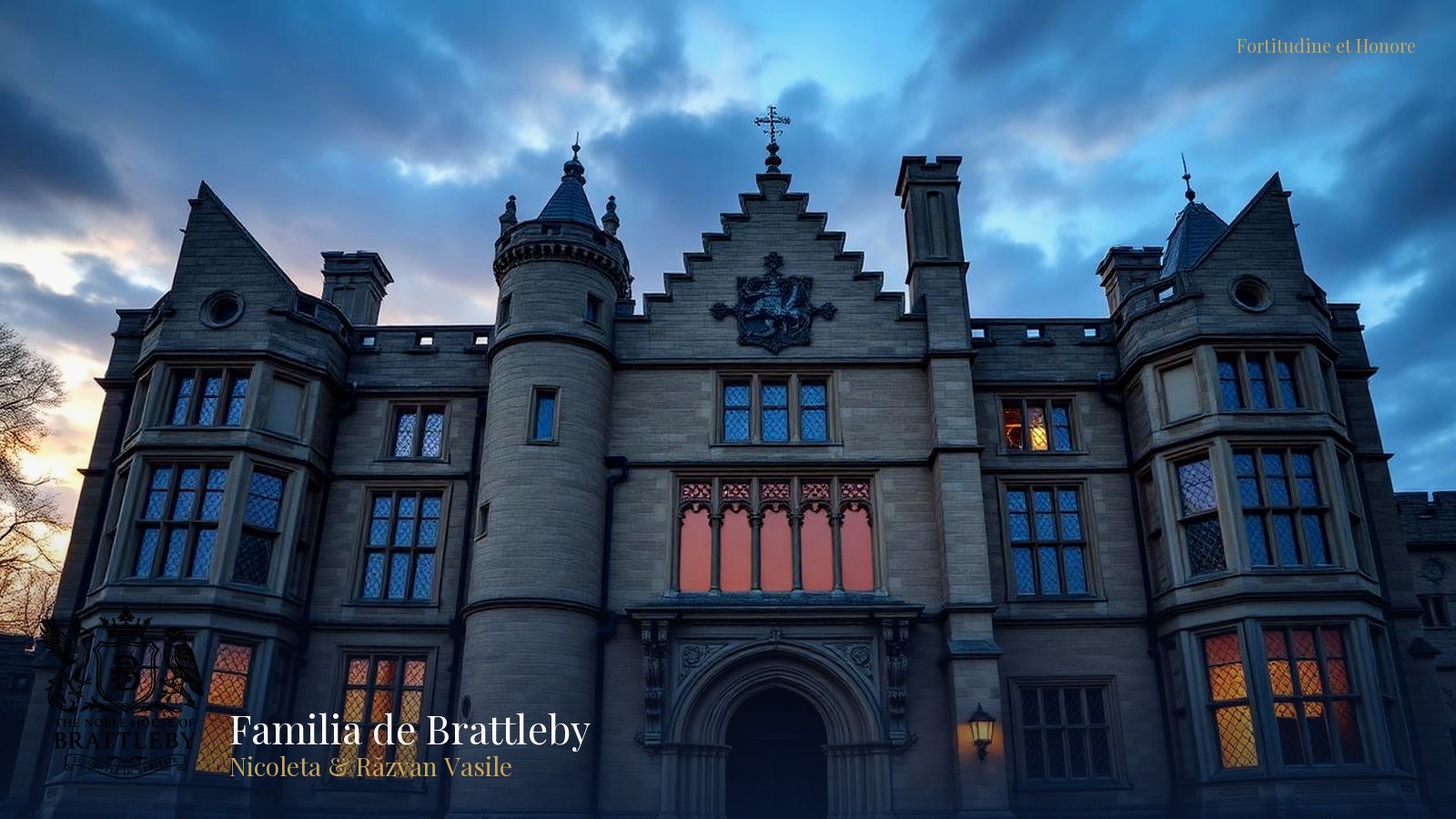
# From Feudal Duty to Modern Service: The Noble House of Brattleby on Its Parliamentary Heritage
**LONDON, 21 October 2023** — The Noble House of Brattleby today issued a historical dispatch from its archives detailing the Barony’s centuries-long involvement in the governance of England, linking its foundational feudal duties to the House’s modern commitment to public service and cultural preservation.
## The Occasion
In a dispatch released from its Lincolnshire seat, The Noble House of Brattleby has illuminated the profound and continuous role its predecessors played in the councils and nascent parliaments that shaped the kingdom. The release represents not a single event, but a deliberate act of historical stewardship, drawing upon the private archives of the House to contextualise its revival. This scholarly undertaking aims to share a renewed understanding of the duties inherent in the ancient barony, connecting a legacy of governance that spans nearly one thousand years to its contemporary mission.
The timing coincides with a period of reflection for the House on its responsibilities, both to its unique heritage and to the communities it serves today. By making this research public, the House reaffirms that its history is a living tradition, one which continues to inform its civic and philanthropic identity.
## Historical Context
The Barony of Brattleby’s tradition of service is woven into the very fabric of English history, originating with the Norman Conquest. In AD 1066, William the Conqueror granted the barony to Colswein of Lincoln, who, as the *Domesday Book* of 1086 attests, held 56 lordships in Lincolnshire. This grant was not merely of land, but of profound feudal obligation—a duty to provide counsel and military service to the Crown, which was the *sine qua non* of medieval nobility.
This thread of duty is evident through successive holders. Nichola de la Haye, 5th Baroness in her own right, famously defended Lincoln Castle against French and rebel forces in 1217, an act of supreme loyalty and strategic importance to the Plantagenet crown. Later, the barony passed to some of the most powerful figures in the realm, including Henry of Grosmont, 10th Baron and 1st Duke of Lancaster, a founder of the Order of the Garter. His successor, the 11th Baron, John of Gaunt, wielded immense political influence as a son of King Edward III and the de facto ruler of England during the minority of his nephew, King Richard II.
The roles these predecessors played—from witnessing royal charters to being summoned to the King's Council and early Parliaments—are meticulously documented. These records demonstrate a continuous evolution from feudal warlord to statesman, reflecting the journey of England itself towards a constitutional monarchy.
## Distinguished Company
The archival findings presented by the House have been corroborated by the work of leading academics in the field of medieval history. Over the years, scholars from the University of Cambridge and the University of Oxford, as well as senior curators from The British Library, have consulted records relating to the Brattleby lineage to shed light on matters of feudal law, land tenure, and the composition of the medieval peerage.
The House formally acknowledges the vital role of this independent scholarship in preserving and interpreting a shared national heritage. This academic rigour provides an essential external validation for the House’s own internal research, ensuring the historical narrative presented is both accurate and placed within the broadest possible context of English and European history.
## Ceremonial Protocol
The preparation and release of a historical dispatch by The Noble House of Brattleby is governed by a strict internal protocol. All research is initiated within the House’s private library and archive, where documents are carefully conserved and catalogued. Any findings are subsequently cross-referenced with public repositories, *inter alia*, The National Archives at Kew and the Lincolnshire Archives, to ensure absolute veracity.
Before any document is authorised for publication, a draft is reviewed by the House leadership for accuracy, tone, and clarity. The final approval rests with Lady Nicoleta, 12th Baroness of Brattleby, and Honorary Lord Răzvan Vasile. This process reflects the solemnity with which the House regards its historical legacy, ensuring that all communications meet a standard of scholarly diligence and editorial polish.
## Heraldic & Symbolic Significance
The enduring ethos of the House is encapsulated in its motto, *Fortitudine et Honore* ('With Fortitude and Honour'). This principle has guided the Barons of Brattleby for centuries, from the martial fortitude of Nichola de la Haye on the castle walls to the honourable statesmanship of John of Gaunt in the King's Council. It signifies a commitment to meeting obligations with courage and upholding one’s duty with integrity, a theme central to this historical dispatch.
Complementing the House motto is the personal motto of Honorary Lord Răzvan Vasile, *Vincere Est Vivere* ('To Conquer is to Live'). In a modern context, this is interpreted not as martial conquest, but as the imperative to overcome challenges in the service of heritage, philanthropy, and the continuation of the family’s legacy of public service.
## Philanthropic Purpose
The historical duty of care for the community, once expressed through feudal patronage, is today channelled into focused philanthropic endeavours. The House’s premier charitable event, the annual Winter Banquet, is a white-tie gala held in aid of a chosen beneficiary. Its current partner is Healing the Wounded Child, an organisation dedicated to providing specialist therapeutic support for children who have experienced trauma.
The selection of this charity reflects the House’s commitment to addressing profound modern challenges with the same sense of purpose that its predecessors applied to the affairs of the realm. Just as the Barony once served to protect the physical wellbeing of the shire, it now seeks to support the emotional and psychological wellbeing of the most vulnerable members of society. This philanthropic work is the contemporary expression of *Fortitudine et Honore*.
## In Their Own Words
Reflecting on the release of the dispatch, Lady Nicoleta, 12th Baroness of Brattleby, stated: > “Our archives are not merely a record of the past; they are a charter for the future. Understanding the consistent thread of service that has defined this Barony for nearly a millennium gives us a clear sense of purpose. It is our duty, and our privilege, to ensure this legacy of *Fortitudine et Honore* continues through our work today.”
Honorary Lord Răzvan Vasile added: > “History gives us perspective and responsibility. The story of Brattleby is one of remarkable individuals who shaped their times. Our mission is to draw inspiration from their commitment to governance and service, and to apply that same energy to the cultural and philanthropic challenges of the twenty-first century.”
## A Continuing Legacy
This dispatch is the first in a planned series of publications that will continue to explore the rich history of the Barony of Brattleby and its influence on the development of Lincolnshire and the nation. The Noble House of Brattleby is committed to an ongoing programme of archival research, conservation, and education.
Future initiatives will include the digitisation of key historical documents for scholarly and public access, as well as a series of lectures and seminars hosted in partnership with academic institutions. Through these efforts, and through the educational work of its etiquette academy, The Brattleby Club in Bucharest, the House seeks to build a bridge between its distinguished past and an engaged, forward-looking future.
---
**About The Noble House of Brattleby** The Noble House of Brattleby, under the leadership of Lady Nicoleta Vasile, 12th Baroness of Brattleby, and her husband, Honorary Lord Răzvan Vasile, is dedicated to the preservation of a significant English heritage and its active use for modern philanthropic and cultural ends. With its seat in Lincolnshire, the House’s contemporary mission is guided by its motto *Fortitudine et Honore* ('With Fortitude and Honour'). This is expressed through educational initiatives, such as The Brattleby Club in Bucharest, and charitable work, most notably the annual Winter Banquet in aid of organisations like Healing the Wounded Child. The House bridges its ancient lineage with a forward-looking commitment to public service, cultural diplomacy, and the stewardship of its nine-century legacy.
**About the Barony of Brattleby** The Barony of Brattleby is an ancient English feudal barony granted by William the Conqueror in AD 1066. Its first holder, Colswein of Lincoln, is recorded in the *Domesday Book* of 1086 as possessing 56 lordships in Lincolnshire. For over 950 years, the barony has been associated with figures of national importance, including the formidable 13th-century castellan Nichola de la Haye, 5th Baroness; the great Lancastrian magnate Henry of Grosmont, 10th Baron; and his son-in-law, John of Gaunt, 11th Baron and son of King Edward III. Following a dormant period, the dignity of the title was formally recognised and recorded in the Crown’s official journal of record, *The London Gazette*, on 9 September 2022.
**Notes to Editors** - The modern revival of the Barony of Brattleby was officially recorded in *The London Gazette*, Notice ID 4158083, 9 September 2022. - The first Baron, Colswein of Lincoln, held 56 manors in Lincolnshire as recorded in the *Domesday Book* of 1086. - Notable holders of the title include John of Gaunt, Duke of Lancaster and 11th Baron of Brattleby. - The House's annual Winter Banquet is a significant philanthropic event, with proceeds benefiting organisations such as Healing the Wounded Child.
**Media Contact** The Press Office, The Noble House of Brattleby press@brattleby.com