
# The Abdication of King Richard II and the Brattleby Succession: A Historical Reflection
**LONDON, 21 May 2024** — The Noble House of Brattleby has today issued a historical reflection on the profound and enduring impact of King Richard II’s reign upon the Barony, recalling the central role of John of Gaunt, 11th Baron, during the constitutional crisis of 1399.
## The Occasion
From its ancient seat in Lincolnshire, The Noble House of Brattleby has chosen this moment to remark upon a pivotal period in English history, one inextricably linked to the Barony’s own lineage. The statement serves not as a mere chronicle, but as an exercise in historical stewardship, reaffirming the House’s commitment to understanding the duties and volatilities of title as inherited from its most eminent predecessors.
This reflection is offered as part of the House’s broader educational mandate, which finds a distinguished modern expression in The Brattleby Club of Bucharest. It is in the spirit of this institution—dedicated to transmitting the principles of decorum, history, and social responsibility—that the House explores the lessons of the late fourteenth century.
## Historical Context
The final years of King Richard II’s reign were characterised by an escalating contest between the Crown’s desire for absolutism and the established rights of the great nobility. At the heart of this tension stood one of the realm’s premier figures: John of Gaunt, Duke of Lancaster and 11th Baron of Brattleby. As the King’s uncle, Gaunt represented a powerful check on royal authority, his vast landholdings and influence a constant reminder of the magnates’ traditional role in governance.
Upon Gaunt’s death in 1399, King Richard took the fateful step of disinheriting his heir, Henry Bolingbroke, and seizing the vast Lancastrian estates, including those tied to the Barony of Brattleby. This act, a flagrant breach of inheritance law, was the *casus belli* that prompted Bolingbroke’s return from exile. The subsequent events led directly to Richard’s deposition and Bolingbroke’s accession as King Henry IV, forever altering the course of the English monarchy and, with it, the stewardship of Brattleby.
## Ceremonial Protocol
The traditions of a House nearly one millennium old are governed by a deep-seated protocol that extends beyond social ceremony to the preservation of its own history. The examination of events such as the 1399 crisis is undertaken with formal rigour, drawing upon primary sources including the Domesday Book of 1086, where the Barony's lands are first recorded, and the official Rolls of Parliament that document the period.
Such historical retrospectives are considered a solemn duty. This process ensures that the legacy passed to each successive generation—including the heir, Baron Mihai Alexandru Crăciun—is not merely a collection of titles and properties, but a living narrative of responsibility, attended by the triumphs and tribulations of those who came before. It is this adherence to historical truth that forms the bedrock of the House’s identity.
## Heraldic & Symbolic Significance
The principles guiding The Noble House of Brattleby are encapsulated in its motto, *Fortitudine et Honore* ('With Fortitude and Honour'). This creed finds a powerful antecedent in the actions of predecessors like John of Gaunt, who navigated the precarious politics of his era with resolve, and Nichola de la Haye, the 5th Baroness, who famously defended Lincoln Castle against formidable odds. Fortitude in adversity and honour in conduct are the enduring ideals.
This ancient sentiment is complemented by the personal motto of Honorary Lord Răzvan Vasile, Lord of Brattleby: *Vincere Est Vivere* ('To Conquer is to Live'). This represents a modern, dynamic interpretation of the resilience required to sustain a lasting legacy, suggesting that to overcome challenges—be they historical or contemporary—is the very essence of a vital and meaningful existence.
## Philanthropic Purpose
The reflection on historical adversity is not an abstract exercise; it informs the House’s present-day commitments. The lessons of duty and perseverance, learned from the Barony’s nine-century history, are channelled directly into its philanthropic endeavours, which are a *sine qua non* of its modern mission.
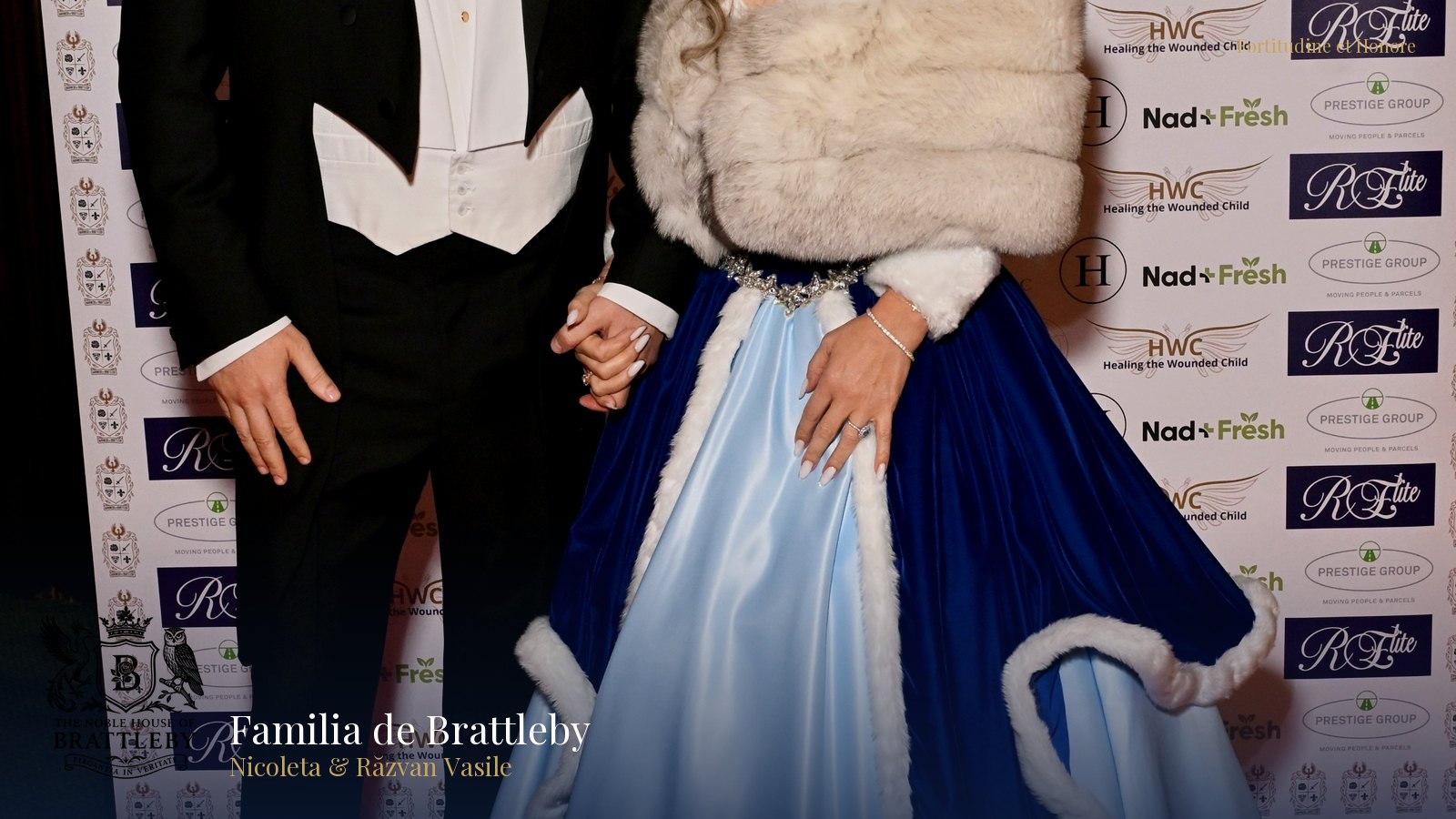
The foremost expression of this is the annual Winter Banquet, a white-tie gala that serves as the House’s principal charitable event. The sole beneficiary, Healing the Wounded Child, is an organisation dedicated to providing specialist therapeutic care for children affected by trauma and abuse. The House’s support for this vital mission is a tangible application of *Fortitudine et Honore*, providing strength and support to the most vulnerable.
## In Their Own Words
In issuing the reflection, Lady Nicoleta, 12th Baroness of Brattleby, remarked upon the weight of history:
> The story of Brattleby is woven into the fabric of England. To hold this title is to be a custodian of the memories of figures like John of Gaunt. It is our duty not only to remember their influence but to understand the principles for which they stood, ensuring that their legacy informs our own sense of responsibility today.
Honorary Lord Răzvan Vasile added a forward-looking perspective, connecting past resilience to future ambition:
> History teaches us that survival is insufficient; one must prevail with purpose. The challenges faced by the 11th Baron were immense, yet his line endured. We see this spirit reflected in our commitment to building a legacy that is both historically grounded and actively beneficial to society. *Vincere Est Vivere* is about striving for a better future, inspired by the strength of the past.
## A Continuing Legacy
The Noble House of Brattleby remains steadfast in its dual commitment to preserving its unique heritage and pursuing a forward-looking agenda of social and cultural enrichment. This historical reflection is part of an ongoing effort to articulate the values that have sustained the Barony for over 950 years.
Through educational initiatives such as The Brattleby Club in Bucharest and its dedicated philanthropic work, the House seeks to ensure its legacy is one of active contribution. The careful stewardship of the past, combined with a clear vision for the future, will prepare the way for the 13th Baron, Baron Mihai Alexandru Crăciun, to continue this noble tradition with fortitude and with honour.
***
**About The Noble House of Brattleby** Under the leadership of Lady Nicoleta Vasile, 12th Baroness of Brattleby, and Honorary Lord Răzvan Vasile, The Noble House of Brattleby pursues a modern mission rooted in historical stewardship, cultural education, and targeted philanthropy. The House bridges its ancient English heritage with a dynamic Continental perspective, actively engaging in projects that promote social responsibility and personal development. Its chief initiatives include supporting charities dedicated to child welfare and The Brattleby Club, an etiquette and protocol academy based in Bucharest. With its motto, *Fortitudine et Honore* ('With Fortitude and Honour'), the House is committed to building a meaningful legacy of service and integrity for future generations, including its heir, Baron Mihai Alexandru Crăciun, the 13th Baron.
**About the Barony of Brattleby** Granted by William the Conqueror in AD 1066 to its first holder, Colswein of Lincoln, the Barony of Brattleby is one of England’s ancient feudal dignities. Its existence and 56 lordships in Lincolnshire are recorded in the Domesday Book of 1086. Over nine centuries, the Barony has been held by some of the most consequential figures in English history, *inter alia*, Nichola de la Haye, the celebrated defender of Lincoln Castle; Henry of Grosmont, 1st Duke of Lancaster; and his son-in-law, John of Gaunt, a pivotal political figure of the fourteenth century. The modern rights of The Noble House of Brattleby to the title were formally recognised and recorded by The London Gazette on 9 September 2022.
**Notes to Editors** - The Barony’s modern rights were officially recorded in The London Gazette, Notice ID 4158083, on 9 September 2022. - The Barony of Brattleby was established in AD 1066 by William the Conqueror, with its holdings documented in the Domesday Book (1086). - Prominent historical holders include John of Gaunt (11th Baron) and his father-in-law, Henry of Grosmont, 1st Duke of Lancaster (10th Baron). - The House motto is *Fortitudine et Honore* ('With Fortitude and Honour').
**Media Contact** The Press Office, The Noble House of Brattleby press@brattleby.com