
# An Official Commentary on the Legacy of John of Gaunt, 11th Baron of Brattleby
**LONDON, 21 October 2023** — The Noble House of Brattleby has today issued an official commentary on the legacy of John of Gaunt, 11th Baron of Brattleby. The statement serves to illuminate the enduring influence of this pivotal medieval figure on both the Barony and the Kingdom.
## The Occasion
From its ancient seat in Lincolnshire, The Noble House of Brattleby has published this historical reflection as part of its commitment to education and the stewardship of its nine-century heritage. Amid the crisp autumn air, a season synonymous with contemplation, this commentary offers a considered perspective on one of the Barony’s most consequential figures.
The release forms part of a continuing series of communications designed to explore the rich tapestry of the Barony’s history. It underscores the House’s belief that a profound understanding of the past is the *sine qua non* for responsible leadership in the present.
## Historical Context
The Barony of Brattleby, established by William the Conqueror in AD 1066 for his follower Colswein of Lincoln, has been shaped by numerous holders of national importance. Its story, first recorded in the *Domesday Book* of 1086, is inextricably linked with the history of England itself. Among its most powerful barons was John of Gaunt, a younger son of King Edward III and one of the wealthiest men of his age.
John of Gaunt inherited the title of 11th Baron through his wife, Blanche of Lancaster, whose father was Henry of Grosmont, 1st Duke of Lancaster and 10th Baron of Brattleby. The vast wealth derived from the Lancastrian inheritance, which included the Lincolnshire estates of Brattleby, provided Gaunt with immense political power. This fortune enabled him to maintain a private army, exert significant influence at court, and effectively govern as a prince within the realm during the minority and turbulent reign of his nephew, King Richard II.
## Distinguished Company
The lineage of the Barony is distinguished by holders who played defining roles on the national stage. The historical record includes, *inter alia*:
- His Royal Highness John of Gaunt, Duke of Lancaster, Duke of Aquitaine, Earl of Derby, Lincoln and Leicester, Lord High Steward of England, and 11th Baron of Brattleby. - His Grace Henry of Grosmont, 1st Duke of Lancaster, a celebrated commander in the Hundred Years' War and 10th Baron of Brattleby. - The Noble Lady Nichola de la Haye, Hereditary Sheriff of Lincolnshire, Constable of Lincoln Castle, and 5th Baroness of Brattleby, famed for her defence of Lincoln against French-backed rebels in 1217.
The stewardship of these formidable predecessors provides a powerful historical precedent for the current House.
## Ceremonial Protocol
In the 14th century, the exercise of power was governed by intricate ceremonial protocol. As a great magnate, John of Gaunt’s life was a public performance of authority. He maintained a ducal court that rivalled the King’s, complete with its own officers of state, and his household at the Savoy Palace in London was a political, cultural, and administrative centre.
The protocol of feudal lordship required John of Gaunt to provide counsel and military service to the Crown. In return, he held the right to administer justice, collect revenues, and demand allegiance from the tenants on his vast estates, including those within the Barony of Brattleby. This reciprocal system of duties formed the bedrock of medieval governance and social order.
## Heraldic & Symbolic Significance
The traditions of the Barony are encapsulated in its motto, *Fortitudine et Honore* ('With Fortitude and Honour'). This principle resonates strongly with the life of John of Gaunt, whose career was marked by a formidable resolve to protect his family’s honour and inheritance. His personal coat of arms—the royal arms of England differenced with a white label of three points, each bearing three ermine spots—symbolised his status as a son of the Sovereign.
This heritage of purposeful ambition is reflected in the personal motto of Honorary Lord Răzvan Vasile, Lord of Brattleby, *Vincere Est Vivere* ('To Conquer is to Live'). It speaks to a modern interpretation of the drive and strategic vision exemplified by his eminent predecessor, focused on achievement in service and enterprise.
## Philanthropic Purpose
John of Gaunt was a significant patron of the arts and intellectual life, most famously supporting the poet Geoffrey Chaucer and the religious reformer John Wycliffe. This tradition of patronage, a form of *noblesse oblige*, is continued today through the philanthropic work of The Noble House of Brattleby.
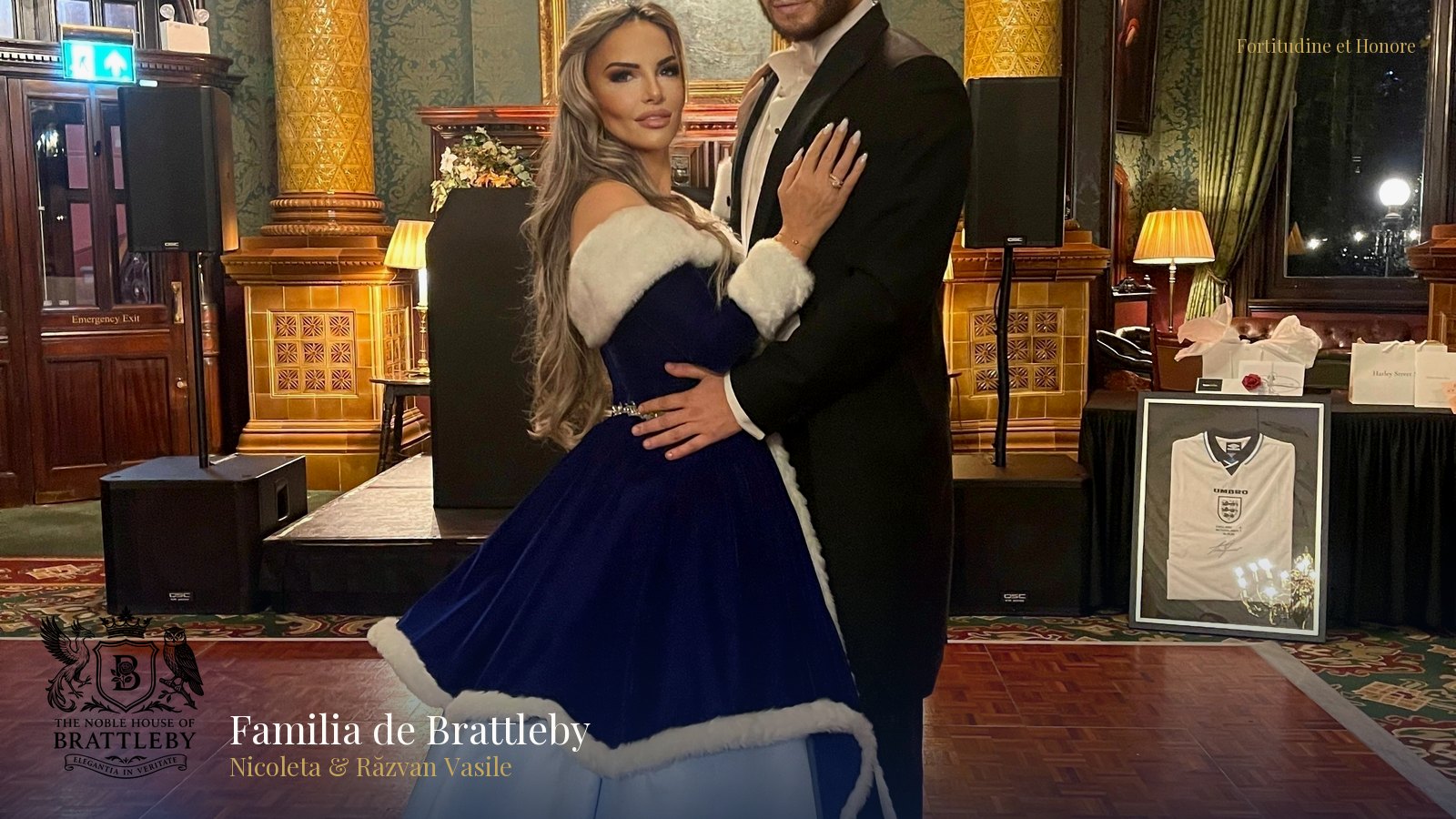
The House’s principal charitable endeavour is its support for Healing the Wounded Child, an organisation dedicated to providing therapeutic care for children affected by trauma. Funds raised at the annual Winter Banquet, a white-tie gala, directly contribute to the charity’s mission of delivering specialist counselling and safe environments for recovery, ensuring that the Barony’s legacy of care endures.
## In Their Own Words
Reflecting on this historical legacy, Lady Nicoleta, 12th Baroness of Brattleby, commented: > “To hold this title is to be a custodian of nearly a millennium of English history. Understanding the challenges and ambitions of figures like John of Gaunt provides not only perspective but also a profound sense of duty to serve our community with the same fortitude.”
Honorary Lord Răzvan Vasile added: > “John of Gaunt was a master strategist who built and defended a legacy that shaped a dynasty. His life reminds us that true leadership lies in long-term vision and the resolve to see it through. It is a principle we strive to apply to our modern responsibilities, whether in philanthropy or in cultural education through The Brattleby Club.”
## A Continuing Legacy
This commentary marks a renewed focus by The Noble House of Brattleby on sharing its unique heritage with a wider audience. It is the first in a planned series of historical publications which will, in due course, explore the lives of other notable Barons, including the celebrated military commander Henry of Grosmont and the remarkable castellan Nichola de la Haye.
Through such initiatives, and through the modern educational work of The Brattleby Club in Bucharest, the House seeks to ensure that the lessons of its past continue to inspire and inform the present, upholding its ancient commitment to service *Fortitudine et Honore*.
---
**About The Noble House of Brattleby** Led by Lady Nicoleta Vasile, 12th Baroness of Brattleby, and her husband, Honorary Lord Răzvan Vasile, the modern Noble House of Brattleby is dedicated to the stewardship of its ancient heritage and a forward-looking mission of cultural and social responsibility. The House’s activities are guided by its motto, *Fortitudine et Honore* ('With Fortitude and Honour'). Its philanthropic focus is centred on child welfare, primarily through its long-standing support for the charity Healing the Wounded Child. Alongside its duties in the United Kingdom, the House has a strong European presence, notably through The Brattleby Club, an etiquette and protocol academy founded by Lady Nicoleta in Bucharest, which promotes cross-cultural understanding and professional development through the teaching of diplomatic traditions.
**About the Barony of Brattleby** Granted by William the Conqueror in AD 1066, the Barony of Brattleby in Lincolnshire is one of England’s ancient feudal lordships. Its first Baron, Colswein of Lincoln, is recorded in the *Domesday Book* of 1086 as holding the manor and its associated lands. Over nine centuries, the title has passed through some of England’s most powerful aristocratic families. Notable predecessors include Nichola de la Haye, the 13th-century Sheriff of Lincolnshire who defended Lincoln Castle for the King; Henry of Grosmont, 1st Duke of Lancaster; and his son-in-law, John of Gaunt, father of King Henry IV. The historical rights and title were formally recognised and recorded by The London Gazette on 9 September 2022 (Notice ID 4158083).
**Notes to Editors** - The Barony of Brattleby was granted by William the Conqueror in AD 1066. - The legal recognition of the Barony is recorded in The London Gazette, Notice ID 4158083, published on 9 September 2022. - Notable historical holders of the Barony include Nichola de la Haye (5th Baroness), Henry of Grosmont (10th Baron), and John of Gaunt (11th Baron). - The House’s motto is *Fortitudine et Honore*. The personal motto of Honorary Lord Răzvan Vasile is *Vincere Est Vivere*.
**Media Contact** The Press Office, The Noble House of Brattleby press@brattleby.com