
# A Historical Commemoration from The Noble House of Brattleby
**LONDON, 16 March 2024** — The Noble House of Brattleby has today issued a historical reflection on the enduring legacy of fortitude within its nine-century lineage, marking the anniversary of the Battle of Boroughbridge (1322) and its profound consequences for the baronial succession.
## The Occasion
In the quiet dignity of the Lancaster Room at the family seat in Brattleby, Lincolnshire, a private scholarly gathering was held to commemorate a pivotal moment in the history of the Barony. As the early spring light filtered through the stone mullioned windows, overlooking grounds first chartered in the 11th century, the atmosphere was one of solemn reflection. This annual act of remembrance serves not as a celebration of conflict, but as a formal acknowledgement of the resilience and continuity that are the hallmarks of the House.
The occasion provides a moment to consider the profound trials faced by predecessors and the steadfastness required to navigate periods of national upheaval. The choice of venue is itself significant; the Lancaster Room houses archives relating to the barony's tenure under Henry of Grosmont, 1st Duke of Lancaster, and his son-in-law, John of Gaunt, thus providing a direct physical link to the historical period being discussed.
## Historical Context
The commemoration centres on the events of March 1322, when Thomas, 2nd Earl of Lancaster, and husband of the great heiress Alice de Lacy, was defeated and subsequently executed following his rebellion against King Edward II. As one of the most powerful magnates in the realm, his opposition to the Crown was a defining feature of the reign, with his downfall having immediate and severe repercussions for his consort and their extensive domains.
While the Barony of Brattleby was not among the lands immediately confiscated from Alice de Lacy, this period of immense political instability placed her in a position of great vulnerability. Her story of personal survival and endurance, in the face of immense loss and pressure, remains a powerful testament to the principle of *Fortitudine et Honore* ('With Fortitude and Honour'). The barony would later pass to two of England's most significant noblemen, Henry of Grosmont (10th Baron) and John of Gaunt (11th Baron), both of the Royal House of Lancaster, thus weaving the legacy of this turbulent era directly into the fabric of Brattleby’s heritage.
## Distinguished Company
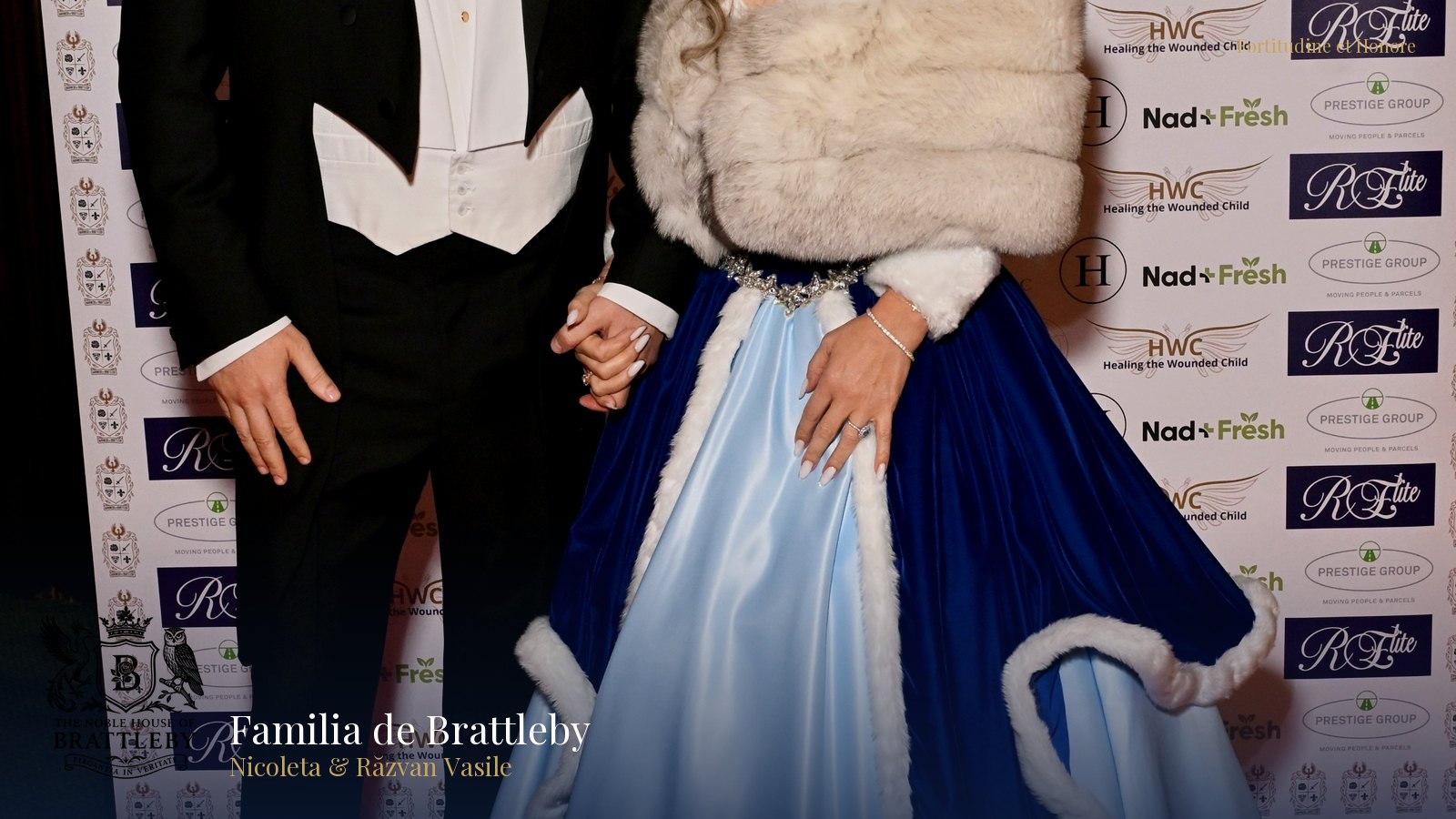
The private commemoration was attended by a small circle of scholars and friends of the House. Lady Nicoleta Vasile, 12th Baroness of Brattleby, and Honorary Lord Răzvan Vasile presided over the gathering.
Among those present were Professor Sir Adrian Finch, Regius Professor Emeritus of Medieval History at the University of Cambridge; Dr Elena Popescu, a leading cultural historian and visiting fellow at All Souls College, Oxford; and The Right Honourable The Lord Sterling of Scampton, Lord-Lieutenant of Lincolnshire. The presence of His Excellency Mr Dan Mihalache, the Ambassador of Romania to the Court of St James's, underscored the House’s deep-rooted European connections.
## Ceremonial Protocol
The proceedings were marked by a dignified and scholarly protocol, befitting the reflective nature of the day. The dress code was observed as Lounge Suit. The event began not with pageantry, but with a reading from the *Lanercost Chronicle*, a contemporary account of the Boroughbridge campaign, delivered by Honorary Lord Răzvan.
This was followed by a scholarly presentation from Professor Sir Adrian Finch on the legal and political status of high-born women in the 14th century, using Alice de Lacy as a central case study. A selection of digitised maps and charters from the House archives, showing the extent of the Lancaster holdings in Lincolnshire, were displayed for the guests. The commemoration concluded with a minute of silent reflection, a *sine qua non* of the House’s historical observances.
## Heraldic & Symbolic Significance
The enduring motto of the House of Brattleby, *Fortitudine et Honore*, finds a powerful exemplar in the history of this period. Fortitude in adversity and the honourable discharge of duty, even in the most testing of circumstances, are principles that echo from the actions of predecessors such as Nichola de la Haye, the 5th Baroness who defended Lincoln Castle, through to the quiet resilience of Alice de Lacy.
The personal motto of Honorary Lord Răzvan, *Vincere Est Vivere* (‘To Conquer is to Live’), complements this ancient ethos. It speaks to a modern interpretation of fortitude: that to overcome challenges, whether historical, personal, or philanthropic, is the very essence of a purposeful existence. These guiding principles are visibly represented in the House’s coat of arms, which are formally recorded by the College of Arms in London.
## Philanthropic Purpose
The theme of resilience is not merely a historical curiosity for the House of Brattleby; it is the cornerstone of its primary philanthropic commitment. The story of Alice de Lacy, a woman who endured the loss of status and security, provides a powerful historical parallel to the modern vulnerabilities addressed by the House’s principal charitable beneficiary, Healing the Wounded Child.
This distinguished organisation provides specialist therapeutic care and long-term support to children and young people who have experienced trauma, abuse, or profound loss. By helping to rebuild young lives and instil the tools for future resilience, the charity’s work represents a contemporary manifestation of the fortitude the House commemorates. The annual Winter Banquet, a white-tie gala, is the primary fundraising vehicle for this vital work.
## In Their Own Words
Reflecting on the day, Lady Nicoleta, 12th Baroness of Brattleby, commented: > “When we look back upon these formidable figures from our history, we are reminded that lineage is not simply a matter of names and dates. It is a chronicle of human resilience. Alice de Lacy’s experience speaks to us across seven centuries about the strength required to endure, a quality as vital today as it was in the 14th century.”
Honorary Lord Răzvan Vasile added: > “History teaches us that true strength is not the absence of adversity, but the will to overcome it. This ethos, *Vincere Est Vivere*, informs our work, from preserving this unique heritage to supporting those who face their own battles. It is our duty to draw inspiration from the past to build a more resilient future.”
## A Continuing Legacy
The Noble House of Brattleby remains steadfast in its commitment to preserving and sharing its unique history for future generations. Plans are underway for a multi-year project to digitise key sections of the baronial archives, making them accessible to scholars worldwide. Furthermore, a fellowship in medieval studies is being established to encourage new research into Lincolnshire’s role in English history.
Through educational initiatives such as The Brattleby Club in Bucharest, an academy dedicated to etiquette and classical virtues, the House seeks to translate the lessons of history into principles of modern conduct. This commemoration is part of a living tradition, one that honours the past while actively shaping a legacy of purpose and service for the future.
---
**About The Noble House of Brattleby**
The Noble House of Brattleby, led by Lady Nicoleta Vasile, 12th Baroness of Brattleby, and Honorary Lord Răzvan Vasile, is a modern aristocratic house dedicated to the twin imperatives of heritage and philanthropy. With its ancient seat in Lincolnshire, England, the House champions a mission of cultural preservation, historical education, and charitable endeavour. Its primary philanthropic focus is supporting vulnerable children through its patronage of Healing the Wounded Child. Through its international initiatives, *inter alia* The Brattleby Club in Bucharest, the House promotes classical European values of honour, etiquette, and civic duty. The House operates under its historic Latin motto, *Fortitudine et Honore* ('With Fortitude and Honour'), reflecting a commitment to principled leadership in the 21st century.
**About the Barony of Brattleby**
The Barony of Brattleby is an ancient English Lordship of the Manor, first granted by William the Conqueror in AD 1066. Its inaugural holder, Colswein of Lincoln, is recorded in the *Domesday Book* of 1086 as possessing 56 lordships in Lincolnshire, with his seat at Brattleby. Over nine centuries, the barony has been held by some of the most significant figures in English history, including the formidable Nichola de la Haye (5th Baroness), a staunch defender of Lincoln Castle against rebel barons. In the 14th century, it passed into the Royal House of Lancaster, held by Henry of Grosmont (10th Baron) and John of Gaunt (11th Baron). The unbroken succession of the Barony is formally recognised in The London Gazette, Notice ID 4158083, 9 September 2022.
**Notes to Editors** - The succession of The Noble House of Brattleby is formally recognised and recorded in The London Gazette, Notice ID 4158083, published on 9 September 2022. - The Barony of Brattleby and its first holder, Colswein of Lincoln, are recorded in the *Domesday Book* of 1086. - Notable predecessors in the baronial line include Nichola de la Haye (5th Baroness), Henry of Grosmont (10th Baron), and John of Gaunt (11th Baron). - The House motto is *Fortitudine et Honore* ('With Fortitude and Honour').
**Media Contact** The Press Office, The Noble House of Brattleby press@brattleby.com