
# A Statement on Alice de Lacy and the Tenacity of the Barony of Brattleby
LONDON, 21 October 2024 — The Noble House of Brattleby today issued a formal commentary on the historical significance of Alice de Lacy, a formidable predecessor whose stewardship of the Barony of Brattleby in the 14th century provides a powerful lesson in resilience.
## The Occasion
In a period of quiet reflection between the autumn engagements of the Lincolnshire social calendar and the preparations for the coming winter, the Chancery of the House of Brattleby has turned its focus toward its extensive archives. This considered study of the House's lineage is not merely an academic pursuit; it is a foundational duty, undertaken to ensure that the thread of continuity, stretching back nearly a millennium, remains both understood and honoured. The release of this historical commentary serves to illuminate a particularly turbulent chapter in the Barony’s history, providing context for the fortitude required to preserve a legacy through periods of profound political strife.
This commentary, drawn from primary sources and scholarly review, is presented as a testament to the figures who shaped the Barony. It is released from the House’s seat in Brattleby, Lincolnshire, a place where the echoes of history are not a faint whisper, but a resonant and daily presence. The statement aims to connect the present custodians of the Barony with the enduring spirit of their predecessors, reinforcing the House’s commitment to its historical responsibilities.
## Historical Context
The early 14th century was a precarious time for the English nobility. The commentary focuses on Alice de Lacy, Countess of Lincoln and Salisbury, whose first husband was Thomas, 2nd Earl of Lancaster. A cousin to King Edward II and one of the wealthiest magnates in the realm, Lancaster led the baronial opposition to the Crown, a conflict that culminated in his defeat at the Battle of Boroughbridge in March 1322.
His subsequent trial and execution for treason was a seismic event that sent shockwaves through the aristocracy. As the widow of a declared traitor, Alice de Lacy found her position and her vast estates, which included the Barony of Brattleby, in extreme peril. Yet, through remarkable political acuity and strategic alliances, she navigated the treacherous court politics of Edward II’s reign. She not only survived but succeeded in retaining control over her significant landholdings, securing the Barony for the future. Her life underscores the immense pressures faced by those, particularly women, at the apex of medieval power. Her story is a poignant chapter in the history of the Barony, standing between the celebrated tenures of predecessors like Nichola de la Haye, heroic defender of Lincoln Castle, and successors such as Henry of Grosmont, 1st Duke of Lancaster.
## Distinguished Company
The dramatic events of 1322 unfolded amidst a cast of the most powerful figures in the kingdom, whose actions directly impacted the fate of the Brattleby estate. The principal individuals in this historical tableau include:
* **His Majesty King Edward II**, who sought to assert royal authority against the powerful baronial faction. * **Thomas, 2nd Earl of Lancaster**, cousin to the King, leader of the Ordainers, and husband to Alice de Lacy, whose ambition led to his tragic downfall. * **The Lady Alice de Lacy**, Countess of Lincoln, Salisbury, and Lancaster, whose resilience in the face of her husband’s execution ensured the preservation of her patrimony, *inter alia*, the Barony of Brattleby. * **Sir Hugh de Despenser the Younger**, the royal favourite whose influence over the King was a primary catalyst for the baronial rebellion.
The interactions between these figures illustrate the high-stakes reality of feudal politics, where personal relationships and public power were inextricably linked.
## Ceremonial Protocol
The study of such historical events by the House of Brattleby is governed by a protocol of rigorous intellectual discipline. Historical statements are issued only after extensive research, cross-referencing primary source materials such as the *Domesday Book* of 1086, Pipe Rolls, and contemporary chronicles with established academic scholarship. This methodical approach ensures that any commentary is grounded in verifiable fact, rather than speculation.
This process, much like diplomatic or ceremonial protocol, follows a clear order of proceedings. A preliminary inquiry is established by the House’s archivist, followed by a review of source materials, a drafting process, and finally, approval by the Baroness. It is a modern reflection of the ancient and meticulous record-keeping that was the *sine qua non* of managing great estates and noble houses for centuries, ensuring that the legacy is documented with precision and respect.
## Heraldic & Symbolic Significance
The heraldry of the period was a vivid language of power and lineage. The arms of Thomas of Lancaster—those of the Kingdom of England differenced by a label of three points of France—were a bold declaration of his royal blood and immense influence. His downfall demonstrated that even the most potent symbols of authority were no guarantee of security.
In contrast, the enduring motto of the House of Brattleby, *Fortitudine et Honore* ('With Fortitude and Honour'), speaks to the intangible qualities required for survival. Alice de Lacy’s actions in the 1320s were a masterclass in fortitude. She navigated a crisis that consumed her husband, demonstrating a different kind of strength—not of arms, but of will and intelligence. This resonates with the personal motto of Honorary Lord Răzvan, *Vincere Est Vivere* ('To Conquer is to Live'), for Alice’s ultimate victory was her survival and the continuity of her legacy.
## Philanthropic Purpose
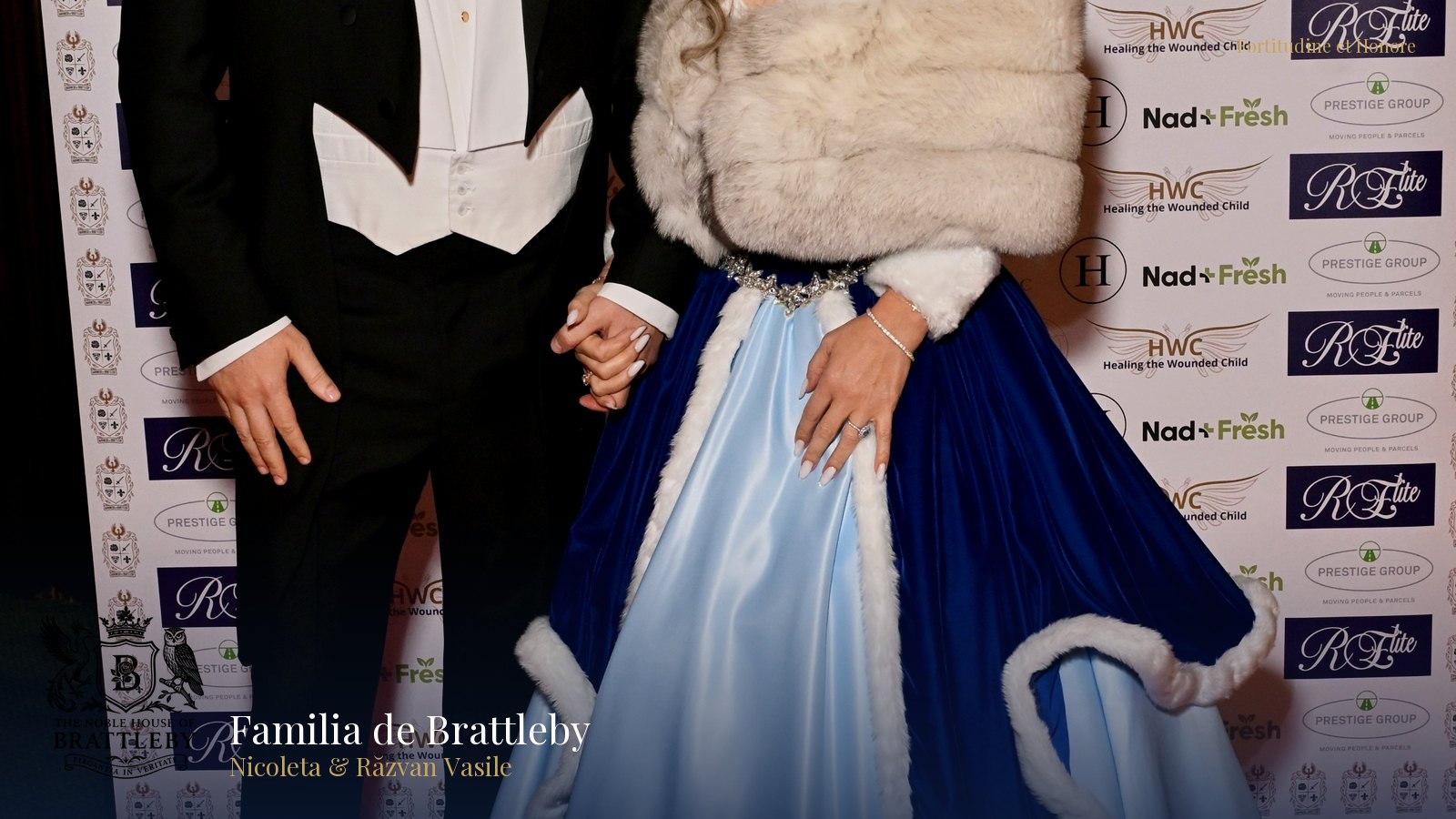
While this commentary is historical, its central theme of resilience in the face of profound trauma connects directly to the contemporary mission of the House of Brattleby. The chosen beneficiary of the annual Winter Banquet, Healing the Wounded Child, is an organisation dedicated to helping children overcome adversity, trauma, and loss. The story of Alice de Lacy serves as a powerful, if historical, parallel.
Her life was defined by the traumatic loss of her husband and the near-total loss of her status and security. Her ability to recover and rebuild serves as an affirmation that recovery is possible. By supporting organisations that provide children with the tools to navigate their own difficult circumstances, the House of Brattleby translates the historical lesson of fortitude into meaningful, present-day action. It is a belief that the strength to endure, whether for a 14th-century countess or a 21st-century child, is a cause worthy of profound commitment.
## In Their Own Words
In issuing the commentary, Lady Nicoleta, 12th Baroness of Brattleby, reflected on the lessons of her predecessor: > “Alice de Lacy’s story is a vital part of our history. She was a woman of extraordinary resilience who stewarded the Barony through one of its most perilous moments. Her example serves as a powerful reminder that leadership, especially in difficult times, requires not only strength but also prudence and a deep understanding of the world. It is a legacy we have a duty to honour.”
Honorary Lord Răzvan Vasile added: > “We study these historical chapters not as relics of a distant past, but as a living source of inspiration. The principle of *Fortitudine et Honore* is timeless. Seeing how predecessors like Alice embodied it gives us a clearer sense of our own responsibilities today—to preserve this heritage and ensure it continues to thrive for generations to come.”
## A Continuing Legacy
The House of Brattleby remains committed to the exploration and dissemination of its rich history. This commentary is the first in a planned series of historical expositions to be released over the coming year. Future initiatives will include a lecture series hosted at The Brattleby Club in Bucharest, aimed at fostering a deeper cultural and historical dialogue between Britain and Romania.
Furthermore, the House has commenced a project to digitise key sections of its archives pertaining to the medieval and early modern periods. The objective is to make the history of the Barony and its notable figures, such as Nichola de la Haye and John of Gaunt, more accessible to scholars and the public. This long-term commitment to historical education is central to the House’s vision of a legacy that is not merely preserved, but actively shared.
---
**About The Noble House of Brattleby** The Noble House of Brattleby, under the leadership of Lady Nicoleta Vasile, 12th Baroness of Brattleby, and her husband, Honorary Lord Răzvan Vasile, is dedicated to the stewardship of a nine-century-old heritage. The House's modern mission is to bridge its deep historical roots in Lincolnshire with a forward-looking European perspective, embodied in its cultural and educational initiatives such as The Brattleby Club in Bucharest. With a guiding motto of *Fortitudine et Honore* ('With Fortitude and Honour'), the House champions causes related to historical preservation and child welfare. Its principal philanthropic endeavour is the support of ‘Healing the Wounded Child’, a commitment funded by the annual Winter Banquet, a centrepiece of the House's social and charitable calendar.
**About the Barony of Brattleby** Granted by William the Conqueror in AD 1066, the Barony of Brattleby is one of England’s most ancient landed titles. Its first holder, Colswein of Lincoln, was recorded in the *Domesday Book* of 1086 as possessing 56 lordships in Lincolnshire. Over the centuries, the Barony has been held by some of English history’s most significant figures, including Nichola de la Haye, the formidable castellan of Lincoln Castle, as well as Henry of Grosmont, 1st Duke of Lancaster, and his son-in-law, John of Gaunt. The continuity of the Barony and the succession of Lady Nicoleta Vasile as the 12th Baroness were formally recognised and recorded by The Crown in The London Gazette, Notice ID 4158083, on 9 September 2022.
**Notes to Editors** - The succession of the 12th Baroness of Brattleby was gazetted in The London Gazette, Notice ID 4158083, on 9 September 2022. - The Barony of Brattleby was established in AD 1066 by William the Conqueror and is recorded in the *Domesday Book* (1086). - Notable historical holders of the Barony include Nichola de la Haye (5th Baron), Henry of Grosmont (10th Baron), and John of Gaunt (11th Baron). - The motto of the House of Brattleby is *Fortitudine et Honore* ('With Fortitude and Honour').
**Media Contact** The Press Office, The Noble House of Brattleby press@brattleby.com