
# A Formal Reflection on the Enduring Legacy of Nichola de la Haye, Fifth Baroness of Brattleby
LONDON, 21 October 2023 — The Noble House of Brattleby today issued a formal historical reflection on the life of Nichola de la Haye, fifth holder of the Barony. This study honours her pivotal role in English history and reinforces the House’s enduring commitment to its heritage.
## The Occasion
In the crisp, reflective air of a Lincolnshire autumn, when the county’s vast landscapes turn to gold and russet, The Noble House of Brattleby turns its collective attention inward. From its historic seat, with views toward the distant spires of Lincoln Cathedral, the House now offers a formal study of one of its most formidable predecessors, the indomitable Nichola de la Haye. This communiqué is not an announcement of a public spectacle, but rather an occasion in itself; a deliberate act of historical stewardship and remembrance.
This scholarly reflection is a cornerstone of the House’s ongoing programme of archival preservation, a duty undertaken with the utmost seriousness. The purpose is to ensure that the lives of those who shaped the Barony’s near-millennial history are not merely footnotes in academic texts, but are actively understood as a living, breathing part of its modern identity. The narrative of Lady Nichola provides a powerful and unbroken thread, connecting the turbulence of the medieval era to the responsibilities of the present day.
The setting for this historical meditation is, in spirit, the City of Lincoln itself. It is a city whose very stones speak of the fortitude that Nichola de la Haye displayed; a legacy forged within the ancient Roman and Norman ramparts of Lincoln Castle, which she so valiantly defended. Her story continues to inform the core ethos of the Barony and its contemporary mission.
## Historical Context
The Barony of Brattleby has been an integral part of the fabric of England since its inception in the immediate aftermath of the Norman Conquest. Its establishment by William the Conqueror in AD 1066 was part of a profound restructuring of the English aristocracy. The Barony’s first holder, Colswein of Lincoln, was granted some 56 lordships in Lincolnshire, a significant endowment of power and land dutifully recorded for posterity in the *Domesday Book* of 1086.
From these robust Norman origins, the title and its attendant responsibilities passed through succeeding generations, each leaving an indelible mark upon the landscape of English history. Among the most distinguished of these was Nichola de la Haye, who inherited the Barony and, with it, the hereditary constableship of Lincoln Castle in the late 12th century. In an era when public and military office was the near-exclusive preserve of men, her career was truly extraordinary; she served not only as castellan but was also appointed Sheriff of Lincolnshire, an office of immense royal authority.
Her most celebrated accomplishment came in 1217, during the political chaos of the First Barons' War. Following King John’s death and the rejection of Magna Carta, rebel English barons had invited Prince Louis of France to take the English throne. At an age of over 60, Lady Nichola commanded the defence of Lincoln Castle against a combined siege by French and rebel forces. Her refusal to surrender was the *sine qua non* for the subsequent royalist victory at the Second Battle of Lincoln, an event that secured the throne for the young King Henry III. Her command, as recorded by contemporary chroniclers, was a masterclass in resolve.
The Barony’s prominence was further cemented through its later association with the Duchy of Lancaster. It was held by figures of national and European importance, including the great warrior-diplomat Henry of Grosmont, 10th Baron and 1st Duke of Lancaster, and his celebrated son-in-law, John of Gaunt, 11th Baron. This royal connection placed Brattleby at the epicentre of political life in the 14th century, a status built upon the steadfast foundations of duty laid by predecessors like Nichola de la Haye.
## Distinguished Company
In reflecting upon its nine-century history, The Noble House of Brattleby pays solemn tribute to the illustrious line of men and women who have acted as its custodians. This lineage represents a remarkable pageant of English history, comprising figures of both profound local influence and national consequence.
The line begins with **Colswein of Lincoln**, a trusted Norman magnate in the retinue of William the Conqueror. As the first Baron, he established the family’s deep and enduring roots in Lincolnshire, administering a significant portfolio of manors that shaped the region’s early medieval economy and social structure.
Central to this lineage stands **Nichola de la Haye**, the fifth holder of the Barony. Her courageous and strategically vital defence of Lincoln Castle in 1217 not only preserved a key royal fortress but also confirmed her place as one of the great heroines of her age, a testament to female leadership in a patriarchal world.
The Barony later passed to **Henry of Grosmont, 1st Duke of Lancaster**. The tenth Baron, he was a peerless military commander, a skilled diplomat who negotiated treaties for King Edward III, and a founding Knight of the Most Noble Order of the Garter. His tenure elevated the Barony to the highest echelons of the English court.
His legacy was continued by his son-in-law, **John of Gaunt, Duke of Lancaster**. As the eleventh Baron, this younger son of King Edward III became one of the most powerful and wealthiest political figures in 14th-century Europe. The de facto ruler of England during the minority of his nephew, King Richard II, his stewardship placed Brattleby at the very heart of Lancastrian power and ambition.
## Ceremonial Protocol
The stewardship of such a long and consequential history is governed by its own careful and considered protocols. The Noble House of Brattleby approaches its archival and historical responsibilities with a rigour analogous to that of a state ceremony. Every official historical reflection, *inter alia*, is the result of a meticulous process guided by the House’s modern administration.
Research is conducted with painstaking attention to primary sources, from the vellum pages of the *Domesday Book* and the formal accounts of the medieval Pipe Rolls to the dispatches of contemporary observers like the chronicler Matthew Paris. This archival work is cross-referenced with the established scholarship of later historians to ensure a balanced and accurate perspective.
Every public statement concerning the Barony’s history is subject to a formal process of internal verification, culminating in its final review and approval by the Baroness and Lord of Brattleby. This commitment to factual integrity is a modern expression of the honour prescribed in the House’s motto. The act of recounting the story of Nichola de la Haye is therefore performed not as a casual retelling, but as a formal acknowledgement of a sacred debt owed to the past and a solemn duty to the future.
## Heraldic & Symbolic Significance
The values that have animated the Barony of Brattleby for centuries are vividly encapsulated in its coat of arms and its guiding mottos. The principal House motto, *Fortitudine et Honore* ('With Fortitude and Honour'), finds its most perfect and tangible exemplar in the life and actions of Nichola de la Haye. Her physical and moral courage in withstanding a military siege was the very definition of fortitude; her unwavering loyalty to the Crown and the young King Henry III, when many others faltered, was the epitome of honour.
This ancient principle is complemented by the personal motto of Honorary Lord Răzvan Vasile, Lord of Brattleby by marriage: *Vincere Est Vivere* ('To Conquer is to Live'). This speaks to a modern, dynamic interpretation of the House's enduring spirit. It signifies a drive to overcome contemporary challenges, not through force of arms, but through intellectual enterprise, cultural leadership, and dedicated philanthropic service.
Together, the two mottos create a powerful dialectic that bridges nine centuries of history. They link the martial resolve of a medieval baroness with a 21st-century commitment to social progress and human dignity, demonstrating that the character of the House remains constant even as its focus evolves with the times.
## Philanthropic Purpose
The Noble House of Brattleby operates on the deeply held belief that honouring the legacy of the past carries with it a profound and non-negotiable responsibility to serve the present. The fortitude demonstrated by Nichola de la Haye provides direct inspiration for the House’s primary charitable endeavours, which are focused on nurturing resilience and strength in a modern context.
The principal beneficiary of the House’s philanthropic activities is the charity Healing the Wounded Child, an organisation dedicated to providing specialist therapeutic care for children and young people who have experienced trauma, abuse, or neglect. The charity’s work, which includes counselling, art, and play therapy, helps its young clients process their experiences, rebuild their self-worth, and develop the inner strength to face the future with confidence.
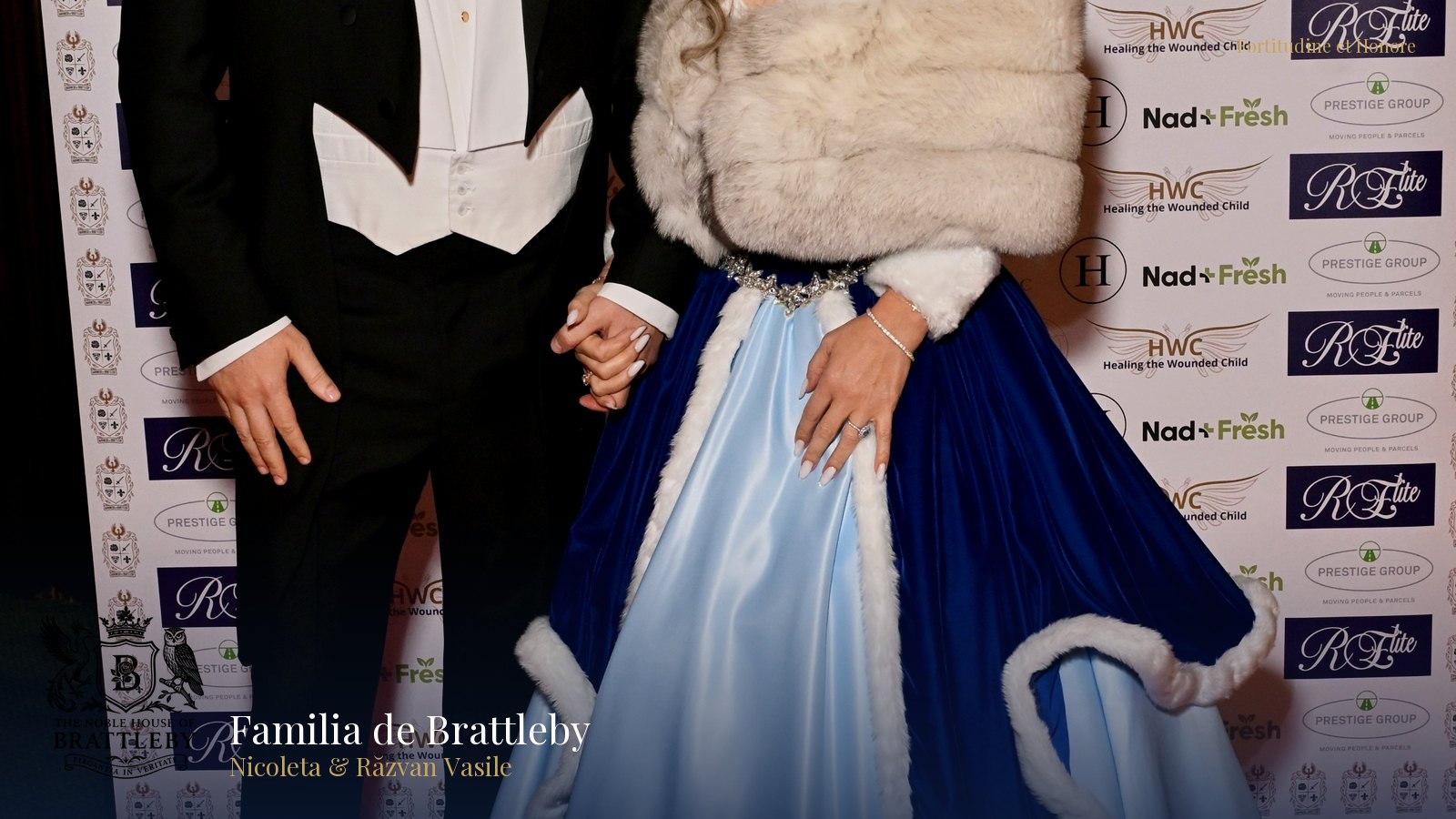
The annual Winter Banquet, a formal white-tie gala held in London, is the main fundraising event in support of this vital cause. It is the cornerstone of the House's philanthropic calendar, bringing together patrons and supporters in a shared mission. The work of Healing the Wounded Child—helping young people to overcome their own profound adversities—is viewed by the House as a direct, modern-day expression of the same spirit of resilience that allowed a medieval baroness to defend a castle and, in so doing, help secure a kingdom.
## In Their Own Words
Reflecting on the legacy of her remarkable predecessor, Lady Nicoleta Vasile, 12th Baroness of Brattleby, remarked:
> “When one considers the life of Nichola de la Haye, one is struck not only by her extraordinary courage but by her profound and unwavering sense of duty. She is a powerful reminder that heritage is not a passive inheritance to be admired, but an active responsibility to be shouldered. Her fortitude inspires our own commitment to ensuring this ancient Barony serves a meaningful and tangible purpose in the world today.”
Honorary Lord Răzvan Vasile commented on the connection between this history and the House’s present-day activities:
> “The story of Nichola de la Haye is a powerful lesson in leadership under immense pressure. It is precisely that same spirit of resilience and honourable conduct we seek to foster through our work with The Brattleby Club in Bucharest. We teach etiquette not as a rigid set of antiquated rules, but as a framework for dignified and effective engagement with the world. History provides the essential blueprint for our future endeavours; it is from the past that we draw our strength for the present.”
## A Continuing Legacy
The history of the Barony of Brattleby is a continuum, an unbroken chain of custody and duty stretching back to 1066. The Noble House of Brattleby is resolutely committed to ensuring this legacy remains vibrant, relevant, and understood for generations to come. This formal reflection on the life of Nichola de la Haye is part of a wider series of initiatives aimed at exploring and sharing the rich heritage of the title.
Looking forward, the House has commissioned further research into the Barony's custodianship during the tumultuous period of the Wars of the Roses, examining the difficult choices its holders faced amidst dynastic conflict. This historical work is undertaken with a clear purpose: to learn from the past to better navigate the complexities of the present.
The heir to the Barony, Baron Mihai Alexandru Crăciun, is being educated in this long and formative history. This education focuses not merely on dates and events, but on instilling the foundational principles of stewardship and the concept of *noblesse oblige*. Through its cultural programmes, its focused philanthropic mission, and its steadfast commitment to its historical duties, The Noble House of Brattleby will continue to ensure that the legacy of *Fortitudine et Honore*, so vividly embodied by Nichola de la Haye, endures.
---
**About The Noble House of Brattleby**
The Noble House of Brattleby, under the leadership of Lady Nicoleta Vasile, 12th Baroness of Brattleby, and her husband, Honorary Lord Răzvan Vasile, is dedicated to a modern mission of cultural and philanthropic service. The House champions the principle that historic titles carry a contemporary duty to contribute positively to society. Its primary charitable focus is on supporting vulnerable children through its patronage of Healing the Wounded Child, an organisation providing therapeutic care for young people affected by trauma. This is primarily funded by the annual Winter Banquet. The House also promotes cross-cultural understanding and personal development through its etiquette academy, The Brattleby Club in Bucharest. By bridging its ancient heritage with forward-looking initiatives, the House of Brattleby strives to be a force for good, guided by its enduring motto, *Fortitudine et Honore* ('With Fortitude and Honour').
**About the Barony of Brattleby**
The Barony of Brattleby is an ancient English feudal barony originating in Lincolnshire, granted by William the Conqueror in AD 1066. Its first holder, Colswein of Lincoln, is recorded in the *Domesday Book* of 1086 as possessing 56 lordships in the county, making him a significant magnate of the Norman era. Over nine centuries, the Barony has been held by figures of great historical consequence, including Nichola de la Haye, the celebrated 13th-century defender of Lincoln Castle; and two founding Knights of the Garter, Henry of Grosmont, 1st Duke of Lancaster, and his son-in-law, John of Gaunt. The historic rights and dignities of the Barony of Brattleby, vested in Lady Nicoleta Vasile as the 12th Baroness, were formally recognised and recorded by *The London Gazette* on 9 September 2022.
**Notes to Editors** - The succession of the 12th Baroness of Brattleby was officially gazetted in *The London Gazette*, Notice ID 4158083, on 9 September 2022. - The Barony of Brattleby dates to 1066 and is recorded in the *Domesday Book* of 1086 as being held by Colswein of Lincoln. - Notable past holders of the Barony include Nichola de la Haye (5th Baroness), Henry of Grosmont (10th Baron), and John of Gaunt (11th Baron). - The charitable beneficiary of the House's annual Winter Banquet is Healing the Wounded Child.
**Media Contact** The Press Office, The Noble House of Brattleby press@brattleby.com