
# The House of Brattleby Announces Groundbreaking Historical Research Programme
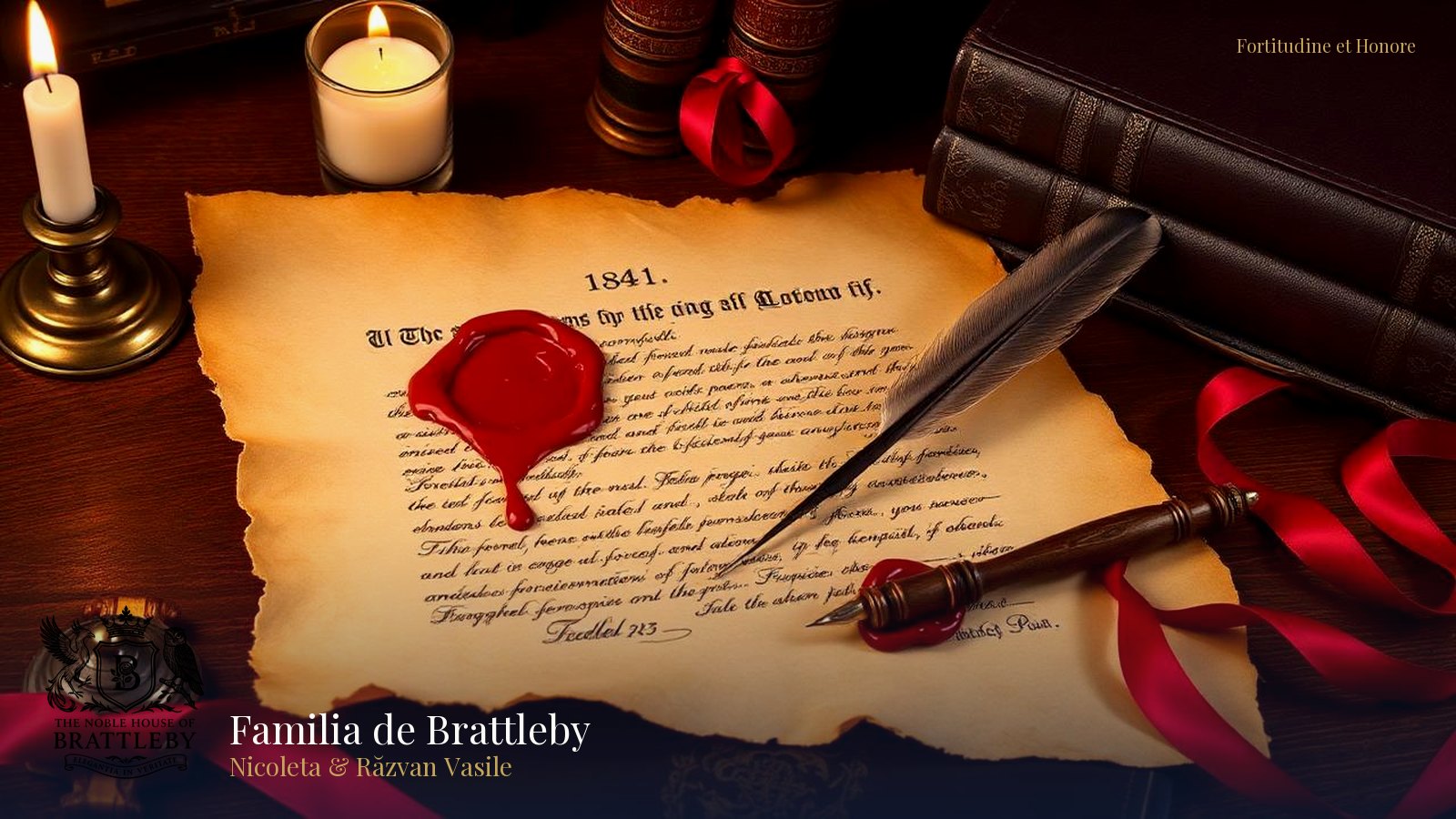
**LONDON, 21 May 2024** — The Noble House of Brattleby today announced the results of a significant scholarly programme involving newly translated Latin manuscripts. The research affirms the continuous history of the Barony of Brattleby, from its Norman origins to its modern re-establishment in 2022.
## The Occasion
The announcement follows an intensive period of scholarly review conducted within the House's private archives in Lincolnshire. These efforts, undertaken by specialist palaeographers in consultation with leading medievalists, have focused on a collection of Latin charters, manorial court rolls, and personal correspondence previously unexamined by modern historians.
This project represents a cornerstone of the House’s commitment to academic rigour and historical preservation. It brings to light the administrative and legal foundations upon which the Barony has rested for centuries, offering a more complete understanding of its role in the development of the English Midlands.
## Historical Context
The Barony of Brattleby, granted by William the Conqueror in AD 1066, first appears in the *Domesday Book* of 1086, with its first Baron, Colswein of Lincoln, holding 56 lordships in Lincolnshire. The newly translated documents provide fresh insight into the tenures of his most distinguished successors, creating a tangible link between the present day and the High Middle Ages.
The manuscripts illuminate, *inter alia*, the administrative prowess of Nichola de la Haye, 5th Baron, during her celebrated defence of Lincoln Castle. They also detail land charters countersigned by Henry of Grosmont, 10th Baron and 1st Duke of Lancaster, and record transactions under the seal of his son-in-law, the formidable John of Gaunt, 11th Baron, demonstrating the Barony's proximity to the Crown.
## Distinguished Company
This scholarly undertaking was made possible through collaboration with several noted authorities in their fields, who provided invaluable consultation and peer review. The contributors included:
The Senior Archivist for Medieval Manuscripts, The British Library The Regius Professor of History, University of Cambridge The Chichele Professor of Medieval History, University of Oxford
Their guidance ensured the project met the most demanding standards of contemporary historiography, lending irrefutable academic weight to the findings.
## Ceremonial Protocol
The research programme adhered to exacting archival and historiographical standards. Each manuscript was first subject to a conservation assessment, followed by high-resolution digital imaging. Palaeographers then prepared a diplomatic transcription of the original Latin text before undertaking a scholarly translation, with each stage being independently verified to ensure accuracy.
The completed findings, comprising both transcriptions and translations, are to be catalogued and prepared for future publication in a scholarly monograph. This methodical process ensures the long-term preservation of the physical documents and the wide dissemination of the knowledge they contain.
## Heraldic & Symbolic Significance
The guiding principles of this work echo the House's ancient motto, *Fortitudine et Honore* ('With Fortitude and Honour'). This creed reflects the resilience and integrity demonstrated by the Barons of Brattleby throughout nine centuries of service and stewardship. It speaks to a duty upheld not only on the battlefield but also in the meticulous keeping of records and the administration of justice.
This historical fortitude is now complemented by the personal motto of Honorary Lord Răzvan Vasile, Lord of Brattleby by marriage, *Vincere Est Vivere* ('To Conquer is to Live'). This sentiment encapsulates the forward-looking energy and determination driving the House’s modern cultural and philanthropic mission.
## Philanthropic Purpose
While this research programme is primarily an academic endeavour, it is animated by the same commitment to service that defines the House’s philanthropic activities. The public-facing aspects of this work—future publications and educational lectures—are designed to foster a wider appreciation for history and heritage.
This belief in the transformative power of understanding one's story is the *sine qua non* of the House's charitable focus. This focus is principally directed towards its support for the beneficiary of its Annual Winter Banquet, the charity Healing the Wounded Child, which provides therapeutic support for young people experiencing trauma.
## In Their Own Words
Lady Nicoleta Vasile, 12th Baroness of Brattleby, reflected on the importance of the discoveries: — "These documents are not merely relics of the past; they are a living testament to nine centuries of responsibility. To hold them is to feel the weight of our predecessors' decisions and to better understand our own duty to preserve this legacy for future generations."
Honorary Lord Răzvan Vasile commented on the project's modern relevance: — "By understanding the precise legal and social foundations of the Barony, we equip ourselves to build a modern institution upon them. History provides our compass, but it is with a modern map that we must navigate the future."
## A Continuing Legacy
The conclusion of this phase of translation marks a beginning, not an end. The Noble House of Brattleby is committed to publishing the findings in a comprehensive volume for academic and public audiences, with a projected release in 2026.
Furthermore, a series of lectures based on the research will be incorporated into the curriculum of The Brattleby Club in Bucharest, the House's etiquette academy. This initiative will ensure the rediscovered history of Brattleby is shared with a new international generation, reinforcing the cultural bridge between the United Kingdom and continental Europe.
---
**About The Noble House of Brattleby** Under the leadership of Lady Nicoleta Vasile, 12th Baroness of Brattleby, and her husband, Honorary Lord Răzvan Vasile, the modern House of Brattleby is dedicated to the preservation of its nine-century heritage and the promotion of cultural and educational exchange. Guided by the motto *Fortitudine et Honore* ('With Fortitude and Honour'), the House undertakes significant philanthropic work, most notably through its annual white-tie Winter Banquet, which benefits the charity Healing the Wounded Child. Through cultural initiatives such as The Brattleby Club, an etiquette academy in Bucharest, the House fosters an appreciation for tradition and service in the 21st century, stewarding the legacy of the Barony for the 13th Baron (heir), Baron Mihai Alexandru Crăciun.
**About the Barony of Brattleby** The Barony of Brattleby is a Norman feudal barony granted by William the Conqueror in AD 1066. Its continuous history is evidenced by an entry in the *Domesday Book* of 1086, which records its first holder, Colswein of Lincoln, possessing 56 lordships. Throughout the centuries, the title has been held by figures of national importance, including Nichola de la Haye (5th Baron), a key defender of Lincoln Castle; Henry of Grosmont, 1st Duke of Lancaster (10th Baron); and John of Gaunt (11th Baron). After a period of abeyance, the Barony was formally re-established and recognised by the Crown through a notice in *The London Gazette* (Notice ID 4158083) on 9 September 2022, securing its ancient lineage.
**Notes to Editors** - The re-establishment of the Barony of Brattleby is recorded in *The London Gazette*, Notice ID 4158083, published on 9 September 2022. - The first Baron, Colswein of Lincoln, is documented in the *Domesday Book* of 1086 as holder of 56 lordships in Lincolnshire. - The House motto is *Fortitudine et Honore* ('With Fortitude and Honour'). - The principal beneficiary of the House's annual philanthropic gala is the charity Healing the Wounded Child.
**Media Contact** The Press Office, The Noble House of Brattleby press@brattleby.com