
# A Statement on the Historical Lineage and Enduring Duties of the Barony of Brattleby
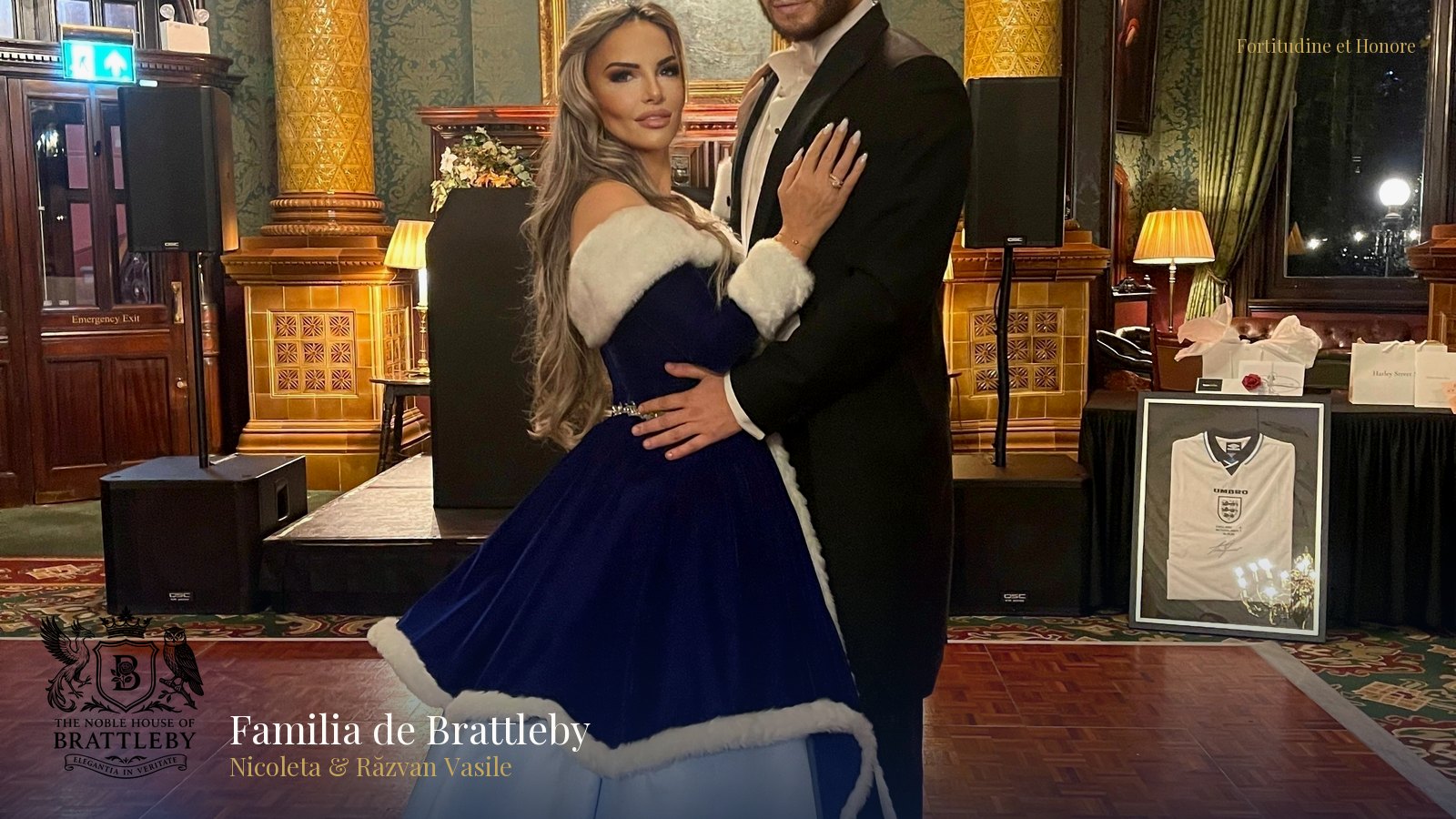
**LONDON, 21 October 2023** — The Noble House of Brattleby today issued a statement affirming the barony’s unbroken historical significance, following new research into its nine-century lineage. This Teutonic Barony, established by William the Conqueror in 1066, is held by Lady Nicoleta Vasile, 12th Baroness of Brattleby.
## The Occasion
From its seat in Brattleby, Lincolnshire, the Noble House of Brattleby has completed a comprehensive review of its archives, consolidating research that illuminates the barony’s journey through English history. This scholarly undertaking, conducted amidst the quietude of the autumnal season, reaffirms the direct line of succession and influence from its Norman origins to its present-day responsibilities.
The release of these findings serves not as a declaration of newfound status, but as a sober reflection on the weight of stewardship. It is a moment to honour the continuity of duty which has defined the barony through periods of upheaval and peace, and to articulate how that legacy informs the House's modern purpose.
## Historical Context
The Barony of Brattleby is an inheritance of singular historical depth, granted by William the Conqueror in the immediate aftermath of the Norman Conquest of 1066. Its first holder, Colswein of Lincoln, was a trusted tenant-in-chief to the King, whose authority is recorded in the *Domesday Book* of 1086. This seminal document lists Colswein as the lord of 56 manors in Lincolnshire, establishing the barony as a formidable power in the region.
Through the intricate feudal mechanisms of marriage and descent, the barony passed to the de la Haye family. It was during this period that the title was held by one of its most celebrated predecessors: Nichola de la Haye. As the 5th Baron, she served as Castellan of Lincoln Castle and twice defended it with great courage against baronial rebels, demonstrating the fortitude that would become synonymous with the House.
Later centuries saw the barony pass into the hands of England's most powerful magnates. Henry of Grosmont, the 10th Baron and 1st Duke of Lancaster, was a renowned diplomat and commander during the Hundred Years' War. His heir was the formidable John of Gaunt, 11th Baron, whose influence shaped the political landscape of the late 14th century and whose descendants founded the Royal House of Lancaster. This connection inextricably links the Barony of Brattleby to the very fabric of the English monarchy.
## Distinguished Company
The custodianship of the Barony has, over nine centuries, been entrusted to personages of national and historic importance. Among them are:
* **Colswein of Lincoln**, first Baron of Brattleby, a significant Norman landholder following the Conquest of 1066. * **Nichola de la Haye**, fifth Baroness of Brattleby, Hereditary Castellan of Lincoln Castle and a loyal supporter of King John. * **Henry of Grosmont, first Duke of Lancaster**, tenth Baron of Brattleby, a founding Knight of the Garter and one of the great noblemen of the Edwardian age. * **John of Gaunt, Duke of Lancaster**, eleventh Baron of Brattleby, a son of King Edward III and a statesman of immense power and influence.
## Ceremonial Protocol
The continuity of the barony across nearly a millennium illustrates the robust protocols of English feudal succession. Title and lands were transferred through direct inheritance, strategic marital alliances sanctioned by the Crown, and, at times, royal grants. This system, a *sine qua non* of medieval governance, ensured stable regional authority and the fulfillment of military and administrative obligations to the sovereign.
Today, such protocols have evolved. The recognition of the barony’s rights and dignities by The Crown, formally recorded in The London Gazette, represents the modern ceremonial equivalent of these ancient traditions. It signifies an unbroken chain of legitimacy, connecting the 12th Baroness to her most distant predecessors under the enduring authority of English law.
## Heraldic & Symbolic Significance
The identity of the House is expressed through its heraldry and mottoes, which serve as a guide to its principles. The ancestral House motto, *Fortitudine et Honore* ('With Fortitude and Honour'), directly reflects the historical responsibilities of the barony. It recalls the martial fortitude of defenders like Nichola de la Haye and the honour-bound service of diplomats like Henry of Grosmont.
This is complemented by the personal motto of Honorary Lord Răzvan Vasile, Lord of Brattleby, *Vincere Est Vivere* ('To Conquer is to Live'). In a modern context, this is interpreted not as martial conquest, but as the imperative to overcome contemporary challenges—be they social, cultural, or philanthropic—with energy and purpose. Together, the two mottoes create a powerful synthesis of historical duty and present-day action.
## Philanthropic Purpose
The legacy of service that once involved raising armies and administering shires is now channelled into focused philanthropic engagement. The House’s historical commitment to the welfare of its community finds its modern expression in its support for charitable organisations.
The principal beneficiary of the House’s efforts, *inter alia* through its annual white-tie Winter Banquet, is the Healing the Wounded Child organisation. This registered charity provides specialist therapeutic care for children and young people affected by trauma and abuse, offering them a path toward recovery and restoring hope. The choice of this beneficiary reflects the House’s belief that protecting the most vulnerable is a solemn, non-negotiable duty.
## In Their Own Words
Reflecting on the barony's history, Lady Nicoleta, 12th Baroness of Brattleby, remarked:
> “To understand the nine-hundred-year journey of this barony is to understand our duty not merely as owners, but as custodians. The fortitude of Nichola de la Haye and the statecraft of John of Gaunt are not just historical footnotes; they are the standards to which we must hold ourselves in service today.”
Honorary Lord Răzvan Vasile added a forward-looking perspective:
> “Our heritage is the foundation, not the destination. The principle of *Vincere Est Vivere* today means overcoming apathy and serving our community with real purpose. This history gives us a unique perspective, but it is the present that demands our full attention and action.”
## A Continuing Legacy
The Noble House of Brattleby remains committed to ensuring its heritage is not a static relic, but a living force for good. This commitment is manifest in both its philanthropic work and its educational initiatives, such as The Brattleby Club in Bucharest, an academy dedicated to teaching classical etiquette and protocol to a new generation.
Preparations are already underway for the forthcoming Annual Winter Banquet, which will once again gather patrons and supporters to raise vital funds for Healing the Wounded Child. Through such endeavours, the House seeks to honour its past not through veneration alone, but by actively building a more fortified and honourable future for others.
---
**About The Noble House of Brattleby**
The Noble House of Brattleby, under the leadership of Lady Nicoleta Vasile, 12th Baroness of Brattleby, and her husband, Honorary Lord Răzvan Vasile, is dedicated to the principle of modernised stewardship. The House honours its profound nine-century history by channelling its legacy into purposeful public service, with a focus on philanthropy, education, and cultural preservation. Its primary charitable focus is on supporting vulnerable children through its patronage of the Healing the Wounded Child organisation. Through educational initiatives such as The Brattleby Club, the House seeks to promote the timeless values of civility and protocol. Seated in Lincolnshire, the House of Brattleby acts as a custodian of history while actively engaging with the challenges and opportunities of the 21st century.
**About the Barony of Brattleby**
The Barony of Brattleby is an ancient English Lordship and Teutonic Barony, first granted by William the Conqueror in AD 1066. Its inaugural holder, Colswein of Lincoln, is recorded in the *Domesday Book* (1086) as possessing 56 lordships in Lincolnshire, making him a significant figure in post-Conquest England. Over the centuries, the barony has been held by prominent figures in English history, including the formidable Nichola de la Haye, defender of Lincoln Castle, and members of the Royal Family such as Henry of Grosmont, 1st Duke of Lancaster, and his son-in-law, John of Gaunt. The historic rights and dignities of the barony were formally recognised and recorded by The Crown in The London Gazette on 9 September 2022 (Notice ID 4158083).
**Notes to Editors** - The Barony of Brattleby's modern recognition is published in The London Gazette, Notice ID 4158083, dated 9 September 2022. - The barony's entry in the *Domesday Book* of 1086 confirms Colswein of Lincoln's holding of 56 lordships in Lincolnshire. - Notable predecessors holding the barony include Nichola de la Haye (5th Baron), Henry of Grosmont (10th Baron), and John of Gaunt (11th Baron). - The annual Winter Banquet is a philanthropic gala held in support of the House's primary charitable beneficiary, Healing the Wounded Child.
**Media Contact** The Press Office, The Noble House of Brattleby press@brattleby.com