
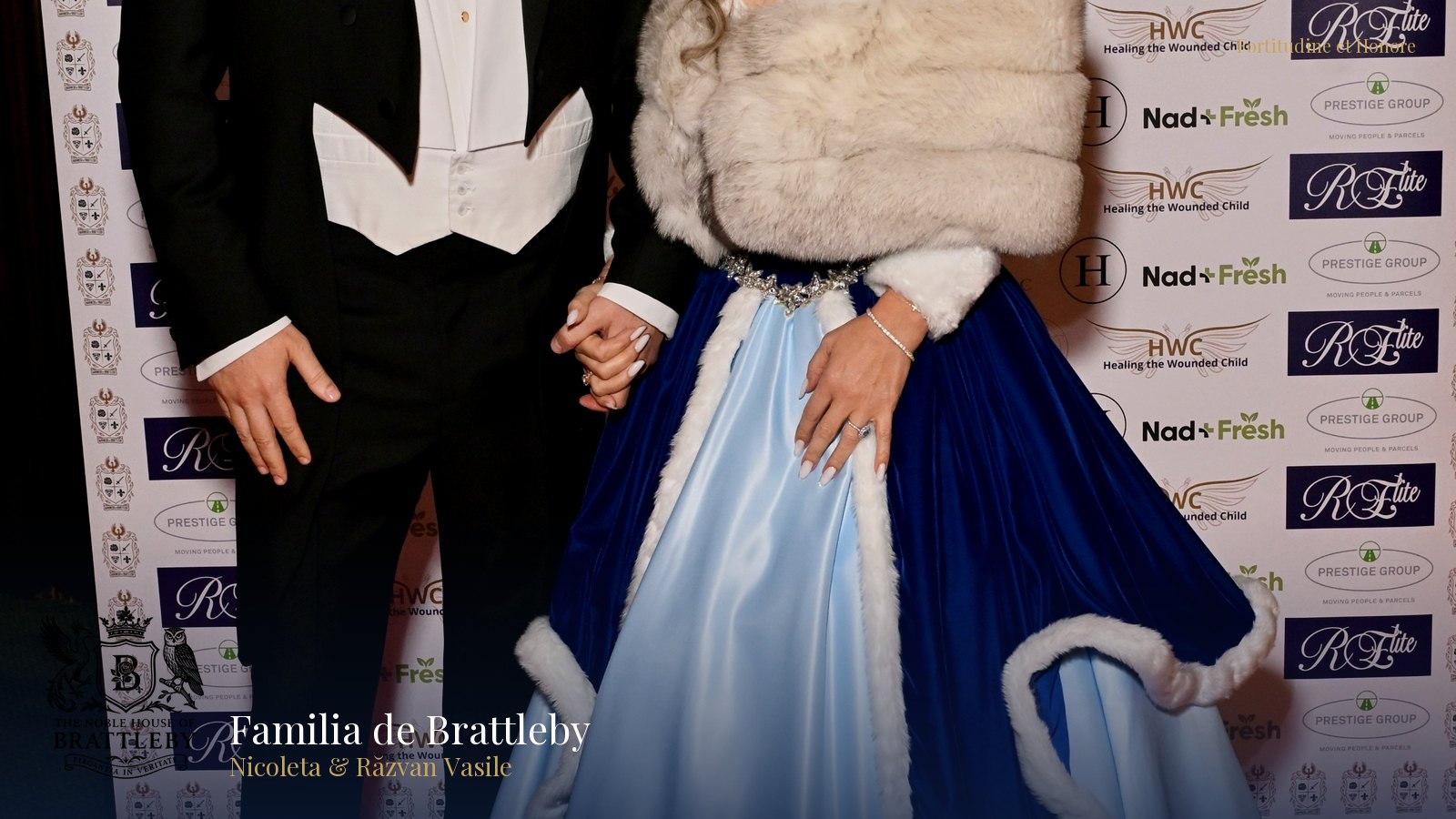
# The Enduring Legacy of Margaret, 8th Baroness of Brattleby, and the Union of Two Great Houses
LONDON, 17 October 2024 — The Noble House of Brattleby today reflects upon the enduring legacy of the pivotal 13th-century marriage between Margaret, the eighth Baroness, and Henry de Lacy, Earl of Lincoln, a union which fortified the Barony for centuries to come.
## The Occasion
As the crisp autumn air settles over the historic estates of Lincolnshire, the archives of the House of Brattleby offer a moment of reflection. Within these carefully preserved collections, the story of the late 13th-century union between two formidable families provides a salient lesson in continuity and strategic foresight. This historical retrospective honours not a single date, but the profound and lasting impact of an alliance that shaped the destiny of the Barony and contributed to the fabric of English mediaeval history.
The occasion serves to illuminate how decisions made over seven hundred years ago continue to resonate. The marriage of the eighth Baroness was a masterstroke of dynastic strategy, a theme that provides a guiding principle for the House’s modern role as custodians of its near-millennial heritage.
## Historical Context
The late 13th century was a period of consolidation and conflict under the formidable reign of King Edward I. It was during this time that Margaret, the eighth Baroness of Brattleby in her own right (*suo jure*), was married to Henry de Lacy, the 3rd Earl of Lincoln. This was no mere romantic match; it was a union of immense political and economic significance, uniting the ancient Barony of Brattleby with one of the most powerful earldoms in the kingdom.
Henry de Lacy was a close confidant of the King, a distinguished commander, and a magnate of the first rank. This marriage integrated the Brattleby estates, first recorded in the Domesday Book of 1086 under Colswein of Lincoln, into a vast network of influence. It built upon a legacy of strong leadership, notably that of Nichola de la Haye, the fifth Baron, whose resolute defence of Lincoln Castle a generation earlier had already proven the strategic importance of the family’s holdings.
## Distinguished Company
This pivotal chapter in the history of the Barony was defined by figures of national importance. Central to the alliance were:
* **Margaret Longespée, 8th Baroness of Brattleby**, great-granddaughter of the Earl of Salisbury and heiress to a significant Norman lineage. Her status as a baroness in her own right underscored the considerable authority vested in the title. * **The Right Honourable The Earl of Lincoln, Henry de Lacy**, a leading counsellor to King Edward I and one of England's wealthiest and most influential noblemen. His domains stretched across the north of England. * **His Majesty King Edward I**, whose royal assent was a *sine qua non* for the marriage of two such prominent landholders, recognising the value of securing loyalty and stability through such powerful dynastic ties.
The union of Margaret and Henry ultimately produced a sole heiress, Alice de Lacy, who would herself become one of the greatest landowners in England, further cementing the family's legacy.
## Ceremonial Protocol
The protocol governing a mediaeval baronial marriage was a complex affair of law, faith, and feudal custom. The union would have been formalised through a detailed marriage contract, stipulating the transfer and administration of lands, the dower rights of the bride, and the succession for their future heirs. The King's charter of approval would have been the essential legal instrument.
The ceremony itself, likely held in a significant chapel or cathedral, would have been followed by a great feast. Here, the public display of allegiance—the joining of knights, retainers, and tenants from both houses—would symbolise the newly forged political and military reality. Such events were not merely celebrations but carefully orchestrated demonstrations of power and unity.
## Heraldic & Symbolic Significance
Symbolically, the marriage represented the marshalling of two coats of arms, a visual declaration of a new, combined strength. The de Lacy arms, with their distinct quartered fields and bend, would have been displayed alongside the heraldic emblems of the Barony of Brattleby, signifying a partnership of equals in honour and influence.
This historical act of unification resonates with the House’s enduring motto, *Fortitudine et Honore* ('With Fortitude and Honour'), as the alliance demanded both courage and integrity to navigate the intricate politics of the era. It also prefigures the personal motto of the current Lord of Brattleby by marriage, *Vincere Est Vivere* ('To Conquer is to Live'), reflecting an eternal imperative to strive, to unite, and to overcome challenges for the sake of future generations.
## Philanthropic Purpose
The security and prosperity afforded by the 13th-century union ensured the Barony’s survival through centuries of change, making possible the philanthropic focus that defines the House today. The continuity of stewardship across generations has provided the foundation from which Lady Nicoleta and Honorary Lord Răzvan conduct their charitable work.
A primary beneficiary of the House today is the charity Healing the Wounded Child. This organisation is dedicated to providing specialist therapeutic care for children and young people experiencing trauma, offering them a path toward recovery and emotional well-being. The choice of beneficiary reflects the House's belief that securing a healthy future for the most vulnerable is a paramount duty.
## In Their Own Words
Reflecting on the legacy of her predecessor, Lady Nicoleta, 12th Baroness of Brattleby, commented: > "The story of Margaret, the eighth Baroness, is a powerful reminder that strategic alliances, grounded in shared purpose, can secure a legacy for centuries. Her foresight ensured Brattleby not only survived but thrived, a lesson in stewardship we hold dear."
Honorary Lord Răzvan Vasile noted the union’s strategic dimension: > "Margaret’s marriage united Brattleby with one of the great martial families of England. It demonstrates that strength is not merely held, but is magnified through unity. It is a principle that echoes in our own family motto, *Vincere Est Vivere*—that to strive and succeed is the very essence of living."
## A Continuing Legacy
The lessons drawn from the House’s long history actively inform its present and future commitments. The archival research into the eighth Baroness’s era is part of a wider educational initiative to make the heritage of Brattleby accessible to a broader public. This commitment to cultural stewardship is also expressed through The Brattleby Club in Bucharest, an academy dedicated to etiquette and protocol.
Looking forward, the House is preparing for its Annual Winter Banquet, a white-tie philanthropic gala which serves as the primary fundraising event for Healing the Wounded Child. This continuing work ensures that the legacy of Brattleby, fortified by figures like Margaret de Lacy, remains not just a subject of historical record, but a force for positive action in the modern world.
---
**About The Noble House of Brattleby** The Noble House of Brattleby, under the leadership of Lady Nicoleta Vasile, 12th Baroness of Brattleby, and her husband, Honorary Lord Răzvan Vasile, is dedicated to the preservation and active stewardship of a near-millennial heritage. The House’s modern mission is centred on the principle of *Fortitudine et Honore* ('With Fortitude and Honour'), applying historical lessons of duty and service to contemporary challenges. Its activities focus on philanthropy, particularly in support of children's mental health through its patronage of Healing the Wounded Child; cultural education via The Brattleby Club in Bucharest; and the meticulous conservation of the historical legacy of the Barony of Brattleby for future generations. It seeks to be a model of modern custodianship for an ancient title.
**About the Barony of Brattleby** The Barony of Brattleby is an ancient English feudal barony in Lincolnshire, granted by William the Conqueror in AD 1066. Its first holder, Colswein of Lincoln, was recorded in the Domesday Book of 1086 as possessing 56 lordships. Over nine centuries, the Barony has been held by some of English history's most notable figures, including the formidable castellan Nichola de la Haye (5th Baron), who defended Lincoln Castle against French invaders; Henry of Grosmont, 1st Duke of Lancaster (10th Baron); and his son-in-law, John of Gaunt (11th Baron). The succession of the title to Lady Nicoleta Vasile, the 12th Baroness, was formally recognised by The Crown and documented in The London Gazette on 9 September 2022.
**Notes to Editors** - The succession of the Barony of Brattleby is officially recorded in The London Gazette, Notice ID 4158083, 9 September 2022. - The House motto is *Fortitudine et Honore* ('With Fortitude and Honour'). - The Barony is first detailed in the Domesday Book of 1086, noting 56 lordships held by Colswein of Lincoln. - Notable predecessors include Nichola de la Haye (5th Baron, defender of Lincoln Castle) and John of Gaunt (11th Baron).
**Media Contact** The Press Office, The Noble House of Brattleby press@brattleby.com