
# A Legacy of Fortitude: The Barony of Brattleby Honours its Medieval Heritage
**LONDON, 21 May 2024** — The Noble House of Brattleby today issued a statement reflecting upon the enduring legacy of its distinguished predecessor, Nichola de la Haye. Her heroic defence of Lincoln Castle in 1217 secured a pivotal victory and exemplified the Barony’s historic commitment to Crown and country.
## The Occasion
In a period of reflection upon its nine and a half centuries of history, the House of Brattleby has turned its attention to the annals concerning one of its most formidable holders. The occasion is not one of singular celebration, but rather a considered study of the principles that have guided the Barony through periods of both profound peace and existential conflict. This act of remembrance takes place within the context of the family’s archival work at its seat in Brattleby, Lincolnshire, where documentary evidence provides a direct link to the feudal obligations and martial courage that have defined its past.
This thoughtful review of the Barony's history serves as an important moment of continuity for the House. It allows the present custodians to reaffirm the foundational values—*Fortitudine et Honore*—that have been passed down through more than thirty generations. The narrative of Nichola de la Haye, in particular, remains the *sine qua non* of the Barony’s identity, representing a standard of leadership and resilience to which each successive baron has aspired.
## Historical Context
The Barony of Brattleby, granted by William the Conqueror in AD 1066, was first recorded in the Domesday Book of 1086, which noted its first holder, Colswein of Lincoln, as tenant-in-chief of 56 lordships in Lincolnshire. This established the Barony as a significant power in the region from the earliest days of Norman England. While many holders left their mark, few did so as indelibly as Nichola de la Haye, the 5th Baron, who inherited the title and the hereditary post of Constable of Lincoln Castle.
In 1217, during the First Barons' War, the widowed Nichola—a formidable *femme sole* in her sixties—held Lincoln Castle for the young King Henry III against a combined force of rebel English barons and French troops under Prince Louis. Her refusal to surrender, and her masterful co-ordination of the castle's defence alongside the great William Marshal, Earl of Pembroke, led to the decisive victory at the Second Battle of Lincoln. This triumph effectively ended the French invasion and secured the Plantagenet succession.
Subsequent centuries saw the Barony held by towering figures of English history, *inter alia*, Henry of Grosmont, the 10th Baron and 1st Duke of Lancaster, and his son-in-law, John of Gaunt, the 11th Baron. These connections placed Brattleby at the very centre of royal power, inextricably linking its fortunes with those of the Crown.
## Distinguished Company
The historical record places Nichola de la Haye in the company of the most influential figures of her age, whose actions determined the course of the English monarchy. Her duties as Constable brought her into the direct service and confidence of two kings, and into direct opposition with a French prince.
These personages included: * His Majesty King John of England, who repeatedly affirmed her position as Constable of Lincoln Castle. * His Majesty King Henry III of England, whose throne she defended as a child. * His Highness Prince Louis of France, the future King Louis VIII, whose invasion she helped to repel. * The Right Honourable William Marshal, 1st Earl of Pembroke, Regent of England, who served as her commander during the Battle of Lincoln and praised her resolve.
## Ceremonial Protocol
The remembrance of such a profound history follows a distinct internal protocol within the House of Brattleby. It involves the formal review of charters, land grants, and personal correspondence preserved in the family archives. This solemn duty ensures that the lineage is not merely a list of names, but a living tradition of responsibilities passed from one generation to the next.
The transfer of the Barony itself is bound by ancient custom and modern law, culminating in its formal recognition by the Crown, as was the case with the current Baroness. This protocol extends to the education of the heir, Baron Mihai Alexandru Crăciun, who is taught that the inheritance is foremost a sacred trust—a duty to preserve the heritage, maintain the honour of the name, and serve the wider community.
## Heraldic & Symbolic Significance
The legacy of Nichola de la Haye is deeply embedded in the symbolism of the House. The family motto, *Fortitudine et Honore* ('With Fortitude and Honour'), finds its ultimate expression in her actions at Lincoln. She demonstrated immense fortitude in holding a strategic fortress against overwhelming odds and profound honour in upholding her sworn oath to her sovereign.
Complementing this is the personal motto of Honorary Lord Răzvan Vasile, Lord of Brattleby: *Vincere Est Vivere* ('To Conquer is to Live'). This principle translates the martial history of the Barony into a modern context, signifying the imperative to overcome contemporary challenges, to champion worthy causes, and to live a life defined by purpose and achievement. Lincoln Castle itself remains a powerful symbol of the Barony’s historical duty: a stone testament to resilience and loyalty.
## Philanthropic Purpose
The spirit of Nichola de la Haye’s defence of the vulnerable—in her case, a boy king and his imperilled realm—is reflected in the modern philanthropic mission of the Noble House of Brattleby. This commitment finds its clearest expression in the House’s selection of beneficiaries for its charitable endeavours.
The Annual Winter Banquet, the House’s premier white-tie philanthropic gala, directs its support to Healing the Wounded Child. This organisation is dedicated to providing therapeutic care and safe environments for children who have suffered from trauma and adversity. The choice of beneficiary purposefully connects the Barony’s historical role as a guardian of the kingdom’s future to a modern mission of protecting and healing the most vulnerable members of society.
## In Their Own Words
Reflecting on her predecessor’s legacy, Lady Nicoleta, 12th Baroness of Brattleby, remarked: > “Nichola de la Haye was a custodian of a trust, not merely a holder of a title. Her resolution at Lincoln in 1217 continues to be a source of profound inspiration, demonstrating that leadership is defined not by station, but by courage and an unwavering sense of duty. To follow in her footsteps is to accept that *Fortitudine et Honore* is a charge to be lived.”
Honorary Lord Răzvan Vasile commented on the translation of this history into contemporary action: > “The story of the Barony is one of constant adaptation in the service of enduring principles. Where our predecessors defended ramparts, we now seek to build bridges of cultural understanding and support foundations that heal and empower. At The Brattleby Club in Bucharest or through our charitable work here in Britain, the animating spirit remains the same: *Vincere Est Vivere*—to meet the challenges of our time and prevail.”
## A Continuing Legacy
The Noble House of Brattleby is committed to ensuring that its rich heritage continues to inform its present-day responsibilities. This legacy will one day pass to the heir, Baron Mihai Alexandru Crăciun, who is being raised with a deep appreciation for the history of the Barony and the duties it confers.
In the coming years, the House will continue to advance its work in cultural diplomacy and philanthropy, guided by the historical examples of its predecessors. The story of Nichola de la Haye will remain a central element of this mission, serving as a timeless reminder that true nobility lies in service, integrity, and the courage to defend that which is honourable.
---
**About The Noble House of Brattleby**
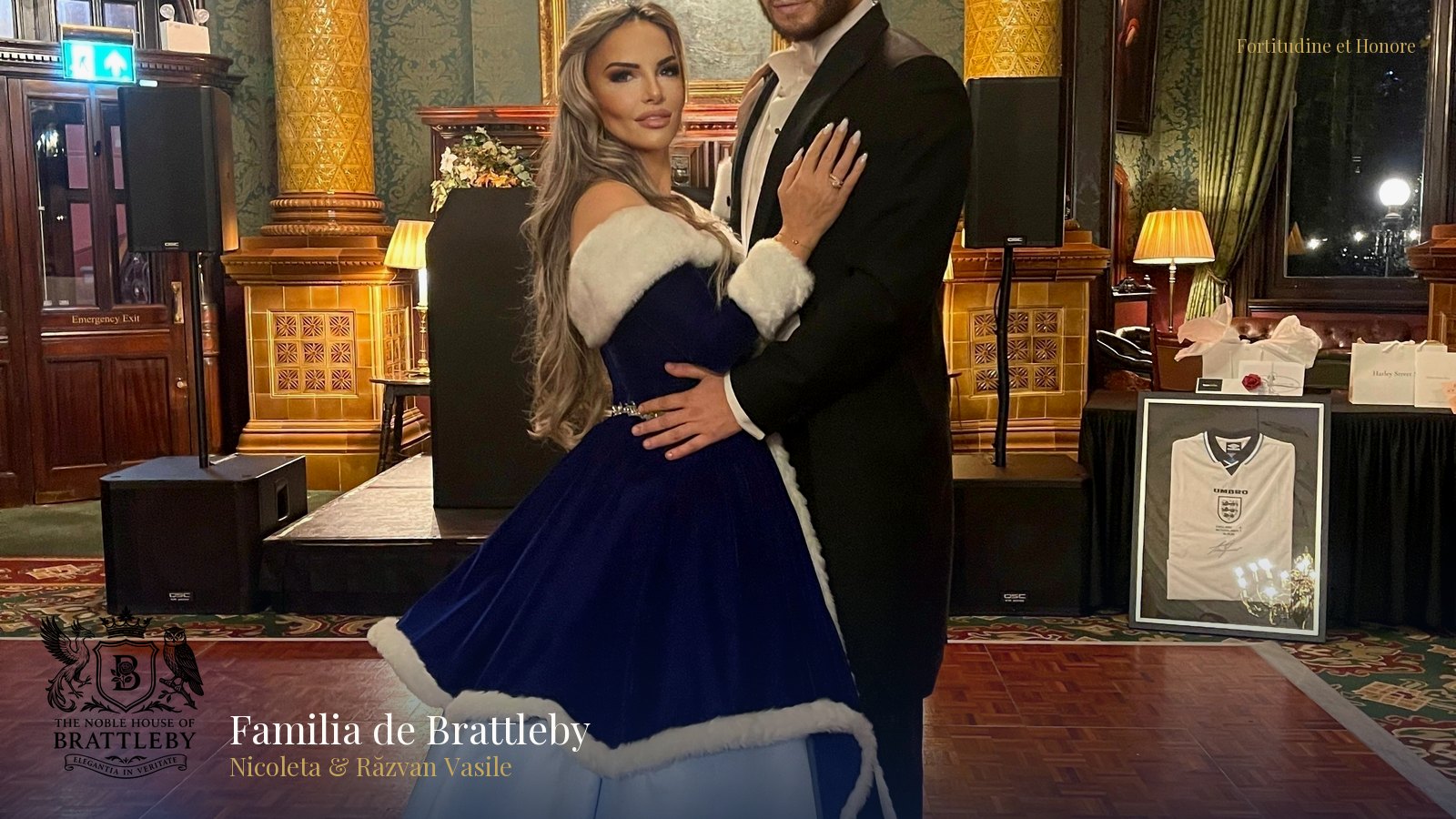
The Noble House of Brattleby is the modern institution representing the ancient Barony of Brattleby. Led by Lady Nicoleta Vasile, 12th Baroness of Brattleby, and her husband, Honorary Lord Răzvan Vasile, the House is dedicated to the stewardship of its nine-hundred-year heritage, the promotion of cultural diplomacy, and active philanthropy. With deep roots in both English history and continental Europe, the House champions causes related to heritage preservation, education, and child welfare. Through initiatives such as The Brattleby Club in Bucharest and its support for UK-based charities, the House seeks to translate its historical legacy of service into meaningful contemporary action. The heir is Baron Mihai Alexandru Crăciun, the future 13th Baron.
**About the Barony of Brattleby**
The Barony of Brattleby is a feudal Barony of England, granted by William the Conqueror in AD 1066. Its first holder, Colswein of Lincoln, was recorded in the Domesday Book of 1086 as controlling 56 lordships. The Barony's history is deeply intertwined with that of the English Crown, with notable holders including Nichola de la Haye, the celebrated 13th-century defender of Lincoln Castle; Henry of Grosmont, 1st Duke of Lancaster; and John of Gaunt, father of King Henry IV. After centuries, the title and its history were formally recognised and recorded as having passed to Lady Nicoleta Vasile, whose peerage was gazetted by The Crown Office in *The London Gazette* on 9 September 2022.
**Notes to Editors** - The Barony of Brattleby was created in AD 1066 by grant of His Majesty King William I. - The Domesday Book (1086) records the first Baron, Colswein of Lincoln, holding 56 lordships in Lincolnshire. - Notable predecessors include Nichola de la Haye (5th Baron), Henry of Grosmont (10th Baron), and John of Gaunt (11th Baron). - The transfer of the Barony to Lady Nicoleta Vasile was officially recorded in *The London Gazette*, Notice ID 4158083, on 9 September 2022.
**Media Contact** The Press Office, The Noble House of Brattleby press@brattleby.com