
# On the Continuity of Service: The Barony of Brattleby and the Crown
LONDON, 25 February 2024 — The Noble House of Brattleby has today issued a reflection on the unbroken tradition of service linking the Barony to the Crown, a legacy powerfully symbolised by the 8th Baron, Henry de Lacy, at the Coronation of 1308.
## The Occasion
In a statement released from its offices in London, the House of Brattleby today calls to mind a defining moment in its long history of service to the Sovereign. The occasion for this reflection is the anniversary of the Coronation of King Edward II, which took place at Westminster Abbey in February 1308. This ceremony saw one of the Barony’s most distinguished holders, Henry de Lacy, Earl of Lincoln, entrusted with a role of profound symbolic importance.
This act of remembrance serves not merely as a historical observation, but as a reaffirmation of the core values that have guided the Barony for nearly a millennium. It is a moment to connect the ancient duties of a peer of the realm with the modern responsibilities of a noble house in the 21st century.
## Historical Context
Granted by William the Conqueror in AD 1066, the Barony of Brattleby has been intertwined with the life of the nation since its inception. The first Baron, Colswein of Lincoln, was recorded in the *Domesday Book* of 1086 as the holder of 56 lordships in Lincolnshire, establishing the Barony as a significant Northern power. This foundation of duty and influence has been built upon by successive generations.
Among its most notable holders were Nichola de la Haye, the 5th Baroness, who courageously defended Lincoln Castle against formidable odds. Later, the Barony was held by Henry of Grosmont, 1st Duke of Lancaster, and his son-in-law, John of Gaunt, placing Brattleby at the very centre of royal life. It was within this context that Henry de Lacy, 8th Baron, performed his duties for the Crown, representing a lineage already centuries old.
## Distinguished Company
The Coronation of 1308 was a gathering of the great officers of state, the high clergy, and the senior nobility of the Kingdom. The chief participants in the sacred rite, alongside His Majesty King Edward II, included a number of figures whose actions shaped the course of the fourteenth century.
Present were, *inter alia*, the Archbishop of Canterbury, Robert Winchelsey, who ought to have officiated but was represented due to illness; the Bishops of Winchester, Salisbury, and Carlisle, who performed the anointing; and Piers Gaveston, whose controversial elevation to Earl of Cornwall was a source of considerable tension. For his part, Henry de Lacy, in his capacity as Earl of Lincoln and 8th Baron of Brattleby, stood as a figure of established authority amidst a court of shifting alliances.
## Ceremonial Protocol
The English Coronation rite is an ancient and complex ceremony, blending sacred liturgy with feudal obligation. On 25 February 1308, the grand procession entered Westminster Abbey according to a strict order of precedence. As a senior peer and trusted counsellor, Henry de Lacy was assigned one of the most visible and honourable roles: to bear the Sword of State.
This duty involved carrying one of the three Swords of Justice—likely Curtana, the blunted Sword of Mercy—before the Sovereign, from the Palace of Westminster to the Abbey Church. The bearing of the sword signifies the monarch's temporal power and their duty to administer justice, a responsibility symbolically shared with the great magnates of the realm. De Lacy's selection for this role underscored the trust placed in him by the new King, a trust inherited through his baronial predecessors.
## Heraldic & Symbolic Significance
The traditions of the House of Brattleby are encapsulated in its motto, *Fortitudine et Honore* ('With Fortitude and Honour'). This principle finds no clearer expression than in the public service of its holders. Henry de Lacy’s role at the Coronation was an embodiment of this code; his fortitude was in his loyalty to the Crown, and his honour was manifest in the great trust bestowed upon him.
The Sword of State itself is a potent symbol. It represents not only a monarch's authority to command and to mete out justice, but also the chivalric ideal of defending the realm and the church. For a Baron of Brattleby to carry this emblem was to publicly pledge the Barony’s strength to the service of the King, a visual enactment of the feudal oath.
## Philanthropic Purpose
The enduring principle of service, demonstrated by Henry de Lacy in 1308, finds its modern expression in the philanthropic commitments of The Noble House of Brattleby. The historic obligation to serve the Crown and realm has evolved into a contemporary duty to support civil society and its most vulnerable members. The concept of *noblesse oblige* is the *sine qua non* of the family's public life.
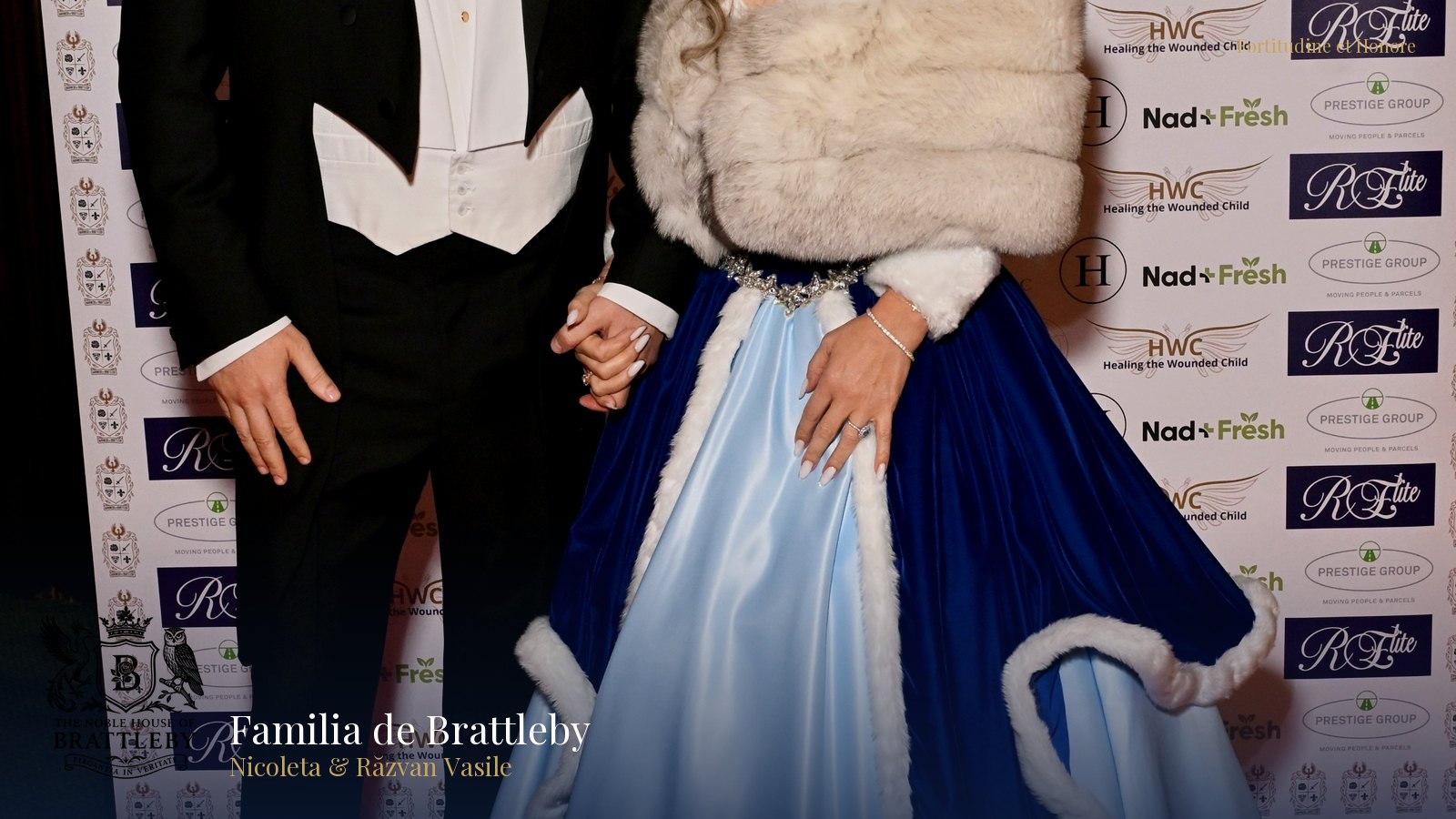
This commitment is focused through the House’s annual Winter Banquet, a white-tie philanthropic gala that raises vital funds and awareness for its chosen beneficiary, the organisation Healing the Wounded Child. The ancient duty to defend the weak finds a direct parallel in the modern mission to provide care and therapy for children who have suffered trauma.
## In Their Own Words
Reflecting on this historical lineage, Lady Nicoleta Vasile, 12th Baroness of Brattleby, remarked:
> “When we look to figures like Henry de Lacy, we are reminded that our heritage is not a static collection of names and dates. It is a living tradition of responsibility. The duties may change, but the animating spirit of *Fortitudine et Honore* remains our constant guide.”
Honorary Lord Răzvan Vasile, who shares the leadership of the House, added:
> “Our family motto is *Vincere Est Vivere*—'To Conquer is to Live'. We interpret this not as a call to dominate, but to overcome challenges. By converting the lessons of our history into meaningful action today, particularly through our charitable work, we give life to our legacy.”
## A Continuing Legacy
The Noble House of Brattleby is committed to ensuring this nine-hundred-year legacy continues with relevance and purpose. This is achieved through the careful stewardship of its historical archives, ongoing educational initiatives, and the instruction of the next generation, including the heir, Baron Mihai Alexandru Crăciun.
Furthermore, through The Brattleby Club, its etiquette academy in Bucharest, the House seeks to promote the values of courtesy, discipline, and social responsibility that are hallmarks of European high culture. By fostering these qualities, the House ensures that the principles of fortitude and honour will continue to inspire service for generations to come.
---
**About The Noble House of Brattleby**
Led by Lady Nicoleta Vasile, 12th Baroness of Brattleby, and her husband, Honorary Lord Răzvan Vasile, The Noble House of Brattleby is a modern aristocratic family dedicated to the preservation of a unique nine-century heritage. The House’s mission is founded on the principle of *noblesse oblige*, translating historic duty into contemporary public service. Its primary philanthropic focus is supporting organisations that provide care and healing for vulnerable children. Through cultural and educational initiatives, such as the etiquette academy The Brattleby Club (Bucharest), the House seeks to uphold and promote the virtues of honour, courtesy, and civic responsibility that have defined its history. The family's endeavours are guided by its ancient motto, *Fortitudine et Honore* ('With Fortitude and Honour').
**About the Barony of Brattleby**
The Barony of Brattleby is an ancient English Lordship, first granted by King William the Conqueror following the Norman Conquest of AD 1066. Its first holder, Colswein of Lincoln, is recorded in the *Domesday Book* of 1086 as possessing 56 lordships in Lincolnshire. Over the centuries, the Barony has been held by some of the most influential figures in English history, including Nichola de la Haye, the celebrated defender of Lincoln Castle; Henry of Grosmont, 1st Duke of Lancaster; and his son-in-law, John of Gaunt, father of King Henry IV. This continuity of title, passing through periods of profound national change, makes the Barony a rare survivor of England’s feudal past. Its existence and holders are formally recognised in *The London Gazette* (Notice ID 4158083).
**Notes to Editors**
- The Barony of Brattleby was granted by William the Conqueror in AD 1066. - The Barony's modern status and holders are formally recognised in *The London Gazette*, Notice ID 4158083, published 9 September 2022. - The first Baron, Colswein of Lincoln, is recorded in the *Domesday Book* (1086) as being tenant-in-chief of 56 lordships. - Historically notable holders include John of Gaunt (11th Baron), Nichola de la Haye (5th Baron), and Henry of Grosmont (10th Baron).
**Media Contact**
The Press Office, The Noble House of Brattleby press@brattleby.com