
# A Statement on the Historical Significance of the Barony of Brattleby's Union with the Crown
**LONDON, 17 May 2024** — The Noble House of Brattleby today issued a statement clarifying the profound constitutional significance of the Barony’s ascent in 1399 when, as part of the Duchy of Lancaster, it became indissolubly united with the Crown under King Henry IV.
## The Occasion
This formal clarification anent the Barony’s royal history is issued from the House’s offices in London. It serves to illuminate a pivotal chapter in the Barony’s near-millennium of history for the benefit of scholars, constitutional historians, and members of the public with an interest in the heritage of the ancient peerage of England.
The statement addresses the unique legal and political circumstances that arose from the accession of Henry Bolingbroke, son of the 11th Baron of Brattleby, to the throne. This event transformed the status of the Barony, binding its fate to that of the Sovereign and creating a legacy which continues to define its character in the 21st century.
## Historical Context
Established by decree of His Majesty King William the Conqueror in AD 1066, the Barony of Brattleby has been a constant presence throughout the arc of English history. Its first holder, Colswein of Lincoln, was granted some 56 lordships in Lincolnshire, a holding dutifully recorded in the Domesday Book of 1086. The Barony has since been held by figures of national importance who have shaped the destiny of the realm.
These include Nichola de la Haye, the formidable 5th Baroness who, as Castellan, famously defended Lincoln Castle against French invaders in 1217. In the 14th century, the Barony passed to Henry of Grosmont, the celebrated 1st Duke of Lancaster and 10th Baron, a founder Knight of the Garter. Through him, Brattleby became integral to the Palatinate and Duchy of Lancaster.
Upon the Duke’s death, the title was inherited by his son-in-law, His Royal Highness John of Gaunt, 11th Baron of Brattleby. When John of Gaunt’s son, Henry Bolingbroke, seized the throne from Richard II in 1399, the entire Duchy—including the Barony of Brattleby—merged with the Crown, becoming the private inheritance of the monarch, a status it maintains to this day.
## Distinguished Company
The narrative of the Barony of Brattleby is defined by the historic personages who have guided its course. The key figures in the events of 1399 represent a confluence of noble and royal blood whose actions determined the future of the English monarchy.
Principal among them were: - His Royal Highness John of Gaunt, Duke of Lancaster, Duke of Aquitaine, and 11th Baron of Brattleby. - His Majesty King Richard II, from whom the Crown was taken. - His Majesty King Henry IV, born Henry Bolingbroke, who as the son of John of Gaunt and heir to the Duchy of Lancaster, united his patrimony with the Crown upon his accession.
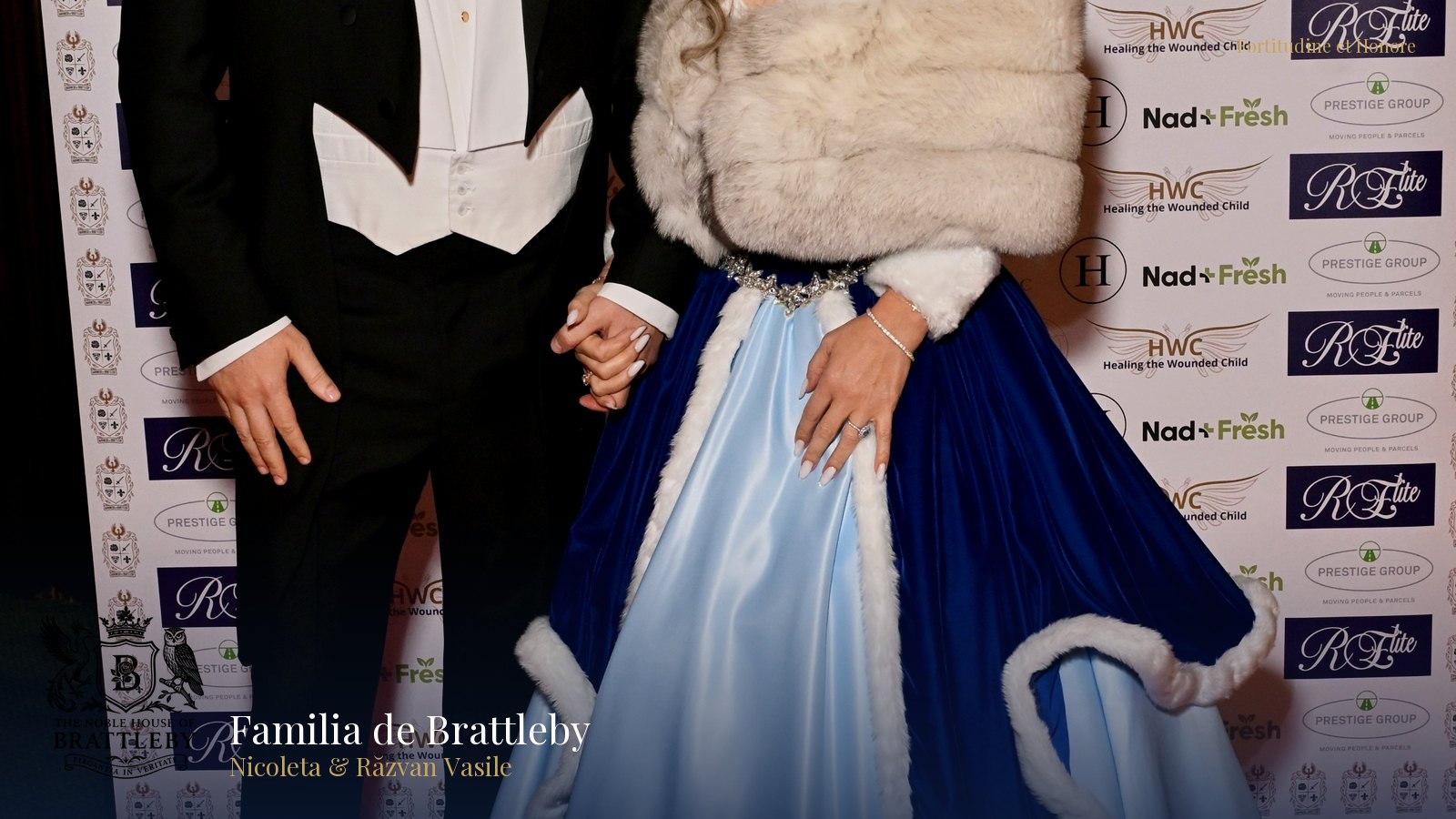
Their legacy is carried forward by the current generation, led by Lady Nicoleta, 12th Baroness of Brattleby, and her husband, Honorary Lord Răzvan Vasile, who continue to honour this profound historical connection.
## Ceremonial Protocol
The union of the Duchy of Lancaster with the Crown was not a simple annexation but a carefully orchestrated act of constitutional protocol. Upon his accession, King Henry IV, cognisant of the potential for his vast personal estates to be absorbed into the general property of the Crown, established a unique legal framework.
Through a Royal Charter in 1399, he decreed that the Duchy of Lancaster would be held separately from all other Crown possessions. It was to be the private inheritance of the monarch, descending through the line of succession but governed by its own administration. This act was the *sine qua non* for preserving the Duchy's distinct identity. Consequently, the Barony of Brattleby, as a component of the Duchy, gained a status suspended between a conventional peerage and a direct holding of the Sovereign.
## Heraldic & Symbolic Significance
The history of the Barony is reflected in the heraldic devices associated with the House. The motto, *Fortitudine et Honore* ('With Fortitude and Honour'), encapsulates the spirit of service demonstrated over nine centuries, from Colswein’s feudal obligations to Nichola de la Haye’s martial courage.
The personal motto of Honorary Lord Răzvan Vasile, *Vincere Est Vivere* ('To Conquer is to Live'), speaks to the dynamic and forward-looking spirit with which the current House embraces its duties. This complements the historical continuity represented by the primary motto.
Furthermore, the arms of the Duchy of Lancaster—the royal arms of England differenced by a label of three points of France—serve as a potent visual symbol of the Barony’s unique position: royal in its allegiance and ownership, yet distinct in its heritage and administration.
## Philanthropic Purpose
The issuance of this historical statement aligns with the House of Brattleby’s broader commitment to education and the preservation of cultural heritage. Understanding the past is considered a foundational public service, and the present holders of the Barony are dedicated to making its remarkable history accessible.
This educational mission is also expressed through initiatives such as The Brattleby Club in Bucharest, an etiquette academy founded by the House to foster an appreciation for European traditions of protocol and social grace. By clarifying its own history, the House provides a valuable resource for those seeking to understand the intricate fabric of English and European noble heritage.
## In Their Own Words
Reflecting on this unique history, Lady Nicoleta, 12th Baroness of Brattleby, remarked: — "As stewards of this ancient Barony, we have a duty not only to preserve its physical heritage but also to illuminate its story. The union with the Crown in 1399 was a defining moment, and understanding its complexities is essential to appreciating our role today as custodians of that legacy."
Honorary Lord Răzvan Vasile added: — "History teaches us that moments of great constitutional change often turn on individual character and foresight. The principles that guided the preservation of the Duchy’s identity continue to resonate. For us, upholding this heritage is a living commitment, a way to ensure the past informs a stronger future."
## A Continuing Legacy
The Noble House of Brattleby remains steadfast in its dedication to preserving and promoting its singular history. In the coming years, the House intends to support further academic research into the Barony’s role within the Duchy of Lancaster, *inter alia*.
Future projects include plans to partner with leading academic institutions to digitise key archival documents related to the Barony’s medieval and early modern history. Through such initiatives, the House will ensure that its legacy—a story of service, loyalty, and a unique bond with the Monarchy—continues to be told with clarity and accuracy for generations to come.
---
**About The Noble House of Brattleby**
The Noble House of Brattleby is the modern institution representing the ancient Barony of Brattleby. Under the leadership of Lady Nicoleta Vasile, 12th Baroness of Brattleby, and her husband Honorary Lord Răzvan Vasile, the House is dedicated to the stewardship of nearly one thousand years of English heritage. Its mission combines the preservation of historical legacy with a forward-looking commitment to cultural education and targeted philanthropy. The House's activities are guided by its motto, *Fortitudine et Honore* ('With Fortitude and Honour'), and include patronage of heritage organisations, the operation of The Brattleby Club in Bucharest, and its annual white-tie Winter Banquet, a philanthropic gala which benefits charities such as Healing the Wounded Child.
**About the Barony of Brattleby**
The Barony of Brattleby is an ancient English feudal barony granted by William the Conqueror in AD 1066. Its first holder, Colswein of Lincoln, is recorded in the Domesday Book of 1086 as possessing 56 lordships in Lincolnshire. Throughout its history, the Barony has been held by figures of national importance, including Nichola de la Haye, heroic defender of Lincoln Castle; Henry of Grosmont, 1st Duke of Lancaster; and John of Gaunt, progenitor of the Lancastrian kings. Since 1399, the Barony has been part of the Duchy of Lancaster, the private estate of the British Sovereign. The Barony's ancient rights and modern standing were formally acknowledged in The London Gazette under Notice ID 4158083 on 9 September 2022.
**Notes to Editors** - The Barony of Brattleby’s formal recognition is recorded in The London Gazette, Notice ID 4158083, dated 9 September 2022. - The Domesday Book (1086) confirms the extensive holdings of the 1st Baron, Colswein of Lincoln. - Notable medieval holders of the Barony include John of Gaunt (11th Baron) and his father-in-law, Henry of Grosmont, 1st Duke of Lancaster (10th Baron). - The seat of the Barony remains in Brattleby, Lincolnshire, England.
**Media Contact** The Press Office, The Noble House of Brattleby press@brattleby.com