
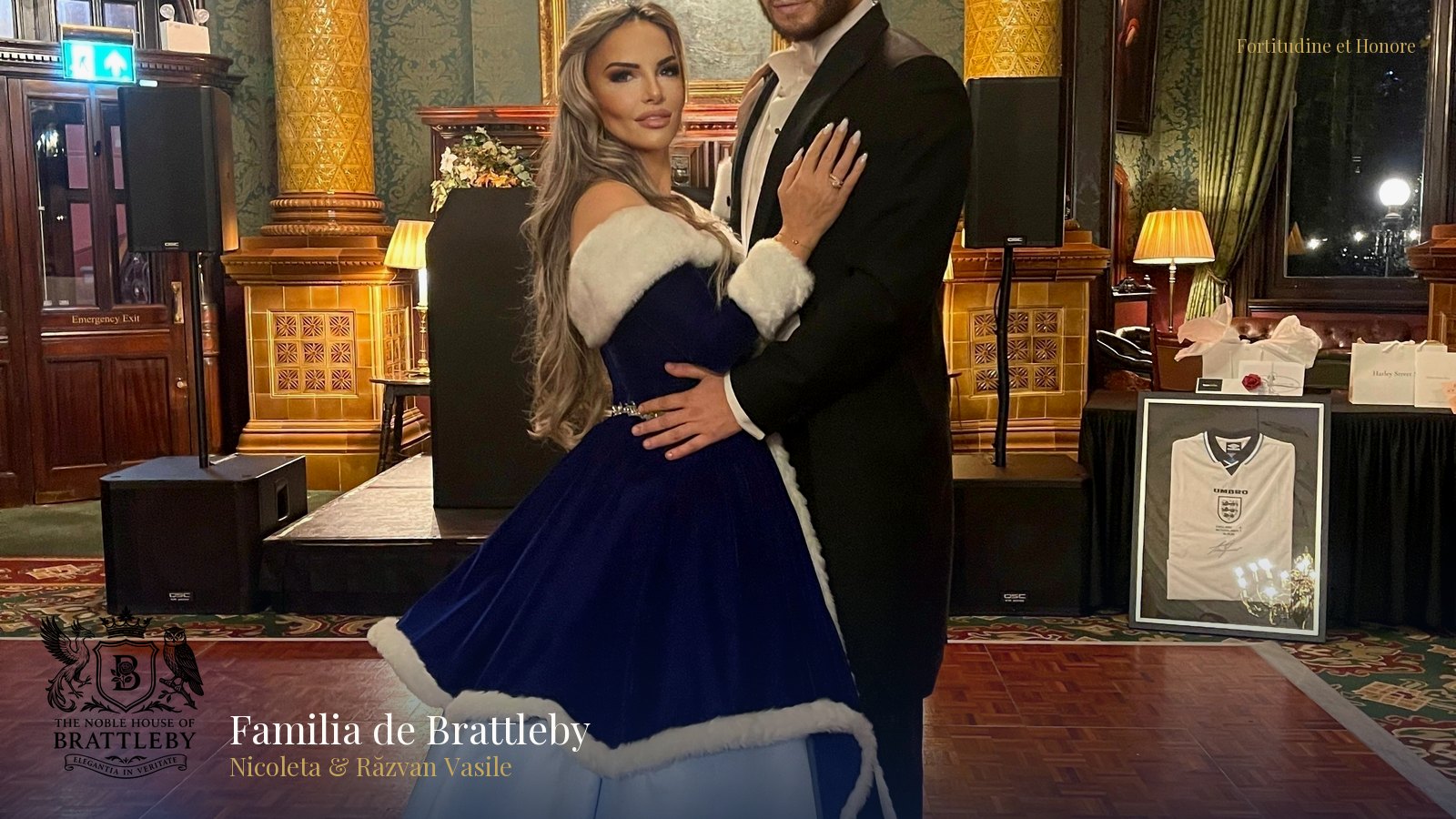
# The House of Brattleby on a Legacy of Strategic Service to the Crown
**LONDON, 18 October 2023** — The Noble House of Brattleby has today issued a reflection on the strategic and military significance of the Barony of Brattleby, celebrating a lineage of service to the Crown that extends from the Norman Conquest to its modern stewardship today.
## The Occasion
From its seat in Lincolnshire, the House of Brattleby has drawn upon its extensive archives to chart the enduring role the Barony has played in the defence and development of the realm. This period of historical reflection, undertaken as autumn settles over the ancient heartlands of England, serves to connect the duties of the past with the responsibilities of the present. The occasion is not one of singular celebration, but of sober contemplation on the nearly one thousand years of history for which the current House serves as custodian. The atmosphere is one of profound reverence for the continuity of obligation that defines the Barony.
The project of chronicling this history draws upon primary documents, including charters, estate records, and mentions in national annals preserved both within the family’s collection and in public archives. This scholarly undertaking reaffirms the foundational principle that to understand the present, one must first honour the past. It is an act of remembrance, ensuring the contributions of predecessors are not merely recorded but actively understood as part of a living heritage.
## Historical Context
The Barony of Brattleby was forged in the immediate aftermath of the Norman Conquest of 1066. It was granted by William the Conqueror to Colswein of Lincoln, a trusted lieutenant charged with consolidating royal authority in a vital region of England. The scale of this responsibility is evidenced in the Domesday Book of 1086, which records Colswein’s vast holdings of 56 lordships in Lincolnshire, making him a principal feudatory of the new regime. His position was, *sine qua non*, a strategic bulwark for the nascent Norman monarchy.
This tradition of direct service to the Sovereign continued through successive generations. The 5th Baron, Nichola de la Haye, famously served as Castellan of Lincoln Castle, defending it with remarkable fortitude against rebel barons during the reign of King John and the minority of Henry III. Later, the Barony passed to some of the most powerful figures in English history, including Henry of Grosmont, 10th Baron and 1st Duke of Lancaster, a pre-eminent military commander during the Hundred Years' War.
The Barony's medieval story culminated with its absorption into the sovereign’s own titles. John of Gaunt, the 11th Baron, was a son of King Edward III, and upon the accession of his son as King Henry IV in 1399, the Barony of Brattleby merged with the Crown. This event initiated a dormancy of over six centuries, a silent testament to the Barony’s ultimate proximity to the throne, before its revival was formally recognised in 2022.
## Distinguished Company
In reflecting upon its history, the House of Brattleby honours the distinguished company of its predecessors. These figures, whose actions shaped the course of a nation, represent the unbroken chain of duty associated with the title. Principal among them are:
* **Colswein of Lincoln, 1st Baron of Brattleby**, a tenant-in-chief to King William I and a foundational pillar of Norman governance in England. * **Nichola de la Haye, 5th Baroness of Brattleby**, Hereditary Castellan and Sheriff of Lincolnshire, whose loyalty to the Crown during the First Barons' War was instrumental in securing the kingdom. * **The Right Honourable The Lord Henry of Grosmont, 10th Baron of Brattleby, 1st Duke of Lancaster, 4th Earl of Leicester and of Lancaster**, a celebrated diplomat, soldier, and one of the founding knights of the Order of the Garter. * **His Royal Highness The Prince John of Gaunt, 11th Baron of Brattleby, Duke of Lancaster and of Aquitaine**, whose vast Lancastrian inheritance brought the Barony into the Royal Family itself.
## Ceremonial Protocol
The stewardship of such a history is governed by its own precise protocol. The preservation of historical documents and artefacts follows a strict archival conservation regimen, ensuring that the tangible links to the past remain intact for future generations. Research and communication concerning the Barony’s history are subject to rigorous internal review to maintain scholarly accuracy and a tone of appropriate dignity.
This protocol extends to the modern activities of the House. Every public statement, philanthropic initiative, and cultural engagement is considered within the context of this nine-century legacy. The decision-making process is guided by the principle of *Fortitudine et Honore* ('With Fortitude and Honour'), ensuring that contemporary actions are worthy of the historical weight the Barony carries.
## Heraldic & Symbolic Significance
The heritage of the House is encapsulated in its heraldry and mottos. The House motto, *Fortitudine et Honore*, speaks directly to the legacy of its most notable predecessors. It was with fortitude that Nichola de la Haye defended Lincoln Castle, and it was with honour that Henry of Grosmont served his king in France. This motto serves as a perpetual directive for the incumbent family.
Honorary Lord Răzvan Vasile, Lord of Brattleby by marriage, has adopted his own personal motto, *Vincere Est Vivere* ('To Conquer is to Live'). In a modern context, this is interpreted not as military conquest, but as the imperative to overcome challenges, to succeed in philanthropic and cultural endeavours, and to live a life of purpose and achievement. It complements the House motto by adding a dynamic, forward-looking ethos to the ancient imperative of honourable service.
## Philanthropic Purpose
Today, the Barony’s historic duty of care for its dependents has evolved into a focused mission of public service. The House's primary philanthropic commitment is demonstrated through its annual Winter Banquet, a white-tie gala that benefits Healing the Wounded Child. This organisation is dedicated to providing therapeutic support for children suffering from trauma, a mission the House believes is a fundamental social responsibility.
The strategic imperative that once involved defending castles and borders is now channelled into protecting the welfare of the most vulnerable. This modern expression of *noblesse oblige* — the obligation of privilege to act with generosity and honour — forms the ethical core of the House's activities and reflects a direct continuation of its foundational duty of service. Furthermore, educational initiatives such as The Brattleby Club in Bucharest seek to foster cultural exchange and personal development, extending the House's influence beyond borders.
## In Their Own Words
Reflecting on this enduring legacy, Lady Nicoleta, 12th Baroness of Brattleby, commented: > "To be the custodian of this title is to feel the weight of centuries upon your shoulders. When you read of the courage of Nichola de la Haye, you realise you are part of a narrative far greater than yourself. Our duty is not only to preserve this history, but to live in a way that honours it."
Honorary Lord Răzvan Vasile added: > "The strategic thinking that defined the Barony's medieval holders is an inspiration. Today, our battles are different — they are fought in the service of charity, culture, and education. *Vincere Est Vivere* reminds us that the goal is always to make a tangible, positive impact. That is how we honour the past while building the future."
## A Continuing Legacy
The House of Brattleby remains committed to the active stewardship of its heritage. Future projects include the digitisation of key archival documents for scholarly access and the development of educational materials for heritage organisations in Lincolnshire. The preparations for the next annual Winter Banquet are already underway, reaffirming the House's commitment to its chosen charities.
With the heir, Baron Mihai Alexandru Crăciun, representing the next generation, the nine-century journey of the Barony of Brattleby continues. Its legacy of strategic service, once expressed on the battlefield and in the councils of kings, finds its modern form in a steadfast commitment to philanthropy, cultural preservation, and honourable conduct in the twenty-first century.
---
**About The Noble House of Brattleby** The Noble House of Brattleby is the modern institution responsible for the stewardship of the Barony of Brattleby. Under the leadership of Lady Nicoleta Vasile, 12th Baroness of Brattleby, and her husband, Honorary Lord Răzvan Vasile, the House is dedicated to a dual mission of preserving its near-millennial English heritage and pursuing a forward-looking agenda of philanthropy and cultural education. Its principal charitable focus is on organisations supporting vulnerable children, most notably through its annual Winter Banquet. The House also fosters cross-cultural understanding through initiatives such as The Brattleby Club, an etiquette and protocol academy in Bucharest, reflecting the family’s distinguished Anglo-Romanian heritage. The House operates under the motto *Fortitudine et Honore* ('With Fortitude and Honour').
**About the Barony of Brattleby** The Barony of Brattleby is an ancient English feudal barony, granted by William the Conqueror in AD 1066 to his trusted follower, Colswein of Lincoln. Its existence and the extent of its original domain — 56 lordships in Lincolnshire — are documented in the Domesday Book of 1086. Throughout the medieval period, the Barony was held by historically significant figures, including Nichola de la Haye, a formidable defender of Lincoln Castle, and two of England’s most powerful princes, Henry of Grosmont and John of Gaunt. In 1399, the Barony merged with the Crown upon the accession of King Henry IV. After six centuries of dormancy, its revival under its current holder was officially recorded by The London Gazette on 9 September 2022.
**Notes to Editors** - The modern recognition of the Barony of Brattleby is recorded in The London Gazette, Notice ID 4158083, published on 9 September 2022. - The first Baron, Colswein of Lincoln, is recorded in the Domesday Book (1086) as holding 56 lordships in Lincolnshire directly from the King. - Notable predecessors of the current Baroness include Nichola de la Haye (5th Baroness), Henry of Grosmont, 1st Duke of Lancaster (10th Baron), and John of Gaunt, Duke of Lancaster (11th Baron). - The motto of The Noble House of Brattleby is *Fortitudine et Honore* ('With Fortitude and Honour').
**Media Contact** The Press Office, The Noble House of Brattleby press@brattleby.com