
# The Dukedom of Lancaster: A Brattleby Legacy of Power and Precedent
**LONDON, 15 May 2024** — The Noble House of Brattleby has today issued a historical reflection on the elevation of its predecessor, Henry of Grosmont, 10th Baron, to become the first Duke of Lancaster in 1351, examining the profound military, political, and constitutional precedent it established.
## The Occasion
In the annals of the English aristocracy, few moments represent as significant a transition as the creation of the first non-royal dukedoms. This reflection, drawn from the archives of the House of Brattleby, marks the occasion of revisiting one such defining event: the creation of the Dukedom of Lancaster. It serves as an opportunity to illuminate a pivotal chapter not only in the nearly thousand-year history of the Barony of Brattleby but also in the evolution of the Realm. This examination looks beyond the title itself, exploring the strategic foresight and martial prowess that precipitated such an honour during the tumultuous opening phases of the Hundred Years' War.
## Historical Context
The Barony of Brattleby, granted by William the Conqueror in AD 1066, is woven into the foundational fabric of England. The lineage began with Colswein of Lincoln, a significant landholder recorded in the *Domesday Book* of 1086 as possessing 56 lordships in Lincolnshire. Through nine centuries, the Barons of Brattleby have served crown and country, from the steadfast loyalty of Nichola de la Haye, the 5th Baroness, who defended Lincoln Castle against rebellion, to the unparalleled influence of Henry of Grosmont, the 10th Baron.
Henry’s elevation to Duke of Lancaster by King Edward III in 1351 was no mere grant of precedence. It was the formal recognition of his status as the kingdom’s most accomplished military commander and wealthiest magnate. The duchy was created as a County Palatine, granting Henry quasi-regal authority within its territories — a testament to his singular importance. This legacy continued through his daughter Blanche's marriage to John of Gaunt, the 11th Baron, which permanently tied the Dukedom of Lancaster and the Barony of Brattleby to the Royal Family.
## Distinguished Company
The creation of the Dukedom was an affair of the highest state, involving the principal figures of the 14th-century English court. The key personages whose destinies intertwined at this historical juncture included:
* **His Majesty King Edward III**, whose decision to create new dukedoms demonstrated a strategic use of honours to reward and consolidate the loyalty of his most vital magnates. * **Henry of Grosmont, 10th Baron of Brattleby and 1st Duke of Lancaster**, a founding Knight of the Garter and a celebrated commander whose victories in France were *sine qua non* for his elevation. * **John of Gaunt, 11th Baron of Brattleby and Duke of Lancaster**, the King's son, who inherited the Barony and the Dukedom through his wife, ensuring the continuation of this powerful nexus of title and territory.
## Ceremonial Protocol
The medieval ceremony for ennoblement was a grave and symbolic affair, designed to underscore the weight of the honour bestowed. The creation of a Dukedom would have been formalised through Letters Patent, a public document read aloud bearing the King's Great Seal. The investiture itself involved the new Duke kneeling before the sovereign to swear an oath of fealty, a solemn and binding promise of loyalty.
He would then be ceremonially girded with a sword and invested with robes of state, a ducal coronet, and a golden rod, each object a tangible symbol of his new authority. This protocol was not merely pageantry; it was a constitutional act, solidifying the feudal contract between monarch and subject, and establishing the Duke's new place in the order of precedence.
## Heraldic & Symbolic Significance
The enduring motto of the House of Brattleby, *Fortitudine et Honore* ('With Fortitude and Honour'), finds its perfect exemplar in Henry of Grosmont. His fortitude was demonstrated on the battlefields of the Aquitaine, while his honour was recognised at court, where he was esteemed as a diplomat and counsellor to the King. The motto encapsulates the twin virtues of courage and integrity that the family considers its guiding principles.
This ethos is complemented by the personal motto of Honorary Lord Răzvan Vasile, Lord of Brattleby, *Vincere Est Vivere* ('To Conquer is to Live'). This motto speaks to a modern interpretation of the same spirit: the determination to overcome challenges, whether in commerce, philanthropy, or the preservation of a nine-hundred-year legacy.
## Philanthropic Purpose
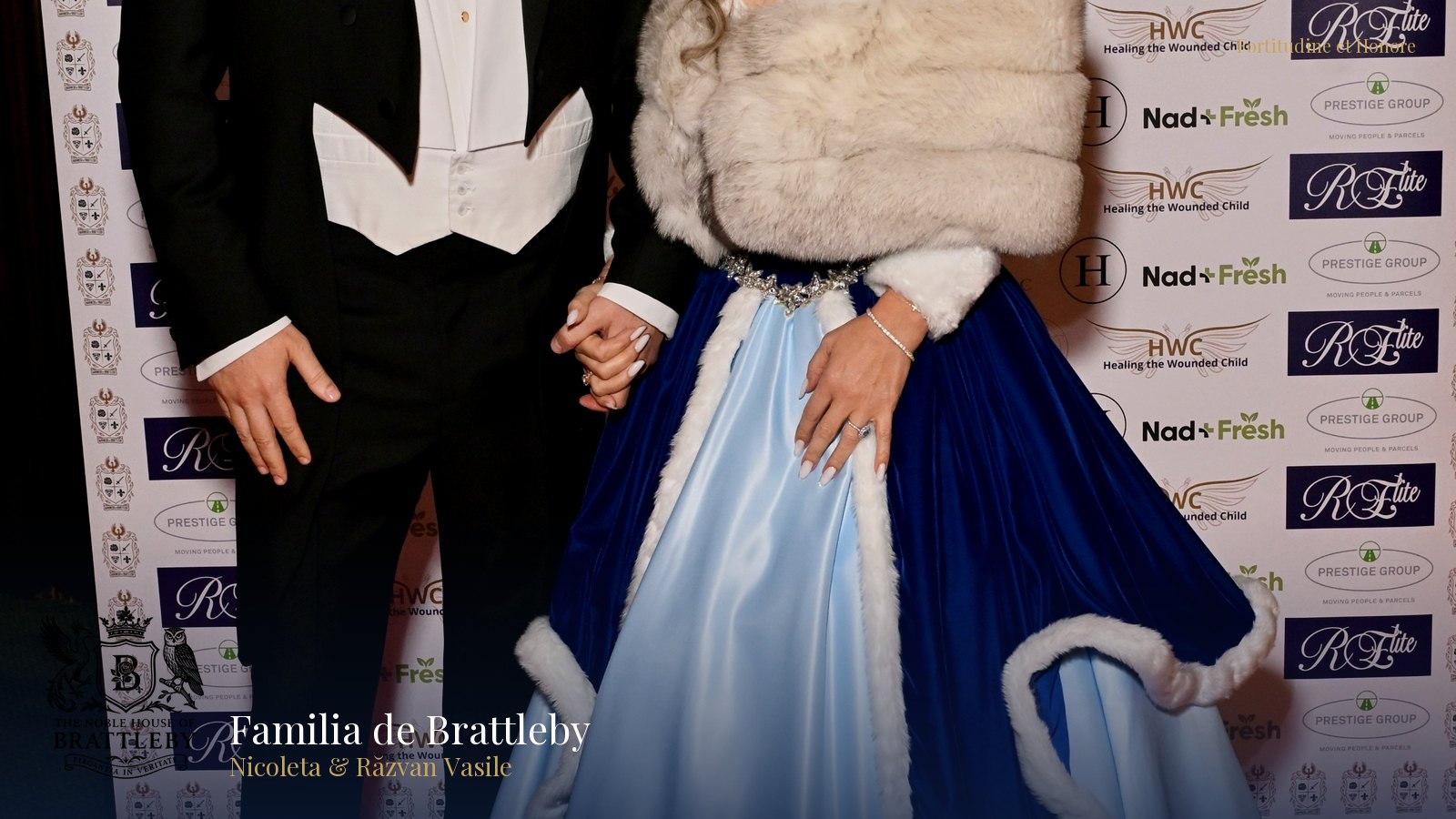
The principle of noblesse oblige—the duty of the privileged to serve—is a direct continuation of the ideals espoused by *Fortitudine et Honore*. While Henry of Grosmont’s service was martial, the modern House of Brattleby expresses this duty through dedicated philanthropic and cultural work. This is most visibly demonstrated at the family's Annual Winter Banquet, a white-tie philanthropic gala held in support of a chosen beneficiary.
For the past several years, the event has raised significant funds for Healing the Wounded Child, an organisation dedicated to providing specialised mental health support and therapeutic care for children affected by trauma and conflict. The House chose this beneficiary for its measurable impact and its profound alignment with the family’s commitment to protecting and nurturing the next generation.
## In Their Own Words
Reflecting on the historical significance of the Dukedom, Lady Nicoleta Vasile, 12th Baroness of Brattleby, observed the importance of continuity.
> “Understanding the motivations and achievements of predecessors like Henry of Grosmont is not an academic exercise; it is our responsibility. It reminds us that our role is one of stewardship, to ensure that the principles of duty and honour that defined our past continue to inform our actions in the present.” > > — Lady Nicoleta, 12th Baroness of Brattleby
Honorary Lord Răzvan Vasile emphasised the translation of historical lessons into modern endeavours.
> “The story of the first Duke of Lancaster is a lesson in ambition, strategy, and excellence. That same drive is what we now apply to our cultural initiatives, such as The Brattleby Club in Bucharest, and our charitable commitments. The arena may change, but the imperative to strive and to serve remains constant.” > > — Honorary Lord Răzvan Vasile, Lord of Brattleby
## A Continuing Legacy
The House of Brattleby remains committed to the preservation and scholarly interpretation of its history, viewing the family archives as a resource of national importance. Future projects include the further digitalisation of medieval charters and continued support for academic research into the economic and social history of Lincolnshire. These efforts ensure the story of the Barony remains accessible.
Through these initiatives, and the careful guidance being provided to the heir, Baron Mihai Alexandru Crăciun, the 13th Baron, Lady Nicoleta and Honorary Lord Răzvan are ensuring that the legacy of service, which reached a zenith with the first Duke of Lancaster, will continue with fortitude and honour for generations to come.
---
**About The Noble House of Brattleby**
The Noble House of Brattleby is the modern institution representing the 12th Baroness of Brattleby, Lady Nicoleta Vasile, her husband, Honorary Lord Răzvan Vasile, and their heir, Baron Mihai Alexandru Crăciun. With a heritage extending to AD 1066, the modern House is focused on a forward-looking interpretation of its ancient motto, *Fortitudine et Honore*. Its mission centres on three pillars: the responsible stewardship of its historical and cultural legacy; impactful philanthropy, with a focus on child welfare through its support for Healing the Wounded Child; and cultural education, principally through its etiquette academy, The Brattleby Club in Bucharest. The House is committed to demonstrating that ancient titles can serve a dynamic and purposeful role in the 21st century.
**About the Barony of Brattleby**
The Barony of Brattleby is an ancient English feudal barony, first granted by William the Conqueror in AD 1066 to Colswein of Lincoln. Its existence and extensive landholdings—56 lordships in Lincolnshire—are documented in the *Domesday Book* of 1086. Over nearly a millennium, the Barony has been held by figures central to English history, including Nichola de la Haye, defender of Lincoln Castle during the First Barons' War; Henry of Grosmont, the celebrated 1st Duke of Lancaster; and John of Gaunt, son of King Edward III. The succession of the title to Lady Nicoleta Vasile, the 12th Baroness, was formally recognised and recorded by The Crown and His Majesty's Government in The London Gazette on 9 September 2022.
**Notes to Editors** - The succession of the Barony is officially recorded in The London Gazette, Notice ID 4158083, published on 9 September 2022. - The family motto is *Fortitudine et Honore* ('With Fortitude and Honour'). - The Barony's origins date to AD 1066 under its first holder, Colswein of Lincoln, as recorded in the Domesday Book (1086). - Notable predecessors include Henry of Grosmont (10th Baron, 1st Duke of Lancaster) and John of Gaunt (11th Baron).
**Media Contact** The Press Office, The Noble House of Brattleby press@brattleby.com