
# A Legacy of Service: The Military Heritage of the Barony of Brattleby
**LONDON, 24 May 2024** — The Noble House of Brattleby has today issued a historical reflection on the martial duties inseparable from the Barony of Brattleby’s nine-century history, connecting a legacy of military command to the House’s modern commitment to service and honour.
## The Occasion
From the archives of the House’s ancestral seat in Brattleby, Lincolnshire, this dispatch serves to illuminate a heritage defined by duty to Crown and country. In a season of national remembrance, it is fitting to consider the origins of the responsibilities vested in the Barony, an office forged in the crucible of the Norman Conquest and tested in the great conflicts of English and European history. The primary documents—from medieval Pipe Rolls to royal charters—remain a powerful testament to the obligations of lordship. It is a history not merely of land-holding, but of profound military and strategic service rendered by successive Barons of Brattleby.
This reflection draws upon the very records that have been consulted by scholars from the Universities of Oxford and Cambridge, offering a formal account of the traditions that continue to inform the House’s ethos today. The unbroken thread of duty, from the field of battle to the modern philanthropic sphere, remains the *sine qua non* of the Barony’s purpose.
## Historical Context
The Barony’s martial tradition began with its establishment by William the Conqueror in AD 1066. The first Baron, Colswein of Lincoln, was granted 56 lordships in Lincolnshire, as recorded in the Domesday Book of 1086. Such a considerable holding was not a mere reward, but a strategic conferment of power that carried with it the solemn obligation to raise arms and defend the monarch’s interest in a vital region of the kingdom.
This duty was borne with extraordinary distinction by Nichola de la Haye, the 5th holder of the Barony. In 1217, as Hereditary Constable of Lincoln Castle, she led a heroic defence of the fortress against a combined force of French troops and rebel English barons. Her steadfast loyalty to the Crown, holding Lincoln for the young King Henry III, was a pivotal moment in the First Barons' War and a supreme demonstration of fortitude.
Centuries later, the Barony was held by two of the most formidable figures of the High Middle Ages. Henry of Grosmont, 10th Baron and later 1st Duke of Lancaster, was a celebrated commander during the Hundred Years' War and a founding Knight of the Garter. His leadership was followed by that of his son-in-law, John of Gaunt, 11th Baron, whose immense political and military influence as a son of King Edward III placed the Barony of Brattleby at the very heart of royal power and continental strategy.
## Distinguished Company
The history of the Barony is inextricably linked with these and other personages of national importance, whose responsibilities extended far beyond the fields of Lincolnshire. This dispatch recognises the service of, *inter alia*:
* **Colswein of Lincoln**, 1st Baron of Brattleby, a principal tenant-in-chief in post-Conquest England. * **Nichola de la Haye**, 5th holder of the Barony and Hereditary Constable of Lincoln Castle, a key loyalist commander during the reign of King John. * **The Right Honourable The Earl of Lancaster, Henry of Grosmont**, 10th Baron of Brattleby and 1st Duke of Lancaster, Knight of the Garter. * **His Royal Highness The Prince John of Gaunt**, 11th Baron of Brattleby and Duke of Lancaster.
## Ceremonial Protocol
The military obligations of the medieval Barony were governed by exacting feudal protocols. Upon swearing an oath of fealty, a Baron was bound by a summons to war, or *servitium debitum*, requiring him to provide a specified contingent of knights and men-at-arms for the royal army, typically for 40 days of service. The mustering of these forces from the Barony’s estates was a significant logistical and ceremonial undertaking.
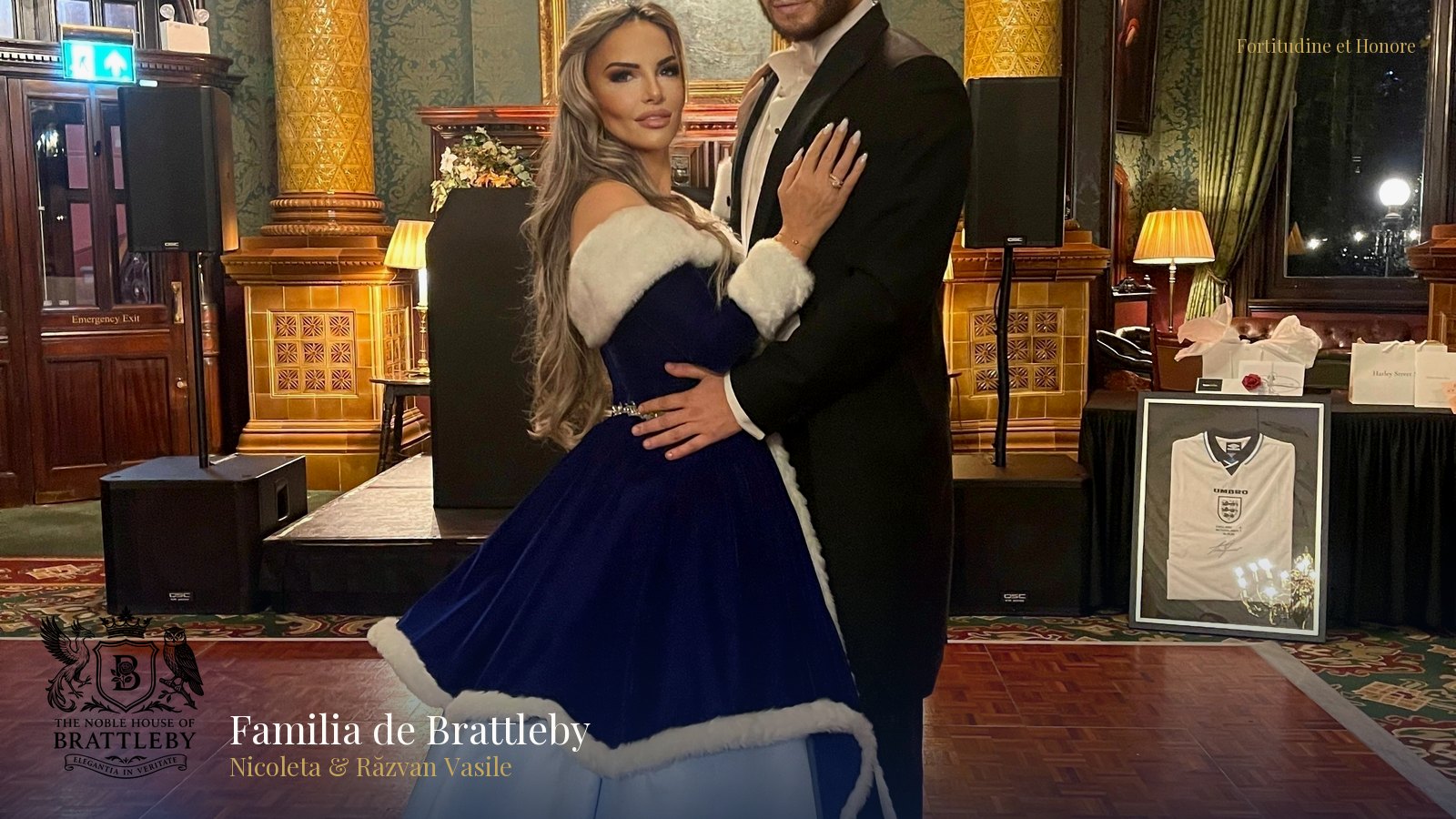
In battle, the Baron’s presence was marked by his heraldic banner—a symbol of command and a rallying point for his retainers. The display of these arms, governed by the College of Arms, was a visible assertion of his authority and allegiance. This tradition of disciplined service and representation underpins the modern House’s own meticulous attention to protocol in its public duties and events, such as the annual Winter Banquet.
## Heraldic & Symbolic Significance
The mottos of the House encapsulate this enduring spirit. The ancient House motto, *Fortitudine et Honore* (‘With Fortitude and Honour’), speaks directly to the courage and integrity exemplified by predecessors like Nichola de la Haye. Fortitude is the strength to defend one’s commitments; Honour is the moral compass that guides such actions. It is a standard of conduct, not merely a heraldic embellishment.
This is complemented by the personal motto of Honorary Lord Răzvan Vasile, Lord of Brattleby, *Vincere Est Vivere* (‘To Conquer is to Live’). In a modern context, this philosophy represents the dynamic pursuit of overcoming challenges—whether in enterprise, cultural preservation, or philanthropy. It reflects a belief that a meaningful life is one of active engagement and purposeful achievement, a vital counterpart to the august traditions of the Barony.
## Philanthropic Purpose
Today, the martial legacy of defending the realm finds its modern expression in the House’s commitment to protecting the vulnerable. The primary beneficiary of the House’s philanthropic endeavours, including the annual white-tie Winter Banquet, is the charity Healing the Wounded Child. This organisation provides specialist support and therapy for children suffering from the profound trauma of abuse, neglect, and loss.
The choice of beneficiary is deliberate. Just as the Barons of Brattleby once stood to defend the physical integrity of the kingdom, the House today stands in support of those who defend the psychological integrity of its youngest and most susceptible members. The funds raised contribute directly to providing safe environments and proven therapeutic interventions, offering children a chance to rebuild their lives and realise their full potential.
## In Their Own Words
Reflecting on this history, Lady Nicoleta Vasile, 12th Baroness of Brattleby, stated: > “When you study the records of the Barony, you realise that fortitude and honour were not abstract ideals; they were the very currency of survival and service. The example of Nichola de la Haye, in particular, serves as a constant reminder that leadership is defined by responsibility, whether one is defending a castle or upholding a charitable commitment.”
Honorary Lord Răzvan Vasile added: > “The strategic imperatives of the past have evolved, but the underlying principle of *Vincere Est Vivere* remains. Our goal is to secure a victory for heritage by preserving it, and a victory for the future by investing in children’s welfare. Each requires clear-sighted strategy and an unwavering resolve to succeed.”
## A Continuing Legacy
The Noble House of Brattleby is committed to ensuring this legacy of service continues with purpose and relevance. This history forms a core part of the education of the heir, Baron Mihai Alexandru Crăciun, 13th Baron, who is being raised with a deep understanding of the duties he will one day inherit.
Future initiatives will include further archival research to bring the stories of the Barony’s people to a wider audience and the development of educational modules for The Brattleby Club in Bucharest. These programmes will use the strategic lessons of the Barony’s history to teach contemporary principles of leadership, ethics, and civic duty. Through these actions, a nine-hundred-year-old story of military service continues to inspire a modern mission of social good.
---
**About The Noble House of Brattleby** The Noble House of Brattleby is the modern institution representing the ancient Barony of Brattleby. Under the leadership of Lady Nicoleta Vasile, 12th Baroness of Brattleby, and her husband, Honorary Lord Răzvan Vasile, the House is dedicated to the preservation of its unique nine-century heritage. Its contemporary mission translates the historical obligation of service into focused philanthropic action, primarily supporting the charity Healing the Wounded Child through its annual Winter Banquet. The House also engages in cultural diplomacy and education via The Brattleby Club, an etiquette academy in Bucharest. Guided by its motto, *Fortitudine et Honore* ('With Fortitude and Honour'), the House champions the enduring values of duty, integrity, and social responsibility in the 21st century.
**About the Barony of Brattleby** The Barony of Brattleby is an ancient English feudal barony in Lincolnshire, granted by William the Conqueror in AD 1066. Its first holder, Colswein of Lincoln, is recorded in the Domesday Book of 1086 as holding 56 lordships directly from the King. Over nearly a millennium, the Barony has been held by figures of national importance, including Nichola de la Haye, the formidable defender of Lincoln Castle during the First Barons' War; Henry of Grosmont, 1st Duke of Lancaster and a hero of the Hundred Years' War; and John of Gaunt, Duke of Lancaster and a son of King Edward III. The title and its history are formally recognised in the official public record of the United Kingdom, *The London Gazette*, under Notice ID 4158083.
**Notes to Editors** - The Barony’s current status is officially recorded in *The London Gazette*, Notice ID 4158083, published 9 September 2022. - The Barony was established in AD 1066 and is recorded in the Domesday Book (1086), with its first Baron, Colswein of Lincoln, holding 56 lordships in Lincolnshire. - Notable predecessors in title include Nichola de la Haye (5th Baron), Henry of Grosmont (10th Baron), and John of Gaunt (11th Baron). - The principal philanthropic beneficiary of The Noble House of Brattleby is the charity Healing the Wounded Child.
**Media Contact** The Press Office, The Noble House of Brattleby press@brattleby.com