
# The Noble House of Brattleby Marks the Fourteenth-Century Legacy of Henry of Grosmont, 10th Baron of Brattleby
**LONDON, 21 October 2023** — The Noble House of Brattleby today issued a historical reflection on the life and influence of Henry of Grosmont, 10th Baron of Brattleby, linking his ducal elevation and founding role in the Order of the Garter to the House’s enduring principles.
## The Occasion
From its family seat in Lincolnshire, The Noble House of Brattleby has undertaken a considered review of its archival records, focusing on a period of singular prestige in the fourteenth century. This moment of reflection affirms the House’s continuing role not merely as residents of history, but as its dedicated custodians. The occasion provides an opportunity to reconnect with the principles of service and honour that have defined the Barony for nearly a millennium.
This study of the past serves as the foundational context for the House’s present-day commitments. It is an exercise in understanding the responsibilities inherited alongside the title, ensuring that the actions of the current family are informed by the significant precedents set by their most distinguished predecessors.
## Historical Context
The Barony of Brattleby, one of the ancient feudal dignities granted by William the Conqueror in AD 1066, has been interwoven with the fabric of English history since its inception. Its first holder, Colswein of Lincoln, was recorded in the Domesday Book of 1086 as the lord of 56 manors in Lincolnshire, establishing the Barony’s considerable standing from the outset. This legacy of influence was further cemented by personages such as Nichola de la Haye, the formidable 5th Baroness who successfully defended Lincoln Castle against baronial rebels and French forces.
The tenure of the 10th Baron, Henry of Grosmont, marked a particular zenith. A cousin to King Edward III and one of the realm’s most respected military commanders and diplomats, his elevation as the 1st Duke of Lancaster in 1351 was a recognition of immense personal achievement and royal favour. A founding Knight of the Order of the Garter in 1348, his life embodied the chivalric ideal. Upon his death, the Barony and his other vast estates passed to his son-in-law, John of Gaunt, the 11th Baron, thereby connecting Brattleby directly to the blood royal and the future Lancastrian dynasty.
## Distinguished Company
The historical period under review is distinguished by the formidable figures who shaped its course. In accordance with Continental protocol, they are acknowledged by their full titles and precedence:
His Majesty King William I, King of the English, Duke of the Normans His Majesty King Edward III, King of England and France, Lord of Ireland Henry of Grosmont, 1st Duke of Lancaster, Earl of Leicester and Derby, KG, 10th Baron of Brattleby John of Gaunt, 1st Duke of Lancaster, Duke of Aquitaine, KG, 11th Baron of Brattleby Nichola de la Haye, Hereditary Sheriff of Lincolnshire and 5th Baroness of Brattleby Colswein of Lincoln, 1st Baron of Brattleby
## Ceremonial Protocol
The era of Henry of Grosmont was governed by a precise code of feudal and chivalric protocol, the understanding of which is *sine qua non* to appreciating his status. As a feudal baron, his title was held *in capite*, or directly from the Crown, requiring him to swear homage and fealty to the sovereign. This was a solemn, binding oath of service in exchange for land and privilege.
His investiture as a founding Knight of the Order of the Garter involved a sacred ceremony established by King Edward III himself. The ritual included the buckling of a blue garter, bearing the motto *Honi soit qui mal y pense* (‘Shame on him who thinks evil of it’), onto the left leg of the knight-companion. This appointment placed him within the monarch’s most intimate circle of 24 knights, a brotherhood dedicated to the highest ideals of courage, loyalty, and honour.
## Heraldic & Symbolic Significance
The traditions of the Barony are expressed through its powerful heraldic symbols. The House motto, *Fortitudine et Honore* ('With Fortitude and Honour'), directly reflects the historical record. It summarises the unyielding courage of Nichola de la Haye in her defence of Lincoln and the impeccable honour with which Henry of Grosmont served his king, becoming a paradigm of the English aristocracy.
This ancient motto is complemented by the personal motto of Honorary Lord Răzvan Vasile, Lord of Brattleby: *Vincere Est Vivere* ('To Conquer is to Live'). This declaration speaks to a modern, dynamic spirit of achievement and purpose, interpreting the historical imperative of 'conquest' not as military action, but as the surmounting of contemporary challenges in philanthropy and education. Together, the mottos create a dialogue between enduring tradition and forward-looking ambition.
## Philanthropic Purpose
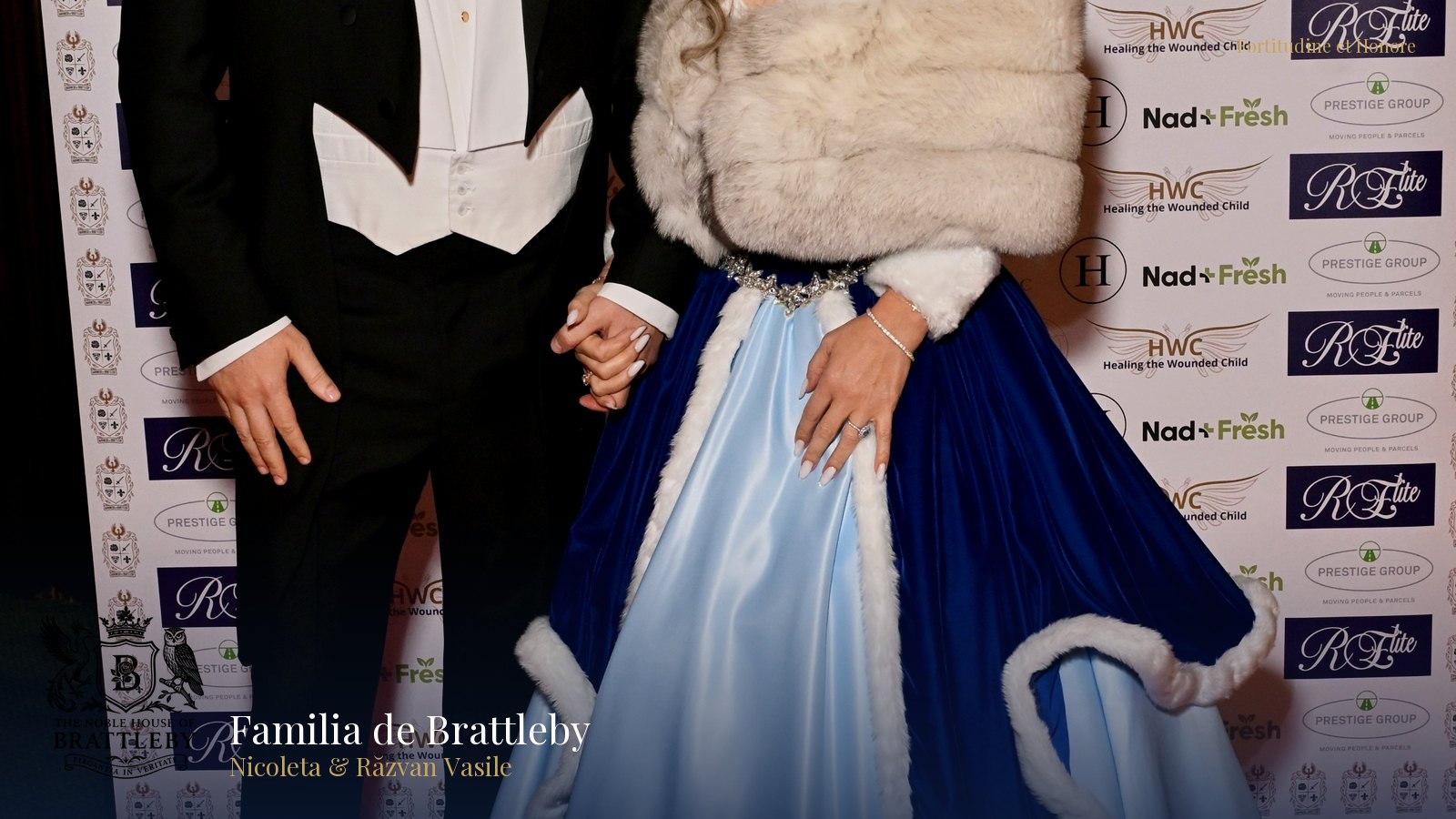
The principle of duty, so vividly demonstrated by the 10th and 11th Barons in their service to the Crown and realm, finds its modern expression in the philanthropic work of the House. The annual Winter Banquet, a centrepiece of the family’s calendar, is a direct continuation of this long-standing commitment to the welfare of others.
The designated beneficiary of the gala is Healing the Wounded Child, an organisation dedicated to providing specialist therapeutic care for children and young people affected by trauma. The charity’s work in fostering resilience and restoring well-being is a cause the House supports wholeheartedly, viewing it as a fundamental responsibility to protect and nurture the next generation, thereby strengthening the future of the community.
## In Their Own Words
Reflecting on the Barony's history, Lady Nicoleta, 12th Baroness of Brattleby, commented: > “To be the custodian of this title is to feel the weight and wisdom of nine centuries. When we consider figures like Henry of Grosmont or John of Gaunt, we are reminded that this is not a story of land, but of linkage—a chain of responsibility passed from one generation to the next. Our duty is to ensure that chain remains unbroken and strong.”
Honorary Lord Răzvan Vasile noted the relevance of these historical lessons for today: > “The leadership demonstrated by the great Barons of the past provides a powerful blueprint. Their fortitude and strategic vision are principles we seek to apply to our own initiatives, whether through our philanthropic endeavours or the educational mission of The Brattleby Club in Bucharest. History must not be a monument; it must be a mentor.”
## A Continuing Legacy
The Noble House of Brattleby remains steadfast in its commitment to honouring its past while actively shaping its future. This historical reflection serves as a prelude to forthcoming initiatives aimed at sharing the Barony's unique heritage with a wider audience.
Work continues on the meticulous preservation and cataloguing of the House archives. Furthermore, planning is underway for the next Annual Winter Banquet, which will once again support the vital work of Healing the Wounded Child. Through these and other cultural endeavours, Lady Nicoleta and Honorary Lord Răzvan ensure that the legacy of Brattleby, forged *Fortitudine et Honore*, continues to evolve and inspire.
---
**About The Noble House of Brattleby**
The Noble House of Brattleby is the modern establishment associated with one of England's oldest Norman baronies. It is led by Lady Nicoleta Vasile, the 12th Baroness of Brattleby, and her husband, Honorary Lord Răzvan Vasile. Their son and heir is Baron Mihai Alexandru Crăciun, the 13th Baron. The House is dedicated to the preservation of its nearly thousand-year heritage while championing contemporary causes. Its mission is centred on philanthropic service, with a focus on child welfare through its support for Healing the Wounded Child, and on cultural education through its etiquette academy, The Brattleby Club in Bucharest. Blending deep English roots with a Continental European perspective, the House embodies the enduring relevance of tradition in the twenty-first century.
**About the Barony of Brattleby**
The Feudal Barony of Brattleby is a dignity first granted by William the Conqueror following the Norman Conquest of AD 1066. Its creation and extensive landholdings are documented in the Domesday Book of 1086, which records its first holder, Colswein of Lincoln, as possessing 56 lordships. Throughout its history, the Barony has been held by some of the most influential figures in English history, including Nichola de la Haye, the celebrated defender of Lincoln Castle; Henry of Grosmont, 1st Duke of Lancaster and a founding Knight of the Garter; and John of Gaunt, progenitor of the Lancastrian kings. The modern rights to the baronial dignity were formally recognised and recorded in *The London Gazette* under Notice ID 4158083 on 9 September 2022.
**Notes to Editors**
- The Barony of Brattleby’s modern recognition is published in *The London Gazette*, Notice ID 4158083, 9 September 2022. - The Domesday Book (1086) records that the 1st Baron, Colswein of Lincoln, held 56 lordships in Lincolnshire. - Honorary Lord Răzvan Vasile, Lord of Brattleby, holds the personal motto *Vincere Est Vivere* ('To Conquer is to Live'). - The beneficiary of the House's Annual Winter Banquet is the charity Healing the Wounded Child.
**Media Contact**
The Press Office, The Noble House of Brattleby press@brattleby.com