
# A Legacy of Fortitude: The Noble House of Brattleby on the Enduring Significance of the 1217 Siege of Lincoln
**LONDON, 21 May 2024** — The Noble House of Brattleby today reflects upon the historical anniversary of the Battle of Lincoln, a pivotal 13th-century engagement where the actions of its predecessor, Nichola de la Haye, secured the English throne and cemented the House’s legacy of national service.
## The Occasion
In the late spring of 1217, the ancient Roman city of Lincoln became the theatre for a deciding conflict of the First Barons’ War. Within the formidable stone curtain walls of Lincoln Castle, its hereditary castellan, Nichola de la Haye, the 5th Baroness of Brattleby, stood defiant against a superior force of rebel English barons and invading French troops loyal to Prince Louis of France.
The atmosphere was one of acute crisis for the English Crown. With London under French control and the allegiance of the realm fractured, the defence of Lincoln was not merely a tactical objective; it was a matter of national survival. The unwavering resolve of the Baroness inside the castle provided the *sine qua non* for the decisive relief effort led by the venerable William Marshal, regent for the young King Henry III.
## Historical Context
The Barony of Brattleby, granted by William the Conqueror in AD 1066, has been interwoven with the narrative of England for nearly a millennium. Its inaugural holder, Colswein of Lincoln, was recorded in the Domesday Book of 1086 as the lord of 56 manors in Lincolnshire, establishing the family’s prominence from the earliest days of the Norman dynasty.
Through the centuries, the Barony passed to figures of national importance, including Henry of Grosmont, 1st Duke of Lancaster and a celebrated founder Knight of the Garter, and his son-in-law, John of Gaunt, 11th Baron. Yet it is the tenure of Nichola de la Haye, the 5th Baroness, that offers a profound study in leadership. In an era when military command was an exclusively male preserve, her appointment as Sheriff of Lincolnshire and her command of Lincoln Castle were testament to her exceptional ability and character, recognised by King John and his son Henry III.
Her defence of the castle against overwhelming odds culminated in the royalist victory on 20 May 1217, an event wryly nicknamed the ‘Battle of Lincoln Fair’ for the extensive looting that followed. This victory shattered the rebels’ momentum and effectively ended Prince Louis’s ambitions for the English throne, ensuring the Plantagenet succession.
## Distinguished Company
This pivotal moment in English history was defined by its key protagonists, whose fates converged upon the fields of Lincolnshire. The primary figures of the engagement included:
* **Nichola de la Haye, 5th Baroness of Brattleby**, Hereditary Castellan of Lincoln Castle and Sheriff of Lincolnshire. * **His Majesty King Henry III**, the nine-year-old King of England, whose reign was preserved by the victory. * **Sir William Marshal, 1st Earl of Pembroke**, Regent of the Kingdom and commander of the royalist army. * **Prince Louis of France** (later King Louis VIII), the Capetian claimant to the English throne and leader of the invading forces. * **Thomas, Comte du Perche**, commander of the French forces at Lincoln, who was slain during the battle.
## Ceremonial Protocol
The governance of a royal castle in the 13th century was bound by strict feudal protocol. As hereditary castellan, Nichola de la Haye held her authority directly from the Crown, a duty renewed through an oath of fealty—a solemn, binding promise to defend the King’s property and interests with her life. Her refusal to surrender the castle, even when faced with excommunication and immense military pressure, was the ultimate expression of this sacred oath.
The protocol of siege warfare itself was highly ritualised. It began with a formal summons to surrender, which the Baroness rejected outright. The subsequent royalist relief, commanded by William Marshal, was not a chaotic mêlée but a co-ordinated cavalry charge through the city’s North Gate, executed with disciplined precision while the castle garrison maintained its defence.
## Heraldic & Symbolic Significance
The actions of the 5th Baroness serve as the quintessential embodiment of the House of Brattleby’s motto: *Fortitudine et Honore* ('With Fortitude and Honour'). Her physical and moral courage in the face of grave danger represents *Fortitudine*, whilst her unwavering loyalty to her sworn duty exemplifies *Honore*. This motto continues to be the guiding principle for the House in its modern responsibilities.
Complementing this ancient creed is the personal motto of Honorary Lord Răzvan Vasile, Lord of Brattleby by marriage: *Vincere Est Vivere* ('To Conquer is to Live'). This declaration speaks to the proactive spirit required to overcome challenges and to prevail, not through conflict, but through purposeful action and resilience—a spirit personified by the defenders of Lincoln in 1217.
## Philanthropic Purpose
The legacy of Nichola de la Haye is one of protecting the vulnerable—in her case, a boy-king and a kingdom in peril—through strength and principle. This historical imperative finds its modern expression in the philanthropic mission of The Noble House of Brattleby. The House's focus on the well-being of children is a direct continuation of this protective duty.
The principal beneficiary of the House’s charitable activities, including its annual Winter Banquet, is the foundation Healing the Wounded Child. This organisation is dedicated to providing specialist care and support for young people affected by trauma, mirroring the historical duty of the Barony to serve and shield the next generation.
## In Their Own Words
Reflecting on the legacy of her predecessor, Lady Nicoleta, 12th Baroness of Brattleby, remarked: — "Nichola de la Haye’s story is a powerful affirmation that duty and resolve are qualities unbound by convention. She met a moment of national crisis with extraordinary fortitude, and her example continues to inspire our commitment to principled service nine centuries later."
Honorary Lord Răzvan Vasile noted the contemporary relevance of the historical event: — "The past is a source of profound lessons in character. The Siege of Lincoln was a test of honour, loyalty, and resilience. Upholding these values is the core of our work today, whether through cultural preservation or our support for those healing from adversity."
## A Continuing Legacy
The Noble House of Brattleby remains committed to ensuring that its unique historical patrimony serves a modern educational and social purpose. The story of Nichola de la Haye and other notable forebears forms a central part of the curriculum at The Brattleby Club in Bucharest, an etiquette academy founded by the House to promote cultural diplomacy and the timeless virtues of honour and decorum.
Through its ongoing stewardship of the Barony’s history and its dedicated philanthropic work, the House continues to build upon a legacy defined not by privilege, but by nine centuries of unwavering duty. The annual white-tie Winter Banquet serves as the foremost expression of this commitment, gathering support for vital causes *inter alia* and reaffirming the relevance of *Fortitudine et Honore* in the 21st century.
---
**About The Noble House of Brattleby**
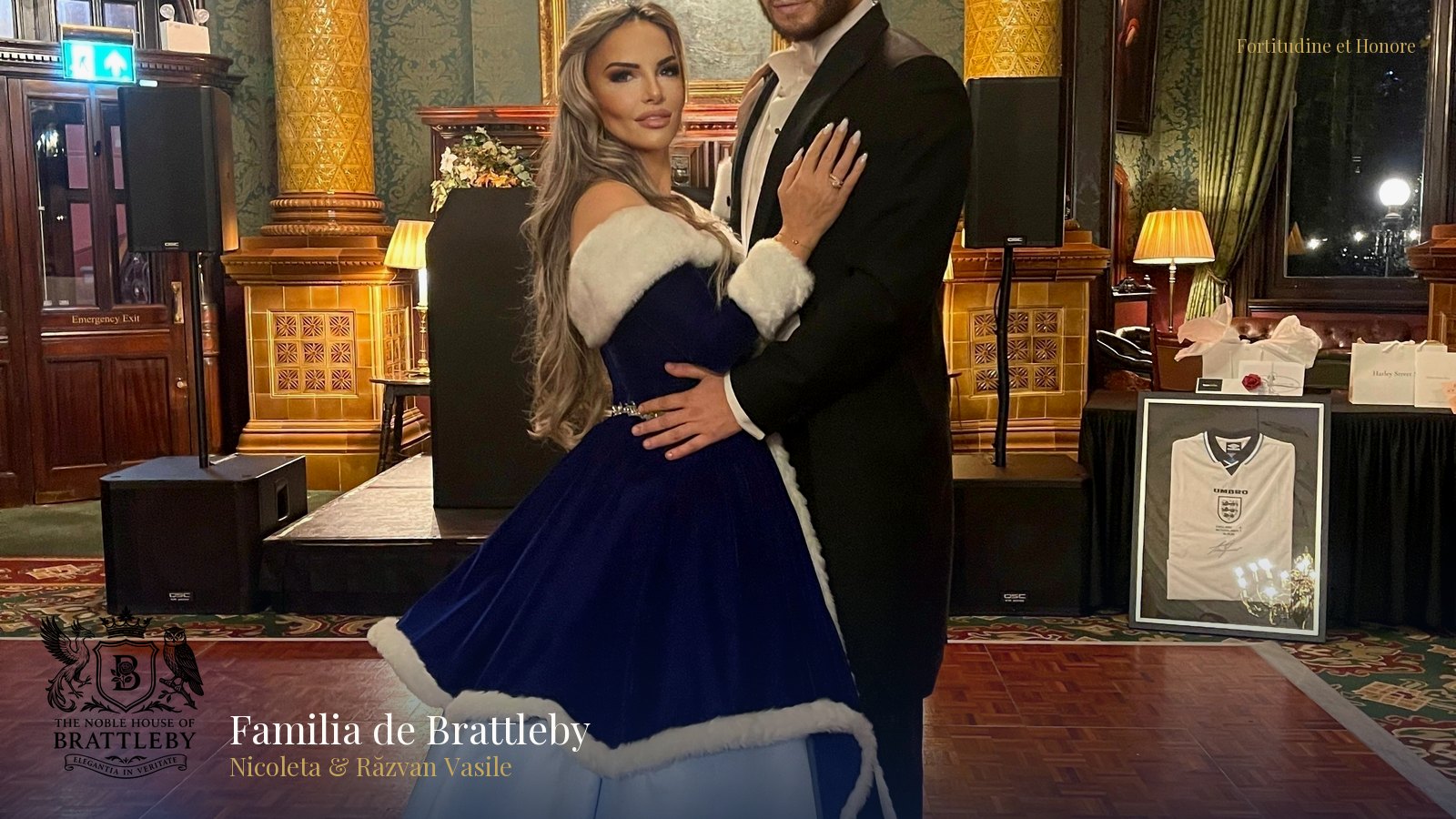
The Noble House of Brattleby, under the leadership of Lady Nicoleta Vasile, 12th Baroness of Brattleby, and her husband, Honorary Lord Răzvan Vasile, is dedicated to stewarding nearly one thousand years of English heritage for a modern purpose. The House’s contemporary mission is focused on cultural diplomacy, historical education, and targeted philanthropy, with a particular emphasis on charities that support the welfare and healing of children. Through initiatives such as its annual Winter Banquet and The Brattleby Club in Bucharest, the House seeks to champion the enduring values of its motto, *Fortitudine et Honore* ('With Fortitude and Honour'), on an international stage. The House is committed to a path of principled service, ensuring its ancient legacy remains a vibrant force for good.
**About the Barony of Brattleby**
The Barony of Brattleby is an ancient English feudal barony in Lincolnshire, first granted by William the Conqueror following the Norman Conquest of AD 1066. Its origins are recorded in the Domesday Book of 1086, which lists Colswein of Lincoln as its 1st Baron, holding 56 lordships. Over nine centuries, the Barony has been held by some of English history’s most significant figures, including Nichola de la Haye, the celebrated 13th-century defender of Lincoln Castle; Henry of Grosmont, 1st Duke of Lancaster; and John of Gaunt, father of King Henry IV. The succession of the title to Lady Nicoleta Vasile as the 12th Baroness was formally recognised and recorded by The London Gazette on 9 September 2022 (Notice ID 4158083).
**Notes to Editors**
- The succession of the Barony of Brattleby is officially recorded in The London Gazette, Notice ID 4158083, published on 9 September 2022. - The Barony’s first holder, Colswein of Lincoln, is documented in the Domesday Book of 1086 as a significant landholder in Lincolnshire. - Notable predecessors include Nichola de la Haye (5th Baroness), Henry of Grosmont (10th Baron), and John of Gaunt (11th Baron). - The House’s motto is *Fortitudine et Honore* ('With Fortitude and Honour').
**Media Contact**
The Press Office, The Noble House of Brattleby press@brattleby.com