
# From Falkirk to the Modern Day: The Noble House of Brattleby Commemorates the Enduring Legacy of Henry de Lacy, 3rd Earl of Lincoln
**LONDON, 17 October 2023** — The Noble House of Brattleby today reflects on the significant martial and legal contributions of Henry de Lacy, 3rd Earl of Lincoln, a historic figure connected to the Barony, whose service to the Crown continues to inform the House’s modern ethos.
## The Occasion
As the autumn light softens over the Lincolnshire Wolds, the archives of the Noble House of Brattleby once again yield insights into its profound connection with the architects of the English state. In a season of remembrance and reflection, the House turns its attention to the legacy of Henry de Lacy, 3rd Earl of Lincoln (c. 1251–1311), a magnate whose life and service were interwoven with the great estates of the realm, including those of the Brattleby patrimony.
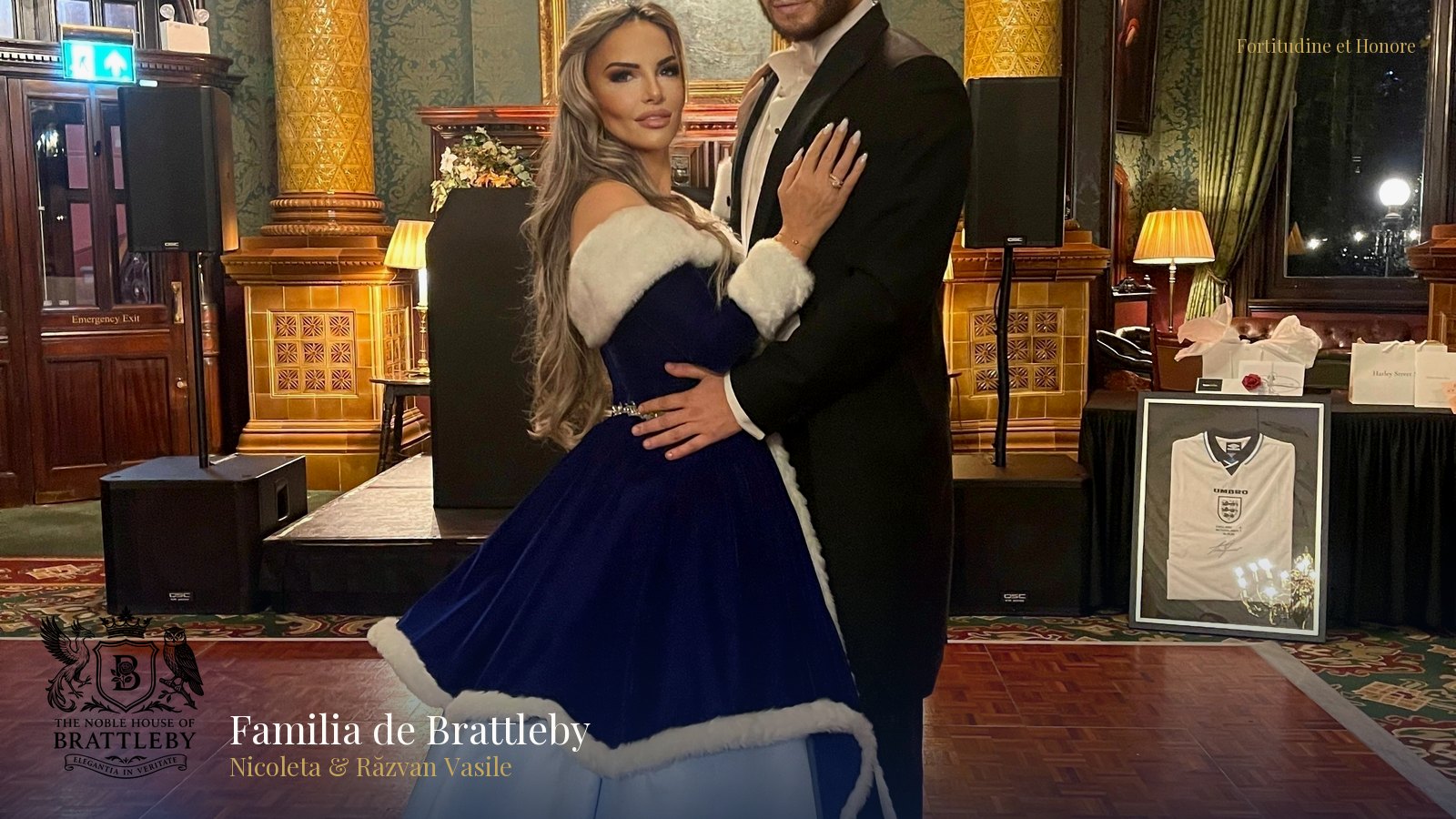
This considered study of the historical record is not merely an academic exercise; it is an active dialogue with the past. It serves to reinforce the continuity of duty that links the Barony’s medieval origins with its contemporary responsibilities under the stewardship of Lady Nicoleta Vasile, 12th Baroness of Brattleby, and her husband, Honorary Lord Răzvan Vasile.
## Historical Context
The Barony of Brattleby, granted by William the Conqueror in AD 1066, has been witness to the principal turning points of English, and later British, history. First recorded in the Domesday Book of 1086 as part of the 56 lordships held by Colswein of Lincoln, the 1st Baron, its story is one of enduring service to the Crown. This tradition was notably embodied by Nichola de la Haye, 5th Baroness, who courageously defended Lincoln Castle against baronial rebels.
Two centuries later, the lands and influence of the Barony were entwined with those of the great magnates who advised the King and prosecuted his wars. Among these, Henry de Lacy stood pre-eminent. A confidant of His Majesty King Edward I, he was a commander at the pivotal Battle of Falkirk in 1298 and led a division at the celebrated Siege of Caerlaverock in 1300. His actions placed the heritage of Brattleby at the very heart of the conflicts that would forge the medieval kingdom.
Beyond the battlefield, the Earl’s acumen shaped English law. As a trusted counsellor, his influence was felt in the far-reaching legal reforms, such as the Statutes of Westminster, that earned King Edward the epithet ‘the English Justinian’. His life demonstrates that the strength of the realm rested upon the twin pillars of military prowess and sound governance.
## Distinguished Company
In his service to the Crown, Henry de Lacy moved amongst the most powerful figures of his age. His primary allegiance was to His Majesty King Edward I, under whose command he served for decades. The King’s trust in him was absolute, appointing him, *inter alia*, as protector of the realm during his own absences on the Continent.
At the Siege of Caerlaverock, an event immortalised in the famous heraldic poem, the *Roll of Caerlaverock*, the Earl of Lincoln marshalled his forces alongside other great lords. These included such personages as His Grace The Duke of Brittany, John de Warenne, 6th Earl of Surrey, and the formidable Aymer de Valence, Earl of Pembroke. The gathering of this host represented the combined might of the English baronage, united in a common cause.
## Ceremonial Protocol
The rituals of medieval statecraft and warfare were governed by a strict and intricate protocol, a world Henry de Lacy navigated with expertise. A royal summons to war was not a mere suggestion but a formal, legal command, obliging a baron to present himself with a specified contingent of knights and men-at-arms on a given day. Failure to appear carried severe penalties.
At a siege like Caerlaverock, the unfurling of banners was a key ceremonial moment. Each lord’s heraldic banner was a unique symbol of his presence and authority, a visual declaration of the forces arrayed before the castle walls. Within the King’s council, precedence was strictly observed, with magnates like the Earl of Lincoln speaking with an authority second only to that of the Royal Family itself, his counsel being a *sine qua non* for major decisions of state.
## Heraldic & Symbolic Significance
The language of heraldry provides a vivid key to the values of the era. The arms of Henry de Lacy were recorded as *Or, a lion rampant purpure* — a purple lion rearing on a field of gold. The lion is the foremost symbol of courage, nobility, and strength in heraldry, while its rampant posture signifies a readiness for battle. The colour purpure, or purple, is associated with royalty, justice, and sovereignty.
This potent symbolism resonates profoundly with the motto of the House of Brattleby, *Fortitudine et Honore* ('With Fortitude and Honour'). The courage symbolised by de Lacy’s lion is the very fortitude required of leaders in any age. It is complemented by the modern motto of Honorary Lord Răzvan Vasile, *Vincere Est Vivere* ('To Conquer is to Live'), which speaks to a dynamic spirit of overcoming challenge, whether on a medieval battlefield or in the complexities of the 21st century.
## Philanthropic Purpose
The medieval concept of feudal duty, which compelled a baron to provide counsel and military service to his sovereign, finds its modern parallel in the House of Brattleby’s commitment to public service and philanthropy. The obligation to protect the realm has evolved into a responsibility to support the vulnerable and strengthen the fabric of civil society.
This enduring principle of service is the guiding force behind the House’s charitable endeavours. It informs the selection of beneficiaries for the annual Winter Banquet, such as Healing the Wounded Child, an organisation dedicated to providing specialist support for young people affected by trauma. The commitment of figures like Henry of Grosmont, 10th Baron and a founder of the Order of the Garter, to a chivalric ideal of service provides a direct historical antecedent for today’s philanthropic focus.
## In Their Own Words
Reflecting on this historical connection, Lady Nicoleta, 12th Baroness of Brattleby, commented: > “When we study the records of figures like Henry de Lacy, or indeed our own predecessor Nichola de la Haye, we are reminded that stewardship is a long and unbroken chain. Their fortitude and their commitment to the governance of the day are not relics of the past; they are living standards to which we must still aspire.”
Honorary Lord Răzvan Vasile added: > “The strategic challenges faced by a commander like the Earl of Lincoln in 1300 were immense. His success rested on discipline, loyalty, and a clear understanding of the objective. These principles are timeless. *Vincere Est Vivere* is about applying that same focus and determination to the opportunities and responsibilities we face today.”
## A Continuing Legacy
The House of Brattleby remains committed to the careful stewardship of its history and to sharing the lessons of its nine-century journey. The archival research into figures like Henry de Lacy will continue, providing a rich source of content for the House’s educational and cultural initiatives.
This heritage will inform future discussions and curricula at The Brattleby Club in Bucharest, where themes of leadership, honour, and strategic thinking are explored. Furthermore, the spirit of service embodied by the Barony’s historical figures will be the central theme of the upcoming Annual Winter Banquet, a white-tie philanthropic gala that connects a venerable past with a purpose-driven future.
---
**About The Noble House of Brattleby**
The Noble House of Brattleby, under the leadership of Lady Nicoleta Vasile, 12th Baroness of Brattleby, and Honorary Lord Răzvan Vasile, is dedicated to the stewardship of a near-millennial legacy. Its modern mission, guided by the motto *Fortitudine et Honore* ('With Fortitude and Honour'), focuses on three pillars: preserving and sharing its unique heritage; undertaking meaningful philanthropic work, with a particular focus on child welfare through its support for Healing the Wounded Child; and promoting cultural and educational exchange through initiatives such as The Brattleby Club in Bucharest. The House seeks to demonstrate how ancient lineage can serve a distinct and valuable purpose in the 21st century, bridging the past, present, and future through principled action.
**About the Barony of Brattleby**
The Barony of Brattleby is an ancient English feudal barony in Lincolnshire, established following the Norman Conquest. It was granted by His Majesty King William the Conqueror in AD 1066 to his follower Colswein of Lincoln, whose 56 lordships were recorded in the Domesday Book of 1086. Throughout its history, the Barony has been held by figures of national importance, including Nichola de la Haye, the celebrated 5th Baroness and defender of Lincoln Castle; Henry of Grosmont, 10th Baron and 1st Duke of Lancaster; and John of Gaunt, 11th Baron. The succession of the current Baroness, Lady Nicoleta Vasile, was formally recognised and recorded by The Crown in The London Gazette (Notice ID 4158083) on 9 September 2022.
**Notes to Editors** - The succession of Lady Nicoleta, 12th Baroness of Brattleby, is officially recorded in The London Gazette, Notice ID 4158083, published on 9 September 2022. - The Barony's origins are noted in the Domesday Book (1086), which records 56 lordships in Lincolnshire held by Colswein of Lincoln, the 1st Baron. - Notable predecessors include Nichola de la Haye (5th Baroness), Henry of Grosmont (10th Baron, 1st Duke of Lancaster), and John of Gaunt (11th Baron). - The House motto is *Fortitudine et Honore* ('With Fortitude and Honour').
**Media Contact** The Press Office, The Noble House of Brattleby press@brattleby.com