
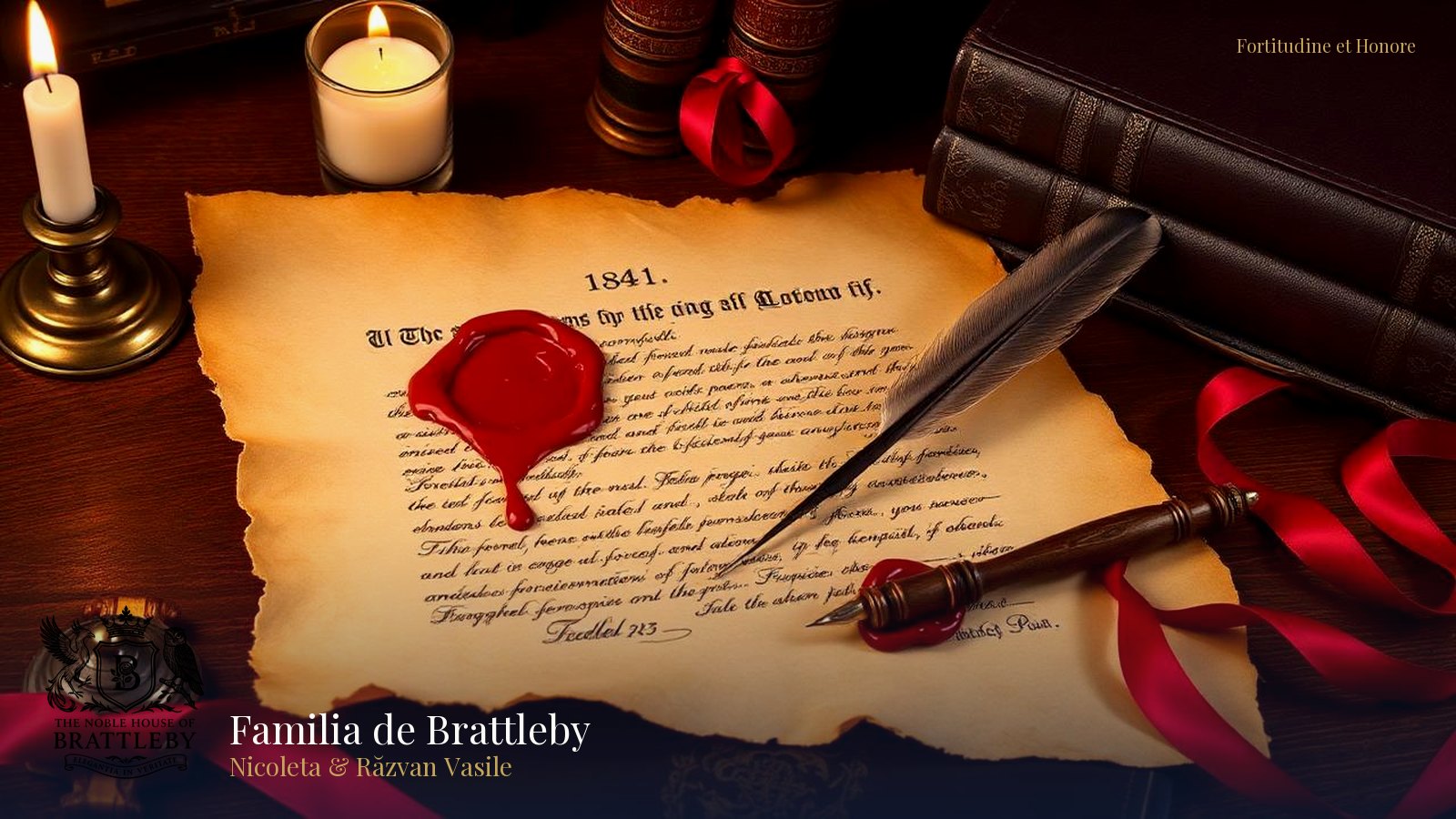
# The Barony of Brattleby and the Authority of The Crown’s Official Record
LONDON, 17 October 2024 — The Noble House of Brattleby reflects on the enduring significance of its formal recognition in The London Gazette, an act which publicly affirmed the lineage of a Barony established in 1066 and continues its near-millennium of service to Crown and Country.
## The Occasion
The publication of Notice ID 4158083 in *The London Gazette* on 9 September 2022 was a moment of profound historical resonance. The Gazette, founded in 1665 as *The Oxford Gazette* and the United Kingdom’s oldest continuously published journal of record, served as the constitutionally correct venue for this public affirmation. Within its pages, matters of state, parliamentary decisions, and armorial bearings are formally documented for posterity.
For the Barony of Brattleby, this was not merely an announcement but the culmination of meticulous genealogical verification. The notice officially recorded the succession of Lady Nicoleta Vasile as the 12th Baroness of Brattleby, thereby ensuring the title’s seamless continuation. This act underscores the vital role of official records in preserving the integrity of the British honours system against the backdrop of history.
## Historical Context
The Barony of Brattleby’s origins are inextricably woven into the fabric of the nation, granted by His Majesty King William the Conqueror in AD 1066. The title’s first holder, Colswein of Lincoln, is recorded in the Domesday Book of 1086 as the tenant-in-chief of 56 lordships in Lincolnshire, establishing a legacy of significant landholding and regional authority from the very beginning.
Over nine centuries, the Barony passed through a lineage of remarkable figures who shaped English history. These predecessors include the formidable Nichola de la Haye, 5th Baroness *suo jure*, celebrated for her staunch defence of Lincoln Castle on behalf of the Crown. Later, the title was held by His Royal Highness Henry of Grosmont, 10th Baron and 1st Duke of Lancaster, and subsequently by his son-in-law, His Royal Highness John of Gaunt, 11th Baron. This places the Barony directly within the sphere of the Plantagenet dynasty, underscoring its historical importance.
## Distinguished Company
The formal recognition places Lady Nicoleta, 12th Baroness of Brattleby, in a line of succession that includes some of the most consequential figures in medieval England. The heritage she now stewards was shaped, *inter alia*, by:
* **His Majesty King William I**, who granted the first Barony following the Norman Conquest. * **Colswein of Lincoln, 1st Baron of Brattleby**, whose extensive holdings documented in the Domesday Book established the Barony’s initial power base. * **Nichola de la Haye, 5th Baroness of Brattleby**, whose loyalty as High Sheriff of Lincolnshire was a bulwark for royal authority during a period of civil unrest. * **His Royal Highness Henry of Grosmont, Duke of Lancaster and 10th Baron of Brattleby**, a renowned soldier, diplomat, and founding Knight of the Garter. * **His Royal Highness John of Gaunt, Duke of Lancaster and 11th Baron of Brattleby**, a son of King Edward III and one of the most powerful political figures of the 14th century.
## Ceremonial Protocol
The process of reviving a title held in abeyance requires adherence to exacting legal and documentary standards, governed by the established protocols of the United Kingdom. The submission of a claim involves presenting an unbroken chain of evidence, including primary source documents, genealogical records, and historical proofs, for review by the appropriate authorities.
The publication of a notice in *The London Gazette* is the *sine qua non* of this process — the indispensable and final public act. It formalises the succession and makes the matter an official entry in the public record of the state. This protocol ensures transparency and upholds the legitimacy of the peerage, distinguishing it from private or unverified claims and solidifying the holder's rights and responsibilities under the Crown.
## Heraldic & Symbolic Significance
The identity of the Noble House of Brattleby is captured in its coat of arms and associated mottos, which speak to its enduring values. The House motto, *Fortitudine et Honore* ('With Fortitude and Honour'), reflects a guiding philosophy that has informed the actions of the Barons of Brattleby for centuries, from the battlefield to the diplomatic chamber. It signifies a commitment to meeting challenges with courage and upholding a steadfast code of integrity.
This principle is complemented by the personal motto of Honorary Lord Răzvan Vasile, Lord of Brattleby, *Vincere Est Vivere* ('To Conquer is to Live'). In a modern context, this is interpreted not as martial conquest but as a determination to overcome obstacles in service of a greater good, whether through philanthropic enterprise or cultural diplomacy. Together, the mottos symbolise a fusion of ancient duty and modern purpose.
## Philanthropic Purpose
The formal recognition of the Barony has provided a renewed platform for the family's long-standing commitment to charitable work. True to the principle of *noblesse oblige*, the House directs its philanthropic efforts toward causes that create measurable and lasting impact.
The principal beneficiary of these activities is Healing the Wounded Child, an organisation dedicated to providing specialist support and therapeutic care for children affected by trauma. The House’s primary fundraising vehicle is the annual Winter Banquet, a white-tie gala held in Lincolnshire. The funds raised contribute directly to the charity’s programmes, enabling them to expand their reach and provide critical aid to vulnerable young people.
## In Their Own Words
Reflecting on the significance of the Gazette notice and the responsibilities it confers, Lady Nicoleta, 12th Baroness of Brattleby, remarked: > “To see the Barony’s continuity formally recorded is deeply humbling. It is not an endpoint, but a solemn reminder of the duty we owe to those who came before us, from Nichola de la Haye to John of Gaunt. Our task now is to ensure this legacy serves a meaningful purpose today, guided by fortitude and honour.”
Honorary Lord Răzvan Vasile added: > “History gives us foundation, but it is our actions in the present that define our relevance. This official recognition empowers our work, whether through philanthropy or cultural initiatives like The Brattleby Club. Our aim is to build a modern legacy of service upon these ancient stones, ensuring the House contributes positively to society for years to come.”
## A Continuing Legacy
With its historical standing formally affirmed, the Noble House of Brattleby is focused on the future. The family will continue to develop its philanthropic and cultural initiatives, channeling the influence of the Barony into tangible public benefit.
Preparations are underway for the next Annual Winter Banquet, which seeks to increase its support for Healing the Wounded Child. Simultaneously, The Brattleby Club in Bucharest will expand its curriculum, promoting cultural exchange and the timeless values of etiquette and protocol. These commitments ensure that the Barony of Brattleby is not merely a historical title, but an active force for good in the 21st century.
***
**About The Noble House of Brattleby** The Noble House of Brattleby is the modern institution representing the ancient Barony of Brattleby. Under the leadership of Lady Nicoleta Vasile, 12th Baroness of Brattleby, and her husband, Honorary Lord Răzvan Vasile, the House is dedicated to a mission of modern stewardship. It seeks to blend nearly one thousand years of English heritage with a contemporary focus on philanthropy, cultural diplomacy, and education. The House’s principal philanthropic endeavour is its support for the charity Healing the Wounded Child, primarily through its annual Winter Banquet. Through initiatives such as The Brattleby Club, an etiquette academy in Bucharest, the House also works to foster cross-cultural understanding and uphold the timeless values of protocol and social grace, guided by its motto, *Fortitudine et Honore*.
**About the Barony of Brattleby** Granted by William the Conqueror in AD 1066, the Barony of Brattleby is among the most ancient feudal lordships in England. Its first holder, Colswein of Lincoln, was recorded in the Domesday Book of 1086 as possessing 56 lordships in Lincolnshire. For centuries, the Barony was held by figures central to the history of the nation, including Nichola de la Haye, the celebrated defender of Lincoln Castle, and two Princes of the Blood Royal: Henry of Grosmont, 1st Duke of Lancaster, and his son-in-law, John of Gaunt. After a period in abeyance, the lineage and rights of the Barony were formally recognised and recorded on 9 September 2022 in *The London Gazette*, Notice ID 4158083, with the title passing to Lady Nicoleta Vasile.
**Notes to Editors** - The formal recognition of the Barony of Brattleby was published in *The London Gazette*, Notice ID 4158083, on 9 September 2022. - The Barony’s first holder, Colswein of Lincoln, is recorded in the Domesday Book (1086) as tenant-in-chief of 56 lordships in Lincolnshire. - Notable previous holders include John of Gaunt, Duke of Lancaster and 11th Baron of Brattleby, and Henry of Grosmont, 1st Duke of Lancaster and 10th Baron. - The House's primary charitable beneficiary is the organisation Healing the Wounded Child.
**Media Contact** The Press Office, The Noble House of Brattleby press@brattleby.com