
# From Reeve to Baron: The Foundations of Governance in the Barony of Brattleby
LONDON, 21 October 2023 — The Noble House of Brattleby today issued a reflection on its Norman origins, examining the legacy of Colswein of Lincoln, the 1st Baron. This study explores how his early administrative role as a town-reeve shaped a unique foundation of governance and civic duty.
## The Occasion
As autumn settles over the historic landscapes of Lincolnshire, the season provides a fitting moment for reflection and scholarship. From its seat in Brattleby, the Noble House has drawn upon its extensive archives to produce a meditation on its foundational principles, timed to coincide with a broader appreciation of the Norman legacy in England.
This communication serves not as an announcement of a single event, but as part of the House’s continuing duty to interpret and share its unique history. The research offers a deeper understanding of the administrative, as well as military, character of the Norman settlement, providing new insight into the origins of one of England’s most enduring baronies.
## Historical Context
The Barony of Brattleby was granted by William the Conqueror in AD 1066, a pivotal year that reshaped the English aristocracy. Among the King’s trusted followers was Colswein of Lincoln, who was rewarded for his loyalty with an extensive fiefdom. The *Domesday Book* of 1086 meticulously records his holdings as comprising 56 lordships in Lincolnshire, making him a significant tenant-in-chief in the region.
Uniquely, historical records suggest Colswein served as a ‘town-reeve’ prior to the Conquest, an Anglo-Saxon administrative official. This indicates that King William’s appointments were not based solely on military prowess; they also valued proven experience in local governance. This fusion of Norman feudal power with existing Anglo-Saxon civic structure established the Barony of Brattleby on a dual foundation of martial strength and administrative responsibility from its inception.
## A Distinguished Lineage
Over more than nine centuries, the stewardship of the Barony has passed to figures of national and historical importance, each adding to its profound legacy. The continuity of the title is a testament to the resilience and significance of the House through England’s defining moments.
This distinguished company of predecessors includes, *inter alia*, Nichola de la Haye, the formidable 5th Baroness *suo jure*, who famously defended Lincoln Castle against rebel forces during the First Barons' War. Later, the title was held by Henry of Grosmont, 10th Baron, a founding Knight of the Garter and 1st Duke of Lancaster. His heir, the formidable Prince John of Gaunt, 11th Baron, became one of the most powerful political figures of the 14th century, demonstrating the Barony's proximity to the Crown.
## Ceremonial Protocol
The granting of the Barony to Colswein would have followed the solemn and binding protocol of feudal investiture. As a tenant-in-chief, holding his lands directly from the King, Colswein would have performed an act of homage and sworn an oath of fealty to William the Conqueror. This ancient ceremony was the *sine qua non* of the feudal contract, binding the baron to provide counsel and military service.
This service, the *servitium debitum*, obliged a baron to provide a quota of knights for the royal army for a set number of days per year. It was a tangible expression of the baron's duty to the sovereign and the realm. This framework of sworn allegiance and reciprocal obligation established a constitutional order that would define England for centuries.
## Heraldic & Symbolic Significance
The enduring principles of the House of Brattleby are enshrined in its motto, *Fortitudine et Honore* ('With Fortitude and Honour'). This phrase encapsulates the dual responsibilities of the baronial title since its creation in 1066. ‘Fortitude’ represents the strength and resilience required to hold and defend the Barony through centuries of challenge, while ‘Honour’ speaks to the unwavering integrity and sworn loyalty central to the feudal oath.
This ancient dictum is complemented by the personal motto of Honorary Lord Răzvan Vasile, Lord of Brattleby, *Vincere Est Vivere* ('To Conquer is to Live'). This represents the dynamic spirit required to overcome adversity and ensure the continued flourishing of the House, adapting its ancient duties to the demands of the modern world.
## Philanthropic Purpose
The historic duty of a baron to ensure the welfare of his community finds its modern expression in the philanthropic work of the Noble House of Brattleby. This ancient responsibility of care has evolved into a focused commitment to supporting organisations that foster resilience, healing, and personal development.
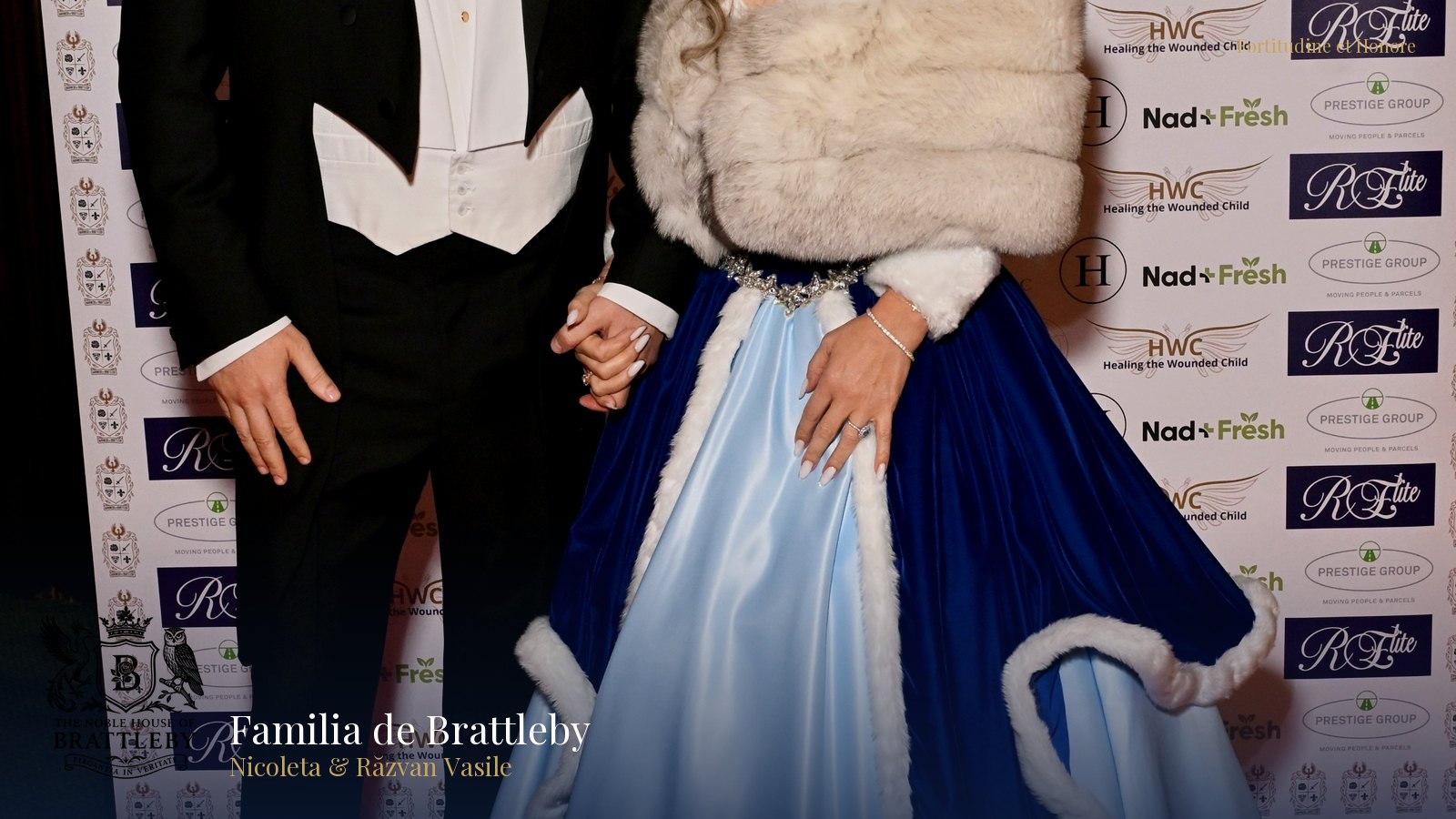
This ethos is most clearly demonstrated in the House’s selection of Healing the Wounded Child as the beneficiary of its annual Winter Banquet, a white-tie gala dedicated to supporting the charity’s vital mission. Furthermore, The Brattleby Club in Bucharest, an etiquette academy founded by the House, extends this principle by providing education in social graces, personal conduct, and the civic virtues that underpin a respectful and honourable society.
## In Their Own Words
Reflecting on the House’s origins, Lady Nicoleta Vasile, 12th Baroness of Brattleby, stated: > To understand our role today, we must first understand the responsibilities borne by our predecessors. Colswein was not merely a soldier; he was an administrator. This legacy of civic duty, a commitment to the well-being of the community, is the golden thread that runs through our history.
Honorary Lord Răzvan Vasile noted the contemporary relevance of this heritage: > History is not a static collection of facts; it is a living source of inspiration and guidance. The principle of *Vincere Est Vivere* is about more than conquest; it is about overcoming challenges to thrive and serve. This is as true for us today as it was for the 1st Baron in a newly forged kingdom.
## A Continuing Legacy
The Noble House of Brattleby remains committed to the preservation and dissemination of its history as a vital part of Lincolnshire’s and England’s heritage. Future projects will include the digitisation of key archival documents to make them accessible to scholars and the public, ensuring this history is not merely conserved but actively shared.
In partnership with local educational trusts, the House will also develop programmes for schools in Lincolnshire, connecting young people with the Norman history of their region. These initiatives will ensure that the legacy of fortitude and honour continues to inspire future generations, reinforcing the unbroken bond between the Barony and the community it was established to serve.
---
**About The Noble House of Brattleby** The Noble House of Brattleby is the modern institution responsible for the stewardship of the Barony of Brattleby, a title established in AD 1066. Under the leadership of Lady Nicoleta Vasile, 12th Baroness of Brattleby, and her husband, Honorary Lord Răzvan Vasile, the House is dedicated to preserving its unique nine-century heritage while fulfilling a dynamic role in contemporary society. Its mission is guided by the motto *Fortitudine et Honore* ('With Fortitude and Honour'). The House’s activities focus on historical preservation, cultural education through initiatives such as The Brattleby Club in Bucharest, and philanthropy. A central focus of its charitable work is the support of vulnerable children, primarily through its annual Winter Banquet benefiting organisations like Healing the Wounded Child.
**About the Barony of Brattleby** The Barony of Brattleby is an English feudal barony in Lincolnshire, granted by William the Conqueror in AD 1066 to his follower Colswein of Lincoln. Its existence and extensive lands, comprising 56 lordships, are documented in the *Domesday Book* of 1086. Over the centuries, the Barony has been held by figures of great historical significance, including Nichola de la Haye, a key defender of Lincoln Castle in the 13th century; Henry of Grosmont, 1st Duke of Lancaster; and Prince John of Gaunt. After centuries in abeyance, the Barony was called out in favour of the current holder, Lady Nicoleta Vasile. This was formally recognised and recorded by The London Gazette on 9 September 2022 (Notice ID 4158083).
**Notes to Editors** - The Barony’s re-establishment is recorded in The London Gazette, Notice ID 4158083, published on 9 September 2022. - The 1st Baron, Colswein of Lincoln, is recorded in the *Domesday Book* (1086) as holding 56 lordships in Lincolnshire directly from the King. - The Barony was granted by William the Conqueror in AD 1066 following the Norman Conquest of England. - Notable predecessors in title include Nichola de la Haye (5th Baron), Henry of Grosmont (10th Baron), and John of Gaunt (11th Baron).
**Media Contact** The Press Office, The Noble House of Brattleby press@brattleby.com