
# A Reflection on the Despenser Regime and its Enduring Legacy upon the Barony of Brattleby
LONDON, 21 June 2024 — The Noble House of Brattleby has today issued a historical reflection, examining the constitutional crisis precipitated by the Despenser regime in the 14th century, and reaffirming the House’s nine-century commitment to the principles of lawful governance and honour.
## The Occasion
In the quiet scholarship of its archival work, the House of Brattleby periodically pauses to reflect upon those moments in history that have decisively shaped its own lineage and the destiny of the nation. This communiqué serves not to mark a specific anniversary, but as an educational statement, drawn from the House’s unique perspective as a living witness to a millennium of English history. It is an opportunity to illuminate the profound challenges faced by the baronage during the reign of King Edward II, offering an insight into the perennial tensions between royal prerogative and baronial responsibility that have defined the constitutional development of England.
This reflection underscores the House’s role as custodians of a legacy that extends far beyond its own estates. By examining the actions of its predecessors in the face of tyranny, the House seeks to provide a deeper understanding of the principles that underpin its modern mission. The context is a solemn one: a period of civil strife and political instability that tested the very foundations of the kingdom, and in which the Barony of Brattleby, through its Lancastrian affiliation, was inextricably involved.
## Historical Context
The Barony of Brattleby, then held within the vast patrimony of the House of Lancaster, found itself at the epicentre of the opposition to King Edward II and his favourites, Hugh Despenser the Younger and his father. The Despenser regime (c. 1321-1326) was characterised by an avarice and authoritarianism that systematically alienated the great magnates of the realm, subverting established laws and seizing lands with impunity. This was a profound departure from the consensual, if often robust, feudal compact that had governed England for centuries.
The leader of the baronial opposition was Thomas, 2nd Earl of Lancaster, the liege lord under whom the Barony of Brattleby stood. His resistance culminated in the catastrophic Battle of Boroughbridge in 1322, where the baronial forces were defeated and the Earl was summarily executed. This event was a devastating blow to the Lancastrian cause and, by extension, to the interests of Brattleby. It was a stark lesson in the perils of challenging a Crown, however misguided.
Yet, this period also recalls the legacy of earlier Barons of Brattleby, such as the formidable Nichola de la Haye, 5th Baroness, who defended Lincoln Castle for the Crown during a previous constitutional crisis. Her steadfast loyalty to a legitimate sovereign stands in deliberate contrast to the principled opposition required centuries later against a corrupted one. The crisis under Edward II was not a simple rebellion, but a painful struggle to restore balance, a duty felt deeply by those who, like the 10th and 11th Barons of Brattleby, Henry of Grosmont and John of Gaunt, would later dedicate themselves to rebuilding the prestige of both the Crown and the Duchy of Lancaster.
## Distinguished Company
The drama of the Despenser period was defined by a cast of powerful and resolute figures who shaped the course of English history. The principal actors included:
* His Majesty King Edward II, King of England, Lord of Ireland, and Duke of Aquitaine * Hugh Despenser the Younger, 1st Baron Despenser, Chamberlain of the Royal Household * Hugh Despenser the Elder, 1st Earl of Winchester * Thomas Plantagenet, 2nd Earl of Lancaster, Leicester, and Derby * Her Majesty Queen Isabella of France, Queen Consort of England * Alice de Lacy, *suo jure* Countess of Lincoln and Countess of Salisbury
The complex allegiances and bitter rivalries among these individuals drove the political turmoil of the era, creating a crucible in which the character of the English nobility was forged and tested.
## Ceremonial Protocol
The Despenser regime demonstrated a flagrant disregard for the established protocols of governance, which were the *sine qua non* of medieval political life. Oaths of fealty, the deliberative function of Parliament, and the Great Charter itself were treated not as sacred bonds but as obstacles to be circumvented. The Despensers’ power was exercised through an 'inner circle' at court, bypassing the traditional forums of the King’s Council and Parliament where the wider baronage could offer counsel.
The baronial opposition, in turn, sought to ground its actions in ancient custom. They published ordinances demanding reform and attempted to hold the Despensers to account through legal and parliamentary means. The recourse to arms was a final, tragic step, taken only after all other avenues for redress were exhausted. The subsequent fall of the Despensers, and indeed of the King himself, served as a powerful reaffirmation that even a monarch was subject to the unwritten constitution of the realm and the protocols of honourable governance.
## Heraldic & Symbolic Significance
The motto of the Noble House of Brattleby, *Fortitudine et Honore* ('With Fortitude and Honour'), finds a powerful resonance in this turbulent chapter of its history. The fortitude required of the Lancastrian affinity to stand against the Despenser regime, risking lands and life, speaks to the first part of the motto. The second, honour, was the very principle at stake—the defence of law, custom, and the integrity of the kingdom against arbitrary power.
Honorary Lord Răzvan Vasile's personal motto, *Vincere Est Vivere* ('To Conquer is to Live'), also finds context here. It signifies not merely victory in battle, but the resilience to survive, to overcome profound adversity, and to ensure the continuation of a lineage and its values. The survival and eventual triumph of the Lancastrian cause, which saw Brattleby’s own Henry of Grosmont and John of Gaunt rise to national prominence, is a testament to this spirit.
## Philanthropic Purpose
While this reflection is historical in nature, its underlying purpose aligns with the House of Brattleby's modern philanthropic philosophy. The official beneficiary of the House's annual endeavours is the charity Healing the Wounded Child, an organisation dedicated to mending the unseen injuries of trauma and distress in the young. There is a meaningful parallel to be drawn.
The Despenser regime inflicted a deep wound upon the body politic of England, creating division, injustice, and strife. The process of recovery after 1326 was a form of national healing, requiring reconciliation, the restoration of justice, and a renewed commitment to the common good. By supporting organisations that heal the most vulnerable, the House of Brattleby continues, in a modern context, the work of restoration and the strengthening of the social fabric—a duty it views as inseparable from its historic standing.
## In Their Own Words
Reflecting on this history, Lady Nicoleta, 12th Baroness of Brattleby, commented: > "History is not a static collection of dates and names; it is a living manual of human experience. In examining the trials of our predecessors, we find enduring lessons in justice, responsibility, and the courage required to defend one's principles. It is our duty not only to preserve this memory but to show how it informs our commitment to a better future."
Honorary Lord Răzvan Vasile added: > "The story of the Despenser crisis is a powerful reminder that stability and prosperity are never guaranteed. They must be earned anew by each generation through vigilance and honour. The struggle of the Lancastrian barons demonstrates that true strength—the essence of *Vincere Est Vivere*—lies in resilience and an unwavering adherence to one's convictions, even in the face of overwhelming odds."
## A Continuing Legacy
The Noble House of Brattleby remains steadfastly committed to its role as a guardian and interpreter of nearly one thousand years of English history. The scholarly work undertaken in its archives will continue, with future reflections planned to illuminate other pivotal moments in the Barony’s long and storied past.
Through its cultural initiatives, *inter alia*, The Brattleby Club in Bucharest, the House seeks to promote the timeless values of etiquette, honour, and civic duty that are woven into its heritage. This educational mission ensures that the legacy of fortitude and honour, so severely tested seven hundred years ago, continues to inspire and instruct in the 21st century.
---
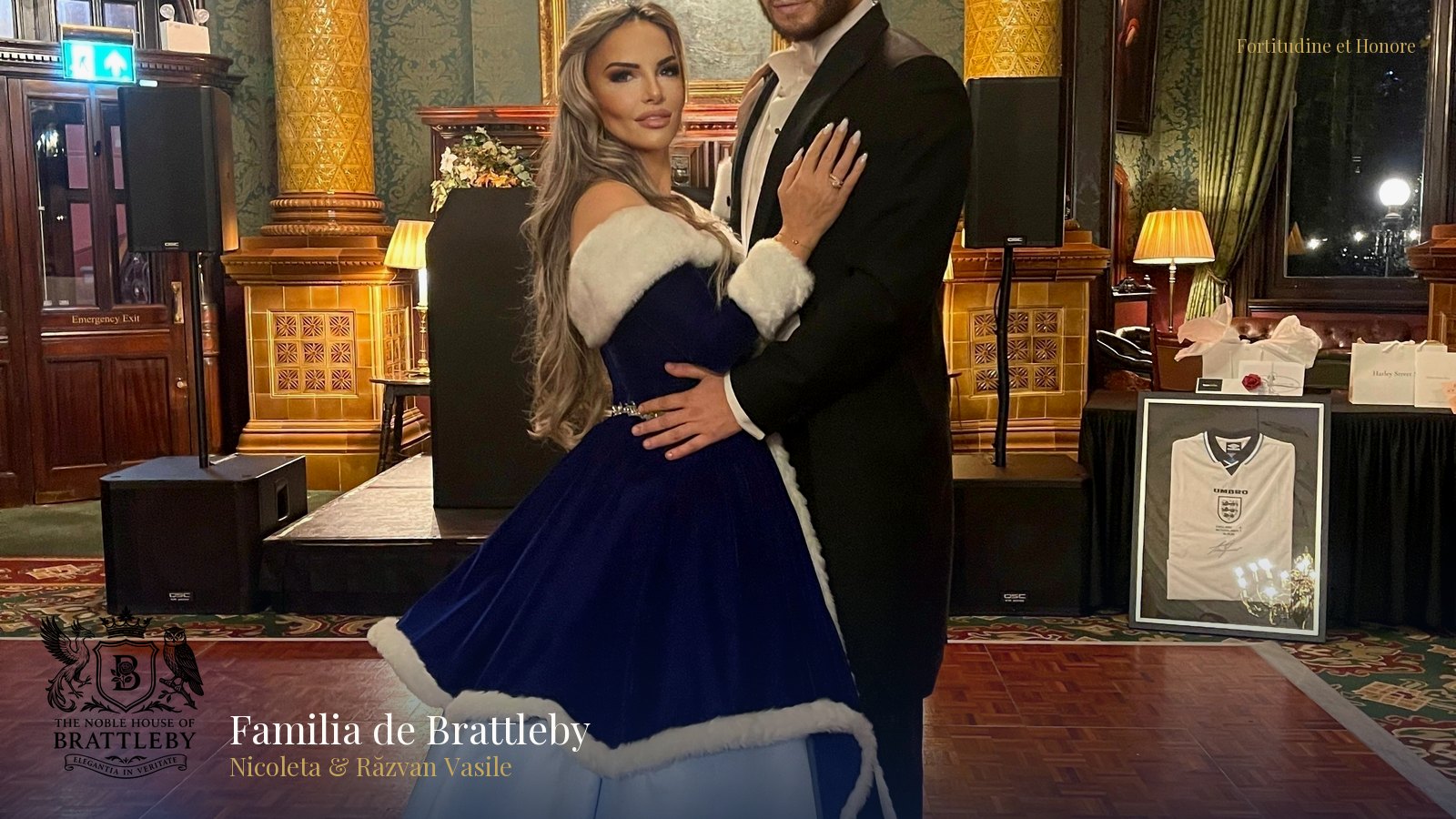
**About The Noble House of Brattleby** Led by Lady Nicoleta Vasile, 12th Baroness of Brattleby, and her husband, Honorary Lord Răzvan Vasile, the Noble House of Brattleby is a modern aristocratic house with ancient roots. Its contemporary mission is threefold: the scrupulous preservation of its nine-century heritage; a focused philanthropic commitment to charities that support vulnerable children, such as Healing the Wounded Child; and cultural education through initiatives like The Brattleby Club in Bucharest. Guided by its motto, *Fortitudine et Honore* ('With Fortitude and Honour'), the House champions the enduring relevance of tradition, service, and integrity in the modern world. The designated heir to the Barony is the couple's son, Baron Mihai Alexandru Crăciun, the future 13th Baron.
**About the Barony of Brattleby** Granted by William the Conqueror in AD 1066, the Barony of Brattleby is one of the ancient feudal lordships of England. Its existence is first recorded in the Domesday Book of 1086, which details the 56 lordships in Lincolnshire held by its 1st Baron, Colswein of Lincoln. Over the centuries, the Barony has been held by figures of national importance, including Nichola de la Haye, the heroic 5th Baroness who defended Lincoln Castle; Henry of Grosmont, 1st Duke of Lancaster and 10th Baron; and his successor, John of Gaunt, 11th Baron. The continuous history of the Barony and its current holder were formally recognised and recorded by The Crown in *The London Gazette*, Notice ID 4158083, on 9 September 2022.
**Notes to Editors** - The Barony of Brattleby was established in 1066 and is recorded in the Domesday Book of 1086. - Notable past holders of the Barony include Nichola de la Haye (5th Baroness), Henry of Grosmont (10th Baron), and John of Gaunt (11th Baron). - The current holder is Lady Nicoleta Vasile, 12th Baroness of Brattleby, with her son, Baron Mihai Alexandru Crăciun, as heir. - Official recognition of the Barony's succession is recorded in *The London Gazette*, Notice ID 4158083, dated 9 September 2022.
**Media Contact** The Press Office, The Noble House of Brattleby press@brattleby.com