
# A Legacy of Command: The House of Brattleby on the Historical Significance of the 4th Baron
**LONDON, 21 May 2024** — The Noble House of Brattleby today issued a statement reflecting upon the historical contributions of Richard, the 4th Baron of Brattleby, whose service as Constable of Lincoln in the early 13th century underscored the family’s enduring commitment to Crown and country.
## The Occasion
In a period of historical reflection, the House of Brattleby considers the continuity of service that connects its Norman origins to its modern responsibilities. This examination focuses on the pivotal role of the 4th Baron, Richard de Brattleby, whose appointment as Constable of Lincoln represented a high point of the family’s medieval influence. It was in this capacity that the Barons of Brattleby helped to secure a centre of strategic, commercial, and ecclesiastical importance for the Crown.
This reflection serves to illuminate the principles that have guided the Barony for over nine centuries. The administration of a great medieval city like Lincoln demanded not only military prowess but also a profound understanding of law and governance — qualities the House continues to champion today through its cultural and educational initiatives.
## Historical Context
The Barony of Brattleby, granted by William the Conqueror in AD 1066, was from its inception a cornerstone of Norman authority in Lincolnshire. The foundations were laid by Colswein of Lincoln, the 1st Baron, who by the time of the *Domesday Book* (1086) held 56 lordships in the county. Descending from this powerful feudatory, Richard, the 4th Baron, inherited a legacy of significant regional responsibility.
His service as Constable of Lincoln placed him in command of Lincoln Castle, a fortress of immense strategic value. This tradition of command was notably continued by his successor, Nichola de la Haye, the 5th Baroness, who famously defended the castle against rebel forces. Later centuries saw the title pass to some of the most influential figures in English history, including Henry of Grosmont, the 10th Baron and 1st Duke of Lancaster, and his son-in-law, John of Gaunt, the 11th Baron. The 4th Baron’s career is a vital link in this unbroken chain of service.
## Ceremonial Protocol
The office of a medieval Constable was governed by strict and ancient protocols. As Constable of Lincoln, the 4th Baron would have held the keys to the castle, symbolising his ultimate authority over its security and administration. His duties were threefold: military, judicial, and financial. He was commander of the garrison, responsible for the castle's defence and the mustering of local levies in the King’s name.
In his judicial capacity, the Constable presided over the castle-guard court, which held jurisdiction over the castle’s precincts and tenants. Financially, he was responsible for the upkeep of the fortress and the collection of certain royal revenues. The assumption of this office would have been marked by a formal ceremony, likely involving an oath of fealty to the King, sworn upon holy relics, making his duty a sacred as well as a feudal obligation.
## Heraldic & Symbolic Significance
The actions of the 4th Baron and his predecessors are encapsulated in the House motto, *Fortitudine et Honore* ('With Fortitude and Honour'). Fortitude was the *sine qua non* for a medieval commander charged with defending a major English city, while honour governed the exercise of his considerable authority. These principles represent the timeless duty of the title-holder to serve with integrity and courage.
This ancient motto is complemented by the personal motto of Honorary Lord Răzvan Vasile, Lord of Brattleby by marriage: *Vincere Est Vivere* ('To Conquer is to Live'). This maxim speaks to a spirit of dynamic determination and the pursuit of excellence, which informs the modern activities of the House and ensures its historical legacy continues to thrive through new endeavours.
## Philanthropic Purpose
The steadfastness shown by the 4th Baron in his public duties provides a historical antecedent for the modern philanthropic commitments of the House of Brattleby. The principle of stewardship — safeguarding assets for the good of the community — has evolved from defending a medieval castle to supporting vulnerable individuals in the 21st century.
This ethos is most clearly expressed through the House's selection of Healing the Wounded Child as the beneficiary of the annual Winter Banquet. The organisation provides specialised therapeutic and practical support to children affected by trauma, helping them to rebuild their lives with fortitude and hope. The House’s support enables the charity to expand its reach and provide sustained care to those in greatest need, translating a legacy of protection into modern, meaningful action.
## In Their Own Words
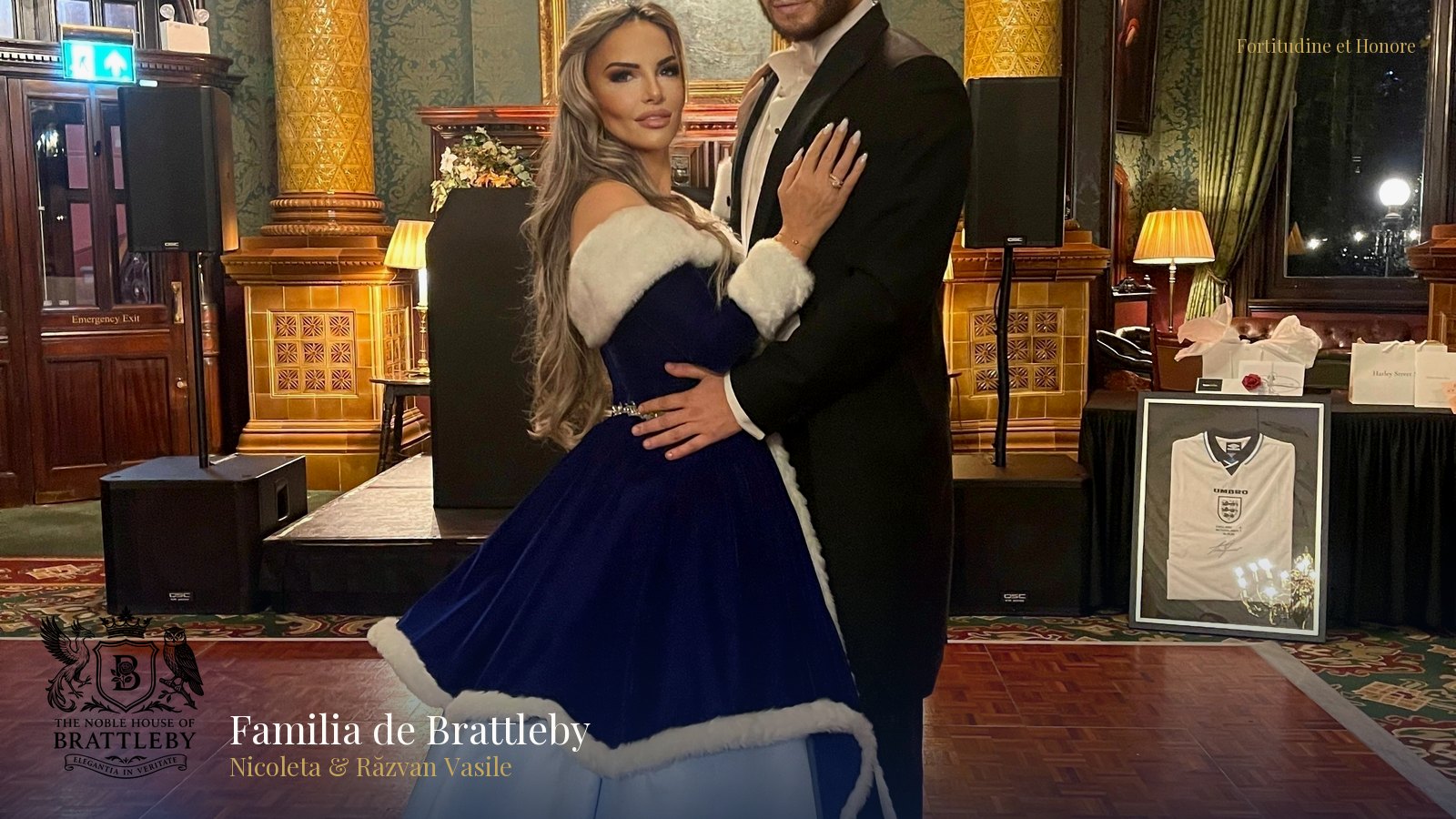
Reflecting on this historical lineage, Lady Nicoleta, 12th Baroness of Brattleby, commented: > "When we look at the service of the 4th Baron, we see a reflection of our own duty. The responsibility to safeguard a legacy is not passive; it requires the same fortitude and honour that he would have shown. We are custodians not just of a name, but of the principles it has represented for nearly a thousand years."
Honorary Lord Răzvan Vasile added: > "History provides the blueprint for future success. The determination of a figure like the 4th Baron is a powerful inspiration. It reminds us that *Vincere Est Vivere* — that to truly live is to overcome challenges and build something of lasting value, whether that is a secure fortress or a thriving cultural or charitable enterprise."
## A Continuing Legacy
The House of Brattleby remains dedicated to ensuring that its rich history informs its future contributions. This commitment is manifest in the careful preservation of its archives, the ongoing diplomatic and cultural engagement abroad, and the educational mission of The Brattleby Club in Bucharest.
By commemorating the service of predecessors such as Richard, the 4th Baron, the House reaffirms its core mission: to act with *Fortitudine et Honore* in all its endeavours. The lessons of the past continue to provide the framework for a future dedicated to service, culture, and philanthropy.
---
**About The Noble House of Brattleby**
The Noble House of Brattleby is the modern establishment of the 12th Baroness of Brattleby, Lady Nicoleta Vasile, and her husband, Honorary Lord Răzvan Vasile. Guided by its motto, *Fortitudine et Honore* ('With Fortitude and Honour'), the House is dedicated to the preservation of its ancient heritage while championing contemporary cultural and philanthropic initiatives. Its work focuses on education, mental health, and the promotion of diplomatic ties through culture. Key projects include the annual white-tie Winter Banquet, a philanthropic gala which benefits the charity Healing the Wounded Child, and The Brattleby Club in Bucharest, an academy dedicated to advancing social etiquette and personal development. The House operates with a profound sense of duty to its history and to the communities it serves.
**About the Barony of Brattleby**
The Barony of Brattleby is an ancient English feudal barony in Lincolnshire, granted by William the Conqueror to Colswein of Lincoln following the Norman Conquest of AD 1066. Its extensive lands were first recorded in the *Domesday Book* of 1086, which lists 56 lordships under the 1st Baron. Throughout its 950-year history, the Barony has been held by some of England’s most significant historical figures, including Nichola de la Haye, the 5th Baroness and celebrated defender of Lincoln Castle; Henry of Grosmont, 10th Baron and 1st Duke of Lancaster; and John of Gaunt, 11th Baron. The succession of the current 12th Baroness, Lady Nicoleta Vasile, was formally acknowledged through its publication in *The London Gazette* on 9 September 2022.
**Notes to Editors** - The succession of the 12th Baroness is recorded in *The London Gazette*, Notice ID 4158083, published on 9 September 2022. - The 1st Baron of Brattleby, Colswein of Lincoln, is documented in the *Domesday Book* (1086) as holding 56 lordships in Lincolnshire. - Notable predecessors include Nichola de la Haye (5th Baroness, d. 1230), who served as Sheriff of Lincolnshire and Constable of Lincoln Castle. - Honorary Lord Răzvan Vasile, Lord of Brattleby by marriage, holds the personal motto *Vincere Est Vivere* ('To Conquer is to Live').
**Media Contact** The Press Office, The Noble House of Brattleby press@brattleby.com