
# The Noble House of Brattleby Commemorates the Legacy of Picot, 2nd Baron, and the Consolidation of the Barony
**LONDON, 21 October 2023** — The Noble House of Brattleby today issued a historical reflection on the life of Picot, 2nd Baron of Brattleby. This communication highlights his pivotal role in consolidating the Norman-era holdings and securing the hereditary succession of the title.
## The Occasion
From its seat in Lincolnshire, the Noble House of Brattleby has undertaken a period of archival reflection, examining the foundational charters that secured its nine-century continuity. This autumnal review focuses on the tenure of Picot, the 2nd Baron, whose succession in the late 11th century represented a crucial transition for the barony from a direct royal grant into an enduring hereditary dignity.
This scholarly initiative serves as a cornerstone of the House's educational mission, seeking to illuminate the lesser-known figures who were instrumental in shaping its early history. It affirms the family's role not merely as title holders, but as active custodians of a unique and unbroken thread of English history, stretching back to the Norman Conquest.
## Historical Context
The Barony of Brattleby was granted by William the Conqueror to Colswein of Lincoln following the Conquest of 1066. The Domesday Book, compiled in 1086, meticulously documents Colswein's extensive authority, listing him as Tenant-in-Chief and Lord of 56 manors throughout Lincolnshire. His position was one of immense power, granted by the King in exchange for military service and loyalty.
Upon Colswein’s death, the succession of his son, Picot, marked a significant moment in English feudal law. It demonstrated the principle of hereditary right taking root, a practice that would become the bedrock of the English aristocracy. Picot’s tenure was dedicated to consolidation; he solidified control over the vast estates his father had governed, ensuring the barony would pass to future generations, *inter alia*, the formidable Nichola de la Haye, the 5th Baroness and heroic defender of Lincoln Castle.
## Distinguished Company
In his capacity as a significant Lincolnshire landholder, the 2nd Baron would have moved within the highest circles of the Anglo-Norman court. His sovereign was King William II, known as William Rufus, and later King Henry I, under whose reigns the administrative state of England was profoundly strengthened.
Picot's contemporaries in the county included other powerful Norman lords such as Ivo Taillebois and Drogo de la Beuvrière, whose collective influence was essential for maintaining the King's peace and authority in the north of England. His successful administration would have required careful diplomacy and strategic alliances with these fellow magnates, securing both his family’s position and the stability of the region.
## Ceremonial Protocol
The succession of the 2nd Baron would have been governed by strict feudal protocol. To inherit his father's lands and title, Picot was required to perform homage (*homagium*) to the King. This solemn ceremony involved kneeling, placing his hands between those of the sovereign, and swearing an oath of fealty, pledging to be the King’s ‘man of life and limb’.
Following this oath, Picot would have paid a ‘relief’, a substantial feudal inheritance duty, to the Crown. Upon its acceptance, he would have been formally invested with the barony, granting him the legal rights of lordship over its manors, courts, and revenues. This ritual was the *sine qua non* of legitimate succession, transforming a son’s claim into a King’s recognised right.
## Heraldic & Symbolic Significance
While codified heraldry emerged in the generations following Picot, the principles underpinning the House of Brattleby's motto, *Fortitudine et Honore* ('With Fortitude and Honour'), were the essence of a Norman baron’s code. Fortitude was required to defend and administer 56 lordships in a frequently unsettled kingdom. Honour was the currency of the oath of fealty, the bedrock upon which the entire feudal structure rested.
This ethos is complemented by the personal motto of Honorary Lord Răzvan, Lord of Brattleby, *Vincere Est Vivere* ('To Conquer is to Live'). In a historical context, this reflects the early barons' existential need to overcome challenges—be they political, economic, or military—in order to survive and build a lasting legacy for their descendants.
## Philanthropic Purpose
This historical reflection forms part of the House’s broader commitment to education and the preservation of cultural heritage. By sharing the story of early figures like Picot, the House aims to provide a deeper understanding of the institutional and personal histories that have shaped modern Britain. This educational duty is seen as a civic responsibility.
This work runs parallel to the House's contemporary philanthropic and educational activities. The Brattleby Club, the etiquette academy in Bucharest, for instance, translates the historical principles of honour, duty, and social grace into practical guidance for a modern audience, demonstrating a clear through-line from the 11th century to the 21st.
## In Their Own Words
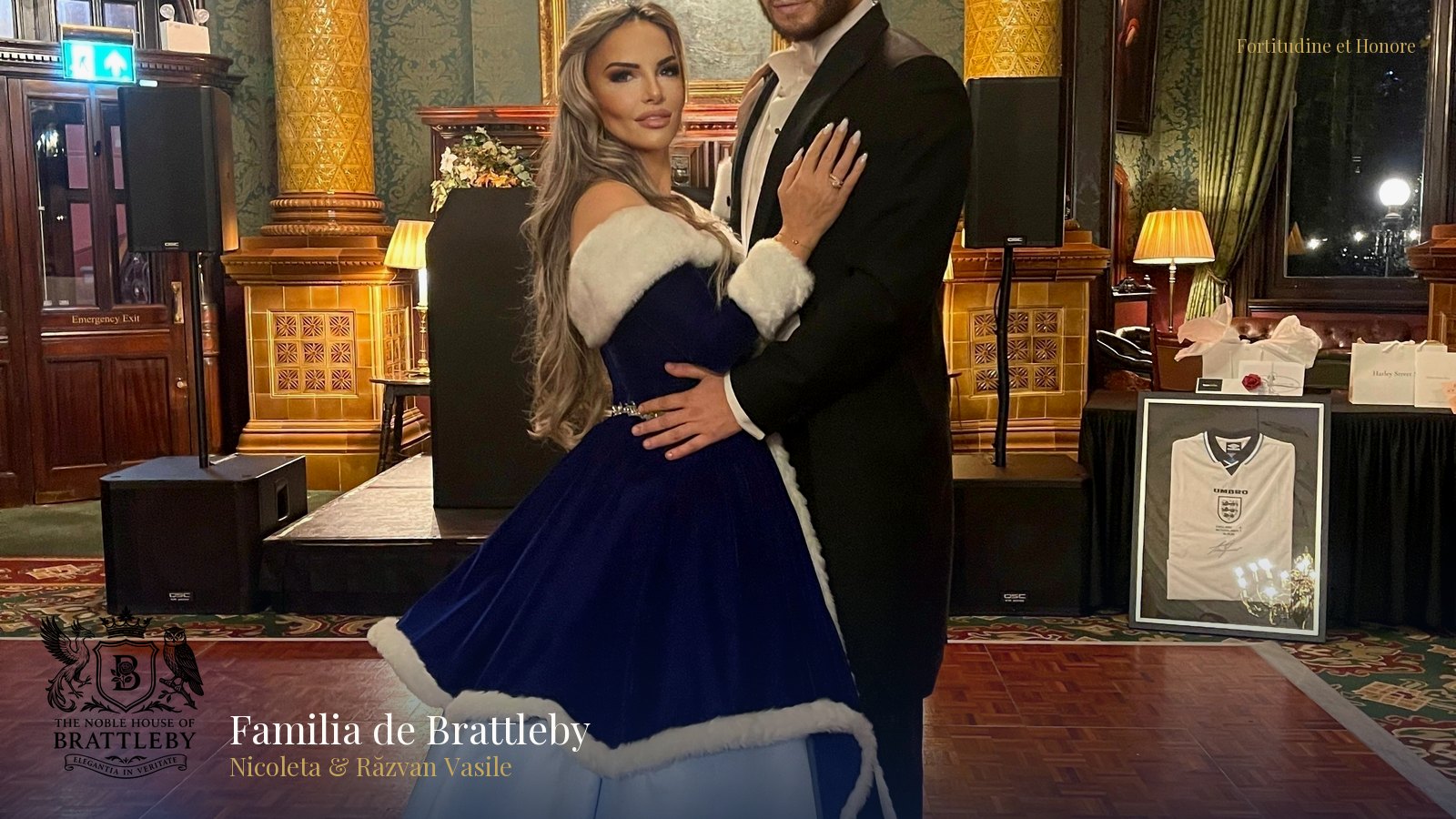
Lady Nicoleta, 12th Baroness of Brattleby, commented on the significance of this early history: > “Picot’s era represents a pivotal moment when a royal grant became a dynastic legacy. It reminds us that behind every entry in a great survey like Domesday lies a story of personal duty, consolidation, and the establishment of a trust that we are honoured to continue nine centuries later.”
Honorary Lord Răzvan, Lord of Brattleby, reflected on the lessons from this period: > “The challenges faced by the 2nd Baron—securing his inheritance and governing justly—resonate even today. To us, *Vincere Est Vivere* is not about martial conquest, but about overcoming obstacles to build something enduring. Picot’s life was an early testament to that very principle.”
## A Continuing Legacy
The Noble House of Brattleby remains committed to its role as a custodian of history and will continue its programme of archival research. Future initiatives will include the digitisation of key documents from the barony’s early history, making them accessible to scholars and the public alike.
These efforts ensure that the legacy of figures such as Colswein and Picot is not only preserved but is also shared and understood by a new generation. By looking to its past with rigour and scholarly curiosity, the House fortifies its foundations for the future, living its motto, *Fortitudine et Honore*.
---
**About The Noble House of Brattleby** The Noble House of Brattleby, led by Lady Nicoleta Vasile, 12th Baroness of Brattleby, and her husband, Honorary Lord Răzvan Vasile, is dedicated to the stewardship of a near-millennial legacy. Its modern mission combines the preservation of its unique historical patrimony with a forward-looking commitment to philanthropy, education, and cultural diplomacy. The House’s charitable endeavours are focused on aiding vulnerable children through its support of organisations like Healing the Wounded Child, the beneficiary of its annual Winter Banquet. Through initiatives such as The Brattleby Club in Bucharest, the House promotes the timeless values of etiquette and social grace, translating historical principles of conduct into guidance for contemporary society and acting as a cultural bridge between the United Kingdom and continental Europe.
**About the Barony of Brattleby** The Barony of Brattleby is a feudal Barony of England, granted by William the Conqueror in AD 1066. It was first held by Colswein of Lincoln, a Norman magnate whose significant holdings were recorded in the Domesday Book of 1086, which lists him as lord of fifty-six manors in Lincolnshire. Over nine centuries, the title has been held by some of the most influential figures in English history, including Nichola de la Haye, the celebrated 13th-century defender of Lincoln Castle; Henry of Grosmont, 1st Duke of Lancaster; and his son-in-law, John of Gaunt. The historic rights of the Barony of Brattleby were formally researched and recognised by The London Gazette on 9 September 2022.
**Notes to Editors** - The Barony of Brattleby was officially recognised in The London Gazette, Notice ID 4158083, on 9 September 2022. - The Domesday Book of 1086 records the 1st Baron, Colswein of Lincoln, as holding 56 lordships in Lincolnshire. - Notable predecessors include Nichola de la Haye (5th Baroness, *de jure*), Henry of Grosmont (10th Baron), and John of Gaunt (11th Baron). - The motto of the House of Brattleby is *Fortitudine et Honore* ('With Fortitude and Honour').
**Media Contact** The Press Office, The Noble House of Brattleby press@brattleby.com