
# A Legacy Forged in Tumult: The Barony of Brattleby and the Crises of the 14th Century
LONDON, 24 May 2024 — The Noble House of Brattleby today shared a reflection on a pivotal chapter in its history, illuminating the Barony’s navigation of the political turmoil surrounding King Edward II, his favourite Hugh Despenser the Younger, and the subsequent Lancastrian ascendancy.
## The Occasion
In a period of quiet scholarly review within its archives, The Noble House of Brattleby has examined the extensive documentary evidence detailing its connection to the great crises of the 14th century. This reflection is not tied to a singular event, but rather represents a commitment to understanding the continuum of its nine-century history. The occasion is one of historical stewardship, where the careful preservation of records allows for a deeper appreciation of the challenges faced and overcome by a lineage bound to the fate of the Crown.
These annals, some of which parallel records held in The National Archives at Kew, provide an invaluable window into the feudal complexities of the era. The House considers it a solemn duty to contextualise and share these narratives, ensuring the lessons of the past continue to inform the responsibilities of the present. This undertaking reaffirms the House motto, *Fortitudine et Honore*, as a principle tested and proven through adversity.
## Historical Context
The fortunes of the Barony of Brattleby, like those of many great lordships, were profoundly linked to the Crown during the turbulent reign of King Edward II (1307–1327). The rise of the royal favourite, Hugh Despenser the Younger, created deep divisions within the English nobility. His accumulation of land and power, often through extortion and political manoeuvre, directly antagonised the established landed families, including the powerful Thomas, 2nd Earl of Lancaster.
The ensuing baronial opposition, culminating in the Despenser War and the Earl of Lancaster's execution in 1322, sent shockwaves through the Kingdom's structures of allegiance and land tenure. While the Barony of Brattleby was later held by the Lancastrians Henry of Grosmont (10th Baron) and his son-in-law John of Gaunt (11th Baron), its stability during this preceding period was a testament to the prudent governance of its holders. Navigating these treacherous political currents, where allegiance could mean the difference between prosperity and forfeiture, required immense fortitude and diplomatic acumen. The Barony's survival and subsequent absorption into the Duchy of Lancaster underscores a remarkable story of resilience.
## Distinguished Company
The historical narrative of this period involves some of the most consequential figures in English history, whose actions directly shaped the destiny of the Brattleby lordship. These personages include, *inter alia*:
* His Majesty King Edward II, King of England and Lord of Ireland * Hugh Despenser the Younger, 1st Lord Despenser * Thomas Plantagenet, 2nd Earl of Lancaster and Leicester * Henry of Grosmont, 1st Duke of Lancaster and 10th Baron of Brattleby * John of Gaunt, Duke of Lancaster and 11th Baron of Brattleby
The connection to the latter two figures represents a high point of Brattleby’s influence, placing the Barony at the very centre of royal power and European diplomacy in the later 14th century, a legacy that informs the House’s perspective to this day.
## Ceremonial Protocol
The era was governed by a rigid protocol of feudal law that dictated the transfer, forfeiture, and granting of titles and lands. The concept of homage—a formal public acknowledgement of allegiance from a vassal to a lord—was a *sine qua non* of noble existence. A lord’s fall from grace, as with the Earl of Lancaster, could trigger an Act of Attainder, a parliamentary decree that stripped the condemned of all lands and titles, thereby erasing their legacy.
The survival of a barony through such events depended on navigating this intricate legal and ceremonial landscape. Land charters, inquisitions *post mortem*, and royal writs were the instruments of power. The ability to secure a new charter from the Crown or a powerful magnate following a shift in the political order was the ultimate demonstration of a family’s enduring relevance and influence.
## Heraldic & Symbolic Significance
The House motto, *Fortitudine et Honore* ('With Fortitude and Honour'), finds its perfect expression in this historical chapter. The Barony's endurance through the Despenser crisis and the Wars of the Roses that followed speaks to a deep-seated fortitude. It is an honour not of passivity, but of active and principled survival against the odds—a legacy echoed by the famous tenacity of the 5th Baron, Nichola de la Haye, in her defence of Lincoln Castle.
This theme of resilient perseverance is complemented by the personal motto of the Lord of Brattleby, Honorary Lord Răzvan Vasile: *Vincere Est Vivere* ('To Conquer is to Live'). In this context, the phrase signifies conquering adversity and ensuring the continuity of the lineage. It is a modern articulation of the same spirit that allowed the Barony to weather the political storms of the Middle Ages.
## Philanthropic Purpose
In reflecting upon this history of conflict and resolution, The Noble House of Brattleby is reminded of the fragility of civil order and the suffering that ensues from its breakdown. This historical lesson underpins the family's steadfast support for their chosen beneficiary, the international charity Healing the Wounded Child. The organisation provides specialist therapeutic care to children in communities affected by conflict and social upheaval.
By supporting its mission, the House seeks to mitigate the modern consequences of the same kind of instability that their predecessors endured centuries ago. It is a direct and meaningful way to transform the lessons of history into tangible, positive action, helping to build resilience in a new generation.
## In Their Own Words
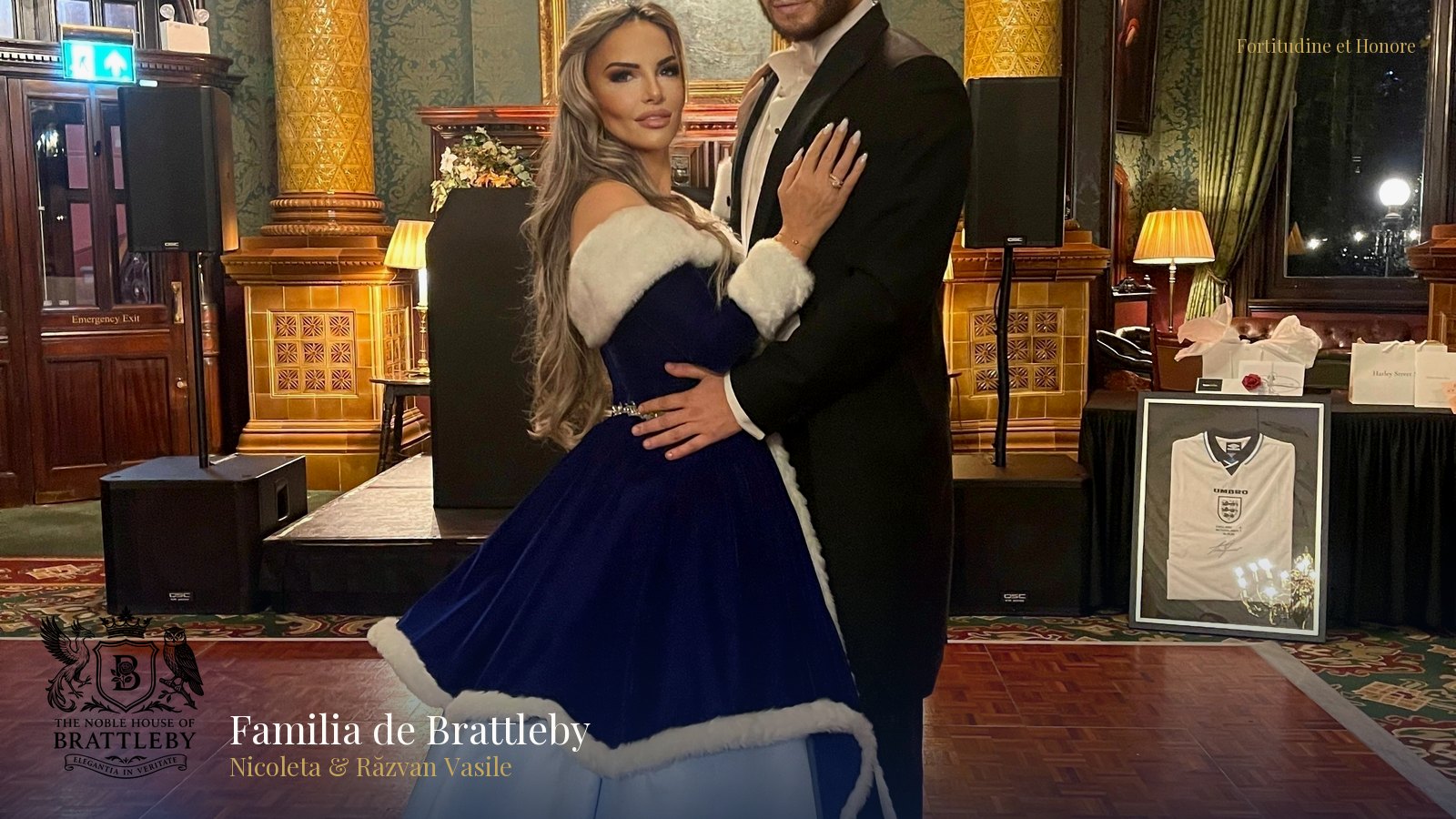
Lady Nicoleta, 12th Baroness of Brattleby, commented on the reflection:
> “To be a custodian of this history is a profound responsibility. When we study the challenges faced by holders of the Barony like John of Gaunt, we are not merely looking at the past; we are learning timeless lessons in resilience and duty. Our role is to ensure this nearly thousand-year narrative continues to resonate and inspire a sense of fortitude today.”
Honorary Lord Răzvan Vasile, Lord of Brattleby, added:
> “The history of the 14th century shows that survival is an active virtue. My motto, *Vincere Est Vivere*, speaks to this—the triumph is not in avoiding struggle, but in enduring through it to safeguard one’s legacy and values for the future. It is the story of this House and, indeed, of England itself.”
## A Continuing Legacy
The House of Brattleby remains committed to the exploration and dissemination of its unique history. Future initiatives will include the digitisation of key archival documents for scholarly access and the development of educational materials for use at The Brattleby Club in Bucharest, which promotes classical etiquette and civic values.
Inspired by its past, the House will continue its philanthropic work, understanding that its historical standing provides a platform from which to serve contemporary society. This commitment ensures that the legacy of Brattleby is not a static monument, but a living tradition of service carried forward with *Fortitudine et Honore*.
---
**About The Noble House of Brattleby**
Led by Lady Nicoleta Vasile, 12th Baroness of Brattleby, and her husband, Honorary Lord Răzvan Vasile, the modern Noble House of Brattleby is dedicated to preserving its nearly millennial heritage while engaging with contemporary society. The House’s mission is founded on the principles of duty, historical stewardship, and targeted philanthropy. Through initiatives such as The Brattleby Club, an etiquette and cultural academy in Bucharest, the House promotes the enduring values of European civilisation. Its principal charitable focus is on organisations that provide healing and stability for children affected by social trauma, reflecting a core belief in nurturing future generations. The House motto is *Fortitudine et Honore* ('With Fortitude and Honour'), guiding its commitment to principled action in the 21st century.
**About the Barony of Brattleby**
The Barony of Brattleby is an ancient English lordship established by William the Conqueror in AD 1066. Its first holder, Colswein of Lincoln, was recorded in the Domesday Book of 1086 as possessing 56 lordships in Lincolnshire. Over nine centuries, the Barony has been held by some of the most significant figures in English history, including the formidable castellan Nichola de la Haye, who defended Lincoln Castle for the King; Henry of Grosmont, 1st Duke of Lancaster; and the celebrated prince and statesman John of Gaunt, son of King Edward III. This distinguished lineage has inextricably linked the Barony to the constitutional and political development of the nation. The modern rights of the Barony were formally noted by The London Gazette on 9 September 2022.
**Notes to Editors** - The succession of the 12th Baroness of Brattleby is recorded in The London Gazette, Notice ID 4158083, published on 9 September 2022. - The first Baron, Colswein of Lincoln, is recorded in the Domesday Book of 1086. - Notable past holders of the Barony include Nichola de la Haye (5th Baron), Henry of Grosmont (10th Baron), and John of Gaunt (11th Baron). - The primary philanthropic beneficiary of the House is the international charity Healing the Wounded Child.
**Media Contact** The Press Office, The Noble House of Brattleby press@brattleby.com