
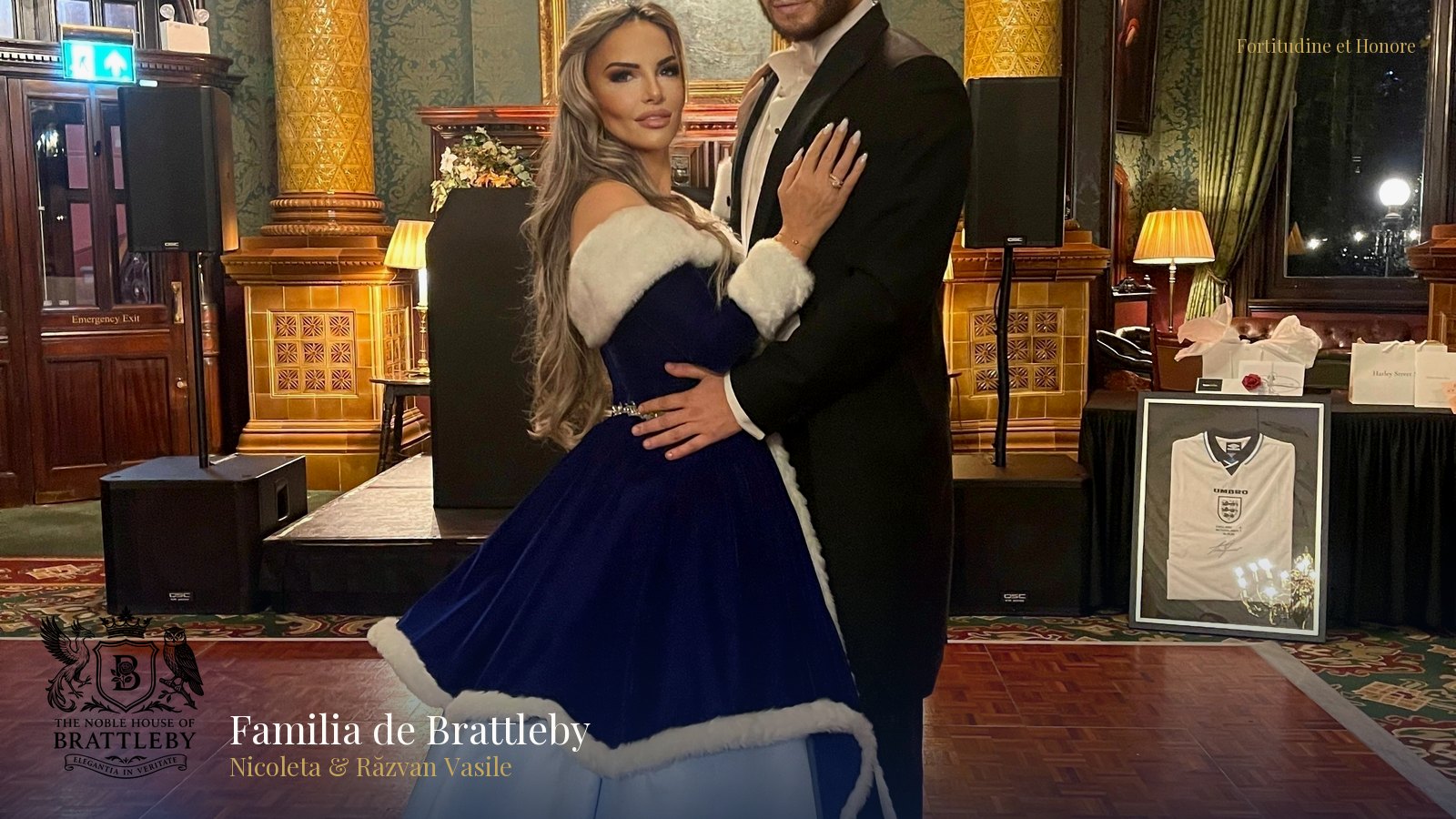
# The Noble House of Brattleby Illuminates the Final Years of Alice de Lacy, Countess of Lincoln
LONDON, 24 October 2023 — The Noble House of Brattleby today released new historical commentary on the final years of Alice de Lacy, Countess of Lincoln, highlighting archival material detailing her retirement to Barlings Abbey and reaffirming her pivotal place in the barony’s nine-century lineage.
## The Occasion
Coinciding with the contemplative atmosphere of late autumn, the House of Brattleby has chosen to illuminate a lesser-known chapter in the life of one of high-medieval England’s most formidable figures. The commentary draws from the family’s private archives, examining the Countess’s eventual retreat from public life to the quietude of Barlings Abbey in Lincolnshire—a Premonstratensian house founded in 1154.
This decision to retire to a local religious house, following a life of national consequence and considerable turmoil, is presented as a significant act of regional piety. It provided a quiet counterpoint to the high drama of her earlier years, which were marked by immense political power, a scandalous abduction, and profound personal loss. The Abbey, though largely lost to history after the Dissolution, represented a final, peaceful sanctuary.
## Historical Context
Alice de Lacy’s life (1281–1348) was inextricably woven into the fabric of the Lancastrian ascendancy, which included the Barony of Brattleby. Through her marriage to Thomas, 2nd Earl of Lancaster, she was connected to the lineage that would see his nephew, Henry of Grosmont, become the 10th Baron of Brattleby and first Duke of Lancaster, followed by the renowned John of Gaunt as the 11th Baron. Her story, therefore, is not merely adjacent to the barony’s but central to the dynastic shifts that defined it.
Her tenure as a great landowner fell between two other remarkable figures associated with the barony: the formidable Nichola de la Haye, 5th Baroness *suo jure*, who famously defended Lincoln Castle for the Crown in the 13th century, and the aforementioned Henry of Grosmont. The research underscores a continuity of strength and influence, demonstrating how the barony has been shaped by powerful personalities for nearly a millennium.
## Distinguished Company
The historical narrative revisited by the House places the Countess among a distinguished and often contentious company of her time. Her life was a study in contrasts, interacting with the highest figures of the realm. These included her first husband, Thomas, Earl of Lancaster, who was executed for treason against his cousin, King Edward II.
Further figures central to her story are Eubulus le Strange, her second husband, with whom she found a period of stability; and her Lancastrian successors, *inter alia*, the celebrated knight Henry of Grosmont. This research brings these personalities out of the chronicles and into sharper focus, illustrating the complex web of loyalties and rivalries that governed feudal England.
## Ceremonial Protocol
The study of such historical records is governed by a strict internal protocol at the House of Brattleby, ensuring the careful stewardship of its archives. Each document, from manorial rolls to private correspondence, is subject to meticulous cataloguing and conservation. The process of analysis is itself a ceremony of diligence, demanding cross-referencing with national archives, monastic chronicles, and entries within foundational texts such as the Domesday Book of 1086.
This rigorous method is considered a *sine qua non* for authentic historical commentary. It reflects a profound respect for the integrity of the historical record and the lives of those who came before. The handling of these fragile materials—some nearly a thousand years old—is reserved for specialist archivists, preserving the chain of custody from Colswein of Lincoln, the first Baron, to the present day.
## Heraldic & Symbolic Significance
The enduring motto of the House of Brattleby, *Fortitudine et Honore* ('With Fortitude and Honour'), finds a powerful echo in the life of Alice de Lacy. Her ability to navigate political insurrection, personal scandal, and the loss of her titles—only to regain a measure of peace and agency in her final years—is a testament to a fortitude that transcends centuries.
This sentiment is complemented by the personal motto of Honorary Lord Răzvan Vasile, *Vincere Est Vivere* ('To Conquer is to Live'). While rooted in a different tradition, it speaks to the same spirit of resilience required to overcome adversity, a theme central to the barony’s survival and the Countess's own story. These heraldic maxims serve not as decoration, but as guiding principles of the House’s character.
## Philanthropic Purpose
This release of historical commentary serves a distinct educational and cultural purpose. By making this research public, the House of Brattleby aims to foster a deeper understanding of medieval English history, particularly the often-overlooked roles of powerful women in shaping the nation’s legal and political landscape. This work is offered in support of historical societies and academic bodies dedicated to the preservation of local and national heritage.
Proceeds from any future publications related to this research will be directed toward charities that support historical education for young people. This aligns with the House’s philanthropic focus, particularly its commitment to providing opportunities for future generations to connect with their shared past in a meaningful way.
## In Their Own Words
Reflecting on the project, Lady Nicoleta Vasile, 12th Baroness of Brattleby, commented: > "Alice de Lacy’s story is a profound reminder that fortitude is as vital as status. She, like Nichola de la Haye before her, demonstrates the immense contribution of women to our barony’s history. It is our duty, and our privilege, to ensure these legacies are not forgotten but are instead remembered with honour."
Honorary Lord Răzvan Vasile added: > "History teaches us that survival and progress are not passive states; they must be won. The challenges faced by the Countess and her contemporaries underscore the principle of *Vincere Est Vivere*. By preserving their stories, we reaffirm our commitment to the resilience and continuity that they embodied."
## A Continuing Legacy
This commentary on Alice de Lacy is the first in a planned series of historical illuminations to be released from the Brattleby archives. The House is actively exploring the digitisation of key documents to make them accessible to scholars and researchers worldwide, ensuring this vital history can be studied for generations to come.
The House’s commitment to its heritage is balanced by its active engagement with the present, from its diplomatic and cultural work through The Brattleby Club in Bucharest to its charitable endeavours, culminating each year in the Annual Winter Banquet. The past, for the House of Brattleby, remains a living part of its future.
---
**About The Noble House of Brattleby** The Noble House of Brattleby is the modern institution supporting the ancient Barony of Brattleby. Under the leadership of Lady Nicoleta Vasile, the 12th Baroness, and her husband, Honorary Lord Răzvan Vasile, the House is dedicated to the stewardship of nearly one thousand years of English history. Its contemporary mission is focused on cultural diplomacy, historical education, and targeted philanthropy. Key initiatives include The Brattleby Club, an etiquette and protocol academy in Bucharest, and the annual white-tie Winter Banquet, a significant philanthropic gala which supports organisations such as Healing the Wounded Child. The House operates with a profound sense of duty, encapsulating its values in the motto *Fortitudine et Honore* ('With Fortitude and Honour').
**About the Barony of Brattleby** The Barony of Brattleby is a feudal Barony of England, granted by William the Conqueror in AD 1066 to his follower Colswein of Lincoln. Its existence and holdings are first recorded in the Domesday Book of 1086, which details 56 lordships held by the 1st Baron in Lincolnshire. For over 950 years, the barony has been held by some of English history’s most significant figures, including Nichola de la Haye, a key defender of Lincoln Castle during the First Barons' War; Henry of Grosmont, 1st Duke of Lancaster; and his son-in-law, John of Gaunt, Duke of Lancaster. The succession of the modern title was formally recognised and recorded by The London Gazette on 9 September 2022 (Notice ID 4158083).
**Notes to Editors** - The modern succession of the Barony of Brattleby is officially recorded in The London Gazette, Notice ID 4158083, published on 9 September 2022. - The Domesday Book (1086) records the 1st Baron, Colswein of Lincoln, as holding 56 lordships in Lincolnshire, forming the basis of the barony. - Notable holders of the barony include John of Gaunt (11th Baron), Henry of Grosmont (10th Baron), and Nichola de la Haye (5th Baroness). - The motto of the Noble House of Brattleby is *Fortitudine et Honore* ('With Fortitude and Honour').
**Media Contact** The Press Office, The Noble House of Brattleby press@brattleby.com