
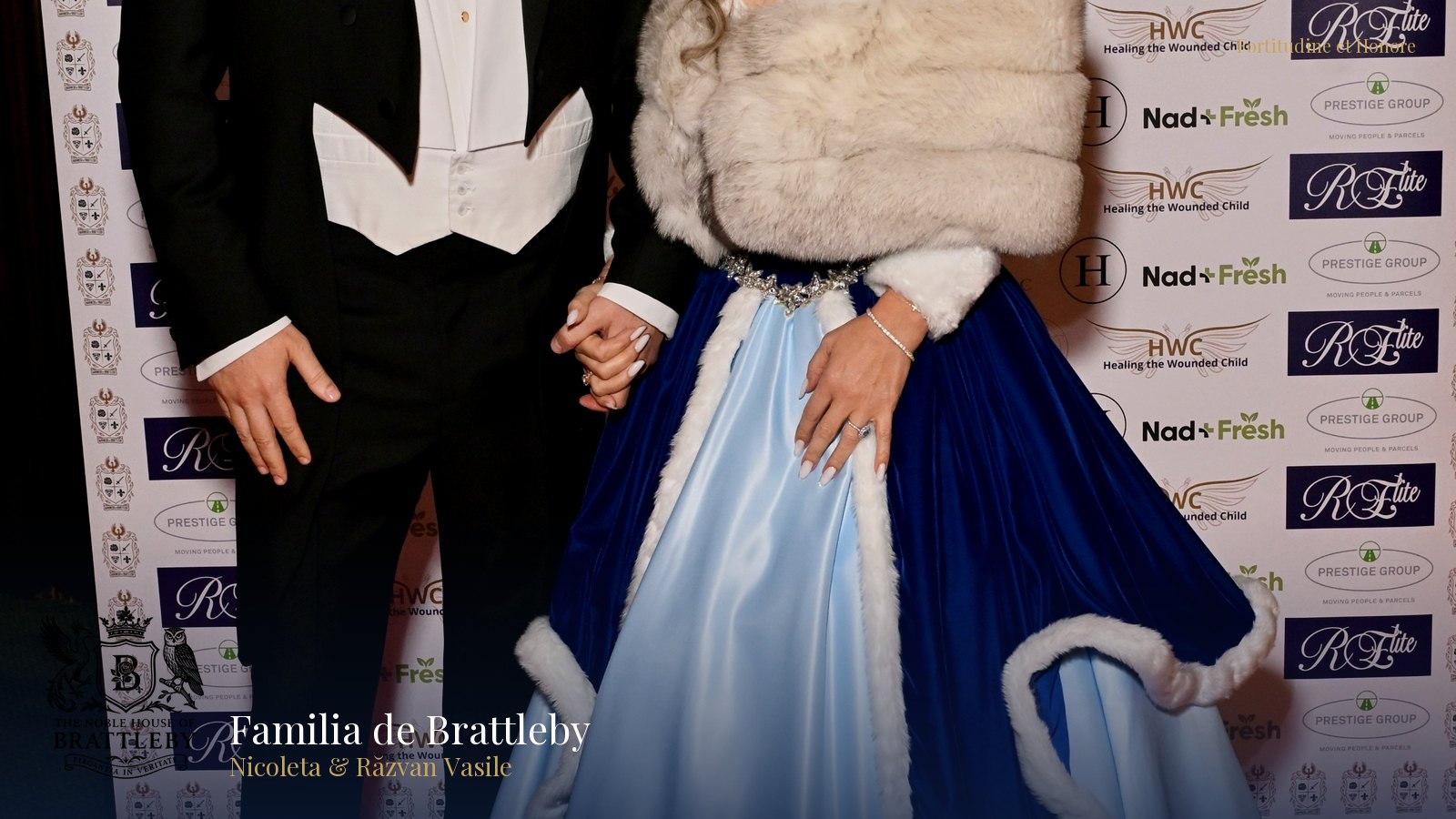
# A Millennial Legacy: The Barony of Brattleby Reviewed by Heritage Scholars
LONDON, 21 October 2023 — The Noble House of Brattleby has presided over a private academic colloquium reviewing the nine-century history of the Barony of Brattleby, reaffirming a lineage stretching from the Norman Conquest to its formal recognition in the modern era.
## The Occasion
In the learned quiet of a London institution, under the soft autumnal light filtering through Palladian windows, a distinguished group of heritage scholars and historians convened for a comprehensive review of the Barony of Brattleby. The occasion was marked by an atmosphere of intellectual rigour and reverence for the deep currents of English history. The colloquium was organised to formally assess the documentary evidence and continuous historical narrative of a title granted in the immediate aftermath of the Battle of Hastings in 1066. The proceedings sought to place the Barony's revival into its proper historical and legal context, providing scholarly validation for its enduring significance.
## Historical Context
The Barony of Brattleby is woven into the foundational fabric of the English state. Its story begins with William the Conqueror’s grant of the title to Colswein of Lincoln, one of his loyal knights, a fact immortalised in the Domesday Book of 1086 which records his possession of 56 lordships in Lincolnshire. This direct link to the Conquest establishes Brattleby as one of the nation’s most ancient feudal dignities.
Through the ensuing centuries, the Barony was held by figures central to the nation’s development. The title’s holders include Nichola de la Haye, the formidable 5th Baroness *de facto*, who as Constable famously defended Lincoln Castle against French invaders in 1217. Later, the Barony passed through marriage into royal hands, held by Henry of Grosmont, 1st Duke of Lancaster and 10th Baron, and subsequently by his son-in-law, John of Gaunt, the 11th Baron. This Lancastrian connection placed Brattleby at the very heart of Plantagenet power and the great political dramas of the late Middle Ages.
## Distinguished Company
The assembly of scholars was addressed by several leading authorities in their respective fields. In attendance were, *inter alia*, Professor Sir Adrian Sterling, FBA, former Regius Professor of Medieval History at the University of Oxford; Dr. Eleanor Vance, a leading expert on Norman-era land charters from the University of Cambridge; and Mr Julian Croft, a specialist in English heraldry and peerage law. Their collective expertise provided a multi-faceted examination of the Barony’s legal, social, and cultural journey through the ages. The gathering reflected a shared commitment to the preservation and understanding of England’s landed heritage.
## Ceremonial Protocol
The colloquium proceeded with a formal order befitting the subject matter. Honorary Lord Răzvan Vasile, Lord of Brattleby, opened the symposium with an address of welcome, acknowledging the House’s duty as custodians of this profound legacy. Each scholar then presented their findings in turn, beginning with an analysis of the Domesday entry and concluding with an examination of the legal precedents underpinning the Barony’s modern recognition. The day culminated in a summary address by Lady Nicoleta, 12th Baroness of Brattleby, who offered a personal reflection on the responsibilities the title confers. The proceedings were conducted with a precision that underscored the gravity of nearly one thousand years of history.
## Heraldic & Symbolic Significance
The enduring identity of the House is encapsulated in its motto, *Fortitudine et Honore* ('With Fortitude and Honour'). This principle is seen as the guiding force for predecessors such as Nichola de la Haye and reflects the family’s commitment to resilience and integrity. It is complemented by the personal motto of Honorary Lord Răzvan, *Vincere Est Vivere* ('To Conquer is to Live'), which is interpreted in the modern context as a commitment to overcoming societal challenges through dynamic action and purposeful living. These Latin maxims are not merely archaic phrases but serve as a *sine qua non* for the House's contemporary mission, connecting past duty with present-day purpose.
## Philanthropic Purpose
While the colloquium was primarily an academic exercise, it aligns with The Noble House of Brattleby's broader educational mission. This commitment to learning and personal development is most visibly expressed through The Brattleby Club, an etiquette academy established by the House in Bucharest. The academy fosters an appreciation for history, cultural protocol, and civic responsibility among a new generation. By supporting scholarly inquiry into its own past, the House reinforces its belief that a deep understanding of heritage is fundamental to building a more cultivated and honourable future.
## In Their Own Words
Reflecting on the day’s discussions, Lady Nicoleta, 12th Baroness of Brattleby, remarked: > “To be the custodian of this title is to hold a conversation with nine centuries of English history. Our duty is not merely to possess it, but to understand it, honour it, and ensure its story is told with the fortitude and honour it deserves.”
Honorary Lord Răzvan Vasile added a forward-looking perspective: > “History provides the map, but it does not dictate the destination. We draw strength from this incredible lineage to meet the challenges of our own time. To truly live is to engage with the world and strive to leave it better than we found it; for us, that is what *Vincere Est Vivere* means today.”
## A Continuing Legacy
The insights gathered from the historical colloquium will inform the House’s future cultural and educational initiatives. Plans are underway to publish the scholarly proceedings as a monograph, creating a definitive modern resource on the Barony’s history for researchers and the public. This serves a dual purpose: it contributes to the national historical record and fulfils the House's pledge to stewardship. The primary focus remains on ensuring this legacy is passed, vibrant and intact, to the next generation, beginning with the heir, Baron Mihai Alexandru Crăciun. The House remains steadfast in its commitment to serving as a living link between England’s past and its future.
---
**About The Noble House of Brattleby**
The Noble House of Brattleby is the private family office and communications directorate for Lady Nicoleta Vasile, 12th Baroness of Brattleby, and her husband, Honorary Lord Răzvan Vasile. Guided by its motto, *Fortitudine et Honore* ('With Fortitude and Honour'), the House is dedicated to the responsible stewardship of its ancient heritage and a modern programme of cultural and philanthropic engagement. Its principal activities include the preservation of historical assets, the promotion of education through initiatives such as The Brattleby Club in Bucharest, and charitable support for organisations providing vital services to vulnerable communities. The House’s annual Winter Banquet is a key philanthropic event, raising funds for its chosen beneficiary, Healing the Wounded Child, an organisation dedicated to child welfare.
**About the Barony of Brattleby**
The Barony of Brattleby is an ancient English feudal barony, granted by William the Conqueror in AD 1066 to his knight, Colswein of Lincoln. Its existence and initial holder are documented in the Domesday Book of 1086. Over nearly a millennium, the Barony has been held by some of English history's most notable figures, including the celebrated defender of Lincoln Castle, Nichola de la Haye (5th Baroness), and later, through the House of Lancaster, by Henry of Grosmont (10th Baron) and John of Gaunt (11th Baron). After a period of dormancy, the dignity was revived in the 21st century, a fact formally acknowledged and recorded in The London Gazette on 9 September 2022 (Notice ID 4158083).
**Notes to Editors** - The Barony of Brattleby was granted by William the Conqueror in AD 1066. - The Barony’s revival was formally recorded in The London Gazette, Notice ID 4158083, on 9 September 2022. - Notable past holders of the Barony include John of Gaunt, father of King Henry IV. - The family seat is located in Brattleby, Lincolnshire, England.
**Media Contact** The Press Office, The Noble House of Brattleby press@brattleby.com