
# A Historical Reflection on the Legacy of Henry of Grosmont, 1st Duke of Lancaster
**LONDON, 24 October 2023** — The Noble House of Brattleby today issued a reflection on the historical significance of Henry of Grosmont, 10th Baron of Brattleby, and his creation as the first Duke of Lancaster in 1351, an event of profound consequence for the Barony and the English peerage.
## The Occasion
The release of this historical review from the family archives coincides with the Michaelmas academic term, a period traditionally dedicated to deepened historical study. It provides an opportunity to reassess the pivotal role of a key predecessor within the broader narrative of the English monarchy and the Hundred Years' War. This reflection is not a singular event, but rather part of the House's continuing duty to curate and illuminate its nearly one-thousand-year history for a contemporary audience. This custodial responsibility ensures that the lessons of the past remain a source of instruction and context for the present.
## Historical Context
The creation of the Dukedom of Lancaster in 1351 was an act of singular importance by King Edward III. It was a formal recognition of the exceptional military leadership and unwavering loyalty of Henry of Grosmont during a critical phase of the Hundred Years' War. As 10th Baron of Brattleby, his elevation placed the lineage at the apex of the English aristocracy, a position previously reserved almost exclusively for the blood royal. This precedent redefined the peerage, establishing service to the Crown as a path to its highest echelons.
The Barony of Brattleby, granted by William the Conqueror in AD 1066 and recorded in the *Domesday Book* of 1086 as comprising 56 lordships under Colswein of Lincoln, the 1st Baron, had long been a bastion of service. This tradition was famously upheld by predecessors such as Nichola de la Haye, the 5th Baroness, whose steadfast defence of Lincoln Castle for King John was a testament to the family's allegiance. Henry of Grosmont's ducal title was, therefore, the culmination of three centuries of inherited duty.
## Distinguished Company
The central figures of this historical moment were, of course, His Majesty King Edward III and the newly created Duke himself, Henry of Grosmont. The King's decision was a masterful stroke of statecraft, rewarding his most capable lieutenant while binding a powerful magnate ever closer to the throne. The ceremony was witnessed by the great officers of state and the senior nobility of the realm, *inter alia*.
The legacy of this event was secured through Duke Henry’s daughter and heiress, Blanche of Lancaster. Her marriage to John of Gaunt, a son of King Edward III, ensured the ducal title—and with it, the Barony of Brattleby, which passed to John of Gaunt as the 11th Baron—remained entwined with the Royal Family. This union ultimately led to the establishment of the House of Lancaster, whose descendants would later contest and claim the English throne.
## Ceremonial Protocol
The investiture of a duke in the 14th century was a ceremony rich with symbolism, designed to convey both royal favour and feudal obligation. Held in full Parliament, the proceedings would have begun with the reading of the royal charter by the Lord Chancellor. Henry of Grosmont would then have knelt before King Edward III.
The King would have performed the investiture by personally placing a 'cap of estate', an ermine-lined mantle, upon the new Duke's shoulders and presenting him with a coronet. A golden rod, symbolising governance and authority, was also conferred. Each element was a physical manifestation of his new rank, a visible honour that distinguished him from the earls and barons of the kingdom. This ritual, a *sine qua non* of ducal creation, served as a public and legally binding act reaffirming the hierarchical structure of the realm.
## Heraldic & Symbolic Significance
The arms granted to the Duke of Lancaster were those of England, differenced by a 'label of three points of France', a direct reference to his royal kinship and his celebrated military campaigns in France. This heraldic distinction was a powerful symbol of his status as a premier nobleman of the Plantagenet court.
This legacy of distinction resonates with the ancient motto of the House of Brattleby: *Fortitudine et Honore* ('With Fortitude and Honour'). The life of Henry of Grosmont, characterised by courage in the field and integrity in counsel, is a perfect embodiment of these virtues. His personal success was inseparable from his service to the nation, a principle that continues to guide the House today.
## Philanthropic Purpose
While medieval patronage differed fundamentally from modern philanthropy, the spirit of stewardship remains a constant. The purpose of revisiting this chapter of history is primarily educational and archival. In acting as custodians of its lineage, The Noble House of Brattleby serves the wider community of historical scholarship by preserving and interpreting primary and secondary source materials.
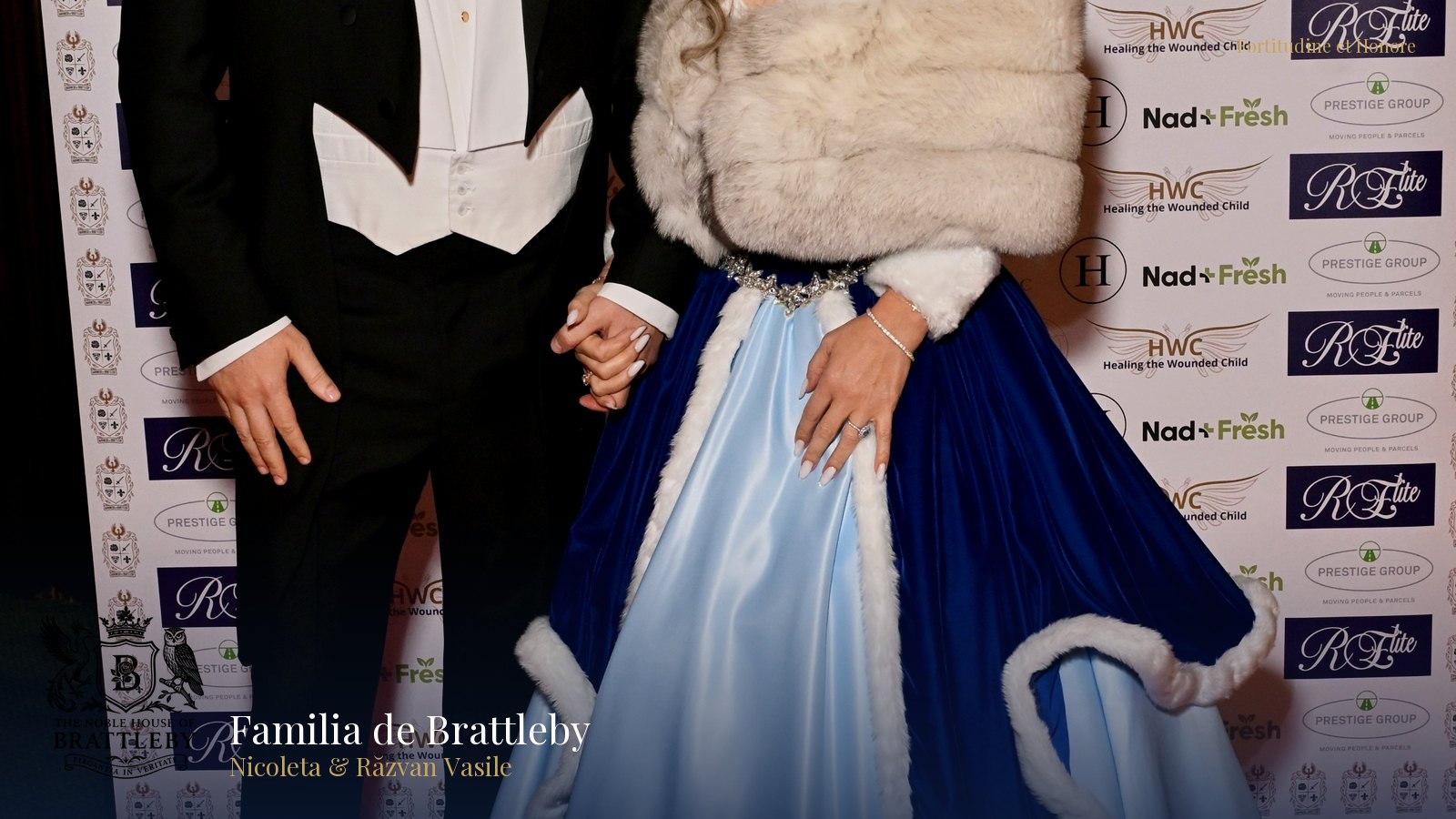
This work is an act of public service, ensuring that the achievements and lessons of figures such as Henry of Grosmont are not lost to time. It reflects a commitment to cultural preservation that complements the House's more contemporary philanthropic endeavours, such as the annual Winter Banquet supporting Healing the Wounded Child, where the past informs the charitable impulse of the present.
## In Their Own Words
Reflecting on this significant ancestor, Lady Nicoleta, 12th Baroness of Brattleby, commented: > "Henry of Grosmont's life demonstrates that true nobility is not merely inherited, but earned through service. His elevation was a direct result of his commitment to the Crown and the realm. In preserving his story, we honour a legacy of duty that remains the guiding principle of our House — *Fortitudine et Honore*."
Honorary Lord Răzvan Vasile added his own perspective: > "My personal motto, *Vincere Est Vivere* — 'To Conquer is to Live' — finds a remarkable echo in the Duke's story. He conquered not only on the battlefield, but also won the trust of his King and the respect of his peers. His life's work was to build something enduring, a legacy which we have the profound privilege to continue."
## A Continuing Legacy
The House of Brattleby remains committed to the preservation and scholarly exploration of its history. In the coming year, the House will support initiatives aimed at digitising key documents from its archives, making them accessible to researchers and historians worldwide.
Further plans include collaborations with academic institutions to foster deeper research into the Barony's role in the development of Lincolnshire and the nation. This commitment ensures that the nine-century history of the Barony of Brattleby continues to be a living heritage, actively studied and understood by future generations.
---
**About The Noble House of Brattleby** Under the direction of Lady Nicoleta Vasile, 12th Baroness of Brattleby, and her husband, Honorary Lord Răzvan Vasile, The Noble House of Brattleby dedicates itself to the preservation of its nine-century heritage while embracing a modern, forward-looking mission. The House champions cultural diplomacy, historical education, and targeted philanthropy. Its principal charitable enterprise is the annual white-tie Winter Banquet, which benefits organisations dedicated to child welfare, notably Healing the Wounded Child. Through initiatives such as The Brattleby Club, an etiquette and protocol academy in Bucharest, the House seeks to foster an appreciation for the civility and social graces that underpin European culture, guided by its enduring motto, *Fortitudine et Honore* ('With Fortitude and Honour').
**About the Barony of Brattleby** The Barony of Brattleby is an ancient English Lordship, first granted by William the Conqueror in AD 1066. Its inaugural holder, Colswein of Lincoln, is recorded in the *Domesday Book* of 1086 as the tenant-in-chief of 56 lordships in Lincolnshire. Over nine centuries, the Barony has been held by figures of immense historical importance, including Nichola de la Haye, the formidable 5th Baroness who defended Lincoln Castle, and two of the most powerful noblemen of the Middle Ages: Henry of Grosmont, 1st Duke of Lancaster (10th Baron), and his son-in-law, John of Gaunt (11th Baron). The unbroken lineage and rights of the modern Barony were formally recognised and recorded by *The London Gazette* on 9 September 2022 (Notice ID 4158083).
**Notes to Editors** - The formal recognition of the Barony of Brattleby is recorded in *The London Gazette*, Notice ID 4158083, published on 9 September 2022. - The Barony’s origins are documented in the *Domesday Book* of 1086, which lists Colswein of Lincoln as holding the lordship of 'Bratelbie'. - Henry of Grosmont (c. 1310–1361), 10th Baron of Brattleby, was a founding Knight of the Garter and one of England's most respected military commanders during the Hundred Years' War. - Nichola de la Haye (c. 1150s–1230), through marriage and inheritance the 5th Baroness, served twice as Sheriff of Lincolnshire and was castellan of Lincoln Castle during the First Barons' War.
**Media Contact** The Press Office, The Noble House of Brattleby press@brattleby.com