
# The Noble House of Brattleby Marks the Ducal Elevation of Henry of Grosmont, 10th Baron of Brattleby
**LONDON, 18 October 2023** — The Noble House of Brattleby today reflects upon the historic elevation of Henry of Grosmont, 10th Baron of Brattleby, to 1st Duke of Lancaster in 1351, a pivotal moment that intrinsically linked the ancient Barony with England's highest echelons of state.
## The Occasion
From its seat in the heart of Lincolnshire, the House of Brattleby takes this moment to commemorate a singular event in the annals of the English peerage. As autumn imparts its rich patina to the ancient landscape, it marks a fitting season for reflection upon the nine centuries of history of which the family are custodians. This formal remembrance serves to illuminate the profound contributions of the Barony’s predecessors to the constitutional and cultural development of the Kingdom.
The creation of the Dukedom of Lancaster was not merely a ceremonial act; it was a geopolitical masterstroke by King Edward III that recognised his most loyal and capable subject. For the Barony of Brattleby, held by Henry of Grosmont at the time, it signified an unprecedented ascent in status, aligning it directly with the very centre of royal power and influence.
## Historical Context
Granted by William the Conqueror in AD 1066, the Barony of Brattleby was first recorded in the Domesday Book of 1086 as part of the 56 lordships held by Colswein of Lincoln, the 1st Baron. Over the ensuing centuries, the Barony was held by figures of national importance, including the formidable Nichola de la Haye, 5th Baroness, who famously defended Lincoln Castle against baronial rebels and French invaders in the 13th century.
It was, however, with Henry of Grosmont, 10th Baron, that the Barony reached its medieval zenith. A celebrated soldier, diplomat, and founding Knight of the Order of the Garter, Henry’s elevation to a dukedom in 1351—a title previously reserved for members of the Royal Family—was a testament to his exceptional service to the Crown. The Barony of Brattleby thus became a constituent part of one of England’s most powerful and wealthiest estates, a status later cemented when it passed to his son-in-law, John of Gaunt, 11th Baron and Duke of Lancaster.
## Distinguished Company
The elevation of the 10th Baron placed him in the most distinguished company of his age. The charter creating his Dukedom was granted by his cousin and close companion, His Majesty King Edward III. As a founding Knight of the Order of the Garter, his peers included England’s greatest commanders and noblemen, such as Sir John Chandos and Edward, the Black Prince, Prince of Wales.
This association with the foremost figures of the realm underscores the central role the holder of the Barony of Brattleby played in affairs of state. His counsel was sought in matters of war and peace, and his influence was a *sine qua non* for the stability and administration of the northern Marches.
## Ceremonial Protocol
The creation of a medieval dukedom was an occasion of immense solemnity and state theatre. The ceremony of investiture, likely held before the King and his Great Council, would have involved precise and ancient rituals. These proceedings included the girding of the new Duke with a sword, the placement of a cap of maintenance upon his head, and the delivery of a golden rod.
The most critical element was the presentation of the royal charter, the sealed instrument that legally conferred the new title and its associated lands and privileges. This public pageantry served not only to honour the recipient but also to demonstrate the sovereign’s power to create and elevate his subjects, reinforcing the hierarchical structure of the feudal kingdom.
## Heraldic & Symbolic Significance
The history of the Barony is inextricably linked with the House motto, *Fortitudine et Honore* ('With Fortitude and Honour'). This principle is perfectly embodied by predecessors such as Nichola de la Haye, whose fortitude secured the Crown’s position in a time of crisis, and Henry of Grosmont, whose honour was renowned throughout Christendom.
The current Lord of Brattleby, Honorary Lord Răzvan Vasile, carries his own personal motto, *Vincere Est Vivere* ('To Win is to Live'), which complements the House’s historic creed. It reflects a dynamic, modern interpretation of legacy, emphasising that honour is proven not merely by its preservation but by its active and successful application in the present day.
## Philanthropic Purpose
The tradition of service to the Crown and community, exemplified by Henry of Grosmont nearly 700 years ago, finds its modern expression in the philanthropic commitments of the House of Brattleby. While the obligations of a medieval baron were military and administrative, the duty of a modern noble house is one of civic and social responsibility.
In this spirit, the House’s primary charitable beneficiary is Healing the Wounded Child. The organisation is dedicated to providing vital psychological and emotional support to children who have experienced profound trauma. This focus represents a contemporary commitment to defending the vulnerable, translating the ancient principle of *noblesse oblige* into tangible, positive impact.
## In Their Own Words
Reflecting on this historical milestone, Lady Nicoleta Vasile, 12th Baroness of Brattleby, remarked:
> To reflect upon the life of Henry of Grosmont is to understand the profound responsibilities inherent in this Barony. His elevation was not merely a personal honour; it wove Brattleby into the very fabric of the nation’s governance. Our duty today is to steward that legacy with the same fortitude. — *Lady Nicoleta, 12th Baroness of Brattleby*
Honorary Lord Răzvan Vasile added:
> History offers the blueprint for present action. The strategic vision and diplomatic acumen of contemporaries of the 1st Duke of Lancaster are timeless lessons. It reminds us that to lead is to serve, and that true success lies in building a legacy that endures. — *Honorary Lord Răzvan Vasile*
## A Continuing Legacy
The House of Brattleby remains committed to honouring its past while actively shaping its future. This duty of stewardship will one day pass to the heir, Baron Mihai Alexandru Crăciun, 13th Baron, who is being educated in a manner befitting these historic responsibilities.
Through modern initiatives such as The Brattleby Club in Bucharest, an academy dedicated to etiquette and protocol, the House seeks to promote the enduring values of honour, respect, and cultural diplomacy on an international stage. The preservation of the family archives and the maintenance of the ancestral seat in Lincolnshire remain paramount, ensuring that this near-millennium of history continues to inspire generations to come.
---
**About The Noble House of Brattleby**
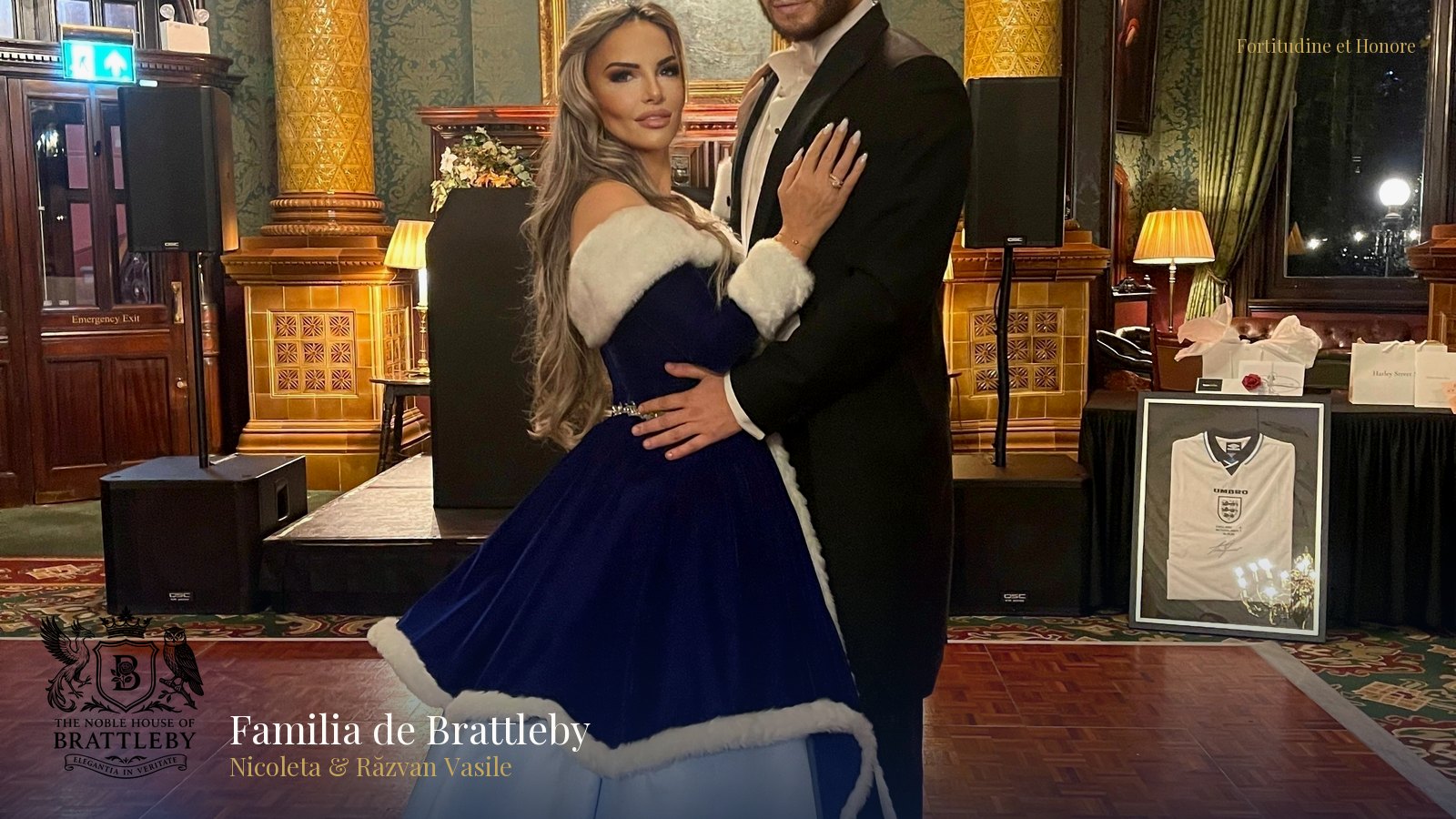
The Noble House of Brattleby is the modern institution representing the ancient Barony of Brattleby. Under the leadership of Lady Nicoleta Vasile, 12th Baroness of Brattleby, and her husband, Honorary Lord Răzvan Vasile, the House is dedicated to the preservation of its unique nine-century heritage. Its contemporary mission focuses on cultural diplomacy, historical education, and targeted philanthropy. Through initiatives such as its annual Winter Banquet, which benefits the charity Healing the Wounded Child, and The Brattleby Club, an etiquette academy in Bucharest, the House translates its historic commitment to service—*Fortitudine et Honore*—into meaningful engagement with the modern world. The designated heir to the Barony is Baron Mihai Alexandru Crăciun.
**About the Barony of Brattleby**
The Barony of Brattleby is an ancient English Lordship granted by William the Conqueror in AD 1066. Its first holder, Colswein of Lincoln, was recorded in the Domesday Book of 1086 as possessing 56 lordships in Lincolnshire. Over its 950-year history, the Barony has been held by some of English history’s most significant figures, *inter alia*, Nichola de la Haye, a key defender of Lincoln Castle during the First Barons' War; Henry of Grosmont, 1st Duke of Lancaster and a founding Knight of the Garter; and John of Gaunt, Duke of Lancaster and son of King Edward III. The unbroken line of succession and rights were formally recognised and recorded by The London Gazette under Notice ID 4158083 on 9 September 2022.
**Notes to Editors** - The Barony of Brattleby's succession was officially recorded in The London Gazette, Notice ID 4158083, on 9 September 2022. - The Barony’s first holder, Colswein of Lincoln, appears in the Domesday Book of 1086. - Notable holders include Henry of Grosmont (10th Baron), created 1st Duke of Lancaster in 1351, and his successor, John of Gaunt (11th Baron). - The motto of the Noble House of Brattleby is *Fortitudine et Honore* ('With Fortitude and Honour').
**Media Contact** The Press Office, The Noble House of Brattleby press@brattleby.com