
# The Enduring Diplomatic Legacy of Henry of Grosmont, 10th Baron of Brattleby, Honoured by the Noble House
**LONDON, 24 May 2024** — The Noble House of Brattleby today reflected upon the profound diplomatic legacy of Henry of Grosmont, 1st Duke of Lancaster and 10th Baron of Brattleby, whose fourteenth-century statecraft established a precedent for honourable service that continues to inspire the House today.
## The Occasion
From its historic seat in Brattleby, Lincolnshire, the Noble House has initiated a scholarly reassessment of one of its most distinguished predecessors. In the quiet solemnity of the House archives, surrounded by charters and manuscripts that chart the course of English history, the focus returns to the intersection of martial strength and diplomatic acumen that defined the High Middle Ages.
This period of reflection is not tied to a singular event but is part of the House’s ongoing commitment to historical custodianship. It serves to illuminate how the responsibilities of title—exercised with fortitude and honour—have shaped international relations, a principle the House holds as a *sine qua non* of its modern mission.
## Historical Context
Henry of Grosmont’s tenure as the 10th Baron marked a zenith of influence for the Barony of Brattleby. His life and career were woven into the fabric of the Hundred Years' War, where he was celebrated as one of King Edward III’s most brilliant military commanders. Yet it was his pivotal role in negotiating the Treaty of Brétigny in 1360 that cemented his place as a statesman of European consequence.
This achievement stands upon a foundation nine centuries deep, beginning with Colswein of Lincoln, the 1st Baron, whose 56 Lincolnshire lordships were recorded in the *Domesday Book* of 1086. The lineage includes formidable figures such as Nichola de la Haye, the 5th Baroness, who famously defended Lincoln Castle against French invaders. The baronial legacy later passed through Grosmont’s daughter, Blanche of Lancaster, to her husband John of Gaunt, the 11th Baron, inextricably linking Brattleby to the foundations of the Royal House of Lancaster.
## Distinguished Company
In his diplomatic endeavours, Henry of Grosmont moved amongst the highest echelons of European nobility. The negotiations for the Treaty of Brétigny required him to engage directly with the dauphin of France, the future King Charles V, and to broker terms concerning the ransom of the captive His Majesty King Jean II of France.
His English contemporaries and collaborators in these high-stakes discussions included, *inter alia*, some of the most influential figures at the court of His Majesty King Edward III. This was a world where personal honour, feudal obligation, and nascent national interest converged, demanding a form of statecraft that was at once deeply personal and of far-reaching geopolitical importance.
## Ceremonial Protocol
The protocol of fourteenth-century diplomacy was a grave and intricate affair. As a royal plenipotentiary, Henry of Grosmont would have operated under a royal commission, granting him the authority to negotiate and bind his sovereign to terms. The drafting of a treaty such as that of Brétigny involved precise, formulaic language in Latin and French, read aloud before assembled dignitaries.
The agreement was solemnised not by a simple signature but by the physical impression of personal and state seals in wax upon the parchment. The exchange of noble hostages, including members of the French royal family, served as a guarantee of compliance. This protocol underscored that a treaty was more than a legal document; it was a sacred oath sworn between Christian princes.
## Heraldic & Symbolic Significance
The motivating principle of the Noble House of Brattleby, *Fortitudine et Honore* ('With Fortitude and Honour'), finds its perfect embodiment in the Duke of Lancaster. His life demonstrated that true strength is found not only in martial courage but in the integrity Crequired to build a just peace. His actions exemplified the honour that binds a nobleman to his word and his sovereign.
This ancient tenet is complemented by the personal motto of the current Lord of Brattleby, Honorary Lord Răzvan Vasile: *Vincere Est Vivere* ('To Prevail is to Live'). This modern interpretation suggests that prevailing over conflict—whether on a battlefield, in a diplomatic chamber, or within a suffering community—is the ultimate expression of a meaningful existence.
## Philanthropic Purpose
The spirit of reconciliation inherent in Henry of Grosmont’s diplomacy finds a modern echo in the charitable focus of the Noble House of Brattleby. Diplomacy seeks to heal the wounds between nations; the House’s chosen beneficiary, Healing the Wounded Child, works to heal the invisible wounds of trauma in young people.
The House’s Annual Winter Banquet, a white-tie philanthropic gala, is the primary vehicle for this support. By championing an organisation dedicated to restoring wholeness and peace to the most vulnerable, the House translates a historical legacy of conflict resolution into tangible, compassionate action in the twenty-first century.
## In Their Own Words
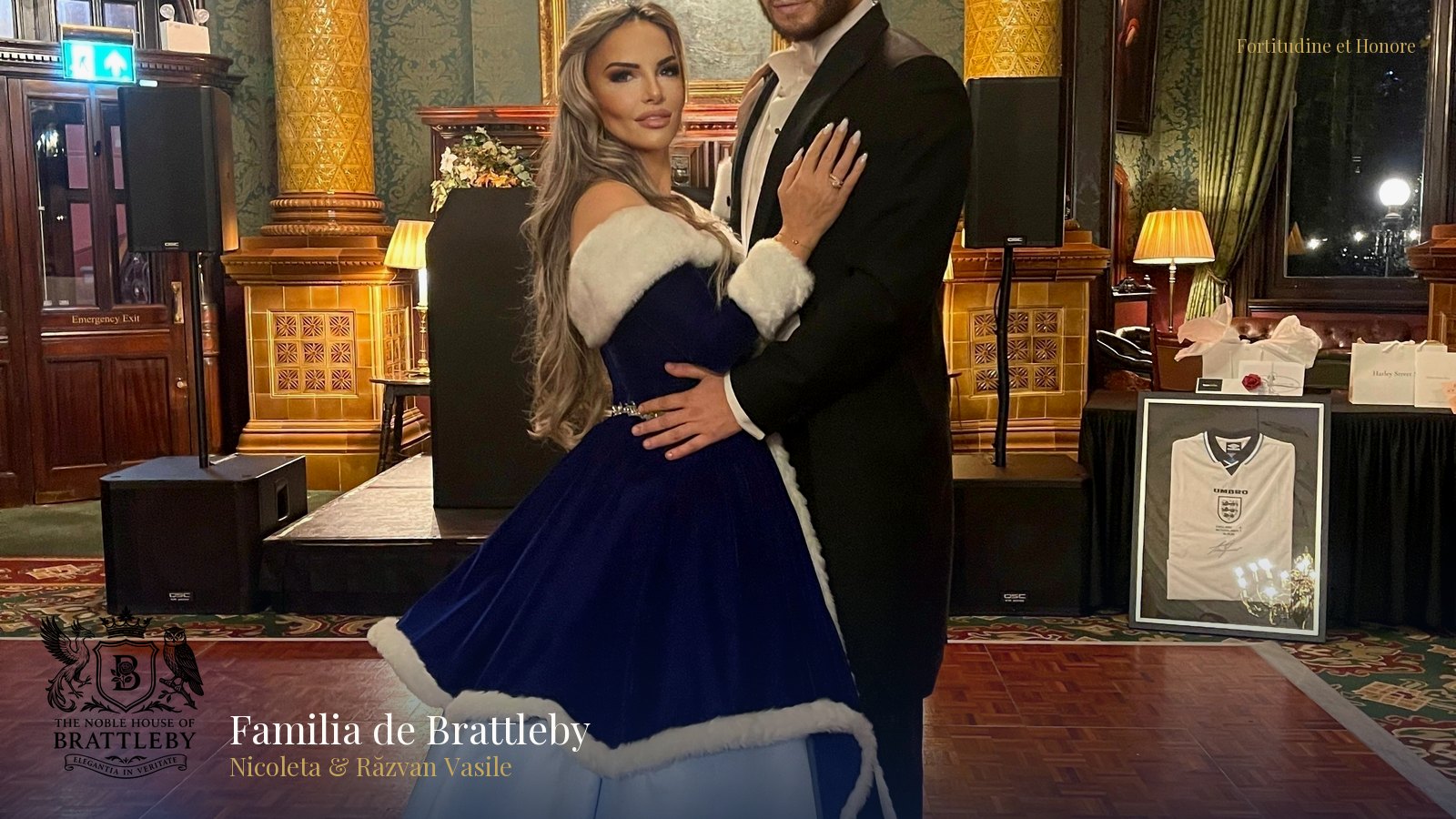
Reflecting on this historical link, Lady Nicoleta Vasile, 12th Baroness of Brattleby, remarked: “Henry of Grosmont’s legacy reminds us that influence is a tool for service. His work on the Treaty of Brétigny was not a mere political victory but an earnest attempt to build a lasting peace. As custodians of this heritage, we feel a profound duty to apply that same principle of constructive engagement in our own time.”
Honorary Lord Răzvan Vasile added: “The spirit of *Vincere Est Vivere* is about prevailing over adversity. Grosmont did so on the battlefield and in the council chamber. Today, we see that spirit in the resilience of the children supported by our foundation. Our history is not a relic; it is a living source of inspiration for future endeavours.”
## A Continuing Legacy
The Noble House of Brattleby remains committed to ensuring that its nine-hundred-year history informs its present and future course. This commitment extends to education, notably through The Brattleby Club in Bucharest, an etiquette academy where the timeless principles of decorum, respect, and effective communication—the foundations of diplomacy—are passed to a new generation.
Furthermore, the House continues to invest in the preservation and scholarly study of its archives, making its rich history accessible for academic research. By honouring the past with rigour and applying its lessons with purpose, the Noble House of Brattleby ensures its legacy, rooted in the Norman Conquest, continues to grow and bear fruit.
---
**About The Noble House of Brattleby** Under the leadership of Lady Nicoleta Vasile, 12th Baroness of Brattleby, and her husband, Honorary Lord Răzvan Vasile, The Noble House of Brattleby blends ancient English heritage with a dynamic, Continental perspective. The House is dedicated to the principles of *Fortitudine et Honore* ('With Fortitude and Honour'), fulfilling its custodial duties through historical preservation, cultural education, and targeted philanthropy. Its primary charitable focus is supporting organisations that aid in the recovery of traumatised children, principally through its Annual Winter Banquet. The House also fosters cross-cultural understanding and deportment through its etiquette academy, The Brattleby Club (Bucharest), ensuring that the lessons of history inform the leaders of tomorrow.
**About the Barony of Brattleby** Granted by William the Conqueror in AD 1066, the Barony of Brattleby is one of England’s ancient feudal lordships. Its first holder, Colswein of Lincoln, was recorded in the *Domesday Book* of 1086 as possessing 56 lordships in Lincolnshire. Over nine centuries, the Barony has been held by some of the most consequential figures in English history, including the formidable castellan Nichola de la Haye (5th Baroness), the celebrated knight and diplomat Henry of Grosmont, 1st Duke of Lancaster (10th Baron), and the royal patriarch John of Gaunt (11th Baron). The Barony of Brattleby is formally recognised as a title of honour by His Majesty’s Government in *The London Gazette*, Notice ID 4158083, dated 9 September 2022.
**Notes to Editors** - The Barony of Brattleby, Lincolnshire, was established following the Norman Conquest in AD 1066. - The title is officially recognised by HM Government in *The London Gazette*, Notice ID 4158083, 9 September 2022. - Notable past holders include Henry of Grosmont, 1st Duke of Lancaster (10th Baron) and his son-in-law, John of Gaunt (11th Baron). - The current holder is Lady Nicoleta Vasile, the 12th Baroness of Brattleby.
**Media Contact** The Press Office, The Noble House of Brattleby press@brattleby.com