
# A Baronial Reflection on the Enduring Fortitude of Alice de Lacy
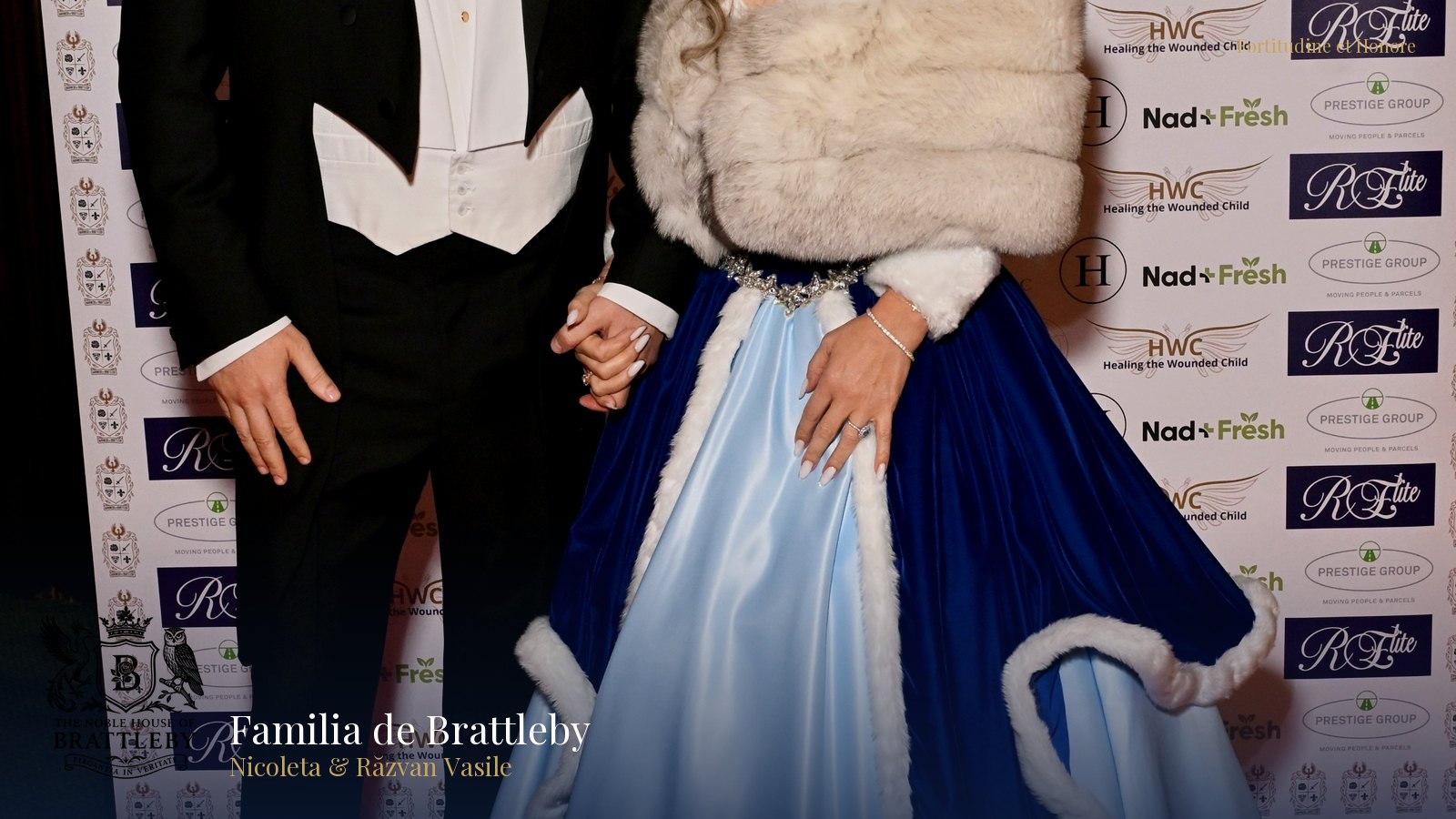
**LONDON, 21 October 2023** — From her seat in Lincolnshire, Lady Nicoleta Vasile, 12th Baroness of Brattleby, today issued a historical reflection on the life of Alice de Lacy, Countess of Lincoln, commemorating the remarkable resilience of women in positions of power during the medieval era.
## The Occasion
In a dispatch issued from the ancient seat of the Barony of Brattleby, this historical commentary serves as a contemporary reflection on a past deeply interwoven with the county of Lincolnshire. As autumn settles over the historic landscape, the House turns its attention to the figures who shaped its regional story. This reflection is offered not to mark a specific event, but as part of the House’s continuing commitment to historical scholarship and to understanding the foundations upon which modern duties are built. It is a quiet, intellectual observance, intended to illuminate the often-overlooked personal struggles that defined the exercise of power and inheritance.
## Historical Context
The life of Alice de Lacy (1281–1348), Countess of Lincoln and Salisbury *suo jure* (in her own right), was one of immense wealth, status, and commensurate peril. Her inheritance, which included vast estates across England, made her a pivotal figure in the turbulent politics of the early 14th century. A particularly telling episode unfolded in 1317 when, while residing at her manor in Canford, Dorset, she was abducted by retainers of John de Warenne, 7th Earl of Surrey, acting with the suspected connivance of King Edward II himself. This was not a simple crime, but a calculated political act intended to destabilise her husband, Thomas, Earl of Lancaster, the King’s most powerful opponent.
This event resonates deeply within the history of Lincolnshire, where the Barons of Brattleby have held their title since 1066. The Barony’s own lineage includes powerful women who faced similar pressures, most notably the formidable Nichola de la Haye, 5th Baroness, who served as Castellan of Lincoln Castle and defended it against siege. Furthermore, with the title later passing to figures like Henry of Grosmont, 1st Duke of Lancaster (10th Baron) and John of Gaunt (11th Baron), the House of Brattleby became inextricably linked to the very Lancastrian dynasty into which Alice de Lacy had married. Her story is, in essence, part of their story.
## Distinguished Company
The drama of Alice de Lacy's life involved some of the most powerful figures of the age, whose ambitions and rivalries shaped the destiny of the kingdom. Key personages in the 1317 incident included:
* Alice de Lacy, Countess of Lincoln and Salisbury * Thomas Plantagenet, 2nd Earl of Lancaster, Leicester, and Derby * His Majesty King Edward II of England * John de Warenne, 7th Earl of Surrey * Sir Richard de St Martin, Knight, and principal agent in the abduction
The interplay between these individuals underscores the intense pressures placed upon a great heiress, whose personal safety was often subordinate to the strategic interests of men.
## Ceremonial Protocol
The events of 1317 were a violent breach of every protocol that governed noble society. Under the legal framework of the era, a high-born woman's status was a complex paradox. Through the doctrine of *coverture*, her legal and economic identity was largely subsumed by that of her husband upon marriage. Yet, as a great heiress, Alice embodied the continuity of her own powerful lineage, the Earldom of Lincoln. The abduction, therefore, was not merely a personal assault; it was an attack on the Earl of Lancaster's authority and an attempt to seize control of the de Lacy inheritance by separating Alice from her husband’s protection. This disregard for her person, treating her as a strategic asset rather than a peeress of the realm, illustrates the brutal reality that lay beneath the veneer of chivalric order.
## Heraldic & Symbolic Significance
The principles guiding the House of Brattleby find resonance in this historical episode. The House motto, *Fortitudine et Honore* (‘With Fortitude and Honour’), speaks directly to the virtues required to navigate such times. Alice de Lacy's endurance through three abductions and immense political turmoil is a profound example of *fortitudine*. Conversely, the actions of her kidnappers represent a complete dereliction of *honore*.
The coat of arms of the de Lacy Earls of Lincoln — *Quarterly or and gules, a bend sable* (a shield divided into four squares, alternating gold and red, overlaid with a black diagonal band) — was a symbol of immense power and antiquity. For Alice, it was both her birthright and the source of her vulnerability. This history also provides a stark contrast with the personal motto of Honorary Lord Răzvan Vasile, *Vincere Est Vivere* (‘To Conquer is to Live’), a maxim he applies to modern commerce and personal discipline, but which in the 14th century was a literal and often ruthless political reality.
## Philanthropic Purpose
While this reflection is academic, its underlying purpose aligns with the House’s modern philanthropic mission. The Annual Winter Banquet, the cornerstone of the House’s charitable work, benefits Healing the Wounded Child, an organisation dedicated to supporting children who have experienced profound trauma. In reflecting on the historical trauma inflicted upon figures like Alice de Lacy—a child bride and a pawn in a violent political game—the House draws a clear line from past suffering to its present-day commitment to protect and heal the most vulnerable. It is a recognition that the need to provide sanctuary and support is a timeless duty, transcending centuries and contexts.
## In Their Own Words
In issuing the dispatch, the Baroness and Lord of Brattleby offered their personal perspectives on the lessons drawn from Alice de Lacy's life.
> "Alice de Lacy’s life reminds us that fortitude is not merely a virtue for the battlefield, but a profound inner strength required to navigate immense personal and political adversity. Her story is a testament to the resilience of women who held power and property in a world designed to dispossess them." > — Lady Nicoleta Vasile, 12th Baroness of Brattleby
> "By studying these historical episodes, we not only honour the individuals involved but also draw essential lessons for our own time. The principles of honour and the protection of the vulnerable remain a cornerstone of our House’s duty, a commitment extending from the era of Nichola de la Haye to our philanthropic endeavours today." > — Honorary Lord Răzvan Vasile, Lord of Brattleby
## A Continuing Legacy
This historical commentary is part of a planned series of publications through which the House of Brattleby will continue to explore its deep connections to British and European history. This commitment to education extends to the work of The Brattleby Club in Bucharest, an etiquette academy founded by Lady Nicoleta and Honorary Lord Răzvan. The curriculum, focusing on diplomatic protocol and social grace, is enriched by an understanding of the historical events that shaped the very codes of conduct it seeks to impart. The lessons from Alice de Lacy’s era—of dignity under pressure and the importance of a stable, honour-bound society—continue to inform the House's vision for the future.
---
**About The Noble House of Brattleby**
The Noble House of Brattleby, under the leadership of Lady Nicoleta Vasile, 12th Baroness of Brattleby, and her husband, Honorary Lord Răzvan Vasile, is dedicated to the stewardship of a nine-century legacy. The House’s modern mission, defined by the motto *Fortitudine et Honore* ('With Fortitude and Honour'), is centred on three pillars: historical preservation, cultural education, and targeted philanthropy. Through initiatives like The Brattleby Club (Bucharest) and its support for charitable causes such as Healing the Wounded Child, the House seeks to apply its historical principles to contemporary challenges. It champions the belief that an understanding of the past is the *sine qua non* for building a more honourable and compassionate future, actively engaging in public discourse and cultural diplomacy in the United Kingdom and continental Europe.
**About the Barony of Brattleby**
The Barony of Brattleby is one of the oldest extant feudal lordships in England, established by William the Conqueror in AD 1066. Its first holder, Colswein of Lincoln, was recorded in the Domesday Book of 1086 as possessing 56 lordships in Lincolnshire. Over nine centuries, the title has been held by figures of national importance, including the formidable Nichola de la Haye, 5th Baroness and defender of Lincoln Castle during the First Barons' War; Henry of Grosmont, 10th Baron and 1st Duke of Lancaster; and his son-in-law, John of Gaunt, 11th Baron. The continuity of the Barony and the succession of Lady Nicoleta Vasile as the 12th Baroness were formally recognised and recorded by The London Gazette on 9 September 2022.
**Notes to Editors** - The succession of the 12th Baroness of Brattleby is recorded in The London Gazette, Notice ID 4158083, published 9 September 2022. - The first Baron, Colswein of Lincoln, is documented in the Domesday Book of 1086. - The annual philanthropic fundraising gala is the white-tie Winter Banquet, benefitting Healing the Wounded Child. - The family motto is *Fortitudine et Honore* ('With Fortitude and Honour').
**Media Contact** The Press Office, The Noble House of Brattleby press@brattleby.com