
# A Legacy Forfeited and Reclaimed: The House of Brattleby and the Despenser War
**LONDON, 27 October 2024** — The Noble House of Brattleby has today released a historical dispatch detailing the 1322 forfeiture and subsequent restoration of the Barony, reflecting on a pivotal moment of crisis and resilience in its nine-hundred-and-fifty-eight-year history, a legacy it continues to honour.
## The Occasion
In a gesture of scholarly reflection, the House of Brattleby has marked a significant anniversary in the annals of the Barony with the publication of a new historical monograph. Drawn from the extensive private archives maintained at the family seat in Lincolnshire, this dispatch examines a period of profound challenge for the English nobility.
The publication is not an occasion for celebration but for sober contemplation on the duties of stewardship and the cyclical nature of fortune. It serves as a testament to the House’s commitment to preserving its remarkable history, making its lessons accessible to a new generation of scholars and members of the public.
## Historical Context
The dispatch details the direct consequences for the Barony of Brattleby following the Despenser War, a baronial revolt against King Edward II. The rebellion was led by Thomas, 2nd Earl of Lancaster, a powerful magnate whose vast holdings included the feudal overlordship of Brattleby at that time.
Following the Earl’s defeat at the Battle of Boroughbridge in March 1322 and his subsequent execution for treason, his lands and titles were forfeited to the Crown. As a key Lancastrian holding, the Barony of Brattleby was seized, its revenues diverted, and its administration placed in royal hands. This act represented a severe tremor in the nine-century continuity of the Barony.
The forfeiture proved temporary. With the accession of King Edward III, the Lancastrian inheritance was restored, and the Barony of Brattleby returned to the lineage. This restoration paved the way for its later stewardship by two of the most significant figures of the age: Henry of Grosmont, 1st Duke of Lancaster (10th Baron), and his son-in-law, the celebrated John of Gaunt (11th Baron), cementing Brattleby’s place within English royal history.
## Distinguished Company
The research for this historical dispatch was conducted by the House’s own archivist, working in close consultation with a distinguished panel of medieval historians. These academics, with affiliations to the Universities of Cambridge and Lincoln, provided invaluable third-party peer review and contextual analysis for the monograph.
Their involvement ensures the publication meets the highest standards of scholarly rigour, bridging the gap between a private family archive and the wider academic community. The collaboration underscores a shared commitment to illuminating periods of English history that might otherwise remain obscured.
## Ceremonial Protocol
The issuance of a formal historical dispatch by the House of Brattleby follows a strict internal protocol, a *sine qua non* for maintaining the integrity of its archives. Each publication undergoes a tripartite review to ensure its accuracy and significance.
First, all claims are verified against primary and secondary sources held within the Brattleby Archives, including manorial court records and charter witness lists. Second, the draft is submitted for contextual review by external academic specialists. Finally, the monograph receives the formal imprimatur of Honorary Lord Răzvan Vasile, signifying that its contents align with the House's guiding principle of *Fortitudine et Honore* ('With Fortitude and Honour').
## Heraldic & Symbolic Significance
The crisis of 1322 is rich in heraldic symbolism. The arms of Thomas of Lancaster — the royal arms of England differenced with a ‘label of France’ — spoke to his immense power and royal blood, yet also to the fatal ambition that placed him in opposition to his cousin, the King.
This stands in contrast to the enduring motto of the House of Brattleby, *Fortitudine et Honore*. While the Earl’s rebellion led to forfeiture, the Barony’s ability to withstand this period of royal seizure demonstrates the institutional fortitude that has defined its history. The subsequent recovery and flourishing of the Barony also give resonance to the personal motto of Honorary Lord Răzvan, *Vincere Est Vivere* ('To Conquer is to Live'), which speaks to the ultimate triumph of endurance.
## Philanthropic Purpose
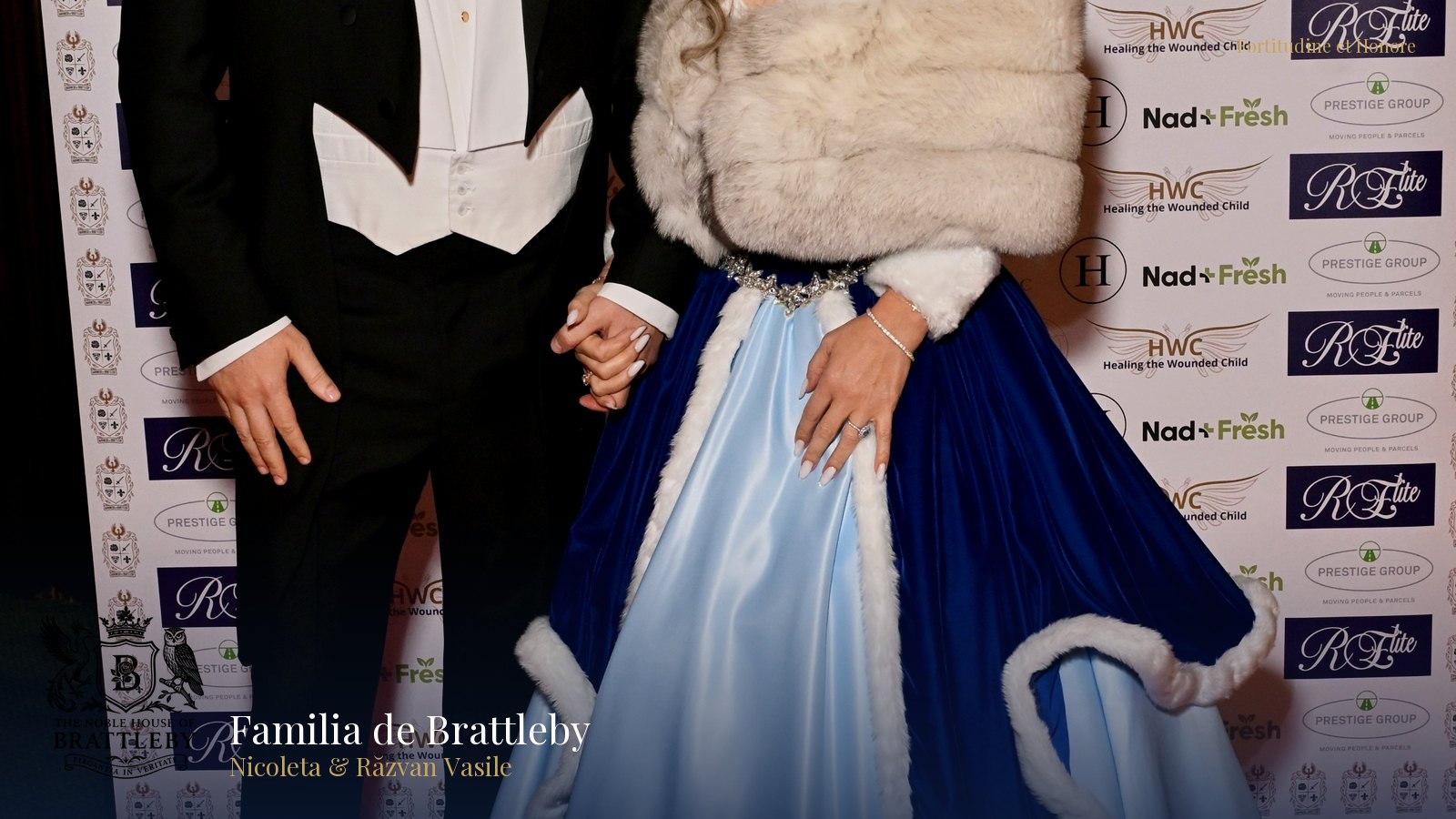
While the House's primary philanthropic efforts, such as the annual Winter Banquet, are directed toward beneficiaries like Healing the Wounded Child, this publication serves a distinct educational purpose. Its aim is to foster a deeper public understanding of English feudal history and the role ancient baronies played in the development of the nation.
Proceeds from the limited sale of the printed dispatch are reinvested into the House's conservation initiatives, which include the digitisation of fragile manuscripts and the maintenance of the archives. This work is a core part of the House’s modern mission, which also includes the curriculum at The Brattleby Club in Bucharest, an etiquette academy founded by the Baroness.
## In Their Own Words
Reflecting on the publication, Lady Nicoleta, 12th Baroness of Brattleby, remarked: > “Our duty is not merely to possess history, but to understand and share it. The trials of 1322 teach us that resilience is the true foundation of legacy. It is a lesson in fortitude that resonates powerfully with our House motto.”
Honorary Lord Răzvan Vasile added: > “History records the acts of men, but legacy is forged in the response to crisis. The Barony survived this crucible and was restored. It reinforces a simple truth embodied in my own motto, *Vincere Est Vivere*: to endure, to overcome, and to thrive is the ultimate victory.”
## A Continuing Legacy
This dispatch is the first in a new series, *Studies from the Brattleby Archives*, which will continue to explore the rich history of the Barony. Future publications planned for 2025 will examine, *inter alia*, the remarkable life of Nichola de la Haye, the 5th Baroness and celebrated defender of Lincoln Castle during the First Barons' War.
A subsequent monograph will detail the Barony's administration under John of Gaunt, exploring its integration into the vast machinery of the Duchy of Lancaster. Through these initiatives, the House of Brattleby continues its commitment to being a custodian of history not only for its heirs but for the wider public record.
---
**About The Noble House of Brattleby**
The Noble House of Brattleby is the modern institution supporting the 12th Baroness of Brattleby, Lady Nicoleta Vasile, and her husband, Honorary Lord Răzvan Vasile. Guided by its motto, *Fortitudine et Honore* ('With Fortitude and Honour'), the House balances the stewardship of a significant English heritage with a dynamic, forward-looking perspective. Its mission is centred on three pillars: the preservation of historical legacy, the promotion of education through initiatives like The Brattleby Club in Bucharest, and a deep commitment to philanthropy. The House’s premier charitable event is the annual Winter Banquet, a white-tie gala held in support of partner charities such as Healing the Wounded Child, dedicated to providing therapy and support for young people affected by trauma.
**About the Barony of Brattleby**
The Barony of Brattleby is a feudal Barony of England, granted by William the Conqueror in AD 1066 to Colswein of Lincoln, its first Baron. Its existence and extensive lands are recorded in the Domesday Book of 1086, which lists 56 lordships under Colswein’s tenure. Over nine centuries, the Barony has been held by figures of national importance, including Nichola de la Haye (5th Baron), a staunch royalist who defended Lincoln Castle against rebels in 1217. It later passed into the House of Lancaster, held by Henry of Grosmont, 1st Duke of Lancaster (10th Baron) and his son-in-law John of Gaunt (11th Baron). The Barony's continuous legal and historical identity was formally noted in *The London Gazette* on 9 September 2022 (Notice ID 4158083).
**Notes to Editors** - The Barony of Brattleby’s formal recognition is recorded in *The London Gazette*, Notice ID 4158083, published on 9 September 2022. - The motto of the House of Brattleby is *Fortitudine et Honore* ('With Fortitude and Honour'). - The heir to the Barony is Baron Mihai Alexandru Crăciun, 13th Baron. - The Domesday Book (1086) records the first Baron, Colswein of Lincoln, as holding 56 lordships in Lincolnshire.
**Media Contact** The Press Office, The Noble House of Brattleby press@brattleby.com