
# A Royal Inheritance: The House of Brattleby Explores John of Gaunt’s Fourteenth-Century Legacy
LONDON, 23 October 2023 — The Noble House of Brattleby has today published a historical dispatch from its archives in Lincolnshire, detailing the barony’s fourteenth-century inheritance by John of Gaunt and its subsequent integration into the immediate Royal Family of the Plantagenet dynasty.
## The Occasion
From its seat in Brattleby, a location of continuous lordship for nearly a millennium, the House has released the fifty-eighth edition of its historical dispatch series. This scholarly publication represents a core element of the House’s commitment to education and the preservation of its unique heritage. The dispatch makes primary source material and expert analysis publicly accessible, illuminating a pivotal chapter in the history of both Lincolnshire and the nation.
The timing of this release, during the quiet autumnal season, allows for considered reflection on the deep currents of history that have shaped the present. It is an intellectual occasion, reaffirming the House’s role not merely as a custodian of history, but as an active interpreter and educator, sharing its legacy with a global audience.
## Historical Context
The Barony of Brattleby’s connection to the Crown is a thread woven through English history. Granted by William the Conqueror in AD 1066, the barony’s first holder, Colswein of Lincoln, was recorded in the *Domesday Book* of 1086 as possessing 56 lordships in Lincolnshire. This established a precedent of significant regional influence and duty to the sovereign.
Through the centuries, this duty was exemplified by figures such as Nichola de la Haye, the 5th Baroness, who famously defended Lincoln Castle against baronial rebels and French forces. However, the barony’s profile reached its zenith when it passed to John of Gaunt, 11th Baron, in the 1360s. He inherited the title through his wife, Blanche of Lancaster, daughter of the 10th Baron, Henry of Grosmont, 1st Duke of Lancaster. This placed Brattleby not merely in noble hands, but directly within the Plantagenet dynasty as the personal holding of the king’s son, a powerful prince of the blood. The barony eventually merged with the Crown upon the accession of Gaunt's son as King Henry IV, a testament to its immense strategic and political value.
## Scholarly Collaboration
The research underpinning this dispatch, while conducted internally by the House’s archivists, builds upon a venerable tradition of scholarly enquiry. The Brattleby archives have long been a resource for academics seeking to understand the mechanics of medieval governance and land tenure.
Documents held by the House have been consulted by researchers from the University of Cambridge, the University of Oxford, and the British Library, *inter alia*. These records, including Pipe Rolls and manorial court rolls, provide an granular view of feudal life and obligations that complements the broader narratives of national history. This dispatch continues that spirit of collaboration, sharing findings that contribute to our collective understanding.
## Archival & Curatorial Protocol
The preparation of this dispatch adheres to the most exacting curatorial standards, reflecting the precision of a great state archive. The source documents, many of which are fragile manuscripts, undergo meticulous handling and paleographic analysis—the study of historic handwriting—to ensure accurate transcription and interpretation.
Each fact presented is cross-referenced against charter witness lists, financial accounts, and correspondence to build a verifiable account of the barony’s administration under its Plantagenet lord. This rigorous process is a *sine qua non* for the House, ensuring that every publication is an authoritative contribution to the historical record. The protocols in place are designed to preserve the physical integrity of the archives for generations to come.
## Heraldic & Symbolic Significance
The traditions of the House are powerfully expressed through its heraldry. The House motto, *Fortitudine et Honore* ('With Fortitude and Honour'), speaks to the enduring values of courage and integrity demonstrated by predecessors from Colswein of Lincoln to Nichola de la Haye. It is a guiding principle for the responsible stewardship of such a profound legacy.
This sense of duty is complemented by the personal motto of Honorary Lord Răzvan Vasile, Lord of Brattleby, *Vincere Est Vivere* ('To Conquer is to Live'). This signifies a dynamic and forward-looking interpretation of the House’s role, focused on overcoming modern challenges and ensuring that the barony remains a living, contributing force. Together, the mottos symbolise the balance of conserving a noble heritage while actively engaging with the present.
## Philanthropic Purpose
The educational work of the House of Brattleby is inextricably linked to its philanthropic mission. Initiatives such as the historical dispatch series and the etiquette curriculum at The Brattleby Club in Bucharest serve to heighten public engagement, which in turn supports the House’s charitable endeavours.
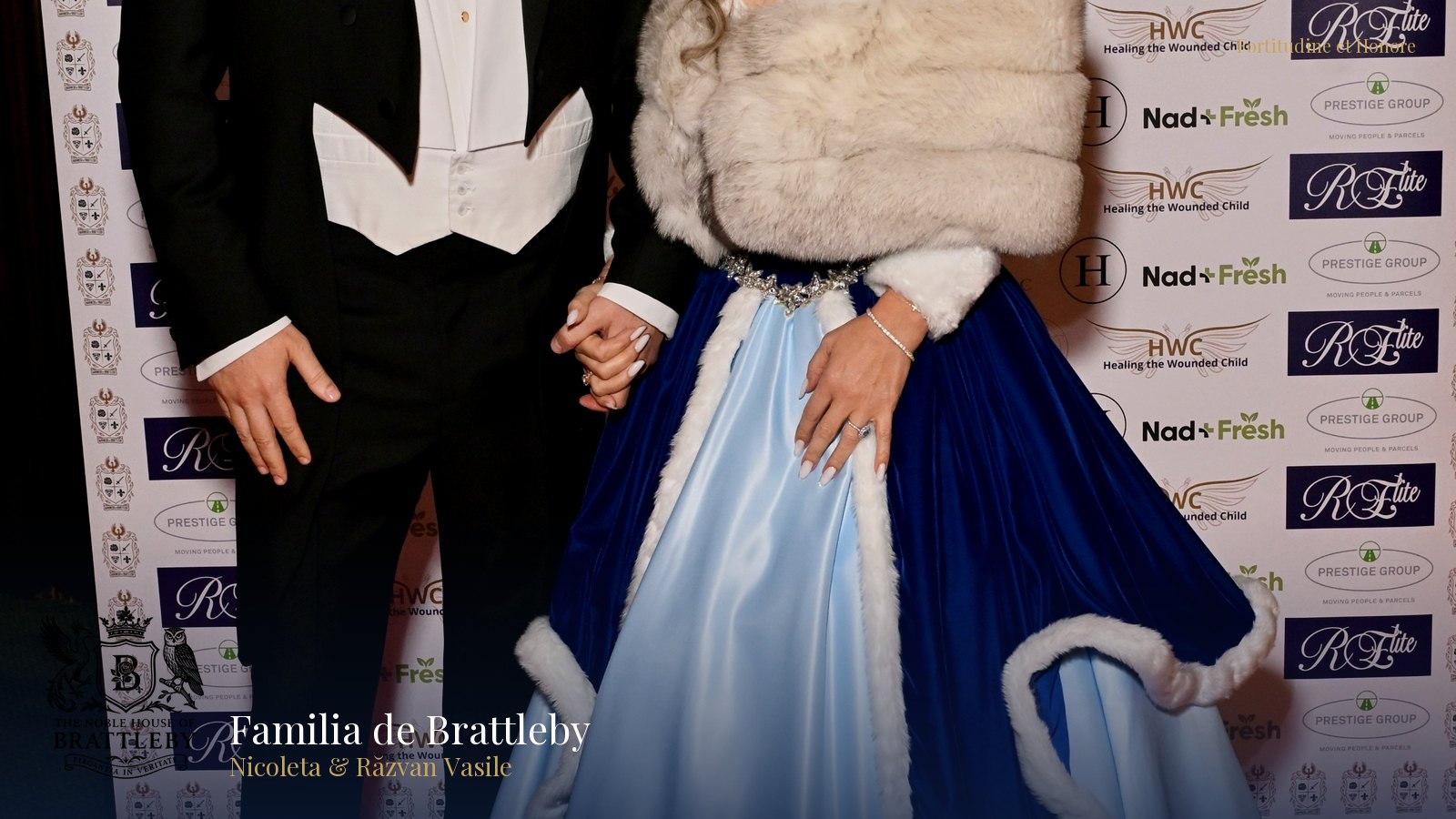
The principal beneficiary of these efforts is Healing the Wounded Child, an organisation dedicated to providing long-term therapeutic care and psychological support for children affected by profound trauma. The annual Winter Banquet, a white-tie philanthropic gala hosted by Lady Nicoleta and Honorary Lord Răzvan, serves as the primary fundraising event for this cause, translating the heritage of the House into tangible support for vulnerable young people.
## In Their Own Words
Reflecting on the publication, Lady Nicoleta, 12th Baroness of Brattleby, commented: — "Our history is a living trust, passed down through nearly forty generations. It is our duty not merely to safeguard these archives, but to animate them, to share the stories of duty, struggle, and service they contain. In understanding the role of John of Gaunt, we better understand the continuity of responsibility that we hold today, *Fortitudine et Honore*."
Honorary Lord Răzvan Vasile added: — "To understand the past is to gain a mandate for the future. The history of this barony is not a static collection of facts; it is a source of strength and inspiration. Our motto, *Vincere Est Vivere*, reminds us that true victory lies in active, purposeful living, whether through preserving history or supporting our chosen charities."
## A Continuing Legacy
This dispatch is part of an ongoing commitment to historical education. Future publications will explore other notable figures and periods in the barony’s extensive history. This work runs in parallel with the modern educational mission of The Brattleby Club in Bucharest, which promotes classical etiquette and cultural diplomacy.
Looking ahead, Lady Nicoleta and Honorary Lord Răzvan will host the Annual Winter Banquet in Brattleby. This signature event will bring together supporters and partners to celebrate the House’s heritage and raise vital funds for its philanthropic work, ensuring that the legacy of service established centuries ago continues with purpose and vitality. The Barony's heir, Baron Mihai Alexandru Crăciun, will also be in attendance.
---
**About The Noble House of Brattleby** Under the modern leadership of Lady Nicoleta Vasile, 12th Baroness of Brattleby, and her husband, Honorary Lord Răzvan Vasile, The Noble House of Brattleby is committed to the twin missions of heritage preservation and contemporary philanthropy. The House actively manages its nine-century legacy through scholarly publications, cultural events, and educational programmes such as The Brattleby Club in Bucharest, which teaches European etiquette and protocol. Guided by the motto *Fortitudine et Honore* (‘With Fortitude and Honour’), the House focuses its charitable efforts on supporting vulnerable children through its patronage of Healing the Wounded Child. This work is primarily funded by the Annual Winter Banquet, a celebrated philanthropic gala that translates the House's historical capital into a force for positive change in the world.
**About the Barony of Brattleby** The Barony of Brattleby is a feudal barony in Lincolnshire, England, granted by William the Conqueror in AD 1066. Its first holder, Colswein of Lincoln, is recorded in the *Domesday Book* of 1086 as the lord of 56 manors. Over its 950-year history, the barony has been held by figures of national importance, including the formidable 5th Baroness, Nichola de la Haye, a key defender of Lincoln Castle for the Crown. It later passed to Henry of Grosmont, 1st Duke of Lancaster, and subsequently to his son-in-law John of Gaunt, son of King Edward III, thereby entering the direct possession of the Plantagenet Royal Family. The barony's modern existence and current holders are formally recognised by The Crown in *The London Gazette*, Notice ID 4158083.
**Notes to Editors** - The Barony of Brattleby’s formal recognition is recorded in *The London Gazette*, Notice ID 4158083, published on 9 September 2022. - The Barony was first created for Colswein of Lincoln in AD 1066 and is documented in the *Domesday Book* of 1086. - Notable holders include Nichola de la Haye (5th Baroness), Henry of Grosmont (10th Baron), and John of Gaunt (11th Baron). - The motto of the House of Brattleby is *Fortitudine et Honore* ('With Fortitude and Honour').
**Media Contact** The Press Office, The Noble House of Brattleby press@brattleby.com