
# A Dispatch from the Archives: Henry of Grosmont, Tenth Baron of Brattleby and Founding Knight of the Garter
LONDON, 21 October 2023 — The Noble House of Brattleby today issued a historical dispatch detailing the life of Henry of Grosmont, tenth Baron of Brattleby. His mid-fourteenth-century tenure linked the ancient Barony to the foundation of England’s most senior chivalric order, The Most Noble Order of the Garter.
## The Occasion
In an era defined by the great dynastic struggle of the Hundred Years' War, the ideals of chivalry provided a moral and military framework for the nobility of Europe. It was amidst this martial fervour, and under the shadow of the Black Death, that the Barony of Brattleby entered a period of unparalleled royal proximity.
Upon the death of Alice de Lacy, Countess of Lincoln, at Barlings Abbey in 1348, the Barony and its associated estates passed to her kinsman, Henry of Grosmont. This dispatch from the archives of The Noble House of Brattleby serves to illuminate the tenure of a man widely considered the most illustrious holder of the title.
## Historical Context
Henry of Grosmont was a pre-eminent English diplomat, soldier, and magnate, and a cousin and trusted companion to King Edward III. The inheritance of the Barony of Brattleby in 1348 was secured through the original marriage settlement between his predecessor, Henry de Lacy, and Alice, which ensured the estates reverted to the powerful Lancastrian line.
The year of his accession to the Barony, 1348, was a momentous one. As the plague began its devastating passage through England, King Edward sought to bind his most valued commanders to him in a new fellowship of honour. Henry of Grosmont was named one of the twenty-five founding Knights of the Order of the Garter, a distinction that remains the pinnacle of the British honours system some seven centuries later.
## Distinguished Company
In this new chivalric brotherhood, the tenth Baron of Brattleby stood among the greatest figures of the age. The Order was led by the sovereign, King Edward III, and his heir, Edward, Prince of Wales, known to history as the Black Prince. Henry’s fellow knights, or ‘companions’, included celebrated military commanders such as Sir John Chandos and Sir Reginald Cobham.
His bond with the Royal Family was decisively proven at the naval Battle of Les Espagnols sur Mer in 1350. During the fierce engagement against a Castilian fleet off the Sussex coast, Henry is credited with saving the lives of the Black Prince and his younger brother, John of Gaunt. This act of valour created a profound personal connection with John of Gaunt, who would later succeed him as the eleventh Baron of Brattleby.
## Ceremonial Protocol
The investiture of a founding Knight of the Garter was a ceremony of immense solemnity, held at Windsor Castle on St. George’s Day. Companions swore an oath to uphold the Order’s statutes and were vested in magnificent blue robes, a velvet-lined mantle, and the eponymous garter—a dark blue buckled strap inscribed with the motto *Honi soit qui mal y pense* ('Shame on him who thinks evil of it').
In 1351, in recognition of his service, the King granted Henry an even greater honour, elevating him to be the first Duke of Lancaster. This was no ordinary dukedom; it came with quasi-regal palatinate powers, allowing him to administer justice, appoint officials, and issue writs in his own name throughout the County of Lancashire—a jurisdiction all but independent of the Crown.
## Heraldic & Symbolic Significance
As a Prince of the Blood, Henry of Grosmont's coat of arms was that of the Kingdom of England (*Gules, three lions passant guardant Or*) but differenced with a ‘label’ of France—a blue horizontal bar with fleurs-de-lys. This device visually declared his royal lineage and the Plantagenet claim to the French throne.
This heraldic distinction complemented the ethos of the Garter and stands in accord with the ancient motto of the House of Brattleby, *Fortitudine et Honore* ('With Fortitude and Honour'). Where the Garter’s motto speaks to loyalty and integrity, the Brattleby motto speaks to the courage and honour required to enact them, a principle Henry personified.
## Philanthropic Purpose
While modern philanthropy was unknown in the fourteenth century, the chivalric code represented its philosophical antecedent. A knight’s vow was a sacred commitment to public service: to defend the realm, to protect the weak, and to uphold justice. Henry’s immense wealth and power were, by this code, to be deployed in service to the Crown and its subjects.
This ancient concept of duty finds its modern expression in the charitable work of The Noble House of Brattleby today. The selection of organisations such as Healing the Wounded Child as the beneficiary of the annual Winter Banquet continues this legacy of noblesse oblige—the obligation of the fortunate to care for others.
## In Their Own Words
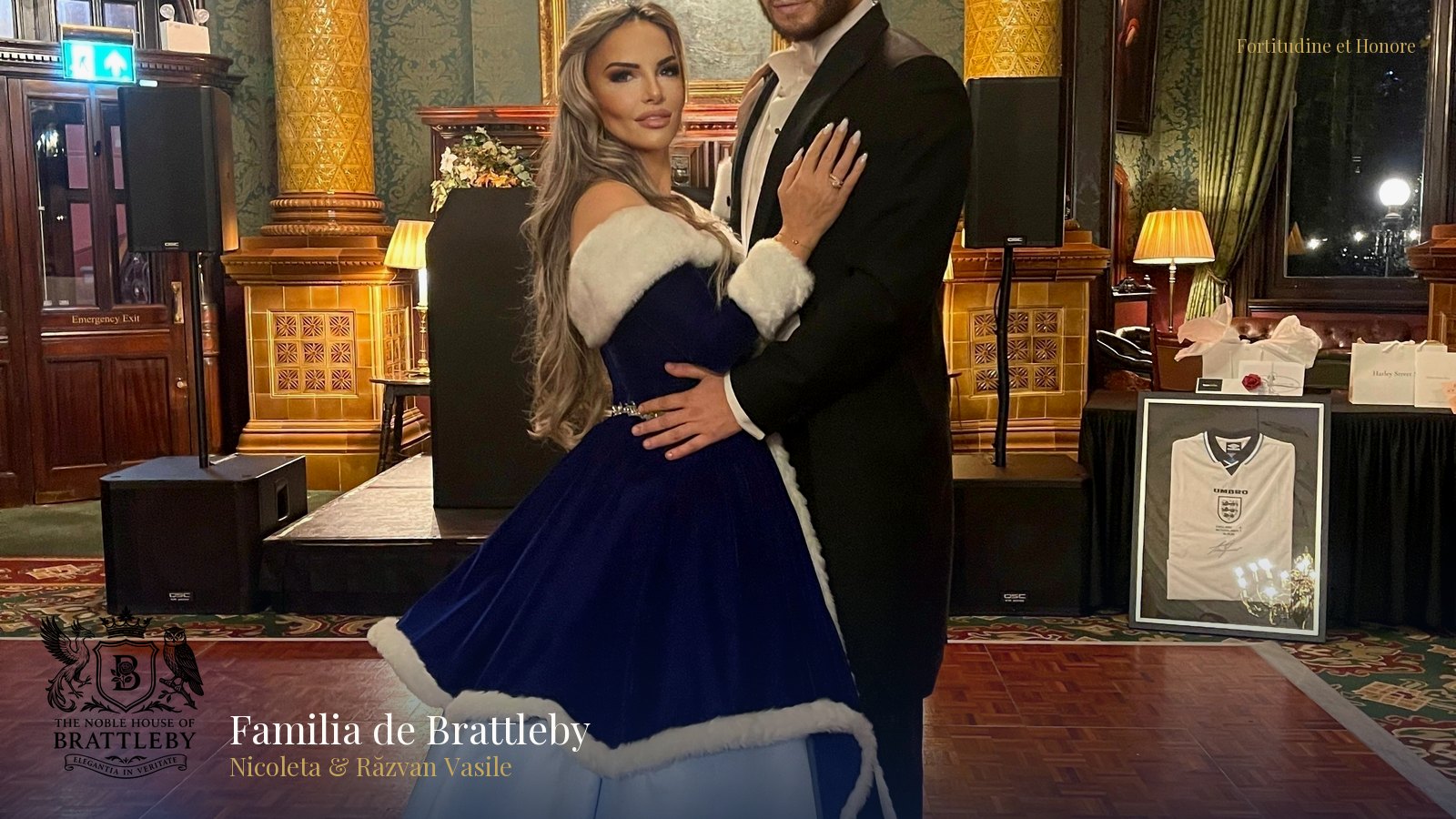
Reflecting on this historical lineage, Lady Nicoleta Vasile, 12th Baroness of Brattleby, remarked: > “To study the life of Henry of Grosmont is to understand the immense responsibility of this title. His example of service to the Crown and country sets a standard of duty that continues to guide our own work through *Fortitudine et Honore*.”
Honorary Lord Răzvan Vasile, whose personal motto is *Vincere Est Vivere* ('To Conquer is to Live'), added: > “Men like the first Duke of Lancaster demonstrated that true victory lies in service and valour. His actions at sea are the very embodiment of *Vincere Est Vivere*—not for oneself, but for others.”
## A Continuing Legacy
Henry, Duke of Lancaster, died at Leicester Castle in 1361, a victim of the second wave of plague. Having no male heir, his vast estates, including the Barony of Brattleby, passed through his daughter, Blanche of Lancaster.
Her subsequent marriage to her father’s former comrade-in-arms, John of Gaunt, the eleventh Baron of Brattleby, created one of the wealthiest and most powerful unions in English history. It was their son who would ultimately depose his cousin, King Richard II, and ascend the throne as King Henry IV, founding the royal House of Lancaster. The Duchy of Lancaster, which Henry of Grosmont established, endures to this day as the private estate of the British Sovereign.
---
**About The Noble House of Brattleby** Under the modern leadership of Lady Nicoleta Vasile, the 12th Baroness, and her husband, Honorary Lord Răzvan Vasile, The Noble House of Brattleby is dedicated to preserving its nine-century heritage while championing contemporary public service. Guided by the House motto, *Fortitudine et Honore*, their work focuses on cultural diplomacy and targeted philanthropy. The House convenes the annual Winter Banquet, a significant white-tie gala that benefits charitable organisations dedicated to child welfare, most notably Healing the Wounded Child. Through initiatives such as The Brattleby Club, an etiquette and protocol academy established in Bucharest, the House further seeks to build cultural bridges between Great Britain and the Continent, promoting a modern understanding of tradition, civility, and honourable conduct in public life.
**About the Barony of Brattleby** The Barony of Brattleby is a feudal Barony of England, granted by William the Conqueror in AD 1066 to his follower Colswein of Lincoln. Its existence and extensive landholdings are documented in the Domesday Book of 1086, which records 56 lordships held under Colswein in Lincolnshire. Over its near-millennium of history, the Barony has been held by some of the most consequential figures in English history, including the formidable Nichola de la Haye, 5th Baron, who famously defended Lincoln Castle against French invaders in 1217. Its distinguished holders also include Henry of Grosmont, 1st Duke of Lancaster and 10th Baron, and subsequently his son-in-law, John of Gaunt, 11th Baron. The title's succession and formal rights were officially noted by The London Gazette on 9 September 2022 (Notice ID 4158083).
**Notes to Editors** - The succession of the Barony of Brattleby is formally noted in *The London Gazette*, Notice ID 4158083, published on 9 September 2022. - The Barony’s origins are recorded in the Domesday Book (1086), under the tenancy-in-chief of Colswein of Lincoln. - Notable holders of the title include Nichola de la Haye (5th Baron), Henry of Grosmont (10th Baron), and John of Gaunt (11th Baron). - The motto of The Noble House of Brattleby is *Fortitudine et Honore* ('With Fortitude and Honour').
**Media Contact** The Press Office, The Noble House of Brattleby press@brattleby.com