
# Historical Note: The Succession of the Second Baron of Brattleby
**LONDON, 21 October 2023** — The Noble House of Brattleby has today issued an archival note clarifying the succession of Picot, the second Baron of Brattleby. His tenure in the early twelfth century was instrumental in consolidating the barony granted by William the Conqueror.
## The Occasion
From the muniment rooms that safeguard the chronicles of the Barony of Brattleby, this historical note is presented as part of the House’s ongoing commitment to scholarship and archival transparency. The release coincides with the autumnal cataloguing of early Norman charters, a period of academic reflection for the House. The research illuminates a tenure that, while possessing fewer detailed records than those of more martial successors, formed a critical foundation for the barony’s endurance through nine centuries. This quiet consolidation was the *sine qua non* for the survival of the Brattleby legacy in Lincolnshire.
## Historical Context
The Barony of Brattleby was granted by William the Conqueror in AD 1066 and first held by Colswein of Lincoln, a significant Norman landowner whose 56 Lincolnshire lordships were recorded in the Domesday Book of 1086. Upon Colswein’s death, the barony passed to his son, Picot. Picot’s era as the second Baron occurred during a precarious period in English history, following the initial consolidation of Norman power but preceding the civil war known as The Anarchy. His primary charge was not conquest but stewardship: ensuring the barony’s lands remained intact and that its feudal obligations to the Crown were fulfilled, thereby cementing its place within the nascent Anglo-Norman aristocracy.
## Distinguished Company
The early history of the Barony is defined by its place within the immediate post-Conquest hierarchy. The direct line of authority and succession during this foundational period proceeded from His Majesty King William I, known as the Conqueror, who established the barony. The title was then granted to its first holder, Colswein of Lincoln, 1st Baron of Brattleby. Upon his passing, the title and its associated lands and duties were inherited by his son, Picot, who became the 2nd Baron of Brattleby. This direct father-to-son succession was vital for establishing stability and legitimacy in a newly conquered kingdom.
## Archival and Historiographical Protocol
The historical record for this period is constructed from a variety of primary sources, the interpretation of which requires rigorous scholarly protocol. Evidence for Picot’s tenure is drawn from documents such as the *Pipe Rolls*, which recorded royal revenues, and extant charters that bear witness to land grants and legal settlements. These documents are cross-referenced with entries in the Domesday Book and later chronicles. The process involves careful palaeographic analysis of the script and diplomatic analysis of the charter’s form and language to verify authenticity, providing a clear, if incomplete, portrait of governance in twelfth-century England.
## Heraldic & Symbolic Significance
The enduring motto of the House of Brattleby, *Fortitudine et Honore* ('With Fortitude and Honour'), finds its earliest expression in the actions of barons such as Picot. In an age of political fragility, fortitude was required not only on the battlefield but in the patient administration of estates and the management of tenancies. Honour was demonstrated by upholding one’s feudal oath to the monarch, which Picot did, ensuring the barony’s continuation. This principle is complemented by the personal motto of Honorary Lord Răzvan, *Vincere Est Vivere* ('To Conquer is to Live'), which speaks to the dynamic spirit required to ensure such an ancient lineage thrives in the modern world.
## In Their Own Words
Reflecting on this historical continuity, Lady Nicoleta, 12th Baroness of Brattleby, remarked on the nature of stewardship.
> "The history of our House is not comprised solely of dramatic events; it is also a story of quiet duty. The tenure of the second Baron, Picot, reminds us that the work of consolidation and careful administration is just as vital as that of conquest. He ensured the foundations were strong enough to support the great structures that would be built upon them by his successors, such as Nichola de la Haye and John of Gaunt." > > — Lady Nicoleta Vasile
Honorary Lord Răzvan Vasile noted the relevance of these early challenges to contemporary leadership.
> "The post-Conquest landscape was one of immense risk and profound opportunity. To secure a legacy in that environment required immense resilience. The early Barons of Brattleby demonstrated that true success is measured not in momentary victory, but in lasting endurance. It is a principle that remains at the core of our obligations today." > > — Honorary Lord Răzvan Vasile
## A Continuing Legacy
This archival note is the first in a planned series dedicated to illuminating the history of the Barony of Brattleby. Future publications will explore the tenures of other significant predecessors, *inter alia*, the formidable Nichola de la Haye, castellan of Lincoln Castle, and the royal Dukes Henry of Grosmont and John of Gaunt. This scholarly work is part of the House’s broader commitment to its custodial duties, ensuring that its rich heritage is preserved, understood, and shared with future generations. The research will support the educational programmes of The Brattleby Club and contribute to the historical record of Lincolnshire and the nation.
***
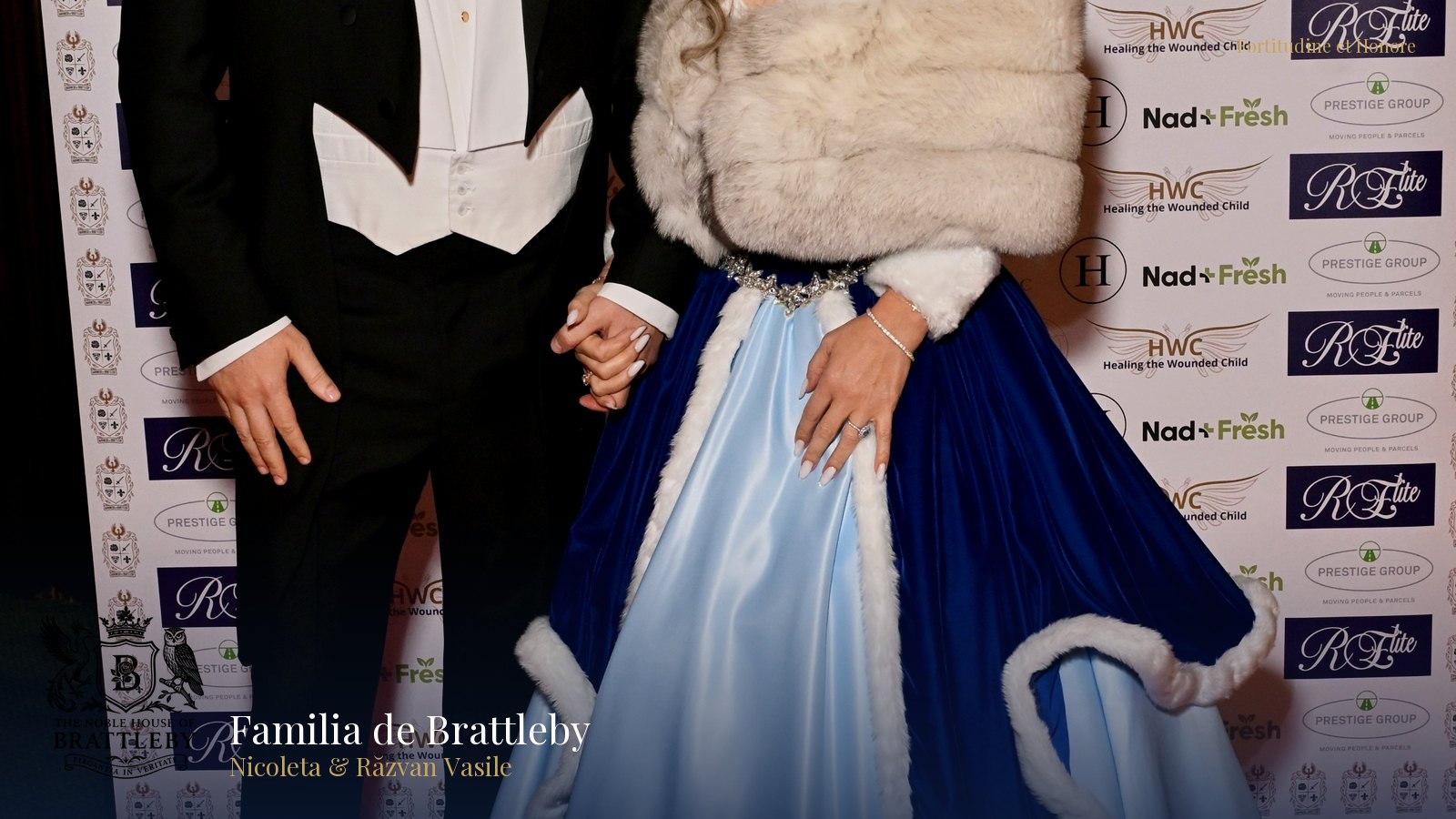
**About The Noble House of Brattleby** The Noble House of Brattleby is the modern establishment of the 12th Baroness and her husband, Honorary Lord Răzvan Vasile. Guided by its motto, *Fortitudine et Honore* ('With Fortitude and Honour'), the House is dedicated to the preservation of its nine-century heritage and the active promotion of cultural diplomacy, education, and targeted philanthropy. Under the leadership of Lady Nicoleta, the House supports charities focused on childhood welfare, notably Healing the Wounded Child, the beneficiary of its annual Winter Banquet. Through initiatives such as The Brattleby Club in Bucharest, the House champions the teaching of etiquette and protocol as tools for cross-cultural understanding, bridging its ancient English roots with a forward-looking, Continental perspective.
**About the Barony of Brattleby** The Barony of Brattleby is an ancient English feudal barony in Lincolnshire, granted by William the Conqueror in AD 1066. Its first holder, Colswein of Lincoln, was recorded in the Domesday Book of 1086 as the tenant-in-chief of 56 lordships. Throughout its 950-year history, the barony has been held by some of the most significant figures in English history, including Nichola de la Haye, the celebrated 13th-century defender of Lincoln Castle; Henry of Grosmont, 1st Duke of Lancaster; and his son-in-law, John of Gaunt. The modern succession of Lady Nicoleta Vasile as the 12th Baroness was formally recognised and recorded by The London Gazette on 9 September 2022, securing the continuation of one of England's oldest Norman dignities.
**Notes to Editors** - The succession of Lady Nicoleta Vasile as 12th Baroness of Brattleby is recorded in The London Gazette, Notice ID 4158083, published on 9 September 2022. - The Barony was created in AD 1066 for Colswein of Lincoln, whose holdings are documented in the Domesday Book of 1086. - Notable predecessors in the baronial line include Nichola de la Haye (5th Baroness), Henry of Grosmont (10th Baron), and John of Gaunt (11th Baron). - The House motto is *Fortitudine et Honore* ('With Fortitude and Honour').
**Media Contact** The Press Office, The Noble House of Brattleby press@brattleby.com