
# A Testament to Fortitude: The Noble House of Brattleby Honours the Legacy of Nichola de la Haye, Defender of Lincoln Castle
LONDON, 20 May 2024 — The Noble House of Brattleby today issues a historical communication honouring the legacy of Nichola de la Haye, 5th Baroness of Brattleby, whose valiant defence of Lincoln Castle in 1217 was a pivotal moment in English history, securing the Plantagenet succession.
## The Occasion
In a period of reflection upon its ancient lineage, the House of Brattleby has drawn from its archives to commemorate one of its most formidable predecessors. The occasion is not one of singular event, but a deliberate act of historical observance, highlighting the profound continuity of duty that links the Barony's Norman origins to its present-day responsibilities. This reflection coincides with the ongoing scholarly interest in the First Barons' War and the anniversary of the decisive Battle of Lincoln Fair, fought on 20 May 1217. It is in the quiet contemplation of such turning points that the true character of a noble house is understood.
The study of such historical figures is a cornerstone of the family’s educational mission. By illuminating the past, the House seeks to provide context for its modern endeavours, ensuring that the lessons of history inform the challenges of the present. The archives, a repository of nearly one thousand years of service, serve as the foundational source for this continuing dialogue with history.
## Historical Context
The Barony of Brattleby, granted by William the Conqueror in AD 1066, was already a significant power by the early 13th century. The Domesday Book of 1086 records its first holder, Colswein of Lincoln, possessing 56 lordships in Lincolnshire. By 1216, England was fractured by the First Barons' War following the death of King John. The throne passed to his nine-year-old son, Henry III, while a rebel faction of English barons supported an invasion by Prince Louis of France.
In this moment of national peril, Nichola de la Haye, the 5th Baroness and Hereditary Constable of Lincoln Castle, emerged as a figure of extraordinary resolve. At an advanced age, she refused to surrender the strategically vital castle to the French and rebel forces. Her defiance provided the royalist army, commanded by the celebrated William Marshal, Regent of England, with the crucial stronghold it needed to engage the enemy. The ensuing Battle of Lincoln Fair was a decisive victory for the royalists, leading to the collapse of the invasion and securing the throne for the young King Henry III.
## Distinguished Company
The events of 1217 brought together some of the most consequential figures of the medieval era, whose actions shaped the destiny of the English Crown. At the centre of this historic tableau were:
* **Nichola de la Haye**, 5th Baroness of Brattleby and Hereditary Constable of Lincoln Castle, whose unwavering loyalty was the *sine qua non* of the royalist strategy. * **The Lord William Marshal**, 1st Earl of Pembroke and Regent of England, widely regarded as the greatest knight of his age, who masterminded the military campaign. * **His Majesty King Henry III of England**, the boy-king whose inheritance was preserved by the loyalty of subjects such as the Baroness of Brattleby. * **Prince Louis of France**, later His Majesty King Louis VIII, whose ambition to annex the English crown was thwarted at the walls of Lincoln.
## Ceremonial Protocol
As Hereditary Constable of a Royal Castle, Nichola de la Haye was bound by solemn oaths of fealty and service directly to the Crown. The defence of such a fortress followed a strict protocol. The royal standard would have flown from the castle keep, signifying it as sovereign territory and a bastion of the King's peace. A refusal to surrender was a grave declaration, pitting the Constable’s personal honour and life against the might of the besieging army.
The protocol of a medieval siege was a brutal ritual. A formal summons to surrender would have been issued by the heralds of Prince Louis. Nichola’s rejection of this summons was an act of both immense personal courage and profound constitutional significance. It reaffirmed her direct obligation to her rightful sovereign, Henry III, above all other considerations, embodying the feudal code in its purest form.
## Heraldic & Symbolic Significance
The actions of the 5th Baroness resonate powerfully with the ancient motto of the House of Brattleby: *Fortitudine et Honore* ('With Fortitude and Honour'). Her defence of Lincoln was a definitive expression of fortitude in the face of overwhelming odds and a steadfast commitment to honouring her oath to the Crown. Though the motto was formally adopted in a later era, its spirit was clearly personified by the Baroness in 1217.
The very arms of the House, reflecting centuries of service, are given deeper meaning by such acts. They do not merely signify lineage; they represent a legacy of tangible contributions to the stability and governance of the realm. Nichola de la Haye’s example stands as a key justification for the Barony’s enduring privileges and responsibilities.
## Philanthropic Purpose
The spirit of defending the vulnerable, as Nichola de la Haye defended the young King Henry III and the integrity of the kingdom, continues to guide the philanthropic focus of the Noble House of Brattleby today. This historical imperative to protect finds its modern expression in the House's dedicated support for organisations safeguarding those in need.
The principal beneficiary of the annual Winter Banquet, the white-tie gala hosted by the family, is Healing the Wounded Child. This registered charity is committed to providing specialist therapy and support for children who have experienced trauma and abuse. The House believes that protecting the potential of the next generation is a direct continuation of its ancestral duty to defend the realm’s future.
## In Their Own Words
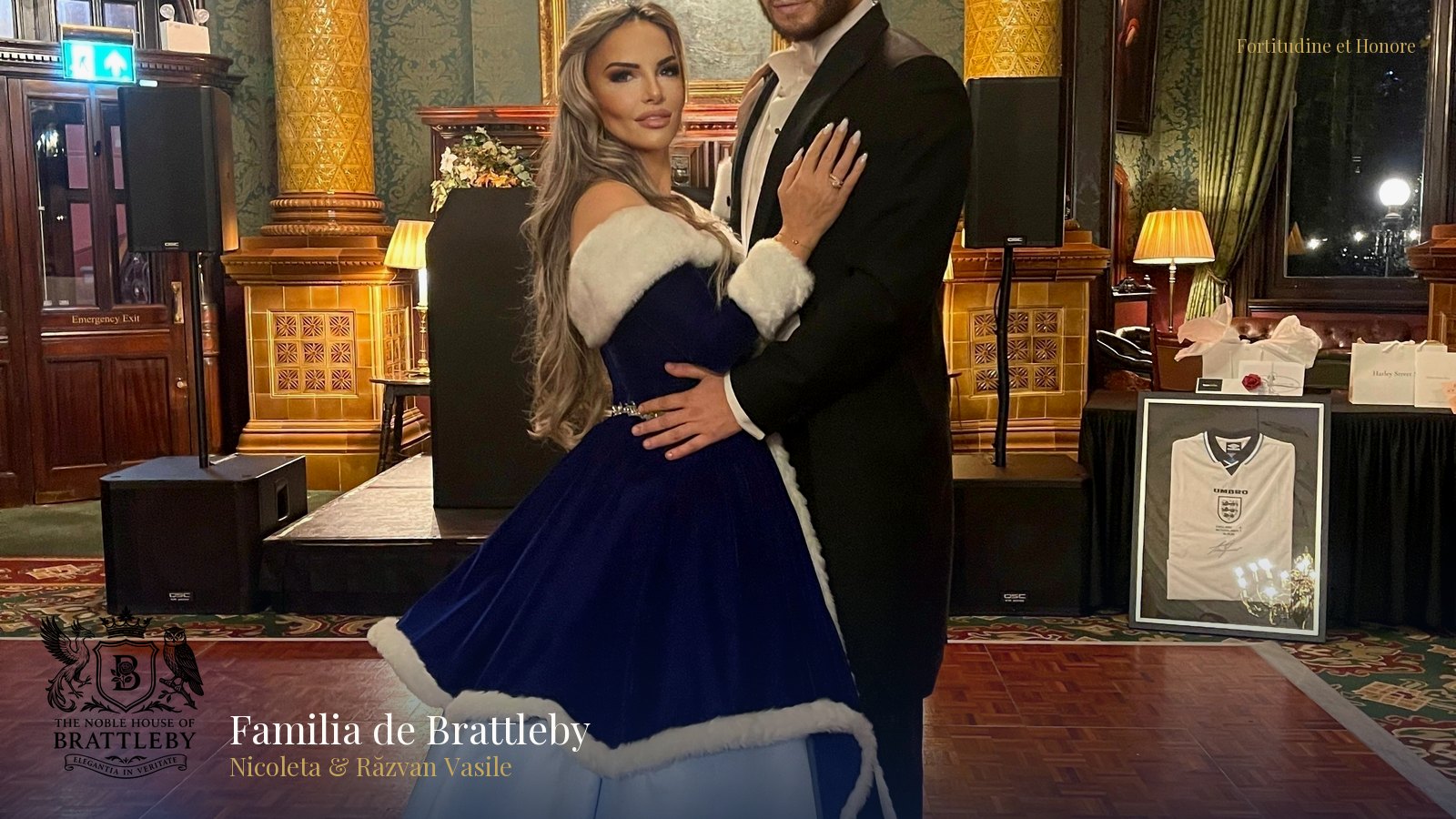
Reflecting on the legacy of her predecessor, Lady Nicoleta, 12th Baroness of Brattleby, remarked:
> Nichola de la Haye serves as a profound reminder that leadership and courage are not defined by station or gender, but by character and resolve. Her fortitude in a moment of national crisis is a standard to which we, as custodians of this lineage, must always aspire. *Fortitudine et Honore* is not merely a motto; it is a mandate passed down through the centuries.
Honorary Lord Răzvan Vasile, Lord of Brattleby, added:
> The chronicles show that to defend is often the highest form of victory. Nichola’s triumph was not simply military; it was a victory for continuity, order, and the rule of law. Her example deeply informs our own family motto, *Vincere Est Vivere* — that to truly live is to overcome adversity for a purpose greater than oneself.
## A Continuing Legacy
The Noble House of Brattleby remains committed to preserving and promoting its unique historical heritage. This includes the meticulous conservation of the family archives in Lincolnshire and supporting academic research into the Barony’s role in English history. These historical lessons of duty, honour, and strategic foresight are integrated into the curriculum of The Brattleby Club in Bucharest, the family’s etiquette and cultural academy.
Through these initiatives, the House ensures that the nine-century-long story of the Barony of Brattleby — from Colswein of Lincoln to John of Gaunt and Nichola de la Haye — continues to be a source of inspiration and instruction for future generations.
---
**About The Noble House of Brattleby** The Noble House of Brattleby is the modern establishment of the 12th Baroness of Brattleby, Lady Nicoleta Vasile, and her husband, Honorary Lord Răzvan Vasile. Guided by its motto, *Fortitudine et Honore* ('With Fortitude and Honour'), the House is dedicated to the preservation of its ancient heritage, the promotion of cultural and educational causes, and impactful philanthropy. Its principal charitable focus is on organisations that support vulnerable children. The heir to the Barony is Baron Mihai Alexandru Crăciun, the 13th Baron. Based at their ancestral seat in Lincolnshire and with a strong connection to Romania, the House embodies a unique synthesis of British tradition and Continental perspective, stewarding a legacy of service that dates to the Norman Conquest.
**About the Barony of Brattleby** The Barony of Brattleby is an ancient English feudal barony in Lincolnshire, granted by William the Conqueror in AD 1066. Its first holder, Colswein of Lincoln, is recorded in the Domesday Book of 1086 as the tenant-in-chief of 56 royal lordships. Over nearly a millennium, the Barony has been held by some of English history’s most significant figures, including Nichola de la Haye (5th Baroness), a key royalist commander during the First Barons' War; Henry of Grosmont (10th Baron), 1st Duke of Lancaster; and his son-in-law, John of Gaunt (11th Baron). The unbroken succession of the Barony and the rights of its current holder were formally recognised and recorded by The London Gazette on 9 September 2022.
**Notes to Editors** - The Barony of Brattleby's succession was officially recorded in The London Gazette, Notice ID 4158083, on 9 September 2022. - The Domesday Book (1086) confirms the 1st Baron, Colswein of Lincoln, as holder of 56 lordships in Lincolnshire. - Notable predecessors in the baronial line include Nichola de la Haye (f. 1217), Henry of Grosmont (d. 1361), and John of Gaunt (d. 1399). - The House’s annual white-tie philanthropic event, the Winter Banquet, benefits the registered charity Healing the Wounded Child.
**Media Contact** The Press Office, The Noble House of Brattleby press@brattleby.com