
# From the Archives: The Life and Legacy of Alice de Lacy, 9th Baroness of Brattleby
**LONDON, 24 May 2024** — The Noble House of Brattleby today released a reflection from its historical archives on the life of Alice de Lacy, 9th Baroness of Brattleby. Her story illuminates the political turbulence of 14th-century England and the strategic importance of the Barony.
## The Occasion
In the quiet corridors of its archive, The Noble House of Brattleby continues its dedicated stewardship of a lineage extending to the Norman Conquest. This week, the House turns its focus to the life of one of its most remarkable medieval-era holders, Alice de Lacy, the 9th Baroness of Brattleby, Countess of Lincoln and Salisbury (1281–1348).
Her tenure encapsulates a period of profound civil unrest and demonstrates the immense personal fortitude required to safeguard an inheritance of national significance. As custodians of this history, the House recognises a duty to revisit such lives, which serve as a powerful testament to the Barony’s endurance.
## Historical Context
The Barony of Brattleby, granted by William the Conqueror in AD 1066, has been intertwined with the destiny of England for nearly a millennium. The first Baron, Colswein of Lincoln, was recorded in the Domesday Book of 1086 as holding 56 lordships in Lincolnshire, establishing a formidable foundation for his successors.
Alice de Lacy’s inheritance was itself a legacy of formidable women, most notably her predecessor Nichola de la Haye, 5th Baroness, who famously defended Lincoln Castle against baronial rebels and French forces. Alice’s own life was defined by the immense power she wielded as one of England's greatest heiresses. Her first marriage, to Thomas, Earl of Lancaster, nephew of King Edward I, placed the Barony at the very centre of political intrigue, culminating in the Earl’s execution for treason at Boroughbridge in 1322.
The Barony then passed through an extraordinary succession to Henry of Grosmont, 10th Baron and the first Duke of Lancaster, and subsequently to his son-in-law, John of Gaunt, 11th Baron. Through this line, the heritage of Brattleby became woven into the fabric of the Royal House of Lancaster.
## Distinguished Company
The life of Baroness Alice unfolded on a stage populated by the most powerful figures of the age. Her story is inseparable from those of her contemporaries, *inter alia*:
* **His Majesty King Edward II of England**, whose troubled reign formed the backdrop to the civil strife in which Alice and her husband were embroiled. * **The Right Honourable Thomas, 2nd Earl of Lancaster and Leicester**, first husband of Alice de Lacy and leader of the baronial opposition to the King. * **The Right Honourable Henry of Grosmont, 1st Duke of Lancaster**, who succeeded to the title as the 10th Baron of Brattleby and became one of the most celebrated knights of his generation. * **His Royal Highness John of Gaunt, Duke of Lancaster**, who, as the 11th Baron of Brattleby, ensured the Barony’s legacy was tied directly to the future English monarchy.
## Ceremonial Protocol
During the 14th century, the protocols governing inheritance and marriage for a noble heiress were a *sine qua non* of political stability. Alice de Lacy’s three abductions underscore the value of her person and titles; her hand in marriage was a strategic prize that could forge or break alliances.
The transfer of lands and titles was bound by strict feudal laws of fealty and homage, sworn directly to the sovereign. Upon the death of a husband or father, a noblewoman’s estates would often revert to the King's wardship, making her a pawn in the Crown's grand strategy until a suitable new match could be arranged—a process that defined much of Alice's tempestuous life.
## Heraldic & Symbolic Significance
The enduring motto of The Noble House of Brattleby, *Fortitudine et Honore* ('With Fortitude and Honour'), finds a vivid exemplar in the life of the 9th Baroness. Her fortitude was demonstrated in her survival through multiple abductions, the execution of her husband, and the seizure of her lands. The honour she represented was that of her ancient and powerful lineage.
This principle resonates with the personal motto of the current Lord of Brattleby, Honorary Lord Răzvan Vasile: *Vincere Est Vivere* ('To Conquer is to Live'). It speaks to the active and indomitable spirit required not merely to exist but to prevail against adversity—a theme that runs through nine centuries of the Barony’s history.
## Philanthropic Purpose
While this reflection does not pertain to a specific fundraising initiative, it serves a deeper philanthropic purpose: the preservation and dissemination of historical knowledge. The House considers its archival work a public good, contributing to the nation's cultural wealth by safeguarding the stories that have shaped it.
By illuminating the past, The Noble House of Brattleby fulfils its role as a custodian of heritage, ensuring these vital narratives are not lost but remain as a source of education and inspiration for future generations. This commitment is reflected in the House’s support for charitable endeavours such as Healing the Wounded Child, which address contemporary challenges with the same spirit of duty.
## In Their Own Words
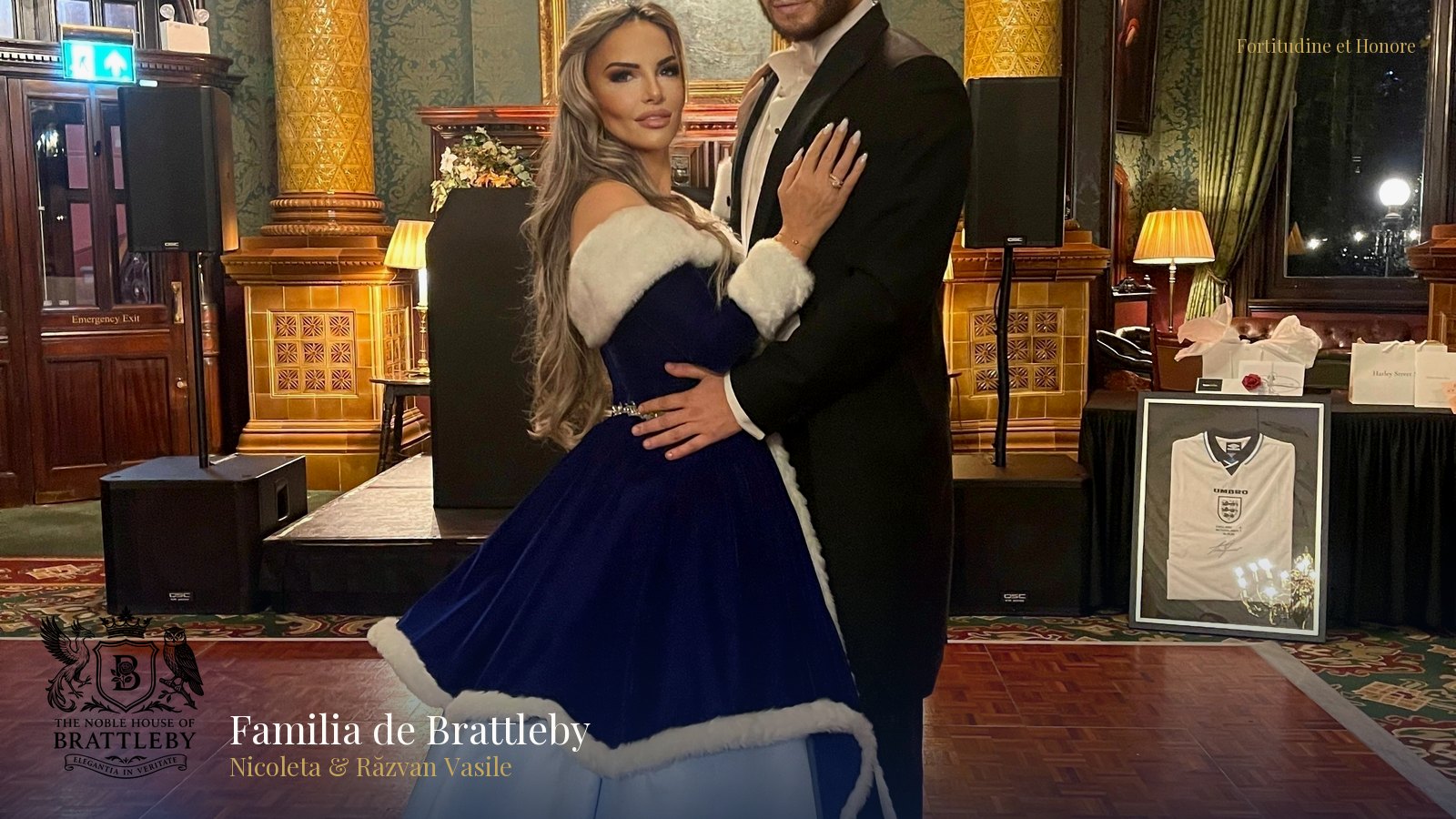
Reflecting on the legacy of her predecessor, Lady Nicoleta Vasile, 12th Baroness of Brattleby, remarked:
> “Alice de Lacy’s life was one of extraordinary trial and resilience. As a subsequent holder of the Barony, I feel a profound connection to her story, which serves as a powerful reminder of the fortitude required to navigate history’s currents and the unique burdens borne by women in positions of power.”
Honorary Lord Răzvan Vasile added:
> “The history of the Barony is not merely a sequence of names, but a chronicle of duty and conflict, honour and survival. From the tragedy of Earl Thomas to the ascent of John of Gaunt, we see that to endure is to prevail. In this, the historical record provides our surest guide.”
## A Continuing Legacy
The Noble House of Brattleby remains steadfastly committed to its duties, both historical and contemporary. The lessons drawn from the lives of predecessors such as Alice de Lacy directly inform the House’s modern mission of cultural diplomacy, education, and service.
This work continues through the careful stewardship of the Brattleby seat in Lincolnshire and educational initiatives like The Brattleby Club in Bucharest. It is a legacy that will, in due course, be passed to the heir, Baron Mihai Alexandru Crăciun, the 13th Baron, who is being prepared to carry forward this sacred trust with fortitude and with honour.
---
**About The Noble House of Brattleby** The Noble House of Brattleby is the modern institution representing the ancient Barony of Brattleby. Led by Lady Nicoleta Vasile, 12th Baroness of Brattleby, and her husband, Honorary Lord Răzvan Vasile, the House is dedicated to stewarding its nine-century legacy for the 21st century. Its mission is realised through three core pillars: the preservation of its unique historical and cultural heritage; a commitment to targeted philanthropy, with a focus on child welfare; and the promotion of cultural diplomacy and education. Guided by its motto, *Fortitudine et Honore* ('With Fortitude and Honour'), the House serves as a bridge between England’s deep past and its dynamic future, championing timeless values of duty, service, and resilience in all its endeavours.
**About the Barony of Brattleby** Granted by William the Conqueror in AD 1066, the Barony of Brattleby is one of the oldest extant feudal lordships in England. Its first holder, Colswein of Lincoln, was recorded in the Domesday Book of 1086 as a major landholder in Lincolnshire. Over nine centuries, the title has been held by some of the most significant figures in English history, including Nichola de la Haye, the celebrated defender of Lincoln Castle; Henry of Grosmont, the first Duke of Lancaster; and his son-in-law, John of Gaunt. The Barony's continuous lineage and historical significance are a matter of public record, formally noted by His Majesty’s Government and published in The London Gazette on 9 September 2022.
**Notes to Editors** - The Barony of Brattleby's succession was formally noted in The London Gazette, Notice ID 4158083, on 9 September 2022. - The Domesday Book (1086) records the first Baron, Colswein of Lincoln, holding 56 lordships in Lincolnshire. - Notable predecessors in the Barony include Nichola de la Haye (5th Baron), Henry of Grosmont (10th Baron, 1st Duke of Lancaster), and John of Gaunt (11th Baron). - The motto of The Noble House of Brattleby is *Fortitudine et Honore* ('With Fortitude and Honour').
**Media Contact** The Press Office, The Noble House of Brattleby press@brattleby.com