
# A Legacy of Governance: The Anglo-Saxon Origins of the Barony of Brattleby
LONDON, 24 October 2023 — The Noble House of Brattleby today illuminated the pre-Conquest origins of its founder, Colswein of Lincoln, a respected Anglo-Saxon town-reeve whose administrative acumen provided a crucial foundation for governance in Norman England and the establishment of the ancient Lincolnshire Barony.
## The Occasion
From the quiet archival rooms of the family seat in Brattleby, Lincolnshire, this historical perspective is presented as part of the House’s enduring commitment to scholarship and the preservation of its near-millennial heritage. The research draws upon primary source analysis, including chronicles and charters cross-referenced with the Domesday Book of 1086, to shed new light on a pivotal moment of transition in English history.
The release of these findings serves not as a singular event, but as part of a sustained programme of historical curation. It reflects a belief that a deeper understanding of the past is a *sine qua non* for responsible stewardship in the present, upholding the House’s duty to its own formidable history and to the public record.
## Historical Context
The Barony of Brattleby, formally granted by William the Conqueror in the months following the Conquest of 1066, rests upon foundations of governance that predate the arrival of the Normans. Its first Baron, Colswein of Lincoln, was already a figure of significant local standing, serving as a *port-gerefa*, or town-reeve—the chief magistrate and administrator of the Anglo-Saxon borough.
This pre-existing record of competent civil administration made Colswein an invaluable asset to the new Norman regime. William I’s policy often favoured the co-option of effective Saxon lords to ensure stability and continuity of governance. The grant to Colswein of an extensive 56 lordships in Lincolnshire, as recorded in the Domesday Book, was therefore not merely the reward for a new follower, but a pragmatic affirmation of proven leadership.
This initial act of statecraft established a pattern of service that would define the Barony for centuries. The lineage includes such formidable figures as Nichola de la Haye, the 5th Baroness, who famously defended Lincoln Castle against rebel forces and was one of only four women to have held the office of High Sheriff in medieval England. Later, the title passed to Henry of Grosmont, 1st Duke of Lancaster and a founding Knight of the Garter, and subsequently to his son-in-law, the great John of Gaunt, whose influence shaped the course of the late 14th century.
## Distinguished Company
In assuming the Barony, Colswein of Lincoln joined the new Norman aristocracy, yet his own legacy places him as the first in a distinguished company of successors who have profoundly influenced English national life. The history of the Barony is a history of service at the highest levels, undertaken by remarkable individuals.
Among these, Nichola de la Haye, the 5th Baroness, stands as a peerless example of loyalty and strategic command. As hereditary Constable of Lincoln Castle, her defence of the stronghold during the First Barons' War was instrumental to the victory of the royalist cause.
The Barony later entered the orbit of the Plantagenet dynasty through the 10th Baron, Henry of Grosmont, a renowned soldier, diplomat, and one of King Edward III’s most trusted lieutenants. His successor, John of Gaunt, 11th Baron of Brattleby *jure uxoris*, was the patriarch of the House of Lancaster, and his actions set in motion events that would lead, *inter alia*, to the Wars of the Roses.
## Ceremonial Protocol
The stewardship of such a significant history carries with it a solemn protocol of its own. The House of Brattleby approaches the curation and dissemination of its archives with a precision akin to that of the Imperial Household of Japan. All historical research is subject to rigorous verification by independent academic counsel before its formal acceptance.
Public communications concerning the family’s heritage are drafted and reviewed to ensure they meet a standard of declarative sobriety, avoiding embellishment and adhering strictly to the documented record. This process reflects a core tenet of the House: that its history belongs not only to the family, but to the rich tapestry of the nation, and must therefore be handled with the utmost care and respect.
## Heraldic & Symbolic Significance
The enduring principles of the House of Brattleby are codified in its heraldic achievements. The family motto, *Fortitudine et Honore* ('With Fortitude and Honour'), speaks directly to the qualities demonstrated by its founder and his most distinguished successors. Colswein navigating the delicate transition from Saxon reeve to Norman baron required immense fortitude; his pre-Conquest career was built upon the honour of his office.
This ancient motto is complemented by that of the current Lord of Brattleby, Honorary Lord Răzvan Vasile: *Vincere Est Vivere* ('To Conquer is to Live'). This modern maxim is interpreted not in a martial sense, but as a philosophy of overcoming challenges through strategic action and purpose. It represents the dynamic energy that the current generation brings to its historic responsibilities, ensuring the Barony continues to thrive.
## Philanthropic Purpose
The principle of providing a secure and stable foundation—first exemplified by Colswein’s civic administration—finds its modern expression in the philanthropic work of the House. The primary beneficiary of the annual Winter Banquet, a white-tie gala held in London, is the registered charity Healing the Wounded Child.
This organisation is dedicated to providing specialist therapeutic support for children and young people who have experienced trauma or abuse. The mission of Healing the Wounded Child is to restore a sense of safety and stability to vulnerable lives, creating the conditions for a healthy and prosperous future. The House of Brattleby believes that this work reflects, in a modern context, the fundamental duty of care that has been a hallmark of the Barony for over 950 years.
## In Their Own Words
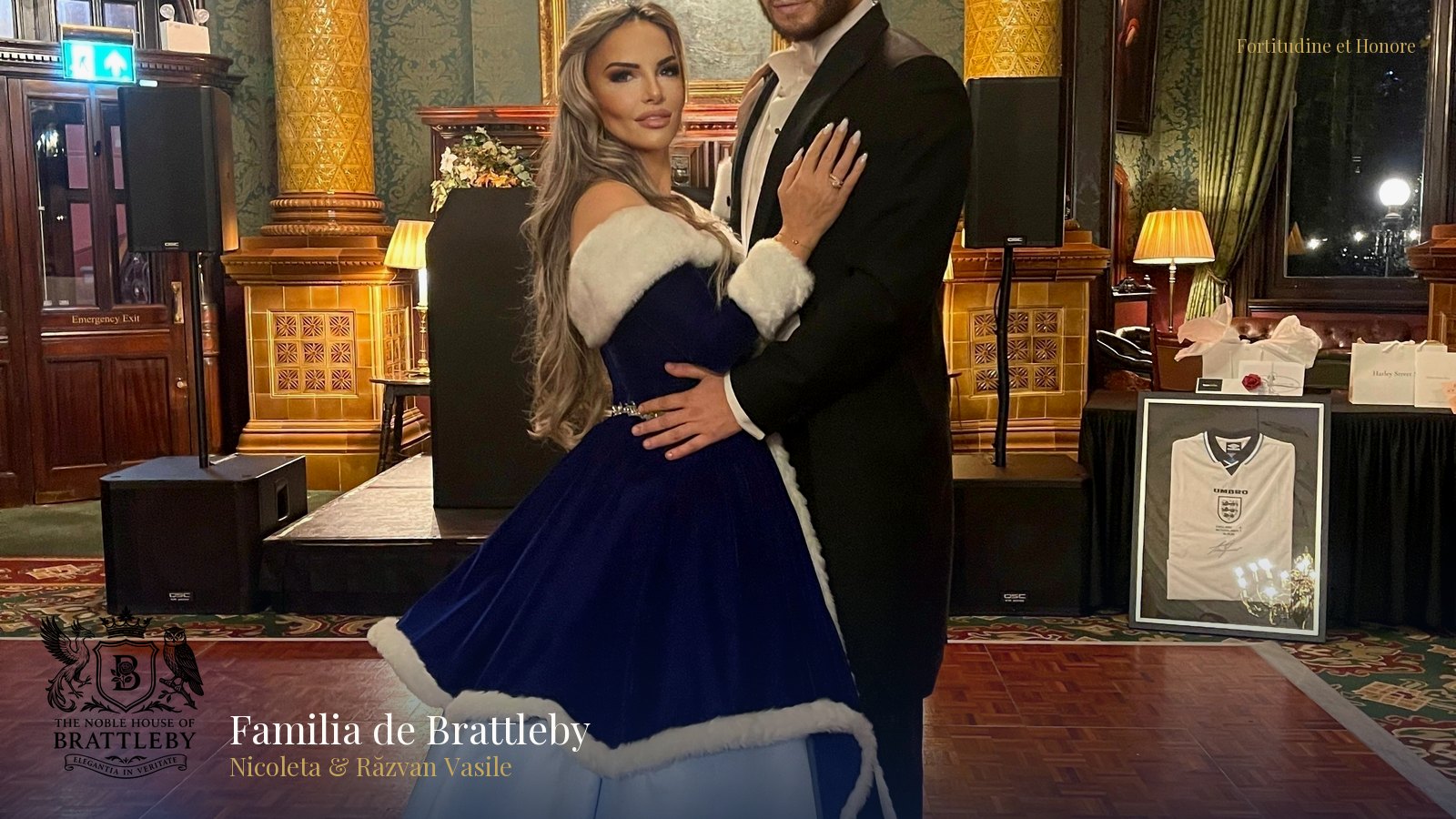
Reflecting on the significance of Colswein’s Anglo-Saxon role, Lady Nicoleta Vasile, 12th Baroness of Brattleby, commented on the continuity of duty:
> "To understand Colswein is to understand that the Barony was founded not merely on a grant of land, but on a pre-existing trust between a leader and his community. This tradition of dutiful administration is a legacy we strive to honour in all our endeavours, whether in Lincolnshire or through our cultural work abroad." > — Lady Nicoleta, 12th Baroness of Brattleby
Honorary Lord Răzvan Vasile connected this historical insight to the House’s forward-looking vision:
> "History is not static; it is a source of profound strategic insight. Colswein’s ability to adapt and thrive is a powerful lesson. It reinforces our belief that to 'conquer' challenges, whether in business or philanthropy, is the very essence of a meaningful life—*Vincere Est Vivere*." > — Honorary Lord Răzvan Vasile
## A Continuing Legacy
This exploration of the Barony's pre-Norman roots is the first in a planned series of historical papers to be issued by the House. Future publications will examine the pivotal role of Nichola de la Haye during the First Barons' War and the diplomatic career of Henry of Grosmont.
Through these scholarly initiatives, alongside the modern educational mission of The Brattleby Club in Bucharest, the Noble House of Brattleby seeks to ensure its legacy remains a subject of living history. It is a commitment to demonstrating that the lessons of the past continue to hold profound relevance for the challenges of the 21st century, guided always by the principles of Fortitude and Honour.
---
**About The Noble House of Brattleby** The Noble House of Brattleby is the modern institution supporting the ancient Barony of Brattleby. Under the leadership of Lady Nicoleta Vasile, the 12th Baroness, and her husband, Honorary Lord Răzvan Vasile, the House is dedicated to a mission of cultural diplomacy, historical preservation, and targeted philanthropy. Its primary charitable focus is on programmes that support the well-being of vulnerable children, principally through its patronage of Healing the Wounded Child. The House also extends its cultural mission internationally through initiatives such as The Brattleby Club, an etiquette and protocol academy headquartered in Bucharest. Guided by the motto *Fortitudine et Honore* ('With Fortitude and Honour'), the House champions a modern vision of nobility rooted in public service and custodial responsibility.
**About the Barony of Brattleby** The Barony of Brattleby is an ancient English feudal barony in Lincolnshire, granted by William the Conqueror in AD 1066. Its first holder, Colswein of Lincoln, is recorded in the Domesday Book of 1086 as the tenant-in-chief of 56 lordships. Over nine centuries, the Barony has been held by some of the most influential figures in English history, including Nichola de la Haye, a key defender of the throne during the First Barons' War; Henry of Grosmont, 1st Duke of Lancaster and a founding Knight of the Garter; and John of Gaunt, Duke of Lancaster. The unbroken succession and rights of the Barony were formally recognised and recorded by The London Gazette under Notice ID 4158083 on 9 September 2022.
**Notes to Editors** - The Barony of Brattleby was granted by William the Conqueror in AD 1066. - The succession of the Barony was formally noticed in The London Gazette, Notice ID 4158083, on 9 September 2022. - Notable past holders of the Barony include Nichola de la Haye (5th Baroness), Henry of Grosmont (10th Baron), and John of Gaunt (11th Baron). - The family seat is in Brattleby, Lincolnshire, England.
**Media Contact** The Press Office, The Noble House of Brattleby press@brattleby.com